Aitana’s family story is a classic of immigration to America.
Her father escaped gang violence in Colombia, and her mother a lack of economic opportunities in Mexico. They met in New York, settled in New Jersey and had three children. He found work in factories and she as a housekeeper, jobs to which Aitana sometimes accompanied her.
Despite living in the country for more than 35 years, however, both remain undocumented. And Aitana – a 30-year-old education worker whose last name The Globe and Mail is withholding to protect her family from becoming a target for Immigration and Customs Enforcement – has spent much of her life worrying if they’ll make it home at the end of each day.

Some Americans now use whistles, like these ones outside an ICE detention centre in Newark, N.J., to warn others that a raid is coming.Adam Gray/Getty Images
Never has that fear been more acute than it is now, as U.S. President Donald Trump’s immigration crackdown sweeps through Latino communities in New Jersey, just across the Hudson River from Manhattan.
Today, Aitana’s mother takes care of her granddaughter while Aitana and her husband are at work. One of the parks the grandmother and toddler frequent is near the site of numerous ICE arrests.
“Especially when my mom is with my daughter, it’s nerve-wracking being far away from them and having to wonder,” Aitana said in an interview.
Neighbourhood rapid response groups log dozens of arrests a day. Aitana, who is part of one such network, said the surge in the area began in May. “We’ve seen them targeting people on the street.”

ICE raids are far less visible now than in the first year of the second Trump administration, when agents captured this man in Atlanta.Carlos Barria/Reuters
The experience here is indicative of what is happening across the country. Mass roundups are escalating even as the White House has mostly stopped publicizing ICE raids since federal agents gunned down two U.S. citizens during immigration operations in Minneapolis in January.
ICE arrested 39,563 people in June, its highest-ever monthly total, according to figures released this week by the agency. That same month, Republican lawmakers authorized a further US$70-billion for the deportation campaign. In July so far, ICE is approaching an average of 1,500 arrests a day.
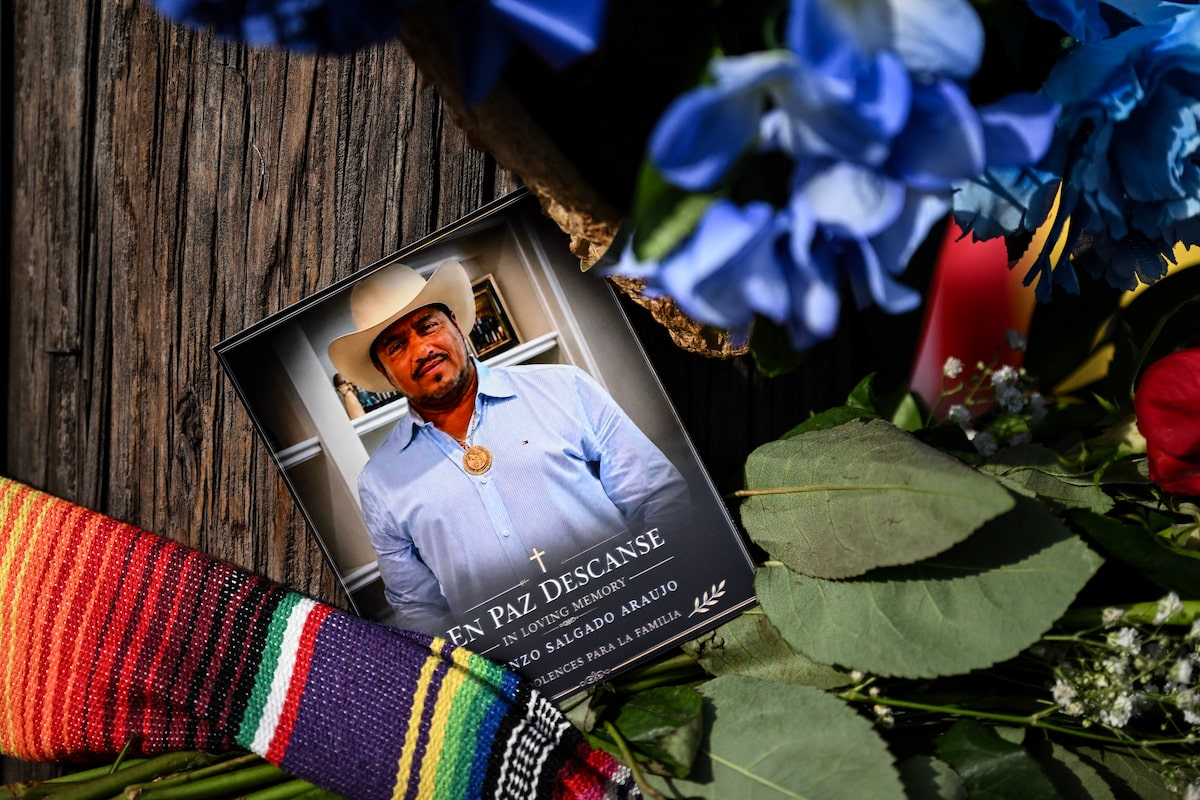
And after being largely out of the public eye since January, the dragnet is attracting renewed attention after ICE shot and killed two immigrants – Lorenzo Salgado Araujo in Texas and Joan Sebastián Guerrero in Maine – during traffic stops this month.


In New Jersey, photos and video posted to social media show arrests on sidewalks, in parking lots and at the sides of expressways. James Braddock Park, an expansive green space in the township of North Bergen, is a regularly targeted spot. Anderson Avenue, a commercial main street that runs through the borough of Fairview, shows up frequently, as does Home Depot. Some videos show dramatic foot chases or arrestees pinned to the ground by multiple officers.
A common practice is for masked ICE agents to sweep local transit stops early in the morning to target day labourers.
One group, Estamos Unidos NJ, logged 30 arrests on a single morning, July 3, across Jersey City, Union City, Palisades Park and other nearby communities. Another group, Jersey Shore Immigrant Support, reported 40 arrests around the town of Freehold on June 23.
“We’re seeing every week, families where the dad was detained, the mom is left behind with multiple kids. We’ve seen teenagers who are left to live alone because their parents were detained. Little kids comforting their family members,” said Maya Laur at Centro Comunitario CEUS, a group that helps such families by, among other things, delivering food hampers.
In a statement, the Department of Homeland Security, ICE’s parent agency, did not address the raids in New Jersey. It insisted that it is “disgusting, reckless, and categorically FALSE” for anyone to claim that agents use “racial profiling” to find targets.
During a Supreme Court case last year, the Trump administration successfully argued that agents should be allowed to use factors such as “apparent race or ethnicity” when looking for people to stop.

Protesters have kept a constant vigil at Newark's Delaney Hall, used by ICE contractors to hold detainees.Adam Gray/Getty Images
Meanwhile, Delaney Hall, a private prison in Newark that serves as the largest immigration detention centre on the U.S. East Coast, has become a flashpoint in the battle against deportations.
Outside the grey, warehouse-like building in an industrial park across the street from an oil tank farm, protesters are keeping a 24-hour vigil. In a large white tent, they offer the families of detainees help connecting with legal and food aid.
In May, hundreds of detainees at the facility launched a hunger and work strike, alleging they were fed rotten food infested with worms and made to work for as little as US$1 per day cleaning the jail, whose ventilation problems are making it stiflingly hot. Female detainees, they said, had been groped by a guard.
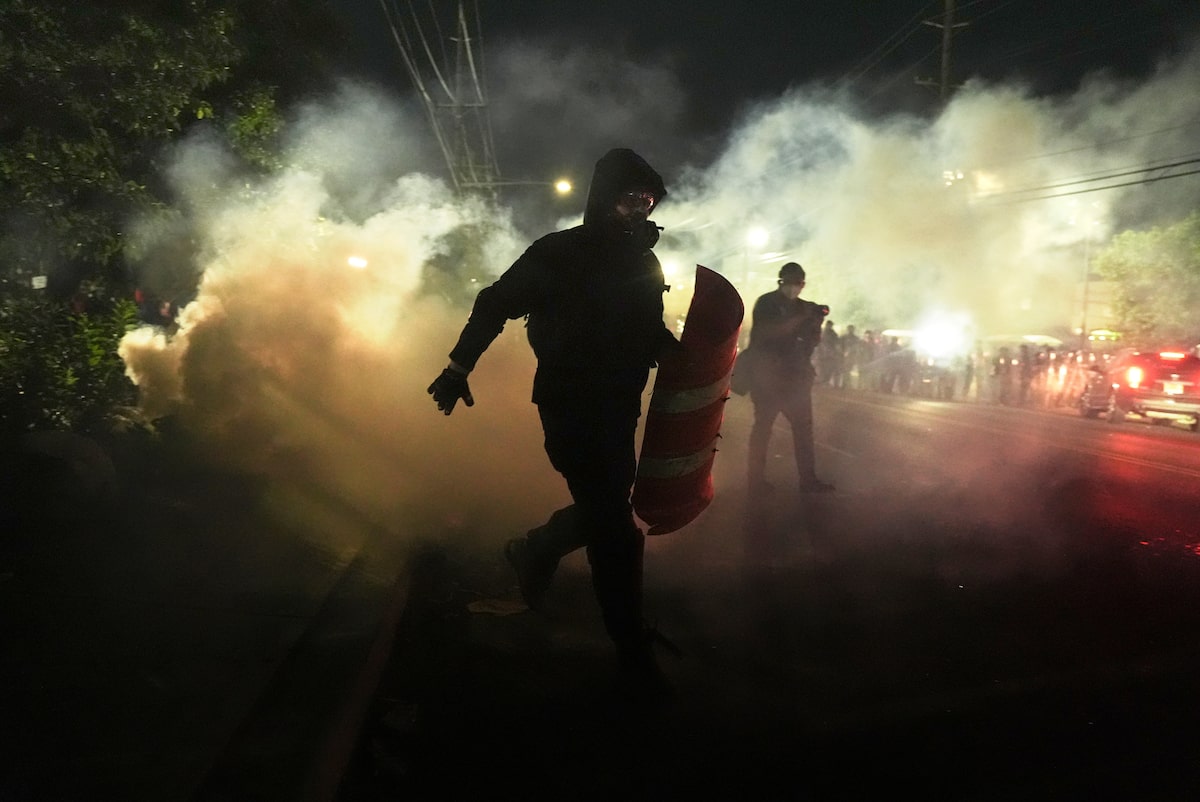
Protests in front of the 1,000-bed facility, run by GEO Group under contract to ICE, got increasingly raucous.
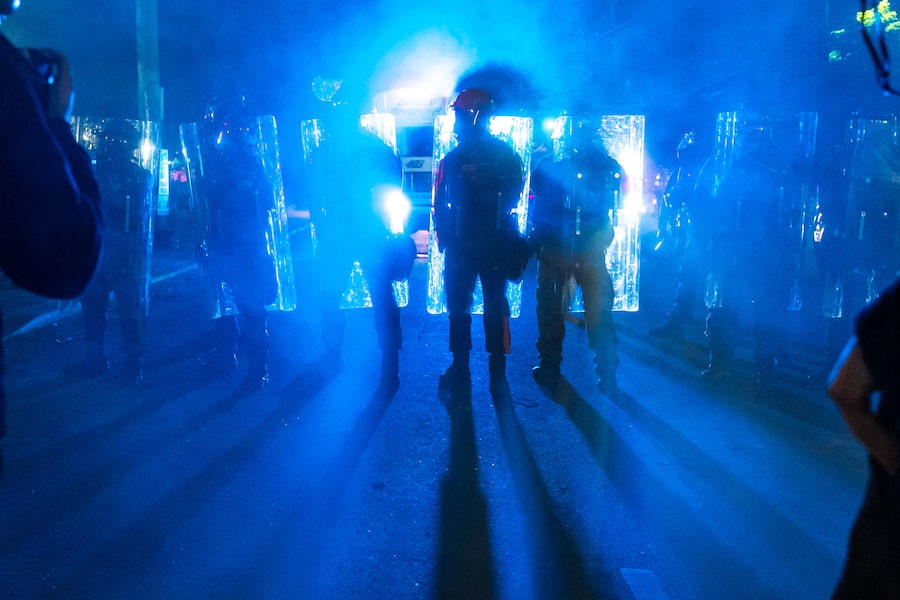
Federal police and state troopers in riot gear fought nightly battles with the protesters, pepper-spraying them and making some 90 arrests. Ultimately, hundreds of detainees were transferred out of Delaney to other facilities.
Homeland Security said in a statement that “there are NO subprime conditions or abuse at Delaney Hall” and that “ICE has higher detention standards than most U.S. prisons.”


Adam Marshall, a former infantry officer who has been volunteering to help the families of the detained for more than a year, said he was serving as a medic for protesters who had been pepper-sprayed when a group of agents pushed him to the ground, picked him up by his arms and legs and carried him inside Delaney Hall’s courtyard.
There, they scanned his face with a mobile application and held him for two hours before driving him and two other men to an underpass beneath the New Jersey Turnpike. “We were lined up against a metal wall with our hands above our heads, and to me, it looked like it was an execution,” he recalled one afternoon as he stood outside the jail. The officers told them to never come back and drove off.
One of the protests’ most persistent figures is Gabriela Soto, whose husband, Martín, was thrown in Delaney after being stopped by ICE around sunset last Feb. 1 while out buying diapers for their children.
Ms. Soto, 28, a U.S. citizen who immigrated from Peru as a child, met Martín at a family gathering during a visit to Lima when she was 19. They dated long-distance for several years until, returning from one trip to Peru, she discovered she was pregnant. Not wanting to wait the years it could take to obtain a fiancée visa, Mr. Soto crossed the U.S. border unauthorized in Arizona in late 2023 and made an asylum claim.
After four months, he was released with a court date set for 2028. The couple began building a life together in the town of Kearny, N.J., raising their toddler daughter and infant son. He found work as a cook at an Italian restaurant. She is six months pregnant with their third child.
“My husband sacrificed a lot to be here for his family, in what’s supposed to be a safe country, just to end up abducted,” Ms. Soto said.

Gabriela Soto's husband, Martín, took part in the hunger strike at Delaney.Adrian Morrow/The Globe and Mail
After she led one of the protests outside Delaney, guards summoned Mr. Soto with a proposition: If they released him, would he have his wife call off the demonstrators? He responded, “No comment,” Ms. Soto said, and they locked him up for several hours in his cell.
On her daughter’s fourth birthday, when Ms. Soto brought her to see her father, a guard confiscated a drawing the girl had made of the family and tore it up in front of her during the security screening, Ms. Soto said.
Ultimately, Mr. Soto, 30, was moved to another jail, the Elizabeth Detention Center, where he remains. In a last-ditch effort to get him out, Ms. Soto has launched a petition calling on ICE to grant him discretionary release.
Beyond the human aspect of cases such as her husband’s, she contends that the White House should understand the pragmatic calculus.
“America is nothing without its immigrants. People are coming here not to cause harm but to do better,” she said. “To make America great again, keep immigrants here.”


From New York to Los Angeles, Americans have been speaking out against ICE’s tactics and the Trump administration.Ryan Murphy/AFP via Getty Images; Justin Sullivan/Getty Images
Andy Pelcher, a lawyer with Amica, a Washington-based non-profit that handles immigration-related litigation, said the roundups are continuing apace across the country, even as they’ve had less visibility than previous surge operations in Los Angeles, Chicago and Minneapolis.
In some cases, ICE is relying on deals with local law enforcement in which police who make traffic stops, for instance, will call in immigration agents if they suspect the driver may be undocumented. In other cases, ICE arrests people who have open immigration cases when they come in to comply with regularly scheduled check-ins. And New Jersey isn’t the only place seeing street arrests.
Mr. Pelcher cited one case in a Washington suburb in which officers approached a man and his son outside their apartment building and arrested them both, even though the man had a work permit, an open asylum claim and no criminal history.
“Minneapolis very much did represent an attempt to make this front and centre in the national spotlight, and I think it backfired substantially,” Mr. Pelcher said. “The administration is taking a slightly different approach. They’re definitely not reducing the number of arrests.”
For undocumented or mixed-status families such as Aitana’s, it’s an intensification of the uncertainty they’ve lived with for decades. She remembers when her parents first explained their status in the country to her: she was five years old and there was a surge in immigration raids after the 9/11 attacks.
Today, some are limiting their exposure to ICE by spending most of their time indoors. For others, it’s not possible – nor is it any way to live in a place that has long been home.
“People have to live their lives, go to work, go to the supermarket,” she said. “My parents have both been in this country longer than they were in their home countries.”

Beyond borders: More from The Globe and Mail
The Decibel podcast
As the United States marks its 250th birthday, Canadians are deeply uncertain about what the next years will bring. John Ibbitson, senior fellow at the Munk School of Global Affairs and Public Policy, spoke with The Decibel about important moments in our historic relationship and where it could be headed. Subscribe for more episodes.
The age of ICE
How curbing immigration is hurting the U.S. economy
A Spokane church choir sings about Anne Frank and ICE
Denver lawmakers explore how to counter the force of federal agencies