At the Port of Vancouver’s operations centre, Sean Baxter likes what he sees on a large screen that displays digital mapping of ships along Burrard Inlet.
The waters in the inner harbour near downtown Vancouver are calm on this overcast autumn day, with vessels entering and exiting smoothly.
“The waterways in the port are becoming busier,” said Mr. Baxter, acting director of marine operations and harbour master at the Vancouver Fraser Port Authority, which oversees Canada’s largest port. “Co-ordination is really required to make sure that we can proactively set a schedule.”
Scheduling transpacific commerce is becoming increasingly important, especially during a period of trade uncertainty when U.S. president-elect Donald Trump has announced plans to impose 25-per-cent tariffs on all goods from Canada and Mexico entering the United States.
Over the past year, the Port of Vancouver has been stepping up efforts to shed its laggard image and become a world-class operation. The goal is to help fulfill the Canadian government’s Indo-Pacific economic dreams and position Canada as the gateway to greater transpacific trade over the long term, even as political tensions with China and India escalate in the short term.
While Canada’s largest trade relationship overall is with the U.S. by far, China is the number one trading partner for goods handled at the Port of Vancouver.

Sean Baxter, acting director of marine operations and harbour master at the Vancouver Fraser Port Authority, which oversees Canada’s largest port, on Oct. 21.

A worker at the Port of Vancouver's operations hub oversees a wall of TV monitors showing live feed cameras at various points around the port.Jesse Winter/The Globe and Mail
From the port’s operations centre, which is open 24/7, an active traffic management project that includes digital monitoring of marine activity is gearing up for what the port forecasts will be record-high shipments across the Pacific Ocean in the years ahead.
Along Burrard Inlet, the port has 23 major terminals. Cargo imports and exports also move from areas nearby, including terminals in Delta, B.C., located about 30 kilometres south of Vancouver.
The port recently expanded its scheduling system for keeping tabs on marine traffic, part of efforts to prevent the sprawling operations from being mired in inefficiency.
The stakes are high, with trade at West Coast ports being a crucial part of the economic health of British Columbia and with the ripple effects felt across Canada.
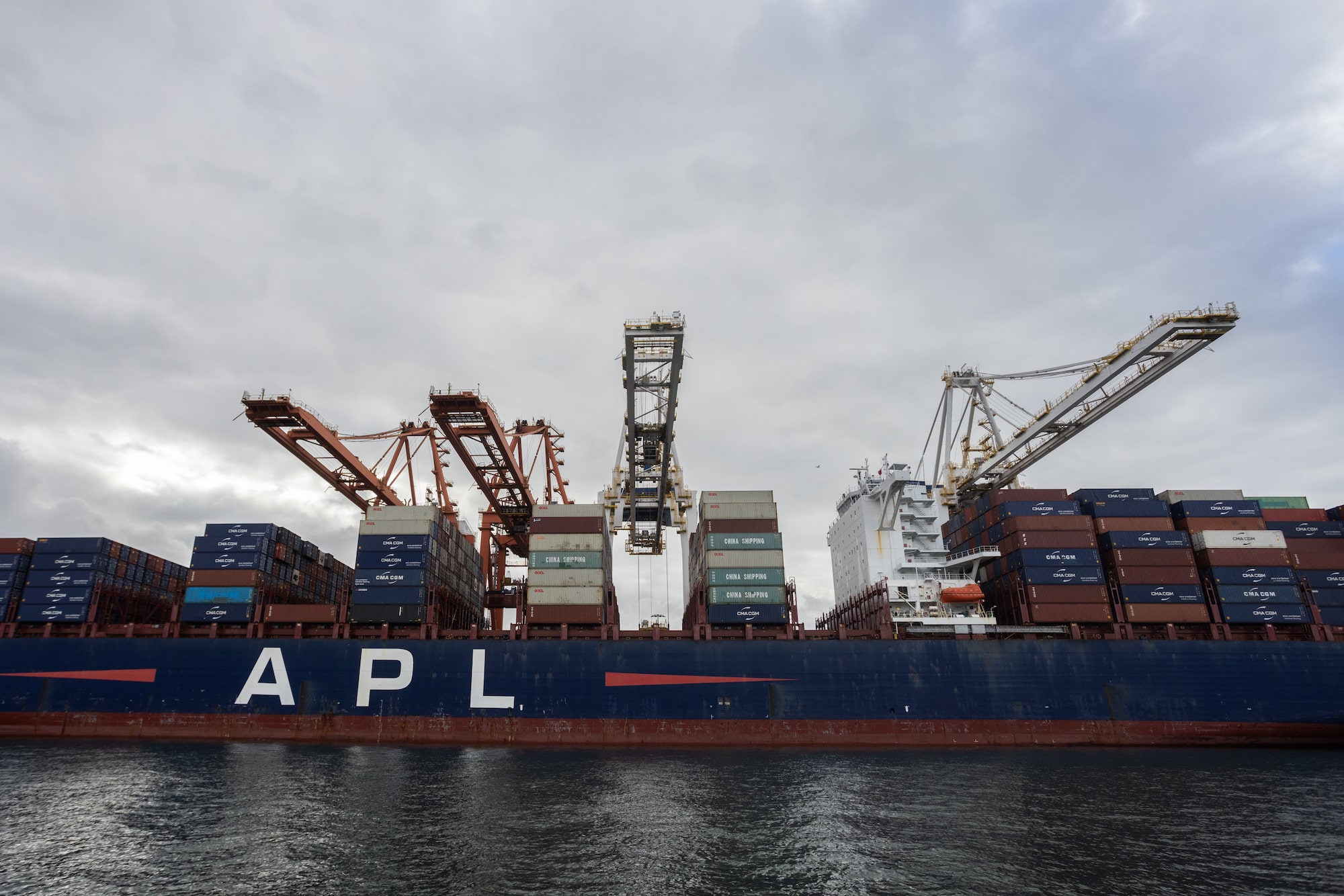
Various types of international trade, including at Canadian ports and along the Windsor-Detroit trucking corridor, represent two-thirds of Canada’s gross domestic product.
Exports alone support about one in six Canadian jobs, according to Mary Ng, the federal Minister of Export Promotion, International Trade and Economic Development.
Mr. Trump said he would slap U.S. tariffs on all goods imported from Canada and Mexico soon after he takes office in January, warning that the levies would stay in place until the two countries crack down on drugs and illegal immigrants. He telegraphed his intentions during the U.S. election campaign, but trade experts originally thought the tariffs would be closer to 10 per cent instead of his announcement that proposes 25 per cent.
“The recent election of Donald Trump, the prospect of substantial new tariffs and an ‘America First’ attitude will bring added risk and headwinds to our economy,” Greater Vancouver Board of Trade president Bridgitte Anderson cautioned in a letter, dated Nov. 7, to federal Labour Minister Steven MacKinnon.
The board of trade’s “port shutdown calculator” displays an electronic tally of the value of trade disrupted on the West Coast, rising each second whenever there is a strike or lockout. The calculator showed that $8-billion of cargo had been affected at B.C. ports during a 10-day lockout in November of about 730 unionized dock supervisors, based on an estimated impact of $800-million a day.

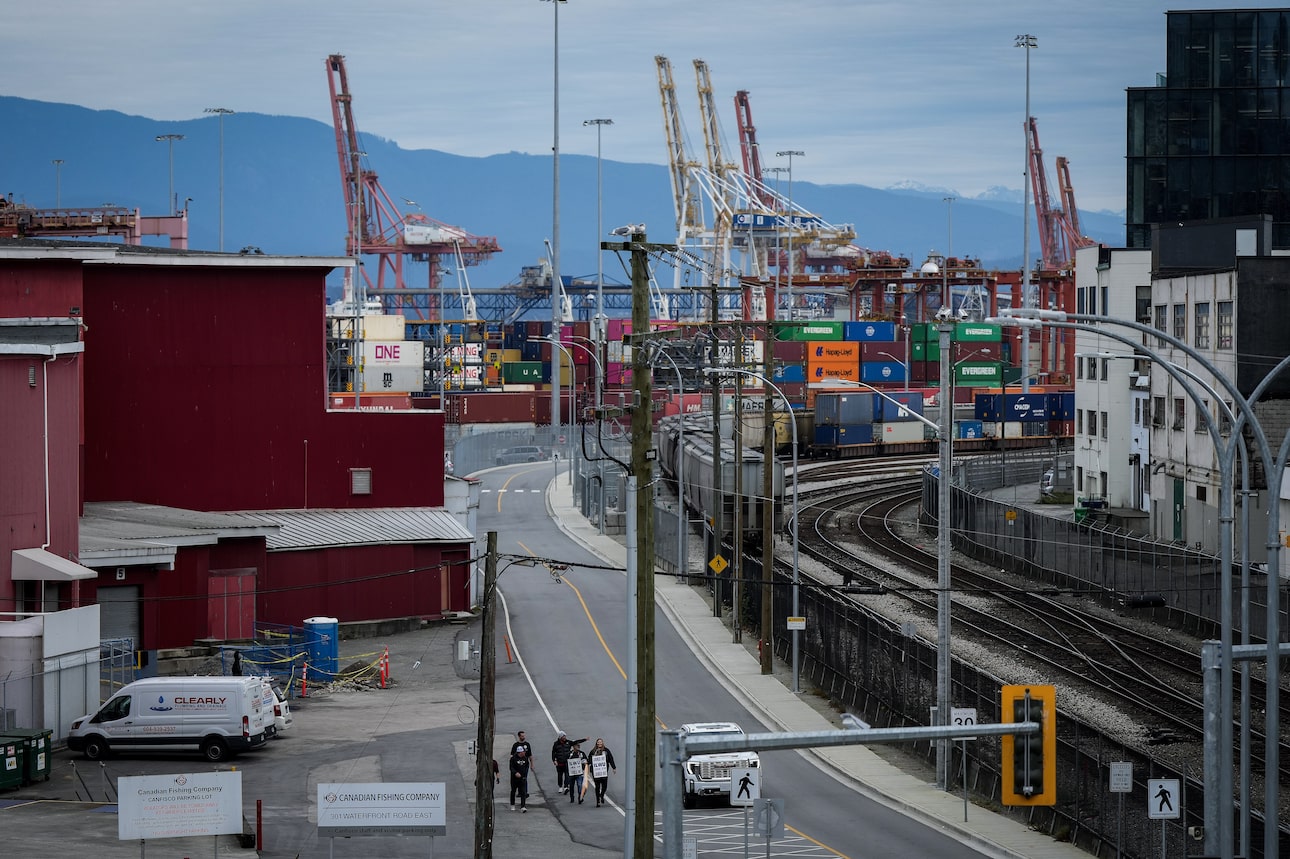
During last year’s two-week strike at B.C. ports by 7,400 rank-and-file longshore workers, the calculator showed that $10.7-billion of cargo had been disrupted. “Unfortunately, in recent years, we have been challenged in various ways to live up to that beacon of stability,” Ms. Anderson said.
Mr. MacKinnon issued a directive to impose binding arbitration to end the lockout at B.C. ports and at the Port of Montreal. He used the same method to end work stoppages that lasted several days at Canada’s two largest railways in August.
The BC Maritime Employers Association represents DP World Canada and 48 other private-sector companies such as ship owners and terminal operators. Union leaders say they are concerned about the lack of consultation over the implementation of semi-automation at DP World Canada’s Centerm container terminal along Burrard Inlet.
Veteran mediator Vince Ready and Vancouver lawyer Amanda Rogers will head an industrial inquiry commission into conflicts at B.C. ports. Their recommendations are expected next spring.Ben Nelms/The Globe and Mail
Earlier this year, the federal government appointed veteran mediator Vince Ready to head an industrial inquiry commission into conflicts at B.C. ports. Mr. Ready is chairing the two-person commission, with the other member being Vancouver lawyer Amanda Rogers. They will be making recommendations in the spring of 2025 for achieving stability at B.C. ports.
The Port of Vancouver’s diversification softened the blow of the economic impact of the November lockout, which shut down sites such as container terminals and potash docks. Exports of coal, heavy oil and bulk grain continued.
Bulk grain was still exported overseas, in accordance with the Canada Labour Code. Under the code, grain is deemed essential and must be loaded on ships through stevedoring companies at the docks, although the rule doesn’t apply to workers at grain terminals. About 650 unionized employees at Vancouver grain terminals went on strike for four days in September.
A coal export facility, operated by Westshore Terminals Investment Corp. in Delta, kept running during the lockout in November because Westshore has its own collective agreement.

The Aqualiberty, a Monrovia-flagged tanker ship, docks at the Westridge Marine Terminal, the terminus of the TMX pipeline in Burnaby, B.C.Jesse Winter/The Globe and Mail
Other sites that continued operating included the Westridge Marine Terminal, where tankers depart with heavy oil from the Trans Mountain Expansion Project (TMX). The first shipment of diluted bitumen from the TMX pipeline left Westridge on May 22 for its journey to China.
In six months since that first shipment, an average of 22 tankers per month departed Westridge with heavy oil from TMX, compared with an average of two per month in recent years, before the completion of the expanded pipeline.
Last year, more than 150 million tonnes of exported and imported cargo went through the Port of Vancouver, equivalent to the next five largest ports in Canada.
China, South Korea, the U.S., Japan and Taiwan were the top five countries sending products imported by Canada into the Vancouver region, based on tonnage. On the export side, the top five countries receiving Canadian goods originating from the Vancouver region were China, Japan, South Korea, India and the U.S.
“Despite ongoing economic and diplomatic challenges, it is worth noting that bilateral trade flows remain near record levels” between Canada and China, according to the University of Alberta’s China Institute think tank.
The Port of Vancouver handles nearly 80 per cent of Canada-China trade value.
The value of merchandise from China imported into Canada surged to $89.2-billion last year, or nearly eight times higher than in 2000, according to Statistics Canada. On the export side, the value of exports from Canada to China soared to $29.8-billion last year, or nine times higher than in 2000.
“The Asia-Pacific market is potentially the biggest growth market for Canada and its world trade,” said Leo Ryan, editor of trade publication Maritime Magazine.
Commodities such as potash, coal and grain fill ships destined for export to Asia, while imports such as consumer electronics and household goods arrive at container terminals.
“How we prioritize and protect our critical trade infrastructure – that has an impact on the health of our economy, opportunities for our businesses and ultimately Canadians’ quality of life,” said Pascal Chan, senior director of transportation at the Canadian Chamber of Commerce.
The federal government established the National Supply Chain Office in late 2023, with a mandate that involves co-ordinating responses to mitigate the impact of disruptions to the transportation system, whether they be work stoppages or natural disasters.

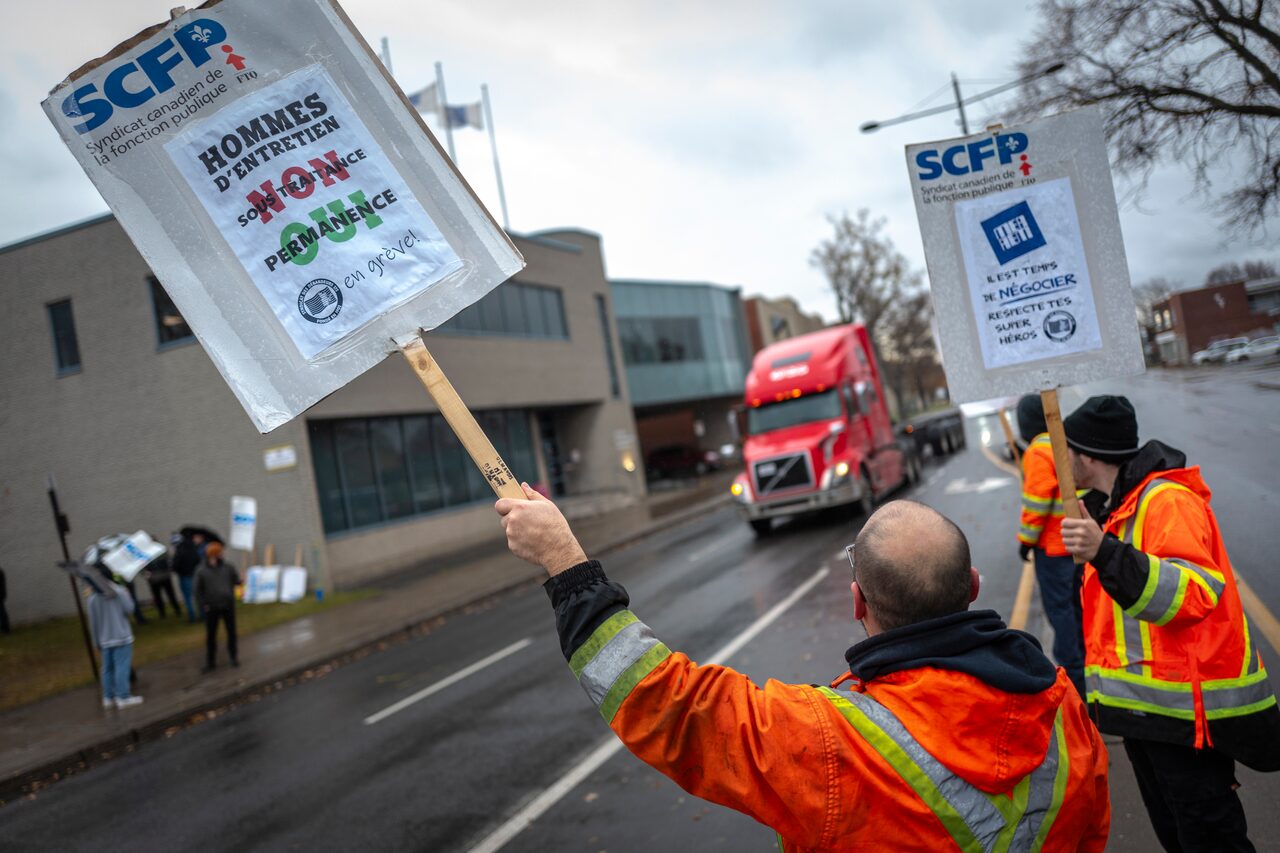
Nationally, over the past two years alone, a series of work stoppages have hit Canada’s supply chain, including last year at the St. Lawrence Seaway and this year at the Port of Montreal and four B.C. ports: Vancouver region, Prince Rupert, Nanaimo and Port Alberni.
Last year, Conservative Leader Pierre Poilievre claimed that Prime Minister Justin Trudeau’s Liberal government has fumbled the port file.
“We’ve got to speed up our ports as well, unleash our exports by making our ports easier to deal with – more friendly to the truckers who pick up and drop off our goods, remove the gatekeepers and let’s make Vancouver one of the best ports on planet Earth,” Mr. Poilievre said.
With larger vessels calling at terminals, it takes longer to unload imported products and load commodities for export, adding to turnaround times that already have given the Port of Vancouver the dubious distinction of being one of the world’s most inefficient for container shipments.
The Container Port Performance Index for 2021, compiled by the World Bank and S&P Global Market Intelligence, served as a wake-up call. The administrative index placed Vancouver in 368th spot, or third-last in the rankings, which factor in operating efficiency and turnaround times. Long Beach, Calif., placed second-last and Los Angeles was at the bottom.
Vancouver improved in the rankings for 2023, placing 356th out of the expanded list of 405 ports reviewed. In those rankings, Vancouver finished behind Mexico’s Port of Manzanillo’s 331st spot, but ahead of other North American West Coast ports: Seattle, Long Beach, Los Angeles, Oakland, Calif., Prince Rupert, B.C., and Tacoma, Wash.

The Yangshan Deep-Water Port in Hangzhou Bay, south of Shanghai, China, topped the container index rankings of the most efficient ports last year.LAM YIK FEI/The New York Times News Service
China’s Port of Yangshan, near Shanghai, topped the container index rankings of the most efficient ports last year, followed by Salalah in Oman and Cartagena in Colombia.
Vancouver Fraser Port Authority officials say the index is a narrow measure that is flawed because it fixates on container shipments. They emphasize that the Port of Vancouver is a diversified operation that handles cargo such as auto imports and bulk grain exports, while also serving as a popular destination for cruise ships.
The port authority is a federal agency that reports to Transport Minister Anita Anand.
Daniel-Robert Gooch, president of the 17-member Association of Canadian Port Authorities, said one area that Ottawa needs to revisit is financing.
Port authorities across the country want greater financial flexibility so they can make much-needed investments themselves, as well as count on Ottawa to pitch in.
“We do think there is still a federal role for infrastructure funding,” Mr. Gooch said. “You need to give the port authorities the tools to be nimbler.”
Union leaders have seen how lucrative that the global shipping industry can be, especially for transporting containers.
Drewry Shipping Consultants Ltd.’s World Container Index – the freight rate of a 40-foot container – peaked at US$10,377 in September, 2021, during the second year of the COVID-19 pandemic.
Freight rates have been volatile since then. With global demand faltering, Drewry’s index fell to less than US$1,500 in December, 2023, but recovered this year to hover around US$3,400 recently. Prices typically floated between US$1,200 and US$2,000 for several years prior to the pandemic.
The shipping industry deploys large vessels to carry containers, which are reusable steel boxes measured as 20-foot equivalent units, or TEUs. Nearly 1.8 million TEUs of exports and imports went through the Port of Vancouver in the first half of this year, up 14 per cent from the same period in 2023.


Harbour Patrol Officer Aubrey Pedersen (top) works aboard a Port of Vancouver patrol boat on Burrard Inlet in October, 2024. The port has 23 major terminals along the inlet, and cargo imports and exports also move from areas nearby, including terminals in Delta, B.C.Jesse Winter/The Globe and Mail
Leaders at the Vancouver Fraser Port Authority acknowledge the obstacles, including labour strife, but they see opportunities through changes big and small.
Peter Xotta, who became the port authority’s president in December, 2023, said incremental improvements will help speed up operations.
For example, expanding existing rail yards at the Annacis Auto Terminal will boost the capacity for importing Asian-manufactured vehicles. Road and rail infrastructure changes in the Vancouver suburb of Burnaby are expected to improve trade flows near Burrard Inlet.
Mr. Xotta replaced Robin Silvester, who stepped down from the port’s top job in June, 2023, after more than 14 years at the helm. Victor Pang, who is the port authority’s chief financial officer, filled in on an interim basis for five months as president.
For imports at the Port of Vancouver, the overwhelming majority of goods in containers from Asia are transported by truck and train eastward and stay in Canada, including shipments to Toronto and Montreal.
“Our role is unique in a Canadian context,” Mr. Xotta said. “Vancouver plays a prominent role for containers coming inbound. They’re going to where the major population centres are in Canada.”
One of the tenants in Delta is coal exporter Westshore, whose largest shareholder is B.C. billionaire Jim Pattison, with a 47-per-cent stake. Westshore is constructing new facilities to allow the company to start handling potash exports in 2026 from BHP Group Ltd.’s Jansen mine in Saskatchewan.
The big bet being placed by Mr. Xotta is the port’s container expansion strategy, which focuses on the $3.5-billion Roberts Bank Terminal 2 project near Delta.
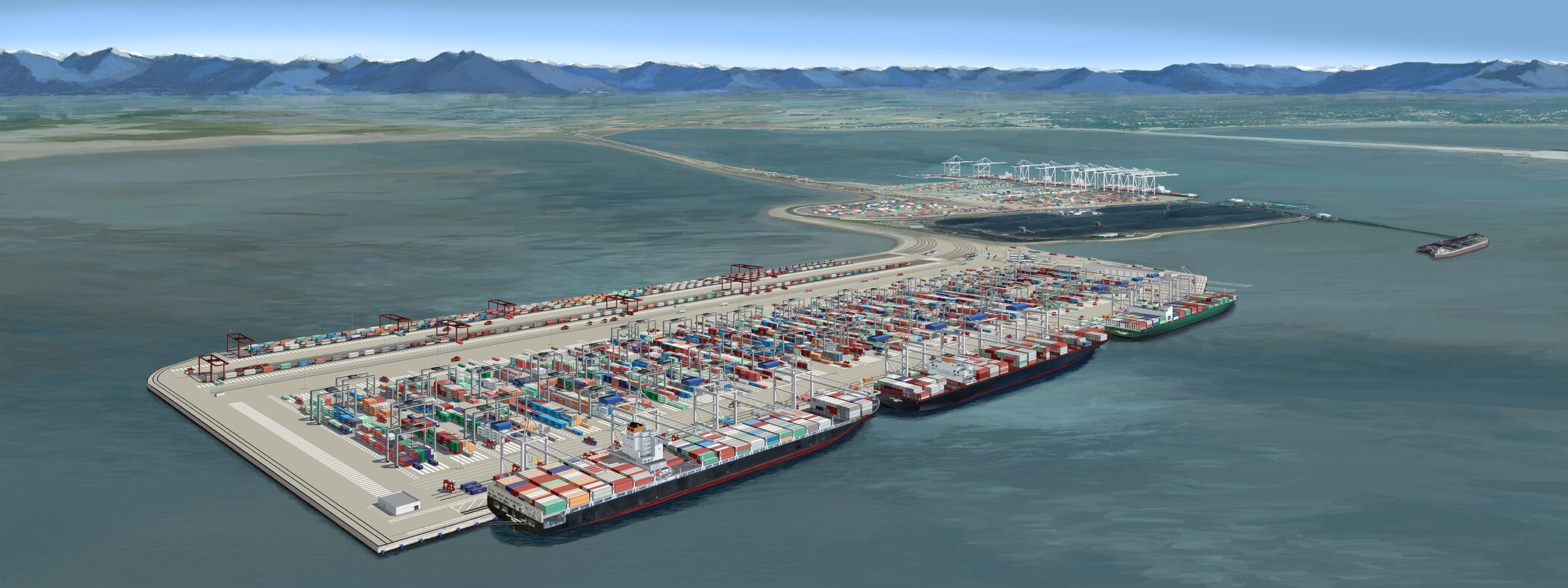
The project, which is subject to 370 legally binding conditions to comply with environmental rules, received approval last year from the federal and B.C. governments.
Environmentalists warn that the new container terminal would threaten intertidal biofilm, affecting shorebirds such as western sandpipers, and harming feeding conditions for endangered southern resident killer whales.
Ecojustice Canada, the country’s largest environmental law charity, is opposing Terminal 2 in Federal Court.
Construction of an artificial island near Delta will be required for Terminal 2. The initial phase is slated for completion by the mid-2030s, followed by incremental expansion as required to take advantage of what the port envisages will be robust trade between Canada and Asia.
The port authority has reached mutual benefit agreements with 27 Indigenous groups consenting to the new site. Upon completion, the additional container capacity could mean a jump of more than 30 per cent compared with the current combined capacity in B.C.

Tugboats push a container ship into position as it docks at a shipping terminal in the Port of Vancouver in October, 2024. China is the number one trading partner for goods handled at the Port of Vancouver.Jesse Winter/The Globe and Mail
Under Mr. Xotta’s new leadership, the port authority has taken a conciliatory approach as the landlord to tenants such as Global Container Terminals Inc. GCT already operates two container terminals in the Vancouver region, namely the Vanterm site along Burrard Inlet and the Deltaport facility in Delta.
Mr. Xotta has opened up the competition for the right to run the new container terminal so that Vancouver-based GCT and DP World Canada, whose parent is based in Dubai, are welcome to bid.
The Port of Vancouver, which handles one-third of Canada’s trade value with countries outside of North America, expects to weather the looming storm of U.S. tariffs and position itself to thrive in the long term.
“It’s absolutely an aspiration for us to be a world-class port,” Mr. Xotta said. “We have to get away from disruption, back to stability, because that’s what will help us restore our reputation and continue to grow.”