
It’s a dark and disgusting Wednesday night in the retail doldrums of late February. The Toronto sky is unloading an exasperated mix of freezing rain, sleet and snow, as if Mother Nature were trying to tell us to just stay home already. Outside feels hostile.
Inside the steamed-up windows of Hopeless Romantic Bookshop, however, the vibe is anything but. Dozens of people of all ages and persuasions, from the young and hip to the middle-aged and me, are crammed onto stools and cushions lining the rose-coloured walls of the Queen Street West boutique. We’re here for a reading party, hosted by the local chapter of global lit event collective Reading Rhythms, and we’ve each paid more than $20 to spend an evening tackling our TBR lists in companionable silence. For the better part of an hour, the only sounds punctuating the soft ambient music are paperback page flips, e-reader flicks and the occasional sigh from someone who’s just arrived at a really good part.
It gets louder, later, when we break into small groups to gush. In one nook—across from a Montreal Metros pennant signed by Rachel Reid (author of Heated Rivalry), Connor Storrie and Hudson Williams (the now-superstars of the smash Crave series the book begat)—the largest bloc enthusiastically exchange recommendations for “spicy” (read: sex-heavy) stories. In another, beside a wall display organizing books by degree of carnal depravity, a quieter, but no less fervid, quintet chats about their favourite cozy romance tropes. It’s not 100% clear what’s going on with the dragon-loving denizens of the romantasy corner, but their zealous cackles suggest the goss is good. As the party disperses, new friends swap contact details, snap selfies and pack up books—the ones they brought and, more often than not, the new ones they bought. The walk home through the slush feels warm, affirming, even hopeful.

Canadian author Rachel Reid signs books at Realms & Roses, a purveyor of romance and fantasy in Hammonds Plains, N.S., not far from where the international bestselling author lives.Paul Atwood/The Globe and Mail
Welcome to “Romancelandia,” the modern movement of and for lovers of love stories and, very possibly, the knight in shining armour publishing has been waiting for.
By some metrics, the book business is in a bad way: There are now barely 1,100 bookstores in Canada—by some counts less than half as many as existed in 2007. The number of people who read daily for pleasure has dropped by as much as 40% in the past two decades. Book publishers in Canada currently comprise a $1.7-billion-a-year business, down from more than $2 billion in 2006. Overall book sales ebb and flow, contingent on trends and Spare-style spikes, but rarely suggest the consistent growth curve of an industry on the ascent.
But there’s a pounding heart keeping things alive and thriving: romance. While comprehensive sales figures that capture all retailers, publishers and formats are notoriously difficult to tally, virtually all data sources show love stories on a tear. According to the non-profit organization BookNet Canada, sales of English-language print romance novels have grown nationally by 105% since 2020; sales of Canadian romance novels have more than quadrupled. Off the page, in the burgeoning markets for both audiobooks and e-books—which together make up more than 20% of all book sales—romance is the fastest-growing genre. Booksellers of all types are working overtime to meet demand.
“Romance is truly driving the book world,” confirms Kaitlynd Carmichael, romance category manager at Indigo, where net sales in the genre have grown by nearly 400% since 2020, taking it from the retailer’s 20th largest book category to its third. “And it just continues to grow.”
Editor’s note: A romance novel renaissance spawned in Canada
Even better: It’s a phenomenon steeped in CanCon. In a country where selling a few thousand copies constitutes a bestseller, romance authors like Toronto’s Carley Fortune (a one-time Globe and Mail editor whose books have sold three million copies in 30 languages) and Halifax’s Reid (whose six-book series of gay hockey romances had sold more than 2.5 million copies globally as of early February, barely two months after the show debuted on Crave and HBO Max) are global celebrities, topping international hit lists and hobnobbing with A-listers.
Hundreds of their compatriots have built mini empires of their own with novels set in Vancouver locker rooms, Alberta ranches and Scarborough strip malls. Authors are telling new stories in new ways and reaching new audiences, and sparking all sorts of economic offshoots in events, tourism and retail as they do so—including a new wave of romance-centric brick-and-mortar bookstores. The Great White North is experiencing a bona fide swoon boom. For books. In 2026.
You could snicker at the heaving bosoms or thrusting buttocks of it all. You could write the trend off as fluff. Or you could pay attention to an economic juggernaut that’s carrying the publishing industry on its (tautly rippled) back and satiating the real needs of a vast and fast-growing consumer base. All based on that purest of human desires: connection. In the words of Taylor Swift (whose framed vinyls grace the walls of Hopeless Romantic in the talismanic way of a patron saint): “It’s a love story, baby, just say yes.”

A shopper stocks up at Hopeless Romantic Bookshop in Toronto, the brainchild of sisters Kearston Bergeron and Serena Goodchild.SUECH AND BECK/Supplied
In some ways, the current moment has been nearly 80 years in the making.
Postwar Winnipeg might not be the wind-whipped moor or tropical island you’d traditionally choose to set a knee-trembler, but the Prairie capital is exactly where Canada’s—and, arguably, the world’s—modern infatuation with romance novels began.
Back in 1949, Richard Bonnycastle, an erstwhile adventurer, fur trader and lawyer, led the launch of a new publishing shingle called Harlequin. The initial mandate was to distribute cheap reprints of cookbooks, westerns and detective potboilers, with the odd weepy love story thrown in. After a few years of hit-and-miss success, Richard’s wife, Mary—whom he’d hired as an editor—had the shrewd idea to buy the paperback rights for British publisher Mills & Boon’s romance novels. These books were formulaic and prim, rarely featuring more than a chaste kiss, but their popularity among women was undeniable and proved to be the engine of Harlequin’s early growth.
By the 1970s, Harlequin had relocated to Toronto, acquired Mills & Boon, inked distribution deals with U.S. publishers and brought in a new management team helmed by marketing savant Larry Heisey. Under Heisey’s reign, Harlequin locked into its winning formula, backed by extensive consumer research: inexpensive, branded paperbacks, each exactly 192 pages in length. Sales flowed less through traditional booksellers (which generally upheld sniffy indifference toward the genre), and more where women were: drugstores, supermarkets, even homes, thanks to ahead-of-its-time mail-delivery subscriptions that guaranteed discretion. The books got racier. Sales erupted. Imitators proliferated. As Carol Thurston explained in her 1987 book The Romance Revolution, “It was the Heisey team’s new marketing scheme that boosted sales and profits and made Harlequin synonymous with romance in the public mind.”
Harlequin was sold to Torstar in 1981 (where it expanded aggressively and globally, penetrating 100 countries and 30-plus languages, and came to represent up to one-third of its parent’s overall revenue) and then to News Corp. in 2014, for $455 million. Today, it operates as a division of the multinational publisher HarperCollins, with headquarters in Toronto, multiple imprints under its umbrella (including Carina Press, home of Rachel Reid’s titles) and some 6.7 billion unit sales to date.
As the book business has evolved in the past eight decades, readers’ appetites for amorous escapism have only intensified: Even in the bifurcated media landscape of 2026, HarperCollins publishes more than 800 Harlequin titles annually, representing nearly 10% of all releases across the company’s 120 imprints in 15 countries. Two Harlequins are sold every second.
“Romance has long been a very big and a very important category, but this is a significant moment in time,” says Craig Swinwood, a 40-year veteran of the company who now sits as CEO of both Harlequin and HarperCollins Canada. As the guy running the company that helped bring Shane Hollander and Ilya Rozanov to the masses—and who sees the sales reports—Swinwood is in no position to argue that the Heated Rivalry phenomenon hasn’t played an outsized role in the recent rush. (If you don’t count yourself as a “Loon”—the fandom’s collective noun of choice—the adaptation of Reid’s 2019 novel has become an industry of its own, driving growth in everything from Crave parent company BCE Inc.’s subscription revenue to NHL ticket sales to rentals of certain Muskoka cottages. For most of the first quarter of 2026, all six titles in the Game Changers series—the first installment of which was published as an e-book in 2018—occupied more than half the spots on The Globe’s Canadian fiction bestseller list, and at times swept all six top slots.)
But Swinwood is emphatic that this movement runs far deeper than any single author or series. What constitutes a romance novel, who writes it, who reads it and how it finds its audience all look very different today than 70, 30 or even 10 years ago, when readers had to hunt for anything other than heteronormative Caucasian dalliances. (You’d have been hard-pressed to find a relentlessly explicit interracial gay hockey romance on the racks at Woolco back in the day.) Romance publishing has become a big-tent movement, Swinwood says, one in which people of all backgrounds and genders and proclivities are finding something to squee over.
There’s sweet romance for folks who like to keep things chaste and erotic romance for those who don’t. There are several broadly popular subgenres, like romantasy (witness A Court of Thorns and Roses author Sarah J. Maas’s 75 million global sales), Regency (see Julia Quinn’s Bridgerton series, which has sold more than 20 million copies in the U.S. alone and spawned a wildly popular Netflix series), Mafia, small-town and paranormal romance. And there are also subgenres that cater to more esoteric tastes: If you’re looking for a love story featuring a dinosaur, gargoyle, alien pirate queen, Amish vampire or Santa Claus, you can find it in a few clicks. “We are living through a massive change in the industry,” Swinwood says. “A broader array of women—and people in general—are embracing romance. People are starting to give it the credit it deserves.”
Michael Tamblyn is seeing a shift, too. As an early employee of Toronto-based Rakuten Kobo, and the company’s CEO for a decade, he has lots of love for love stories—and not just because his romance-hooked partner created a crash syllabus for him when he first joined Kobo back in 2009. Romance readers were early adopters of the e-readers, e-books and audiobooks the company trades in, and remain the most voracious cohort in its overall customer base (which grew by 7.1% in 2025, to 69.3 million registered users globally), often buying two or three titles a week. And writers in the genre have long dominated Kobo Writing Life, its self-publishing platform.
“Romance has always been a powerhouse genre for us. It’s always driven significant sales,” Tamblyn says. And while the category has seen surges in the past—the fervour surrounding e-reader smash Fifty Shades of Grey 15 years ago comes to mind—he says the recent momentum shift has been more intense and durable than anything he’s seen before.
Indeed, even niche subgenres and tropes can find ravenous audiences, from dark academia vampire romantasy (à la On Wings of Blood by Winnipeg’s Briar Boleyn) to Regency mash-ups of Ted Lasso, Bridgerton and The Hangover (that’d be Earls Trip by London, Ont.’s Jenny Holiday) to hockey love stories in literally every configuration (there now are dozens of Canadian authors in the puck-smut game). “There’s a renaissance going on right now in romance that looks different than what we’ve seen in the past: The titles are bolder, more diverse and more visible,” Tamblyn reports. “And readers are celebrating romance more openly. They’re meeting in these vibrant communities, and it is driving sales.”

Former Globe and Mail editor Carley Fortune (right) released her second bestseller, Meet Me at the Lake, in May 2023. Her books have sold three million copies globally, and her fifth novel is due out in May.JEREMY CHAN/Getty Images
Kristin Cochrane can clock the exact moment she realized something had shifted.
It was early in the summer of 2024, and she’d travelled to Calgary for an event to mark the launch of Carley Fortune’s latest, This Summer Will Be Different. As CEO of Penguin Random House Canada (PRHC), she wanted to support the third novel from Fortune, whose first two summery love stories (published under the Penguin Canada imprint) had been (and remain) indisputable smashes. (She now has production deals with both Netflix and Amazon Prime; her fifth novel, Our Perfect Storm, comes out in May.)
Toting chilled glasses of wine and hand-tied bouquets—the protagonist of the book is a florist with a yen for vinho verde—hundreds of readers listened raptly during Fortune’s chat with Wordfest CEO Shelley Youngblut, then stuck around to bask in the company of fellow enthusiasts. Few left without a stack of paperbacks. “It was an extraordinary thing to be part of,” Cochrane says. “People were there to be in community with each other. And I don’t think I’ve ever seen a higher conversion of event attendees to people buying books.”
What struck her most is how uninhibited romance lovers have become in their fandom. As a publishing lifer, she remembers the days when women felt compelled to hide romance paperbacks underneath more respectable book jackets. “It is almost like there was a lack of permission structure for people to identify as romance readers. People tended to keep it behind closed doors,” Cochrane says. That’s no longer the case, which helps to explain why PRHC has seen a compound annual growth rate of 54% for Canadian romance sales over the past five years. “That stigma and judgment has been taken away,” she continues. “These books are the port of call for people who are looking for escapism, pleasure and community. These are really important parts of how we keep society together.”
They’re also proving to be really good business. A big reason the romance industrial complex has exploded in the way it has is its ability to meet two of the most significant—and lucrative—consumer needs in the post-COVID era.
First, modern romance offers hope. Romance novels tend to occur in dreamy settings. Their characters skew decent, kind and open. Nearly every story involves people overcoming differences or obstacles to come together (sometimes in more ways than one). Bad things may happen, but there’s usually a happy ending (again, sometimes in more ways than one).
As endless horrors—pandemics, wars, genocides, climate crises—ping ceaselessly on our omnipresent screens, an increasing share of the populace is feeling anxious and overwhelmed by the state of the world. As a result, today’s consumers have developed what marketing experts Eugene Chan and Ali Gohary describe as a “deep psychological need” for comfort and cognitive release. As the pair explain in a recent essay published by The Conversation, “fantasy in the form of escapism offers them mental relief.” It’s not hard to understand the growing appeal of a product that predictably delivers respite—especially when it’s as affordable and accessible as a romance novel. It’s not worlds removed from cosmetic magnate Leonard Lauder’s “lipstick effect” economic theory, which posited that when times are rough, inexpensive little indulgences feel not only appealing but justified.
Yet it would be inaccurate to categorize romance novels as simple numbing agents. Some of the genre’s most successful writers use its inherent optimism to help readers process tough realities, not hide from them. One is Uzma Jalaluddin, a Markham, Ont.-based author who’s rocketed to international acclaim by writing contemporary riffs on classic romcoms set in Toronto suburbs. (Her highlight reel includes 2018’s Ayesha at Last, a Muslim retelling of Pride and Prejudice, and 2021’s Hana Khan Carries On, a tale of duelling restaurants that Mindy Kaling is potentially developing into a film.)

In less than 10 years, Canadian author Uzma Jalaluddin has built a loyal and diverse international fandom that spans gender, age, racial and ethnic lines.Andrea Stenson/Supplied
Like Jane Austen before her, Jalaluddin’s novels use the soothing envelope of romance to tackle gentrification, identity, addiction and income inequity. “These are serious issues, but you get a delightful love story with a bit of comedy to help the medicine go down,” she says. In less than 10 years, Jalaluddin has amassed a loyal and diverse fandom that spans gender, age, racial and ethnic lines—really, anyone looking for a gentle way to make sense of modern life. “I mean, therapy is expensive,” she quips. “Read a romance novel.”
Second, modern romance provides community—an increasingly valuable commodity amid public-health warnings of the “loneliness epidemic.” The pandemic saw a lot of locked-down folks cracking the spines of romance novels for the first time in ages (if not ever) and made many of them itchy to share the experience. A flood of romance readers began engaging with one another on online platforms like TikTok (where they congregate around #BookTok), Instagram (#Bookstagram), YouTube (#BookTube) and Goodreads (no hashtag needed) and, later, at romance-centric events, clubs, conferences, readings, parties, getaways, even cruises. Today, fans display special sprayed-edge versions of their favourite titles like family photos and carry totes emblazoned with their favourite tropes with the brio of a sports fan wearing the home team’s jersey. To the surprise of anyone who’s ever frantically stashed a bodice-ripper under a mattress, the private act of reading smut has become a source of social engagement, near-tribal community identity and pride.
This alignment slakes a very fundamental need for social belonging, according to Cindy Chan, an associate professor of marketing at the University of Toronto whose research includes the ways in which consumers spend time and money in pursuit of social connection. And for the many stakeholders who make bank on books, it represents a real opportunity. “When people are connecting over books or authors or publishing imprints, those brands and products become the vehicles for connection,” Chan says. “For those in the industry, this is a very powerful thing.”

Nowhere is the economic evolution of romance publishing more pronounced than in the relationship writers are now able to develop with their audiences. Romance authors—the savvy ones, anyway—have long fostered connections with their readers, showing up for book signings, readings, maybe the occasional convention appearance. But the one-two punch of social media and e-commerce has unlocked an entirely new value proposition to fan engagement.
“I think of all of my authors, especially romance authors, as digital entrepreneurs,” says Carly Watters, a senior literary agent at P.S. Literary who represents several writers in the category. (Her roster includes Kamloops, B.C.’s Bailey Hannah, whose bestselling Wells Ranch series of western love stories are regular BookTok darlings.) With about 80% of all books now sold via e-commerce (both print and digital formats), authors who opt in to online reader engagement often see material returns faster than you can say “link in bio.” “Social media is the way that authors can feel like they’re close to their audience,” Watters says. “That’s how they get them to show up in droves at all these big fan events with lineups around the block. It’s like magic.”
Consider the remarkable authorial trajectory of Becka Mack, a global romance star who lives in Ontario’s Niagara region. Mack wrote her first romance in her late 20s, after her therapist recommended she find a creative outlet to deal with some personal challenges. It worked. When the pandemic hit and upended her day job as a teacher, she had time to hone what has become her signature style: romantic comedies with themes of mental health and grief. “I began to think I might be good at this,” she recalls. “And I started to wonder: ‘How can I share this with other people and see if they like it, too?’” At the recommendation of an editor friend, Mack started posting her work on Wattpad, the popular Toronto-based platform for readers and writers to swap original fiction, and quickly amassed a following of fans hungry for more. In the spring of 2022, she self-published her first novel, the slow-burn hockey romance Consider Me, as an e-book.
(An important side note about self-publishing: In the past 15 years, the evolution of e-book publishing platforms like Kobo Writing Life and Amazon Kindle Direct Publishing have had a democratizing effect on publishing, making it easier for aspiring writers to independently test the waters, find audiences and make money. Romance writers dominate this space. Some of the most globally famous authors in the genre—including Fifty Shades’ E.L. James—started by self-publishing their work.)
The internet made Consider Me a sensation. First, one of Mack’s videos, featuring a few saucy paragraphs from the book, went viral. Then another. Then a stream of influential BookTok creators recommended the book. Every time a post took off, she’d see a “massive” jump in sales on her Kindle Direct Publishing dashboard. “It was crazy,” she says. “There’s no other way to describe it.” The combination of Instagram followers and sales helped draw the attention of Simon & Schuster, which signed her to a multi-book deal in 2023. She’s now written five titles in the Consider Me arena; her latest, 2025’s Breathe With Me, was an instant New York Times bestseller.
Mack’s close dialogue with her audience not only arms her with real intel about what people want and respond to; it has also given her a deep appreciation for what makes the romance community so sticky. “My DMs are constantly flooded with people telling me how my words change their lives, which might sound a little bit silly for books about hot hockey players,” she says. “But this community is about connection and feeling less alone.” Readers regularly tag her on snaps of group pilgrimages to B.C. to visit the settings of her books; a few foreign fans have told her they moved to Canada because of how it’s represented in her work. “Getting to connect with fans is amazing,” Mack says. “It’s a lovely, lovely space.”
Roland Gulliver witnessed the symbiotic nature of the romance author/romance reader relationship this past November at Ever After, a three-day convention produced by the Toronto International Festival of Authors, where he sits as artistic director and CEO. Between panels, workshops, high teas and a full-on dress-up ball, some of the most successful romance writers in the country and their fans forged real bonds—many meeting IRL for the first time. “There’s so much fluidity between being a reader and a writer of romance,” he says. “Because readers don’t judge how writers produce their work, it opens all sorts of opportunities. And because writers know that, they are very supportive of readers, many of whom are aspiring and unpublished authors themselves. It creates a real support network.” Plenty of businesses talk a good game about understanding their customers. Few do it better than smut writers.

Fans of Rachel Reid’s Game Changers series—which begat Crave’s smash hit Heated Rivalry—line up in the January cold for a sold-out book signing at Realms & Roses.Paul Atwood/The Globe and Mail
Here’s another thing you should understand about modern romance fans: They’ll show up and shell out. It’s no coincidence that romance-centric brick-and-mortar bookshops have emerged in virtually every major city in the country in the past few years, from Perfect Match in Vancouver to Realms & Roses in suburban Halifax, and more than a dozen in between. If you really want to get what gets Romancelandia going, these spaces offer a valuable window in.
At the aforementioned Hopeless Romantic, business has grown quicker than…well, you know. The store is the brainchild of sisters Kearston Bergeron and Serena Goodchild, who launched the concept in a shipping container at Toronto’s Stackt market in 2024. “It was a strategic choice to be niche and romance,” Bergeron says. “We knew the community was there.” Hopeless Romantic quickly outgrew Stackt and moved into its Queen West digs in October 2025. Earlier this year, it added a pop-up satellite in Union Station that will run through May. Further locations are a possibility. “We’re offering something that the community needs, and I would love to keep expanding that,” Bergeron says.
Hopeless Romantic’s clientele is far more diverse than you might assume. A normal day in the shop might see a shy teen buying her first romance novel, an older fan brazenly browsing the spiciest of titles, a queer couple finding the perfect nonbinary meet-cute and, believe it or not, plenty of dudes looking for love (stories). “Even the people who usually carry the most shame about it are starting to feel comfortable being open about what they like,” Bergeron says. “I think that’s really cool.” A packed calendar of events, many ticketed, ensure the community has plenty of reasons to keep coming in, including occasional book-bedazzling sessions, regular writing workshops and a “Bridgerton-inspired floral cupcake soirée” in late April. “Our goal is to give people a space to share and be together in a community with like-minded peers, and to keep removing that stigma around romance,” says Bergeron.
In Marda Loop in Calgary, you can pop into Slow Burn Books, a cozy, music-filled space crammed with books. The business’s origin story reads like the start of its own romcom: Burned-out MBA (Shannon MacNaughton) quits her corporate job to open a quaint romance-centric book shop with her sister (Nicola MacNaughton), who’d noted similar retail models taking off in Australia and the U.S. Since opening in the spring of 2023, Slow Burn has relocated to a bigger space and started hosting regular off-site book club meetings, author signings and midnight release parties. In February, it organized a reading retreat in Mexico, wherein a group of strangers spent a week reading steamy books on the beach.
Shannon is endlessly impressed by how open the romance community is and how deep they’ll go to feed their fandom. “A lot of our customers buy books as trophies,” she says, pointing to a trend of readers purchasing physical copies of favourites they’ve already read on Kindle or Kobo, or doubling down to collect hardcover, foreign and sprayed-edge editions of the same title. “It’s a source of pride to have these beautiful novels on display,” she says. “It’s part of their identity.” Customers generally leave Slow Burn feeling refreshed, nourished and, often, that they’re part of something. “I think we’ve been successful in giving people a space to express themselves, in person, in a community,” Shannon says. “Yes, doing that creates customers and loyalty, but it also creates friends. That’s the best part.”
In Montreal’s Mile End neighbourhood, you’ll find Joie de livres, a cheerful plum-façaded bilingual bookshop-slash-café-slash-bar specializing in genre fiction, with romance front and centre. Joie de livres is owned by philanthropists Claire and Sylvie Trottier (daughters of Matrox multimillionaire Lorne), who opened the store as a deliberate counterbalance to the heaviness of their work fighting climate change and income inequality. “We love these books, we think you should be proud to read these books, and we want to celebrate these books and the communities that love them,” Claire says. After securing a location, hiring directors with bookstore and hospitality expertise, and undergoing meticulous renovations, the shop opened in the summer of 2025.

Joie de livres in Montreal was created by Claire and Sylvie Trottier. March 31, 2026Supplied
Joie de livres is built for lingering: Shoppers who come to pick up a new paperback often find themselves sitting on a comfy chair to read a chapter over a sandwich; passersby looking for quick coffee tend to leave with a book or two. A rich complement of events has made the store a de facto community hub, having hosted—among other things—wildly popular weekly Heated Rivalry rewatch parties (a.k.a. reheats) and monthly Sapphic Saturday events, where fans of women-loving-women books gather over specialty cocktails and tarot readings.
As a business, every decision is meant to position amusements like romance novels as valid and important: The store’s unofficial motto is “take joy seriously.” (Claire has a tattoo of those very words; Sylvie is getting one.) “That notion that things have to be grim to have serious merit—we reject that categorically,” says Claire. “The world is tough, and we don’t shy away from that,” Sylvie adds. “But you also need to take time for yourself and celebrate joy. That’s not something to feel guilty about. It’s something to really lean into.”
Yes, a lot of what’s for sale in all these shops is stuff you can get on Amazon, maybe for cheaper. That’s not what it’s about. In an age of doom and gloom, they peddle joy. In a time of fragmented attention, they offer slow focus. In a world that feels increasingly transactional, they encourage real relationships. In an era of ruthless commodification, they cater to community as much as commerce. (But yes, their proprietors would appreciate it if you’d buy some books, please.)
None of this is to suggest the business of romance novels will all be happy-ever-after.
Selling books has never been the easiest or highest-margin form of making money. Every potential book-reader continues to have an entire internet’s worth of entertainment in their pockets, and TikTok may still rule the day. Then, of course, there’s AI, which is already infiltrating some of the less reputable corners of the business and which may yet upend the entire industry.
But for now, at least, there’s little evidence that the love-story love-in will end any time soon. Romance factors largely in the growth plans of every bookseller and publisher consulted for this piece. Most are working on ways to expand the audience further and to engage existing fans more deeply.
That’s certainly true at Indigo, where a typical shopper is now as likely to be greeted by the most recent swoony BookTok smash as the latest Booker winner. “Every single person here, from the executives to the marketing team to the people who work on the back end to the people working in the stores, is committed to romance,” says Kaitlynd Carmichael.
Indeed, there are no longer many people in publishing that don’t get the value of the genre and its loyal fanbase. In Carmichael’s view, it’s high time everyone else got the message, too. “The romance industry is a powerhouse, and it should absolutely be taken seriously from a business point of view,” she says. Fittingly, she invokes the 2001 romcom Legally Blonde (based on the Amanda Brown novel of the same name, natch) to underline her point: “Underestimating romance readers is a massive mistake—it’s like underestimating Elle Woods when she said she was going to go to Harvard.”
Bae Street reading list: Five Canadian office (-adjacent) romances to warm your cubicle

PM’s wife’s assistant + PM’s bodyguard = love, Ottawa-style
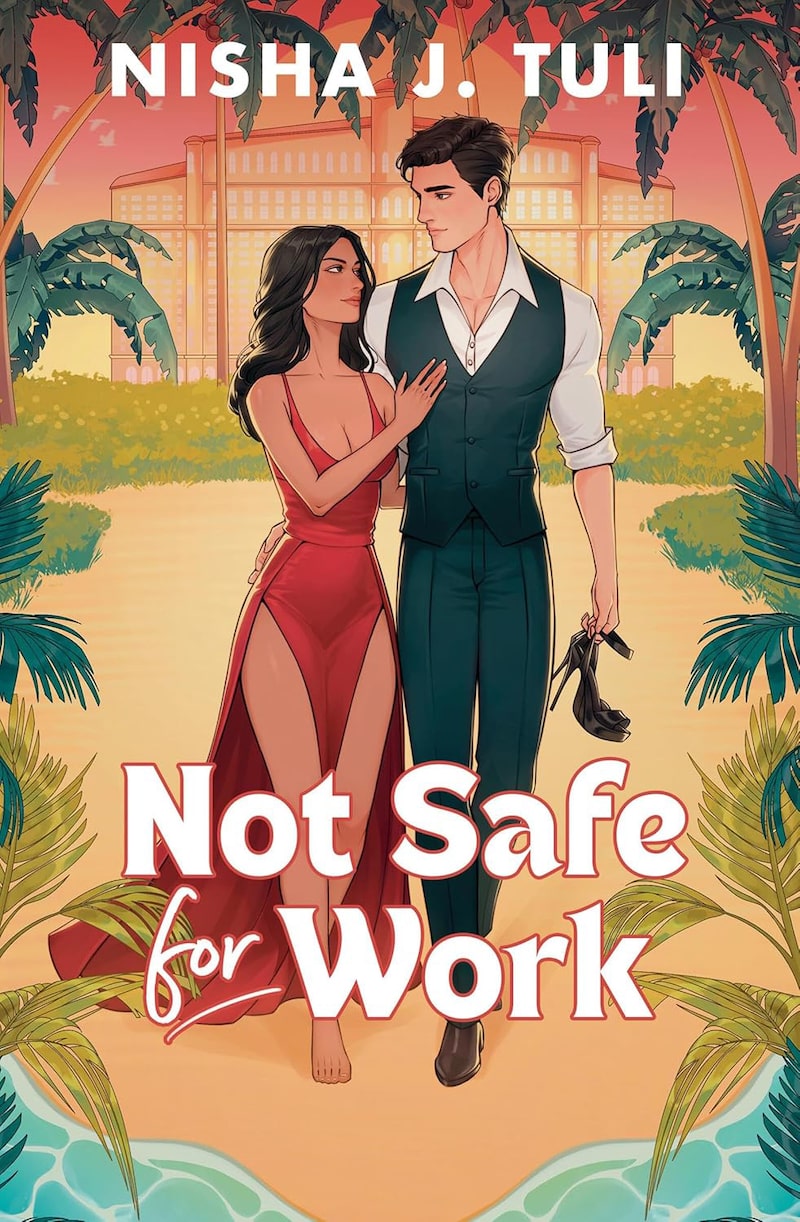
Ambitious engineer + nepo-baby rival = forced-proximity fervour
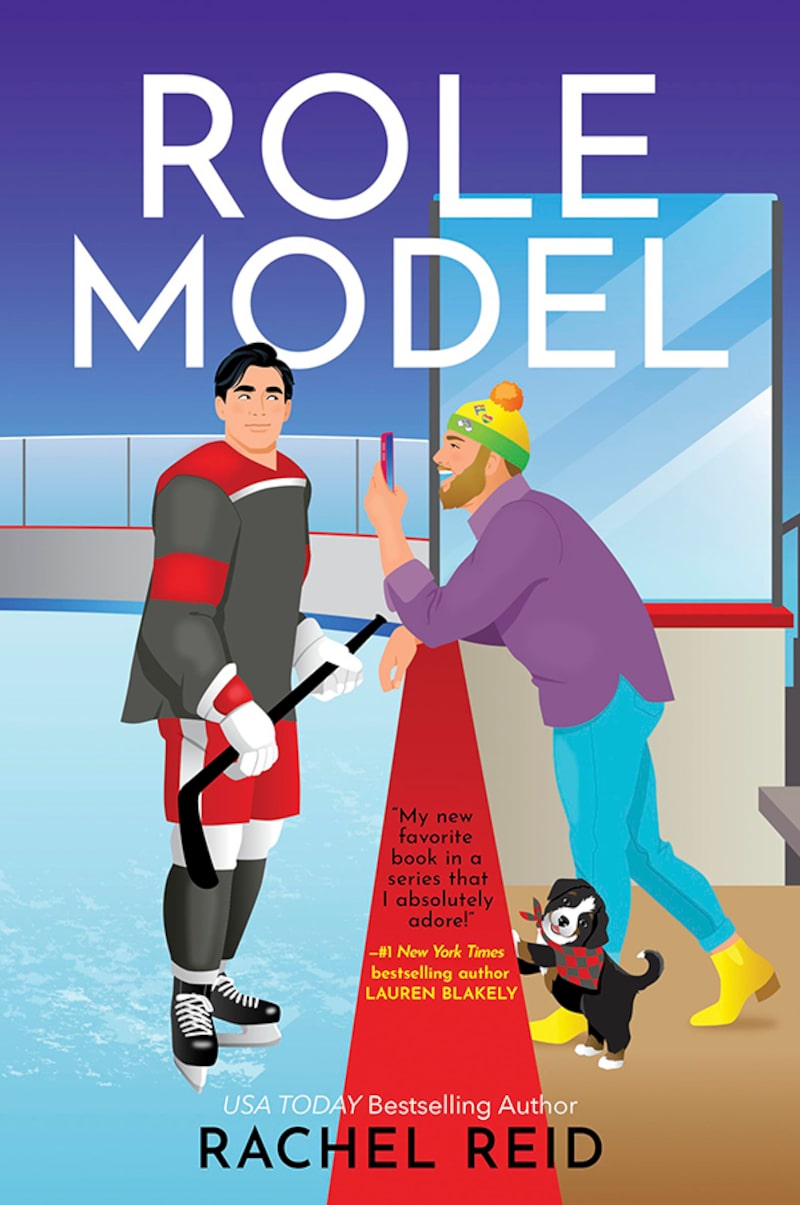
Prickly pro hockey player + peppy social media manager = heated revelry
“One of the most beautiful queer love stories ever written.” —Kaitlynd Carmichael, romance category manager at Indigo

Workaholic ladder-climber + burnt-out megastar = secret-identity slow burn
“It’s a love story between a super career-focused high-powered lawyer and an undercover K-Pop star. It’s so fun.” —Claire Trottier, co-owner of Joie de livres in Montreal

Fed-up office admin + helpful colleague = heartwarming HR nightmare
“A woman frustrated by her co-workers writes what she actually thinks of them in white text at the bottom of her emails. When she forgets to change the colour, she gets called into HR and meets a new love interest.” —Shannon MacNaughton, Slow Burn Books in Calgary