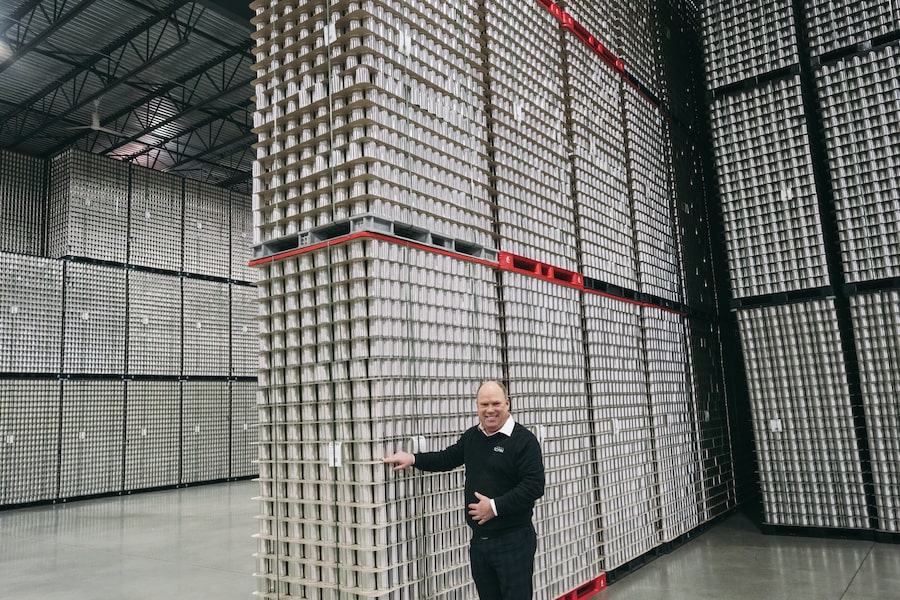

James McInnes has pressed pause on U.S. expansion plans for his London, Ont.-based Odd Burger Corp. ODD-X
The move, which was two years in the making and already included 60 U.S. franchise sales, would have been propped up by a $2-million capital raise by the vegan fast-food company.
Instead, that money will go toward fast-tracking a new manufacturing facility in Canada and fulfilling growing demand by restaurants and grocery giants that want to buy domestic, said Mr. McInnes, Odd Burger’s chief executive officer.

James McInnes, CEO of London, Ont.-based Odd Burger, is pausing the company's U.S. expansion plans and is instead redirecting the funds to grow its Canadian operations.Geoff Robins/The Globe and Mail
It’s a small example of U.S. President Donald Trump’s tariffs backfiring. But it’s not the only one. Odd Burger is one of a growing number of Canadian companies – big and small – betting on increasing domestic sales rather than relying on the U.S. market.
The ambition behind Mr. Trump’s beloved tariffs is crystal clear: Lure manufacturers to the United States with promises such as low corporate tax rates and access to its gargantuan consumer market.
Early indicators showed the President’s rhetoric might be working. Nearly half of Canadian businesses surveyed by accounting firm KPMG in January said they planned to shift production or investments to the U.S. to mitigate tariffs. A number of companies appear to be following through on those plans.
But out of the panic, another more buoying trend is emerging.
Some Canadian companies are seeing the opposite of Mr. Trump’s wishes come true, as governments, corporations and consumers here wake up to the necessity of building capacity and economic autonomy at home.
Mr. Trump’s latest round of tariff blows may have been lighter than anticipated for some sectors of Canada’s economy, but it hasn’t slowed a patriotic push to shift our dollars away from our biggest trading partner.
Experts warn the path forward won’t be easy. They say Canada’s waning manufacturing base and barriers to efficiency demand that our political leaders streamline regulatory requirements to spur investment.
But, for now, many Canadian companies say they’re already taking steps to grow at home, where business is booming, and they have Mr. Trump to thank.

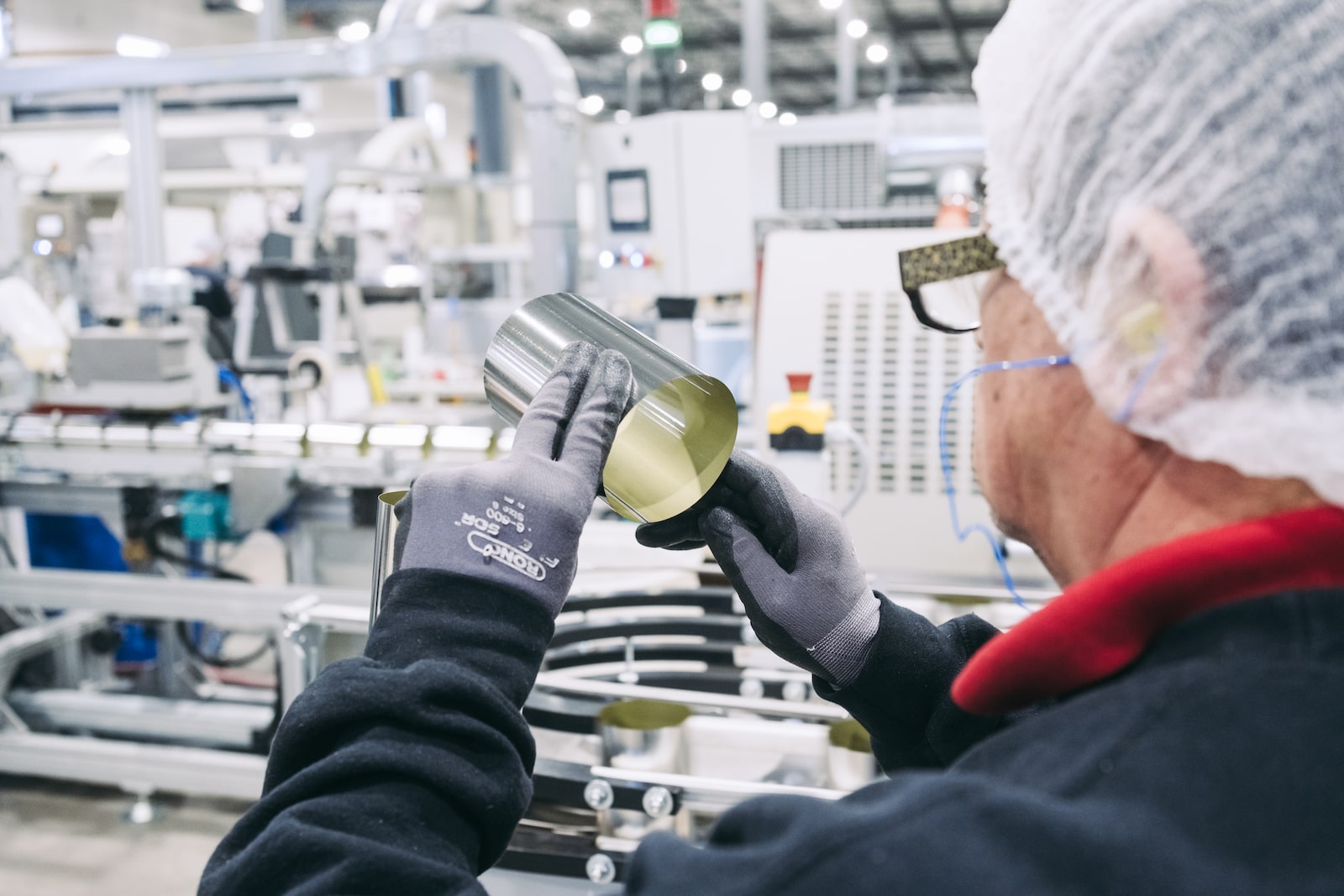
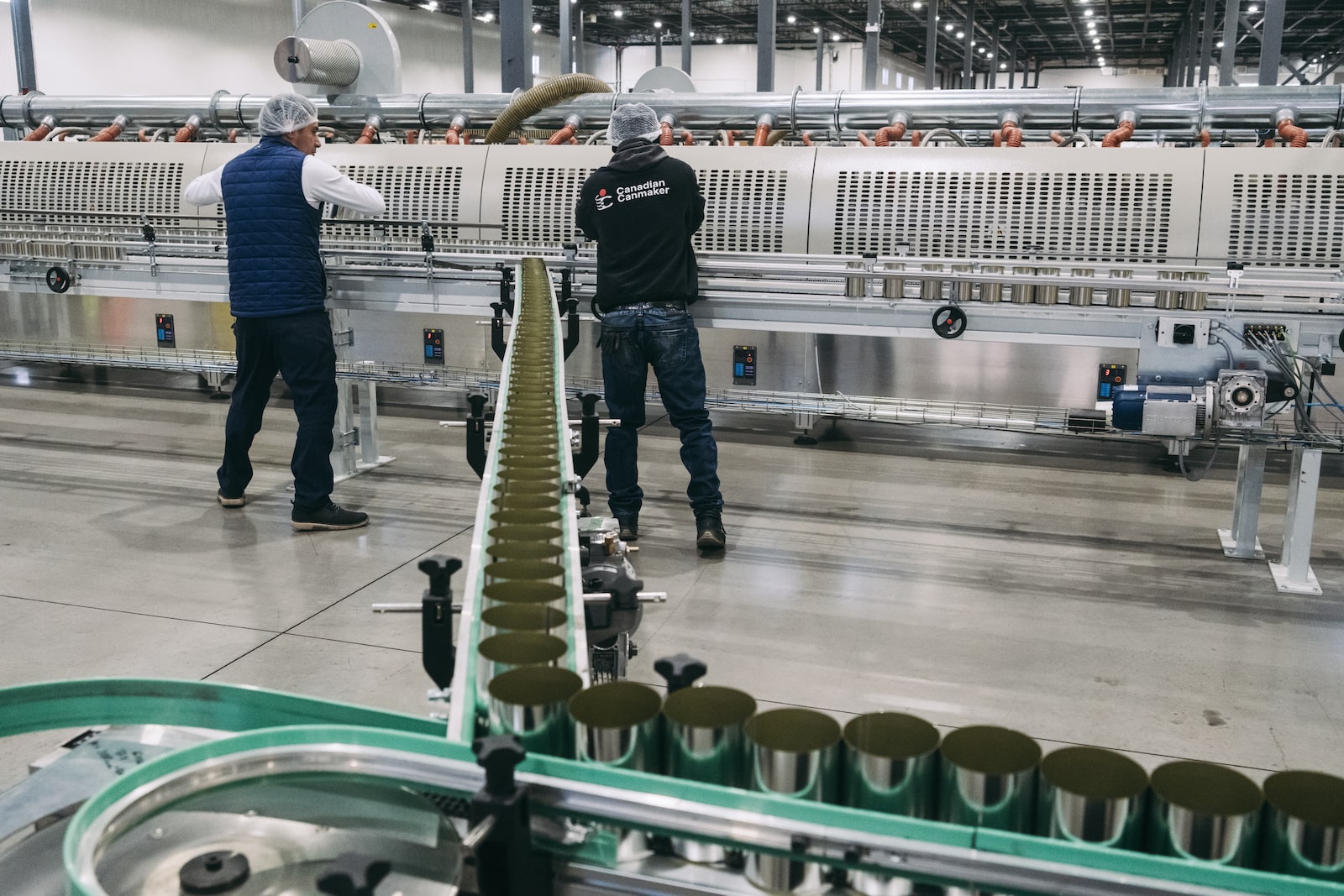

At Ideal Can Inc. in Saint-Apollinaire, Que., Erick Vachon has tripled the number of shifts at his manufacturing plant from one to three since Mr. Trump’s trade war began in March, owing to strong demand for his Canadian-made cans for food, industrial uses and aerosol. The Ideal Can president and co-founder has more than doubled his production, from approximately 200 million to 500 million cans a year.
Unexpectedly, tariffs have led to better prices for Mr. Vachon, because he no longer has to go through American distributors and he deals directly with overseas steel mills.
He has also finally been able to enter discussions with Hamilton-based steel maker ArcelorMittal Dofasco, the Canadian arm of global giant ArcelorMittal SA, which he has struggled to work with in the past because the quantity of steel he needed was minuscule compared to ArcelorMittal Dofasco’s U.S. buyers.
Operating out of a brand-new manufacturing facility that opened in 2023, Ideal Can wants to increase its number of production lines. It’s currently running three lines, with two more ordered and the capacity for up to seven. Mr. Vachon said U.S. tariffs have put him in a position to fulfill demand similar to what he saw during the COVID-19 pandemic, when international supply chains were disrupted.
With his new facility already open when Mr. Trump’s trade war began, Mr. Vachon said the timing couldn’t have been better for him to up Ideal Can’s capacity.
“Everything is changed,” Mr. Vachon said.

Mr. Vachon and his son, Jean-Sébastien Vachon, vice-president of Ideal Can, walk through the company's new manufacturing facility, which opened in 2023. Mr. Vachon says the tariffs have unexpectedly led to better prices, since he now deals directly with overseas mills rather than going though American distributors.Renaud Philippe/The Globe and Mail
Similarly, Anil Abrol is also enjoying a well-timed boost to his Canadian manufacturing capacity. The CEO and founder of Eco Guardian Inc., a compostable packaging company headquartered in Newmarket, Ont., plans to open his first domestic manufacturing facility at the end of 2025.
Currently, Mr. Abrol said many Canadian companies buy their single-use packaging from the U.S., which means they’re likely subject to Canada’s retaliatory tariffs on the country.
Soon, he’ll be able to offer them a more sustainable, more Canadian alternative. Mr. Abrol said major players in the food and beverage industry have already reached out to him since he announced the new facility, which will be in Aurora, Ont., more than a month ago.
He actually moved the announcement up, Mr. Abrol added, and is aiming to open the facility at full capacity immediately, instead of easing into it at a lower capacity as he had planned. Planning for the facility began a year and a half ago, but its urgency has increased given the tariffs.
“In any challenge, there are different opportunities,” Mr. Abrol said.
Brad Bourne, president of Firan Technology Group Corp. FTG-T, is also searching for those opportunities to grow within Canada. The aerospace and military electronics firm has 10 sites worldwide: three in Canada, five in the U.S. and two in China.



He said he now thinks of the U.S. as a separate market, isolated from the rest of the world.
“There’s a wall going up and either you’re inside the wall or outside the wall, and if you’re inside the wall, try to do everything inside the wall,” he said.
He’s not looking to stop his U.S. operations; it’s where the majority of his sales come from. But he wants FTG’s facilities there to function independently, and that means making some small adjustments.
“I have about $5-million of stuff I am building in the U.S. that goes to the rest of the world and I’m trying to move that outside the wall right now, because it’s got to be on the right side of the wall for where the customers are,” he said.
That $5-million worth of revenue in the form of commercial aerospace product is in the process of being moved to one of FTG’s Toronto sites, Mr. Bourne said. He also plans to hire additional salespeople in Canada and Europe to help the company pursue growth in those markets.
Even giants such as Montreal-based Transcontinental Inc. TCL-A-T have alluded to taking advantage of opportunities within Canada amidst Mr. Trump’s tariffs. In a recent conference call, CEO Thomas Gaston-Louis Morin said the printing, packaging and media company was actively looking at acquisitions within Canada and its in-store marketing branch, in response to a question about increasing potential for mergers and acquisitions within Canada, owing to tariffs.
Despite these pockets of opportunity, some experts warn tariffs will deter business spending and delay Canadian economic independence.
Beverly Lapham, an economics professor from Queen’s University, said she’s “not optimistic” the Trump tariffs will cause Canadian firms to shift their investments away from the U.S. in any sizable amount, especially in the short-to-medium-term.
Higher prices caused by U.S. tariffs and Canadian retaliatory tariffs, and the potential increased costs of selling to a smaller market, will likely discourage Canadian investment, she said.
Businesses typically invest over the long term and outlays are sensitive to uncertainty. Access to the U.S. is now in flux and the macro environment is weak, said Nicholas Li, an associate professor of economics at Toronto Metropolitan University. He, too, is skeptical that businesses will commit to large and irreversible investments in Canadian plants to produce items for a domestic market alone.
Decisions being made by major international companies reflect Mr. Li’s concerns. In March, a report by Reuters detailed how several giants, including Honda Motor Co. Ltd. HNDAF, Hyundai Motor Co. HYMTF, LVMH and Samsung Electronics Co. Ltd. SSNLF, were considering moving their manufacturing to the U.S.
And in Canada, Quebec-based transportation and logistics leader TFI International Inc. TFII-T, announced plans to move its headquarters to the U.S., before quickly backpedalling owing to investor feedback. In a move that experts told The Globe and Mail was likely connected to Canada’s heightened sense of nationalism, the freight operator retracted its decision after major shareholder Caisse de dépôt et placement du Québec expressed its distaste for the relocation.
Spurring business investment is possible, but it will require major policy shifts, said Stéfane Marion, chief economist and strategist at the National Bank of Canada. This means slashing regulatory red tape, and it could include delaying decarbonization targets in exchange for manufacturing sector growth, and investing more in defence, he said.
Since 2005, Canada’s per-capita manufacturing output – a key proxy for growth – has contracted by 30 per cent relative to the country’s population, according to a December report from the bank.
The U.S. manufacturing sector has grown by 10 per cent in real terms since 2018, while Canada’s sector shrunk by 5 per cent. Manufacturing made up 9 per cent of Canada’s gross domestic product in 2024, the lowest proportion in the Group of Seven industrialized countries.
To reverse this erosion, Mr. Marion said, Ottawa should begin by reviewing the red tape dampening business spending. According to National Bank’s calculation, the number of regulatory requirements in Canada increased by more than a third between 2006 and 2021, and the bank said that resulted in a 9 per cent fall in business investment.
Competing with imports is another challenge Canadian companies regularly face at home.
For years, the growth strategy for many Canadian companies has been to expand in the U.S., said Jonathan O’Hara, an international trade lawyer with McMillan LLP. But many are now turning their attention back to the Canadian market, believing they can pay their bills if they scoop up more customers back home.
“In the past decade or two, some are realizing, they have ceded a lot of their market share to offshore imports. For example, from China or Vietnam,” Mr. O’Hara said.
In trade law, there is a very potent mechanism to deal with that: trade remedy laws, also known as anti-dumping laws. These are measures designed to prevent foreign companies from flooding the Canadian market with unfairly low-priced goods.
Canadian businesses may have not bothered to enforce their rights in this area in the past because they were too busy pushing into the American market, but the Trump administration’s tariffs have changed that.
“In the next year, we are going to see – almost for sure – an unprecedented surge in unfair trade cases against China, I think,” said Mr. O’Hara, who regularly handles these types of actions.
In March, Pierre Cléroux, vice-president of research and chief economist at the Business Development Bank of Canada, told The Globe that if every Canadian household redirected $25 per week from foreign products to Canadian ones, it would boost GDP by 0.7 per cent and create 60,000 jobs.
A bigger emphasis on the Canadian market – and other non-U.S. ones – is exactly what some politicians are touting in response to Mr. Trump’s trade actions.
In late March, Prime Minister Mark Carney said Canada must fundamentally reshape its economy to become less reliant on the U.S.

At an election campaign stop in Windsor in March, Prime Minister Mark Carney promised an “all-in-Canada” manufacturing network for car parts, as part of the effort to become less reliant on the U.S.Blair Gable/Reuters
At an election campaign stop in Windsor, Ont., the Liberal leader promised an “all-in-Canada” manufacturing network for car parts. Then, in Calgary, he pledged to supercharge Canada’s energy sector, proposing a new federal office to fast-track project reviews. Conservative Leader Pierre Poilievre has proposed a similar office, but for all regulatory approvals across all levels of government.
Alberta Premier Danielle Smith has been vocal about her interest in diversifying the province’s crude oil export market, which saw around 97 per cent of shipments abroad go to the U.S. in 2023, according to the Canada Energy Regulator.
Challenges aside, Canadian business owners are finding opportunity in uncertainty and latching onto it. It’s not that Odd Burger will never grow into the U.S., Mr. McInnes said, it just won’t be happening any time soon.
“It’s just the uncertainty of the economics. We have no idea what the tariffs will do.”
With files from Robyn Doolittle