
President Donald Trump is not interested in building relationships, negotiation experts say. For him, it's all about winning.Alex Brandon/The Associated Press
The practice of negotiation hasn’t changed much over the course of human history. We have haggled, cajoled, given and taken for centuries. In this sense, U.S. President Donald Trump represents an established archetype within the academic study of negotiation. You could call him a transactional negotiator, a hard bargainer or a “hard-core toughie” – someone who is highly competitive, averse to concessions, exploits weaknesses and has little to no interest in building relationships. Winning is what matters.
Unfortunately, this knowledge does not make him easier to deal with. Even experts can be perplexed. “I make no claims of knowing how to do it,” said Richard Shell, a professor at the Wharton School of the University of Pennsylvania who teaches negotiation.
Mr. Trump is the most important negotiator in the world right now. He is disrupting decades of free-trade practices with his unshakable belief in tariffs, imperilling industries, economies and relationships with allies. For months, some countries have engaged with the Trump administration to get him to back down and prevent widespread economic damage. Now that Mr. Trump has put so-called retaliatory tariffs on dozens of countries, those efforts are intensifying.
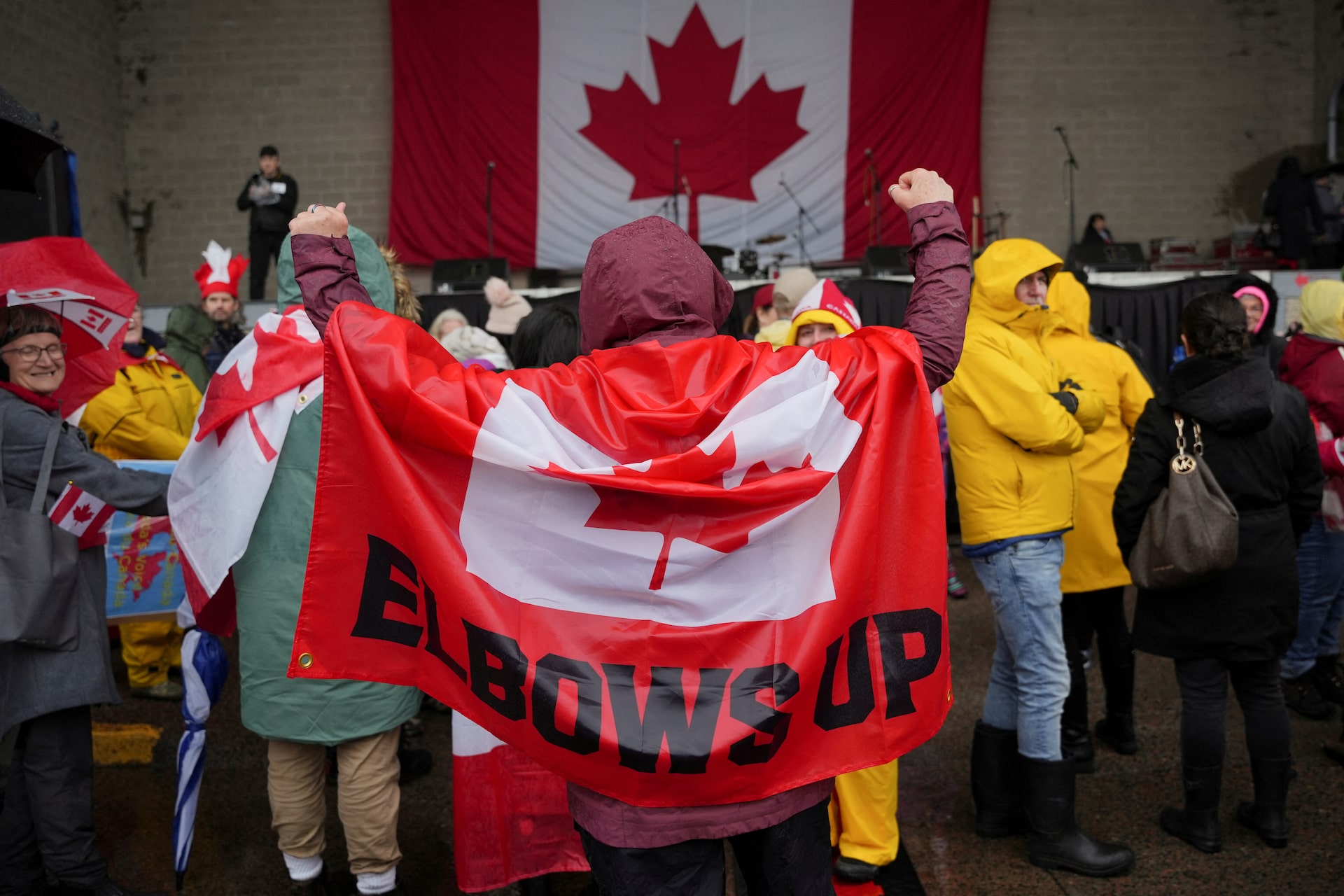
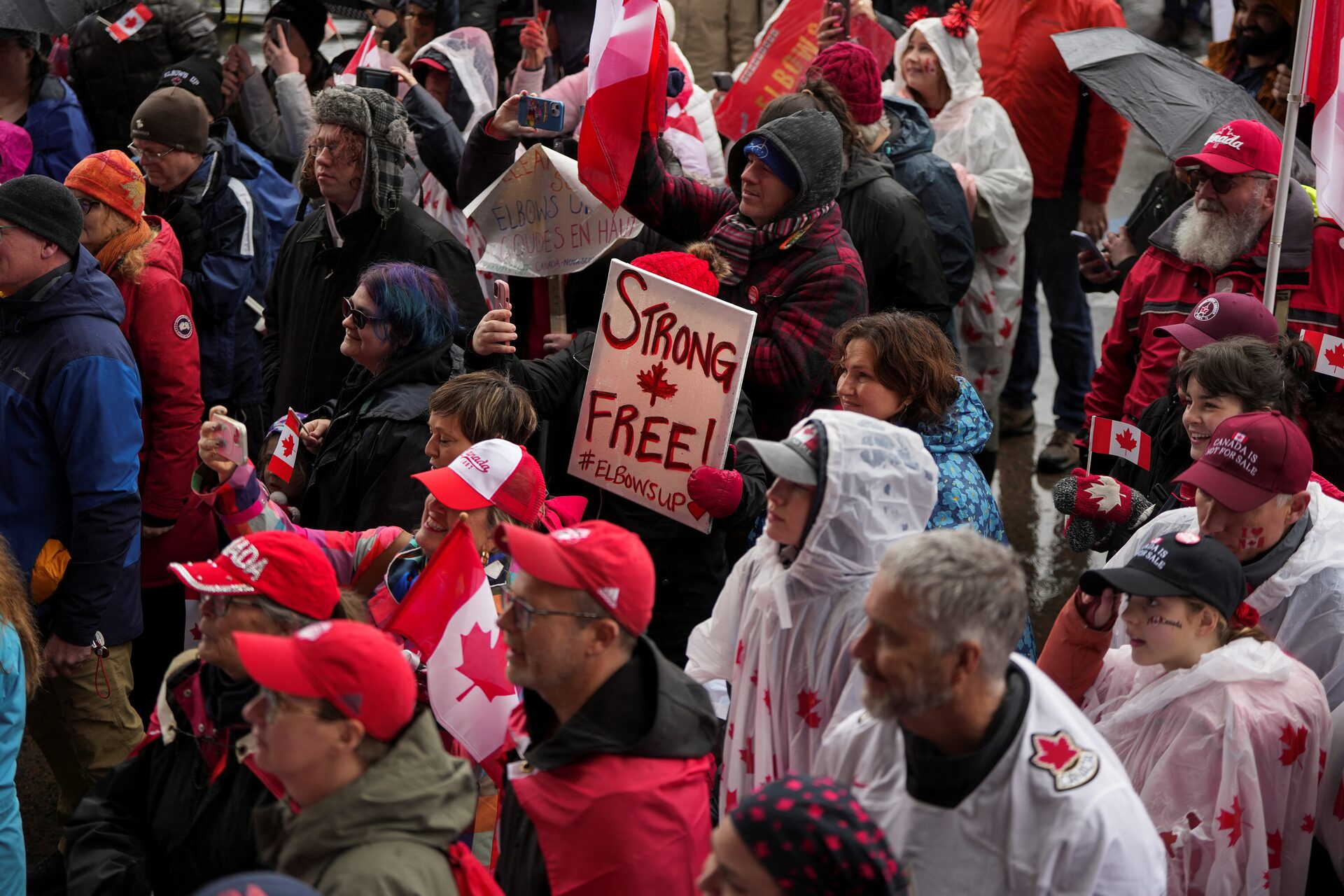
Different approaches have emerged. Canada hit back earlier with retaliatory tariffs and adopted the “elbows up” mantra, while China has responded aggressively. Mexican President Claudia Sheinbaum has talked about keeping a “cool head” – while she has threatened tariffs, she has not imposed any. The European Union has proposed tariffs, but is prioritizing negotiations. The United Kingdom is also not angling for a fight, with Prime Minister Keir Starmer saying last month he will not be “jumping into a trade war.”
It’s easy to conclude that some countries are playing hardball and others are playing nice. The reality is negotiations involve both strategies. Experts talk about forcing, which means using pressure and coercion, but also about fostering, a more collaborative approach to win support. It’s a tricky balance.
“Anyone dealing with Trump has to figure out a restrained form of forcing that lets Trump know that he can’t just walk over you but doesn’t trigger an escalating conflict,” said Joel Cutcher-Gershenfeld, a professor at Brandeis University in Massachusetts who teaches negotiation. He’s not sure about fostering directly with Mr. Trump, suggesting it might be more appropriate with other people or constituencies that may have influence.
Mr. Trump’s style is a throwback. His blatantly transactional approach, while never disappearing entirely, has fallen out of favour. The 1981 bestseller Getting to Yes had a lot to do with that. Written by Roger Fisher and William Ury, the book cautions against an overly hard or soft approach and instead advises that parties should focus on common interests and look for mutual gains.
Getting to Yes was an antidote to other bestsellers of the era that advocated for more of a hard bargaining, zero-sum style, such as Winning Through Intimidation and Looking Out for #1, both written by Robert Ringer. (Perhaps it is merely coincidental that Mr. Ringer appears to be a supporter of Mr. Trump. “Liberalism is like a fungus that spreads out of control,” he wrote in a recent blog post.)
“The book captured the zeitgeist,” Mr. Ury said of his 1981 bestseller. “People began to realize that there’s more benefits in mutual benefit.”
While the U.S. President might disagree, Mr. Ury said principles from that book and others he’s written since still apply. That includes developing a best alternative to a negotiated agreement, or BATNA, a term he and his co-author coined for a backup plan when a deal cannot be reached. A party will be less likely to accept a bad deal if they’ve already established a viable alternative.

The Canadian government has placed the anti-tariff billboards in numerous American cities, including this one in Miramar, Fla., in what it has described as an 'educational campaign' to inform Americans of the economic impacts of tariffs.Joe Raedle/Getty Images
He also recommends engaging the “third side,” which is essentially about building a community. In the context of tariffs, that can mean forging relationships with like-minded constituencies in the U.S., including citizens. “It’s about building what might be called a winning coalition for a saner relationship,” Mr. Ury said. There is a reason the Canadian government is paying to put up billboards in the U.S. blaring, “Tariffs are a tax on hard-working Americans.”

Alberta Premier Danielle Smith has used an approach that is seen as more favourable to U.S. sentiment in confronting Trump's threats to Canada.KAYLEE GREENLEE/Reuters
You can also see that in the approach of Alberta Premier Danielle Smith, who, while drawing criticism for some of her actions, has been meeting with U.S. officials who have influence to press her case. She also appeared at a conservative gala in Florida, telling the audience that Canada becoming the 51st state would skew the electoral map and prevent a Republican from ever again taking the White House, according to CBC.
“Canadians want to hear ‘we will never be the 51st state’ and ‘elbows up,’ but she is speaking to [Americans] in a way they understand, and they’re going to be much more receptive to that message,” said Gitane De Silva, the founder of consulting firm GDStrategic and Alberta’s senior representative to the U.S. during the first Trump administration.
But hardball tactics are also required with Mr. Trump. “The most important single concept is leverage,” said Prof. Shell, who wrote a book called Bargaining for Advantage. “He understands leverage like a bird of prey understands the movements of a fish.”
It’s something Mr. Trump may even respect. Consider his comments about Ontario Premier Doug Ford, who temporarily slapped a surcharge on electricity exports to the U.S. “There’s a very strong man in Canada,” Mr. Trump told reporters. Mr. Ford quickly dropped the levy after securing a meeting with U.S. officials, however, and may have made the fatal negotiating mistake of overestimating his leverage. Neither country, The Globe and Mail reported, really has an advantage over the other when it comes to electricity.

Trump is not an adaptable negotiator, experts say, adding that he only engages when he is in a position of power.Carlos Barria/Reuters
It’s notable that Mr. Trump, despite crowing about his deal-making prowess, is not an adaptable negotiator. “He only seems to engage when he has the upper hand,” said Andrea Caputo, a professor of strategy and negotiation at the University of Lincoln in the U.K. and associate professor at the University of Trento in Italy. “It’s difficult to recall a negotiation in which he didn’t have the opportunity to use coercion.” In response, counterparties should team up to gain leverage and apply pressure. “That’s the best way to address that imbalance of power,” Prof. Caputo said.
Canada, the EU and Mexico responding in lockstep to Mr. Trump’s tariff threats could help achieve that. The U.S. President is aware of this vulnerability, it seems, and blasted out a statement threatening even bigger tariffs if Canada and the EU work together.
The danger in playing nice with Mr. Trump, as the United Kingdom appears to be doing, is being perceived as weak and getting pushed around even more. “They could end up conceding more in future negotiations,” Prof. Caputo said.
The President’s ego is nevertheless something that can be exploited, in part by giving him a win that isn’t a major concession. Mexico stepped up security at its border in response to Mr. Trump’s tariff threats and handed over accused cartel members to U.S. authorities, yet has not retaliated with tariffs. Media outlets have reported that Mr. Trump has developed respect for Ms. Sheinbaum.

Mexican President Claudia Sheinbaum has decided not to respond to U.S. tariffs with countertariffs. Media outlets have reported that Trump has developed respect for Sheinbaum.YURI CORTEZ/AFP/Getty Images
Of course, Mr. Trump hasn’t threatened Mexico’s sovereignty, as he has with Canada. “Emotions are just higher, and this desire to respond strength for strength or stand up to the bully is stronger here” in Canada, Ms. De Silva said.
Even so, Mexico is arguably no better off than Canada. Mr. Trump still hit the country with steel, aluminum and auto tariffs. Canada attempted to appease him by investing in border security, too, and yet here we are. (Neither country, however, was targeted with reciprocal tariffs on April 2.)
Experts say there are reams of studies showing that this antagonistic approach to negotiating is ultimately bad for everyone. It destroys trust, nobody wants to help one another, and everyone ends up with a worse outcome than they could have achieved otherwise.
Prof. Shell suggests it’s more complicated than that. “It’s very comforting to teach people to negotiate in a way that’s collaborative, because it does work,” he said. “That doesn’t change the fact that we have a lot of transactional and competitive negotiation situations.” They include bankruptcies, divorces and buying a house. Mr. Trump, apparently, has added diplomatic relations to the list.
There are downsides to this style of negotiation spreading to more domains. In 2017, Wharton professors Jennie Huang and Corinne Low conducted a study before and after the presidential election on how men and women negotiated in a lab setting. After Mr. Trump’s first election in 2016, participants were less co-operative, more adversarial and less likely to reach an agreement. In particular, men were more aggressive toward women in negotiations. The researchers suggested Mr. Trump “may have disrupted community norms around civility.”

Prime Minister Mark Carney has said Trump's tariffs has made clear Canada needs to reduce its dependence on the U.S.Katherine Cheng/Reuters
Today, he is disrupting much more than that. Prime Minister Mark Carney, for one, appeared ready to write off the United States in late March, calling it an unreliable partner and saying we need to “dramatically reduce our reliance” on the country and strengthen relationships elsewhere.
The very next day, he had a call with Mr. Trump, who later characterized the conversation as “extremely productive.” It was the most positive thing Mr. Trump has said with respect to Canada in months.
It’s a reminder of how Mr. Trump keeps everyone off-balance, which itself can be a strategy. Prof. Shell, at least, suggested there could eventually be some stability. Decades ago, he had a student from the New York real estate world who said Mr. Trump walked away so often during negotiations that he and his colleagues would make bets on when the future president would depart in a huff.
“If you have a style that’s predictable,” Prof. Shell said, “people can adapt.”