The race to build Canada’s first new nuclear reactor in more than three decades has officially begun on the north shore of Lake Ontario.
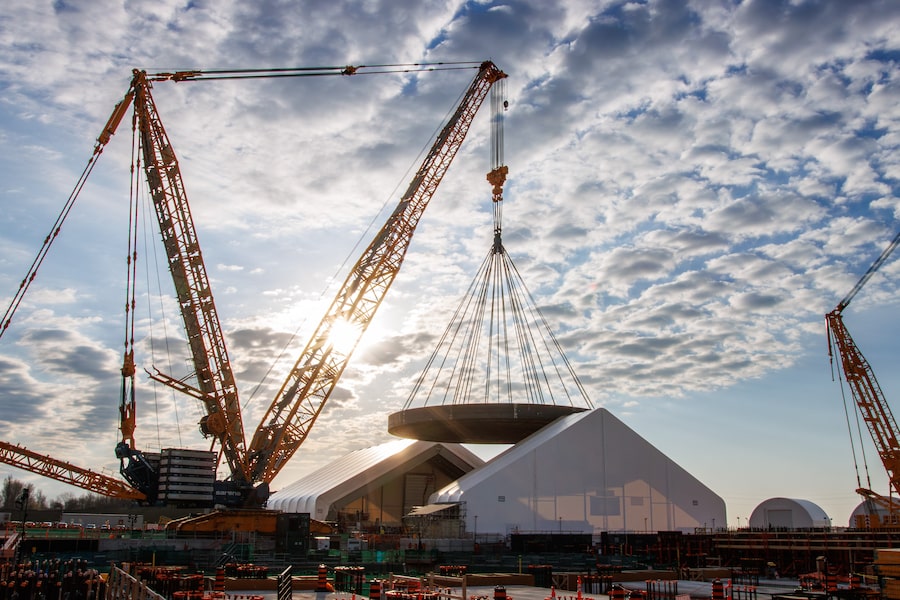
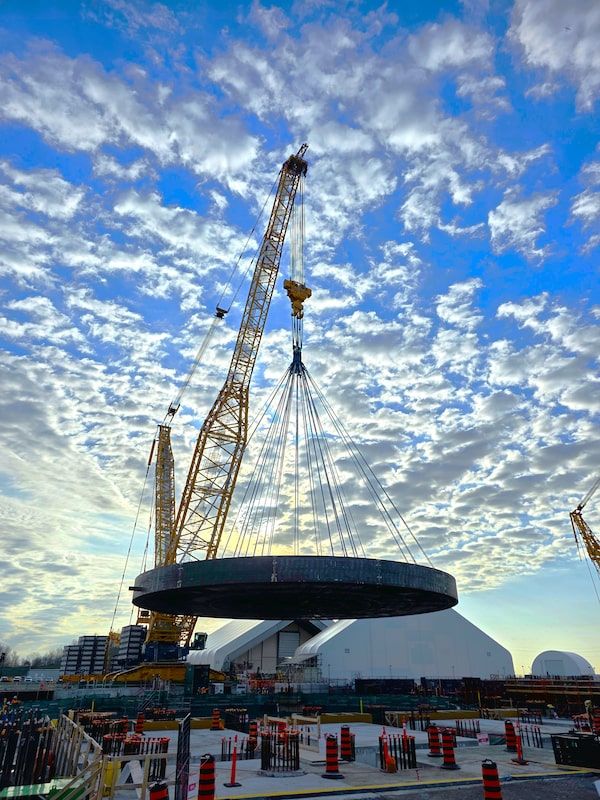
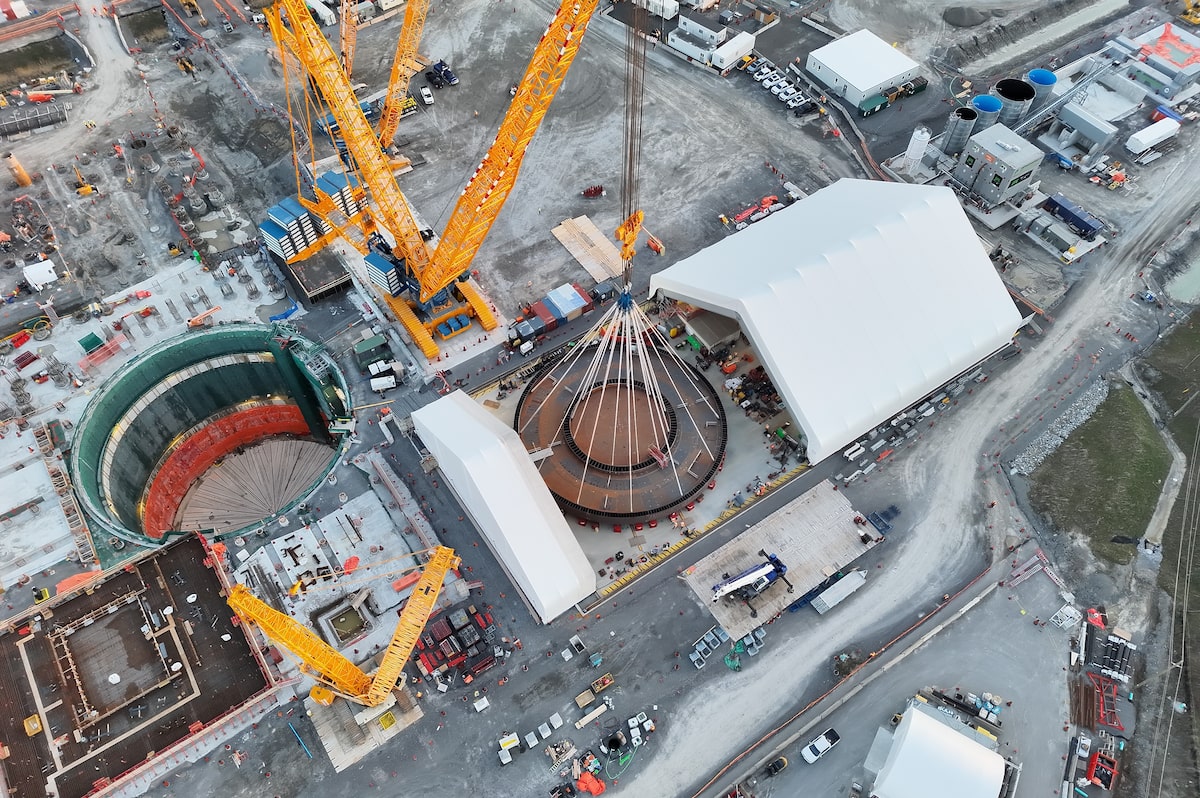
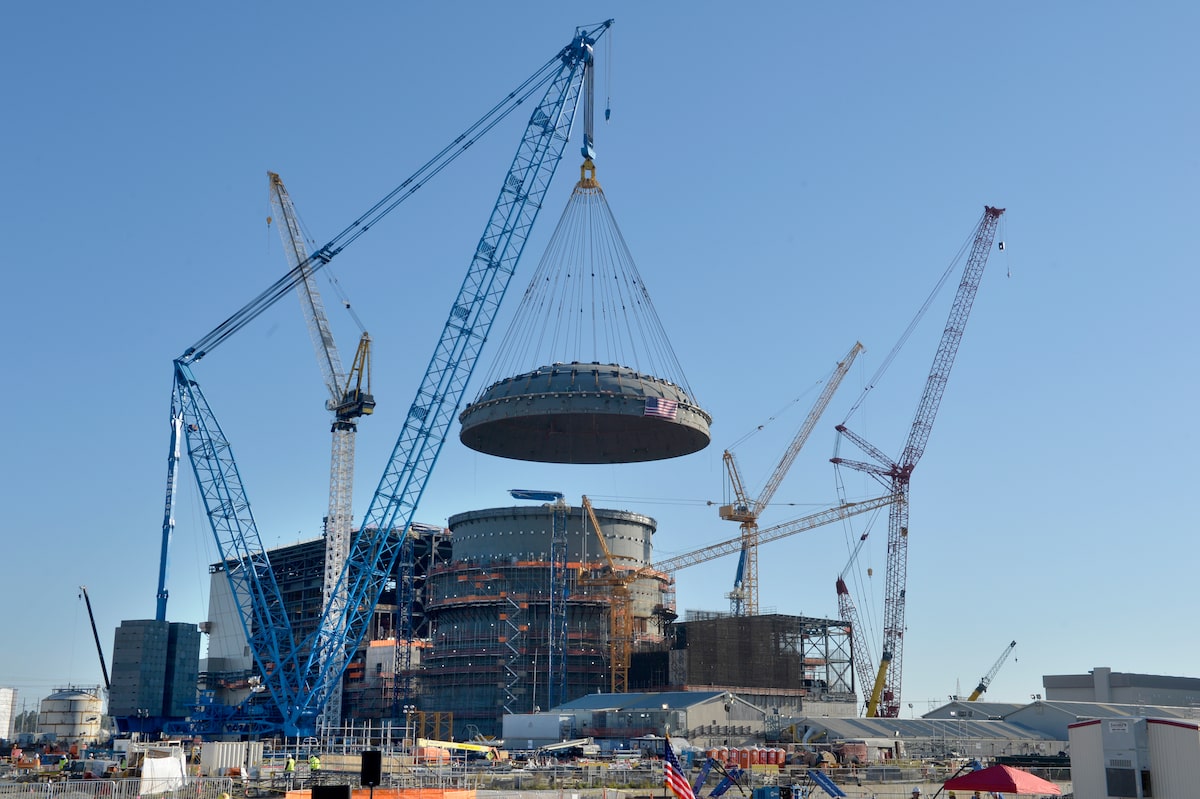
In late April, the Ontario government announced that the foundation of the building that will house the reactor had been lifted to its final resting place, down a 35-metre-deep vertical shaft, by one of the world’s largest crawler cranes. The foundation weighed more than 950 tonnes – heavier than three Airbus A380s, the government said.
With that, a clock started ticking.
As far as Ontario Power Generation is concerned, the Darlington small modular reactor, or SMR, has been under construction for about a year now. But according to nuclear industry bodies such as the International Atomic Energy Agency and Mycle Schneider Consulting, which compile data on nuclear projects globally, construction officially begins with the placing of concrete for the foundation of the reactor building.
OPG and its partners – including reactor developer GE Vernova Hitachi Nuclear Energy, construction company Aecon Group Inc., and architect-engineer AtkinsRéalis Group Inc. – have just four years and seven months to complete construction and connect the reactor to the grid, as promised, by the end of 2030. Once built, the reactor could supply enough electricity to power 300,000 homes. It’s a crucial first step for Ontario’s energy plans, which envision building many more reactors in the coming years.

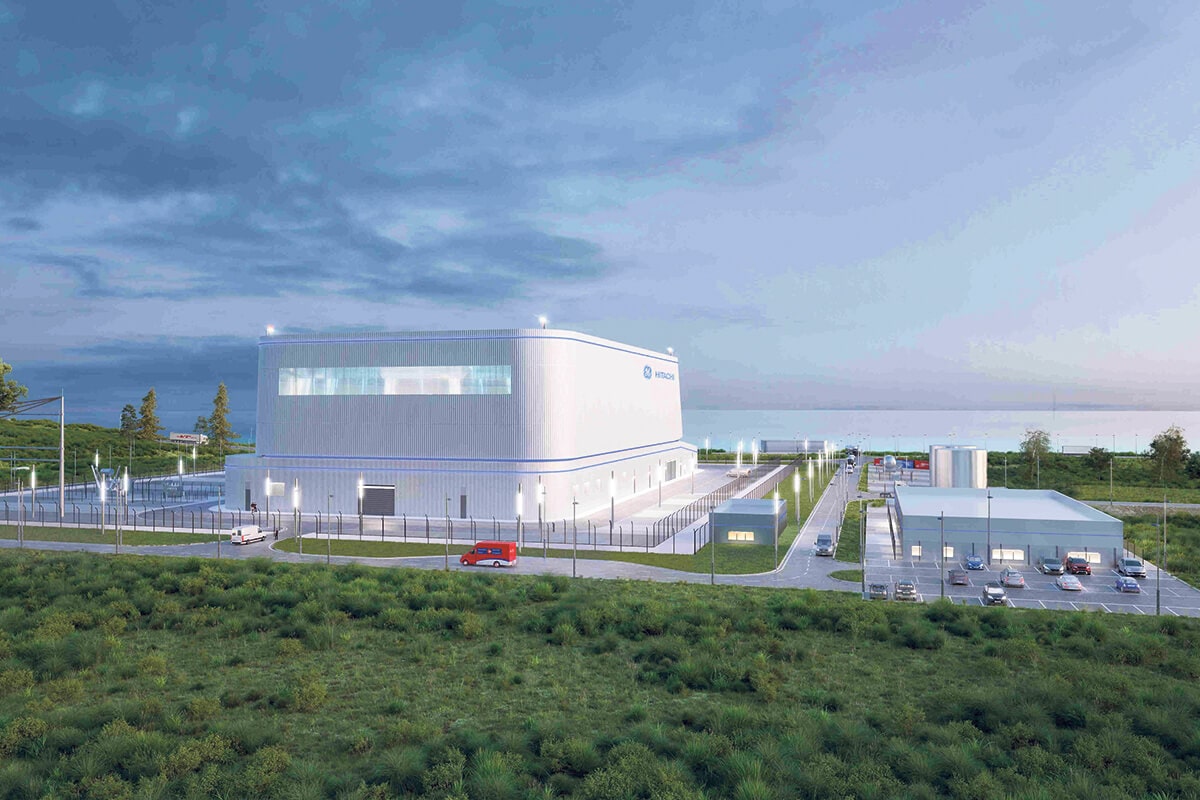
Ontario Power Generation is working with partners to develop a new nuclear reactor at Darlington.Cole Burston/The Canadian Press
Nuclear plants join high-speed rail, large bridges and tunnels, hydroelectric dams (think Site C) and major IT initiatives (think the federal Phoenix payroll system) on the list of complex engineering works that are highly likely to suffer lengthy delays. They’re akin to the Olympics for project managers; by promising the SMR in less than five years, OPG has effectively promised a gold medal.
Don’t let the “small” moniker fool you: The Darlington SMR is no minor undertaking. Lately, as many as 1,500 workers have been on-site on a typical work day.
OPG’s lengthy task list includes building the first-ever BWRX-300 reactor, a robust containment building to house it, a control building which will include the main control room, and another structure to house the turbine generator. It must also complete support structures for the other three planned units. They include a water cooling system complete with underground tunnels, and a switchyard.
According to an analysis of data from Mycle Schneider Consulting by The Globe and Mail, few reactors have been built in less than five years in recent history.
The fortunes of corporate executives, politicians, suppliers and even the nuclear industry itself depend on whether OPG’s team can demonstrate they are as exceptional as their political masters claim.
Why would completing a reactor in five years be difficult?
Canada’s nuclear industry finished building its last nuclear power reactor more than three decades ago. The 25 Candu reactors that started construction between 1958 and 1985 took an average of slightly longer than seven years to bring into commercial operations. Many of those reactors have been refurbished, which has reinvigorated Ontario’s nuclear industry. Even so, many of the skills required to build a plant from scratch have atrophied.
The closest Canadian analogue to the Darlington SMR might be Douglas Point, the earliest attempt to construct a commercial nuclear power plant. When work began in 1960 in Tiverton, Ont., Canada had limited experience building nuclear plants. Just like Douglas Point, the Darlington SMR is essentially a prototype. Douglas Point’s 200-megawatt output placed it in the same class. It took 8½ years to build.
Canada’s fastest build was Pickering-3, running from late 1967 to early 1972. Those years spanned a period when Ontario hit its stride building multiple reactors, but shows tight timelines were achievable back then.
How long has it taken to build nuclear plants globally?
China dominates modern reactor construction: According to Mycle Schneider Consulting data, 44 of the 75 reactors that began construction worldwide since 2016 are there. Yet few Chinese reactors are delivered within five years.
Western countries build far more slowly, when they build at all. The Darlington SMR is one of only six in the entire Western Hemisphere to begin construction in the past 40 years. Of those, only two, located in the U.S., completed construction, both spectacularly late.
Boasting about modular construction techniques, American reactor developer Westinghouse promised it could build its AP1000 reactor in just 36 months. Four AP1000s eventually started construction in the U.S. in 2013. Two of them, Vogtle Units 3 and 4, took more than a decade each. The other two, V.C. Summer Units 2 and 3, in South Carolina, were abandoned after roughly four years; efforts to restart their construction are now under way.
The only reactor attempted in France so far this century, Flamanville-3, was planned to take a little more than four years. It took 17. The only two reactors started in the United Kingdom since 2016 were at the Hinkley Point station, Britain’s largest nuclear power site; they’re approaching 12 years and counting, still under construction.
Why are nuclear builds so frequently delayed?
Nuclear projects face delays for numerous reasons. But some cardinal sins occur regularly, such as proceeding without a complete set of detailed blueprints.
The two V.C. Summer units in South Carolina, for example, began construction when engineering designs were incomplete. Drawings often turned out to be not constructible, sending designs back to the drawing board. Those changes, in turn, led to more work for subcontractors, which provoked disputes over who’d pay the resulting costs. Any changes also had to be approved by the U.S. Nuclear Regulatory Commission.
A report by Jean-Martin Folz, former head of French automaker Peugeot, found that construction at France’s Flamanville-3 also began without a complete set of validated plans. The result was that the plant’s design continuously changed during construction, and lots of work had to be redone.
Quality control is another common stumbling block. At Flamanville-3, Mr. Folz catalogued a wide range of defects including poor welds and badly-manufactured forged components. Defects can lead to a cycle of delays, rework and disputes.
Once delays start piling up, it’s hard to recover. At Flamanville, Mr. Folz noted that Électricité de France tried to accelerate work schedules to get back on track. That only led to other problems, leading to further rework and delays, not to mention overloaded and demoralized crews.

Building Flamanville-3 proved to be a logistical headache for Électricité de France, a state-owned utility.Stephanie Lecocq/Reuters
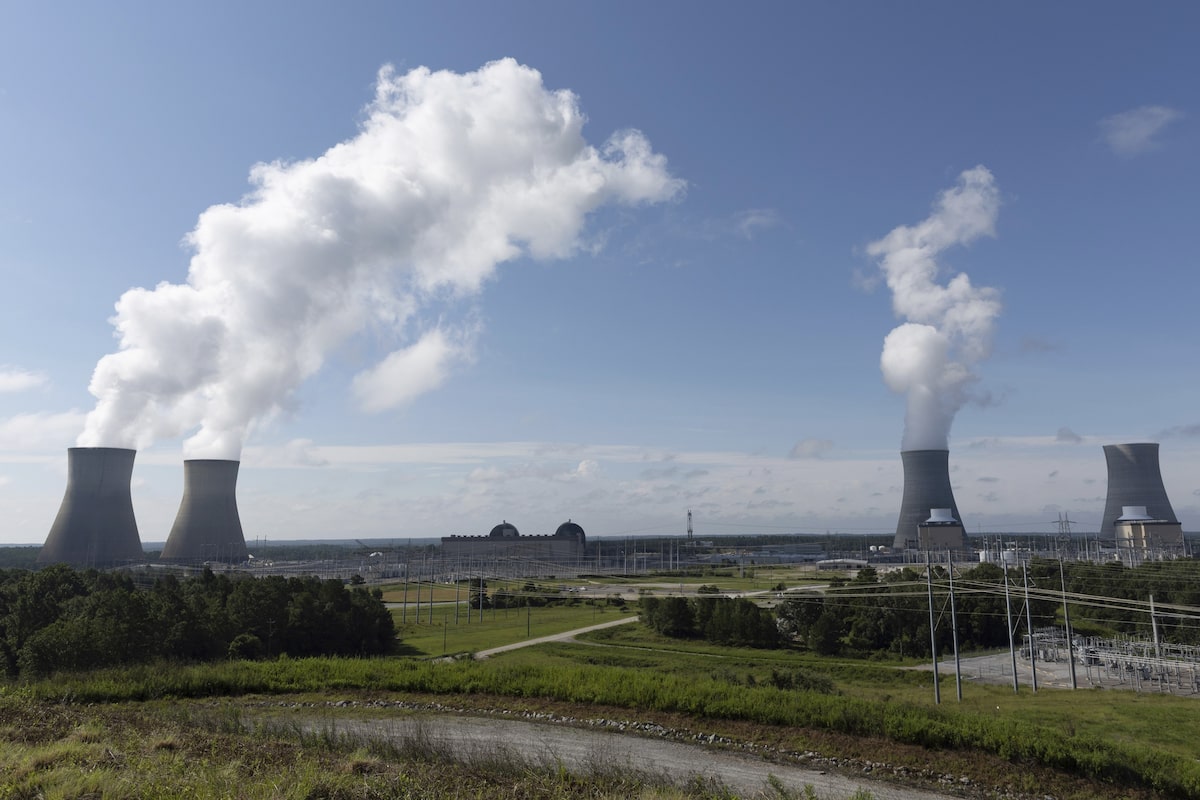
After years of poor performance, the construction of the Vogtle units in Georgia was placed under new management. Don Grace was an engineer hired by the Georgia Public Service Commission to evaluate the project’s progress. During testimony in 2022, he explained that the new proponents “prematurely” started testing equipment at the plant, even as construction continued.
The problem? Mr. Grace said it resulted in too many workers toiling alongside one another on compressed timetables – a problem dubbed “stacking of crafts.” That was exacerbated by management’s tendency to defer planned work to achieve near-term milestones that provided “an inaccurate impression of having made significant progress.”
Mr. Grace put it this way: “The scope of work for a new nuclear plant is so large, and how the proper scoping and sequencing of all the activities comes together is highly important.”
What’s behind OPG’s confidence?
OPG believes the BWRX-300, while being first of its kind, is the simplest-ever boiling water reactor, a mature American-designed technology. There are more than 100 of them operating worldwide, so many of its basic principles have been demonstrated before.
OPG also counts on modular construction techniques to speed things up. The Darlington SMR’s base mat is a good example: It is comprised of 56 sections that were manufactured off-site. Upon delivery to Darlington, they were welded together in a special building with a retractable roof, then lifted into place by crane. In theory, this should be more efficient than assembling a warren of rebar, erecting forms and then pouring huge volumes of concrete.
“Many components will be pre-assembled offsite into larger modules and lifted into place – such as skid-mounted systems and pre-assembled piping – reducing onsite duration and risk,” wrote OPG spokesperson Neal Kelly in a written response to questions.
OPG is also taking an off-the-shelf approach wherever possible. For example, the plant’s turbine and generator are to be the same standard units already proven in natural gas plants.
And OPG is using what it calls an “integrated project delivery contract model,” which it says will encourage partners to collaborate, share risks and rewards, and maximize efficiency. Previous nuclear projects have demonstrated that how contracts are written, and how the various stakeholders work together, matters a great deal – especially when unforeseen challenges arise.
Of note, Mr. Kelly wrote that the plant’s design was completed in December.

If all goes as planned, Ontario's grid will start getting power from the Darlington SMR by 2030.Sean Kilpatrick/The Canadian Press
What’s at stake?
Most immediately, the fate of the Darlington SMR.
A nuclear project’s schedule and cost are inextricably linked: Any delay will eat into contingencies, and, if sustained, will blow budgets to smithereens. Moreover, delays compound the already daunting challenge of financing the project: Owners must wait that much longer to start earning revenue by generating electricity.
Though contracts haven’t been signed yet, Ontario has already committed to build three more BWRX-300s. Its existing nuclear plants all have four identical reactors, an approach that has demonstrated significant benefits. An $8-billion one-off lemon would be a costly miss.
The Darlington SMR is the signature project of Nicole Butcher, who assumed OPG’s top job in early 2025. Ontario Energy Minister Stephen Lecce, who approved it, has bet heavily on OPG’s prowess, insisting the utility stands alone in building on-time and on-budget.
Mr. Lecce’s entire vision for Ontario’s electricity hinges on that statement being true. His plan involves a major expansion of nuclear power, in which the SMR would be followed by two much larger projects, the combined cost of which would likely be in the hundreds of billions of dollars. Failure to deliver the comparatively modest Darlington SMR might compel a rethink.
Similarly, the federal government has invested considerable political and financial capital in SMRs. Yet of all the research clusters and demonstration units promised over the past decade, the Darlington SMR is just about the only one still standing. Ottawa has provided billions of dollars in financing, thus becoming a substantial minority owner in the project, and referred it to Prime Minister Mark Carney’s new Major Projects Office.
Other utilities around the world have expressed interest in building their own BWRX-300s. More than 100 Canadian companies have signed agreements to provide components and services for the Darlington SMR; successful delivery could lead to contracts if global utilities feel bold enough to build their own.
SMRs represent a promising but untested approach to manufacturing reactors – one that emphasizes simplification and mass production. Whereas large reactors are purchased almost exclusively by resource-rich utilities, SMRs are marketed as being cheaper and quicker to build – and thus suitable for a broader range of customers. Yet even within the nuclear industry, many doubt SMRs can offer sufficient advantages to attract orders; the results of the first SMR in a G7 country could settle the matter.
And that’s why the Darlington SMR is one of the most important nuclear projects worldwide.
No pressure.
Insights on energy: More from The Globe and Mail
The Decibel podcast
Since the war in Iran threw oil and gas markets into turmoil, Canada has faced intensifying pressure to meet global demand. Energy reporter Emma Graney spoke with The Decibel about what companies are doing, and what it means for the green energy transition. Subscribe for more episodes.
Matthew McClearn on nuclear power
Ottawa commits millions to study micro nuclear reactors for Northern defence facilities
The federal government faces calls to begin enriching uranium. Should it?