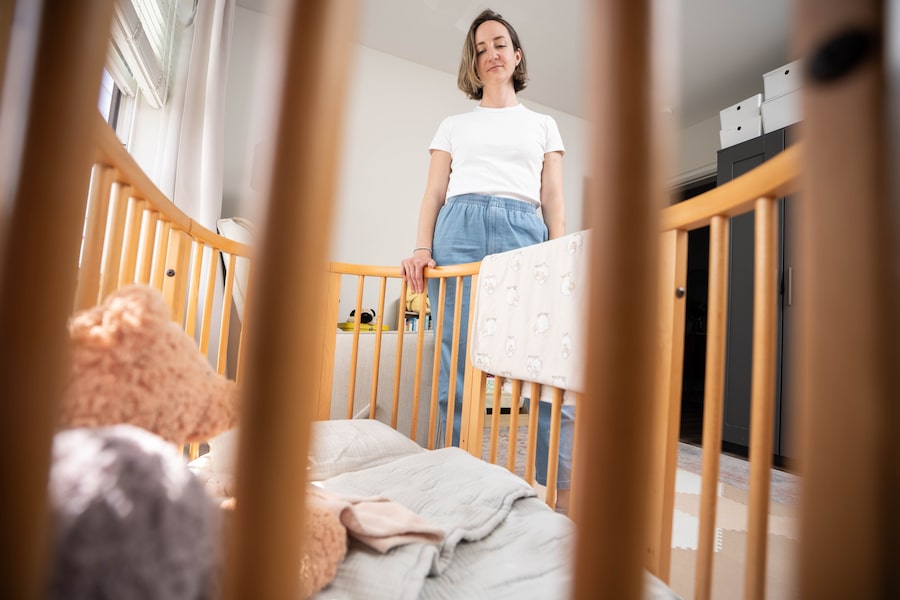
Taryn Greig can’t recall exactly when she first heard about the federal plan to create a national child-care program that promised to reduce fees to an average of $10 a day.
But she does remember when she started putting her name on waiting lists for a child-care space. It was in the summer of 2023 – the same week she took the pregnancy test confirming she was going to have her first child.
Getting an early jump on waiting lists has long been a familiar race for families in Canada, especially those living in big cities. Ms. Greig, a professor at Kwantlen Polytechnic University, lives in Vancouver.
But the promise of affordable care gave her that much more incentive to secure a spot. The savings would be tremendous, influencing her and her partner’s decision about where to live and even whether they might have a second child.
Nearly three years later, Ms. Greig is still on waiting lists for a $10-a-day spot.
“I was optimistic that even if we didn’t get a spot right away, we probably would eventually. And I was also hopeful that the program would continue expanding,” she said.
Those hopes were dealt a blow in February when British Columbia announced it was pausing expansion of the program over concerns about the sustainability of its funding.

Taryn Greig has not found a $10-a-day spot to care for her first child. In B.C., where she lives, the average daily cost of licensed child care is around $42.Ethan Cairns/The Globe and Mail
The pause in B.C. is only one sign that the system, born of great promise, now appears to be faltering. Several provinces, most notably Ontario and Alberta, have said much more federal funding is needed, as are significant changes to the original principles of the deal, including limits on the expansion of for-profit centres.
The five-year agreements that provinces and territories signed with the federal government came due at the end of March. Ontario and Alberta have signed only one-year extensions. The other provinces and territories have all signed five-year extensions of the deal, although several of them have flagged what they say are significant funding problems.
The federal government has not committed to the higher level of funding provinces say they need to meet the program’s goals.
Many of the goals that were supposed to be reached by now have not been.
There are fewer spaces than were promised and although fees have dropped significantly, they haven’t hit $10 a day in some of Canada’s biggest provinces.
There is also a severe shortage of early childhood educators across the country, with an estimated 10,000 needed in Ontario alone by the end of this year.
Solving these problems will require much more investment.
On top of all that, there are fewer low-income families accessing affordable care now than before the $10-a-day program was introduced.
As a result, calls to fundamentally alter the original principles of the program are increasing, including means-testing it so that affluent families pay more in fees, sending money directly to parents and removing limits on the expansion of for-profit centres.

With existing child-care spaces at a premium, provinces are pressing Ottawa for new funding to create more.Todd Korol/The Globe and Mail
Concerns regarding the financial sustainability of the program are widespread. Five years since the program was first announced, some child-care advocates say the system is at risk of collapsing. “The plug could be pulled very quickly, and the impact will be dramatic and immediate,” said Morna Ballantyne, executive director of Child Care Now, an organization that advocates for a national, non-profit child-care system.
Ms. Ballantyne said she and many other child-care organizations were hoping to see the $10-a-day program championed in the federal spring economic update alongside other nation-building projects.
After all, few other initiatives have the promise of helping women enter the work force like a universal child-care system does, Ms. Ballantyne said.
Instead, the update noted that the federal $625-million infrastructure fund launched in 2023 to support creating non-profit, licensed child-care spaces will end this year.
“Building a fully universally accessible child-care program will create as many, if not more, jobs than will be created through construction projects. The difference, of course, is that construction jobs are held mostly by men, and that won’t change without child care, and child-care jobs are held mostly by women,” Ms. Ballantyne said. “It really does seem that women are being left out of Prime Minister Carney’s economic plan.”
Child-care advocates, child-care providers and some provinces are all saying the current funding makes the program unsustainable.

Canada was struggling to recover from the COVID-19 pandemic when Justin Trudeau’s Liberal government announced plans for the Canada-Wide Early Learning and Child Care plan in its spring budget in 2021.
A universal child-care system had been a goal for many politicians, advocates and others at least since the Royal Commission on the Status of Women identified such a system as essential for gender equality in a landmark report published in 1970.
The pandemic seemed the perfect time to realize that dream.
Building an affordable early education and child-care system would make life more affordable for families, create new jobs, expand the middle class, increase women’s participation in the work force and drive economic growth across Canada, the federal government said when it announced the plan.
With $30-billion in federal funding, the plan would create 250,000 child-care spaces and reduce fees to an average of $10 a day, among other promises, by the end of March, 2026.
The system would prioritize non-profit child care, which the government said would help ensure higher quality and the responsible use of government funds.
Every province and territory signed on to five-year agreements with the federal government by the spring of 2022. Ontario was the last to join.


Justin Trudeau visited a child-care centre in Brampton, Ont., four years ago to announce Ontario was on board with the $10-a-day plan.Carlos Osorio/Reuters; Nathan Denette/The Canadian Press
Not surprisingly, demand for child care surged.
In 2025, 31 per cent of parents of children ages 0 to 5 reported that their child was on a waiting list, up from 26 per cent in 2023, according to Statistics Canada.
Among parents who were using child care, which could include centre-based care or having a relative look after the little ones, 65 per cent reported their top challenge was finding available care in their community, while 42 per cent said the biggest difficulty was finding affordable care.
The spike in demand – and the frustrations of parents shut out of the system – were always to be expected.
After all, cutting fees for parents who already had children in care could be done much more quickly, and much more easily, than building new centres and training and recruiting the educators needed to staff them.

When the Prime Minister conferred with premiers at January's first ministers meeting, officials in charge of child care also gathered in Ottawa to discuss next steps for CWELCC.Justin Tang/The Canadian Press
Although the federal plan promised to create 250,000 new child-care spaces by this spring, progress has been much slower than expected.
A report from the Auditor-General of Canada published last November found that just over 112,000 new spaces had been created as of March, 2024.
In Ontario, a recent report from the province’s Auditor-General found that between 2019 and the end of 2024, the province had added approximately 36,000 CWELCC spaces, well short of the target of 48,000.
A report published in January by the Canadian Centre for Policy Alternatives, a Toronto-based think tank, found that as of last September, 194,000 new spaces have been created across Canada since the beginning of the program, and most of them are in for-profit centres.
A troubling shortage of early childhood educators is one main factor hobbling expansion efforts across the country, said Carolyn Ferns, policy director at the Ontario Coalition for Better Child Care, an advocacy organization.
More investments are required to attract more people to the profession, and higher pay is needed, she said.
“If we really want to build a stable system, that’s what needs to happen.”

Ontario Auditor-General Shelley Spence found the province was behind on its targets for hiring new early childhood educators.Sammy Kogan/The Canadian Press
The Ontario Auditor-General report found that the province will need up to 10,000 more early childhood educators by the end of this year to meet expansion targets.
The same report found that as of December, 2023, more than 80,000 CWELCC spaces in the provinces were left empty because those spaces were either vacant or not operating, a figure Ms. Ferns attributes to the lack of staff.
The drop in fees has so far been the biggest success of the program, at least for the families fortunate enough to have a CWELCC space.
Many provinces, including Quebec, Newfoundland and Labrador, Prince Edward Island, Manitoba, Saskatchewan and the three territories, have reached the $10-a-day target, while Ontario, Alberta and B.C. have cut fees by 50 per cent or more.
More affordable child-care spaces seem to have helped women enter the work force.
“Thanks in part to the Canada-wide system, the labour force participation rate of mothers aged 25-54 with young children was near record highs in 2025, at 79.5 per cent,” Maja Stefanovska, a spokesperson for Patty Hajdu, the federal Minister of Jobs and Families, said in an e-mail.
And so far, more than 900,000 children have been able to access affordable child care thanks to the program.

One of the goals of affordable child care is to bring more women into the work force.Graeme Roy/The Canadian Press
But progress toward $10 a day has stalled in some of Canada’s biggest provinces because of a lack of funding.
In Ontario, fees have been capped at maximum of $22 a day at least until the end of this year.
Paul Calandra, the provincial minister responsible for child care, has said current federal funding is sufficient to maintain that level, but any further reductions toward $10 a day will require more federal money.
Alberta, which had to postpone its space-creation targets to next year, has introduced a flat fee of $15 a day. It signed a one-year, $1.17-billion extension with the federal government in December.
To get to $10 a day, the province will need somewhere between $2-billion and $3-billion more, Education and Child Care Minister Demetrios Nicolaides said in March.
Alberta is pushing for the federal government to make fundamental changes to the program’s founding principles.
“Our position remains that any new agreement must provide maximum flexibility to meet the needs of Alberta families and address concerns raised by parents and providers – including the removal of arbitrary limits on private space growth,” Garrett Koehler, a spokesperson for Mr. Nicolaides, said in an e-mail.

Krystal Churcher, board chair of the Association of Canadian Early Learning Programs, questions whether higher-income parents should pay more to make the child-care system more accessible to others.Todd Korol/The Globe and Mail
“Maximum flexibility” should mean more affluent parents paying higher fees, said Krystal Churcher, board chair of the Association of Canadian Early Learning Programs, an advocacy organization that represents both for-profit and non-profit licensed child-care providers.
“Why are we paying for people to have $10-a-day child care that maybe have six-figure incomes? People are struggling to pay for groceries and gas right now, let alone supporting universal child care across the country,” she said.
Sarah Hunter, who runs a daycare in Calgary, agrees that fees should be tied to family income.
“I have oil and gas professionals. I have physicians. I have pharmacists. I have engineers,” she said. “They’re a wonderful community, but they don’t need this funding.”

Sarah Hunter at Imagination Tree supports linking fees to family income.Todd Korol/The Globe and Mail
Not only are there many affluent families using the program, they appear to be pushing out families in need.
The Auditor-General of Ontario found that compared with 2019, child-care enrolment among families who receive subsidies has decreased by 31 per cent.
But changing the program so that fees fluctuate depending on family income will mean that fees will continue to rise and little to no improvements will be made to the system, said Martha Friendly, executive director of the Childcare Resource and Research Unit, a Toronto-based think tank.
“That’s the way we always did it, and it didn’t work,” she said.
Peter Dinsdale, chief executive officer of YMCA Canada, which provides child care to 68,000 children across the country, said there are only two options to sustainably fund the system.
“There has to be more variety for parents to pay the true cost of child care to offset the other costs, or the government has to put in more money,” he said. “Because what we’re doing right now, we’re seeing all the cracks starting, and I think it’s going to be a big challenge for the future of the program.”

In Imagination Tree's home province, the government is pressing Ottawa not just for more money, but a substantial overhaul to how the child-care program works.Todd Korol/The Globe and Mail
The federal government currently is committed to spending approximately $9.2-billion annually to support CWELCC.
A recent report from Ms. Churcher’s organization pegged the true cost at $40-billion.
Whatever the actual amount might be, the current funding was insufficient to prevent the pause in B.C.
Lisa Beare, B.C. Minister of Education and Child Care, said income testing the program is an option she will consider.
“Everything is on the table,” she said. “The way the program is structured right now, it is not sustainable for $10 a day. There just simply is not enough money in the system.”
It is unlikely that the $10-a-day average fee will ever be reached in every province because it is an unsustainable goal, said Peter Jon Mitchell, director of the family program at Cardus, a non-partisan think tank.
“It really was an advocacy slogan that the federal government turned into a policy and then handed to provinces to figure out how to implement,” he said.
Nor will it be surprising if some governments eventually abandon the program altogether, Mr. Mitchell said.
“Demographics is not on the side of this program. Unfortunately, we know we have a very low birth rate and an aging population, and governments will have to make difficult decisions in the long term.”

The cost of child care weighs on Taryn Greig and her partner. They have talked about leaving Vancouver for someplace where raising a child is more affordable.Ethan Cairns/The Globe and Mail
In the meantime, Ms. Greig still puts aside time on Fridays to call daycare centres to check in on the waiting lists for her daughter, who is now two years old.
Ms. Greig and her partner currently pay a little more than $1,200 a month in child-care fees at a centre that isn’t participating in the program. They feel lucky just to have a spot.
But at the same time, they wonder if life would be easier somewhere else where they could find a $10-a-day child-care space.
“Honestly, my husband and I do have conversations about, is this the best place for us to live given that it is more affordable in other places,” she said.
Maybe if they could find a more affordable child-care space they might have a second child.
“In the odd moments where we think, would we have another one? We just think, oh my gosh, but the cost of child care is insane.”

Melissa Tait/The Globe and Mail
Parent traps: More from The Globe and Mail
Commentary and advice
Krystal Stokes: What this Gen Xer learned after parenting a millennial, a Gen Z and now a Gen Alpha
Katherine Martinko: Your kids are going to mess up. Your job? Let them
Amberly McAteer: : Does calling ‘Jessica’ stop a kid’s tantrum? The algorithm wants you to think so
David A. Robertson: Dads, it’s okay to struggle and seek help for your mental health
The Decibel podcast
Where has the federal child-care program succeeded and failed the most? Dave McGinn spoke with The Decibel about the path to greater affordability in Canada, and obstacles along the way. Subscribe for more episodes.