The contracts impact billions of dollars in public spending, affecting everything from policing and transit to infrastructure and tax exemptions for one of the world’s richest sporting organizations. Yet most cities have gone out of their way to keep them hidden from view.
The Host City Agreements generated by the Fédération Internationale de Football Association (FIFA), contracts that all 2026 World Cup host cities have been required to sign, regulate almost every aspect of the marquee soccer tournament being played on Canadian soil for the first time next month. These agreements, written by FIFA’s lawyers and often signed with minimal public debate by municipal, provincial and federal governments, help explain how this lucrative sporting tournament manages to be fabulously profitable and remarkably low‑risk – at least for FIFA.
The Switzerland-based soccer federation controls the competition – in this case, games between 48 of the world’s best men’s national teams – and harvests most of the revenue. Governments assume most of the cost and practical risk. That arrangement is deliberate and contractual.


A soccer pitch was recently installed outside Toronto's City Hall as the World Cup nears.Wa Lone/Reuters
Toronto recently released an unredacted version of its host-city agreement to The Globe and Mail following a Freedom of Information request, after seeking approval from FIFA. Vancouver only released its agreement last year after a three-year legal battle with independent journalist Bob Mackin and following a ruling by British Columbia’s Office of the Information and Privacy Commissioner.
An earlier version of the Toronto deal, released publicly in 2024, had heavy redactions around FIFA’s exclusive use of BMO Field, preferred treatment for FIFA delegates and other host obligations.
The city says this was to protect FIFA’s commercial interests, but critics – including the City of Toronto’s auditor – complained that negotiations around these contracts were handled with too much confidentiality and too little oversight.
The auditor’s 2025 report said the confidentiality demanded by FIFA gave Toronto City Council limited visibility into conditions that “could have left the city exposed to potential financial, operational and reputational risk.”
Mark Pieth, a Swiss anti-corruption expert and law professor once hired by FIFA to help it reform, says the soccer federation’s focus on secrecy is a problem for governments trying to make informed decisions on whether they want to host these mega-events.
“The public in general should have access to the contracts in order to assess if they want to participate,” he told The Globe.
The Globe compared these agreements side-by-side and consulted with experts in law, sport management and economics to better understand how they affect the governments that bankroll them.

A detailed rule book
The host-city agreements are detailed rule books that go far beyond being simple stadium rental contracts. For the 16 host cities in Canada, the United States and Mexico in the 2026 World Cup, the agreements spell out their obligations on security, transport, telecommunications, customs, immigration, taxation, marketing, labour access and even street signage.
Host cities must ensure seamless VIP transport lanes, dedicated security perimeters, guaranteed power supply and uninterrupted broadcasting infrastructure. Failure is not an option: The agreements typically require governments to indemnify FIFA against losses arising from security breaches, protests, strikes and regulatory delays.
Even areas usually guarded jealously by countries, including border control and policing, are brought within FIFA’s orbit. Host governments commit to expedited visa regimes for players, officials and commercial partners, and to blanket security operations often co-ordinated at the national level. These pledges are enforceable not by voters, but by arbitration clauses written into the contracts.

Mexico City’s airport, like its counterparts in other host cities, must manage the comings and goings of players on a tight game schedule.Hector Vivas/Getty Images
The real impact of the host-city agreements is in their economics, which protect FIFA’s centralized revenue model. Broadcasting rights, sponsorships and most income from hospitality packages flow to Zurich. For the 2026 men’s World Cup, projected revenues run above $13-billion, although numbers for Canada are not available because most of FIFA’s income streams are global.
As some politicians in Toronto and Vancouver have complained, host cities do not share meaningfully in this money. Instead, they pick up the tab for stadium upgrades, security operations, fan zones, transport adaptations and public‑space refurbishment.
The math, critics say, isn’t in hosts’ favour. The Institute on Taxation and Economic Policy says the structural imbalance between hosts and FIFA is the biggest reason 12 of the past 14 World Cups since 1966 resulted in financial losses for host countries.

Tourism boards and host authorities, however, insist it will be worth it. FIFA’s own projections for the World Cup’s economic impact, prepared by accounting firm Deloitte, suggest the tournament could contribute as much as $2-billion to Canada’s gross domestic product thanks to global exposure, visitor spending and general economic activity.
A new report by Canada’s Parliamentary Budget Officer (PBO) said each game hosted by Toronto and Vancouver will cost about $82-million in public funds – nearly twice what it cost Germany to host in 2006, but notably less than the next three World Cups.
The economics of these deals still so heavily favour FIFA that host cities are essentially signing a no-win contract, according to Robert Sroka, an assistant professor of sport management at Towson University in Maryland.
Unlike the Olympics, for which local host committees retain more operational revenue and manage ticketing, domestic sponsorship sales and merchandising, the World Cup ensures most of the money generated goes to FIFA. The host-city agreements also require that municipal, provincial and federal authorities ensure FIFA can operate the tournament without tax costs reducing its revenues, under the principle of “tax neutrality.”
“With FIFA, basically, hosts get nothing. They get the privilege of hosting six to nine games,” Mr. Sroka said.
This imbalance led Alan Rothenberg, on the Los Angeles host committee for the 2026 World Cup, to call the FIFA deals “very, very one-sided” – and to declare that cities such as Chicago, which backed out, were “the smart ones.” For Vancouver and Toronto, it means they’re on the hook, legally and financially, to deliver 13 games for FIFA – an undertaking that will require more than $1-billion in public spending from all three levels of government, according to the PBO.

Stadium upgrades
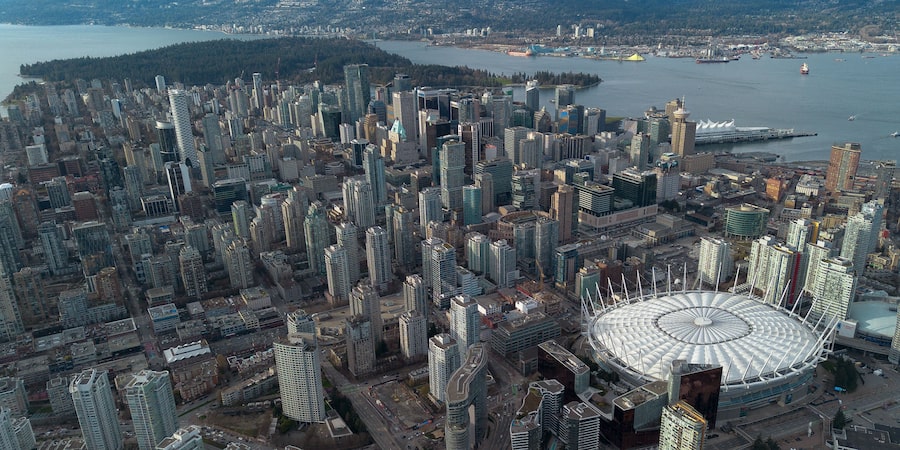
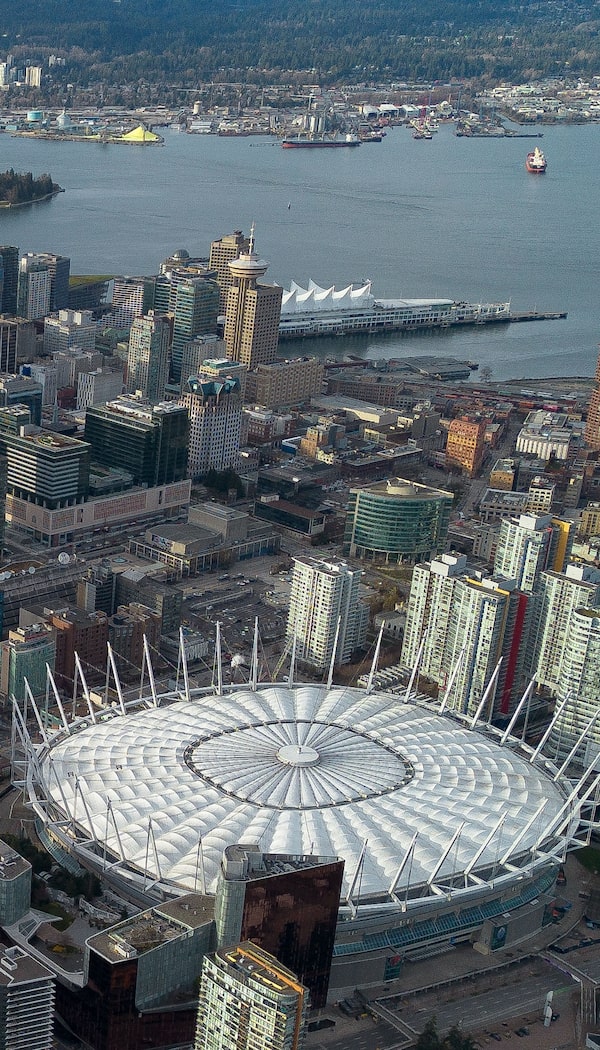
Toronto and Vancouver have collectively spent hundreds of millions to upgrade BMO Field and BC Place because FIFA’s requirements go far beyond hosting matches. The host-city agreements essentially turn these existing stadiums into temporary FIFA-controlled broadcast and commercial compounds.
In Vancouver’s case, the province spent approximately $196-million on renovations at BC Place to meet FIFA standards. These included adding a high-definition video scoreboard and new elevators, and installing a temporary natural grass pitch, exclusive lounges and retail space and enhanced locker rooms.
Toronto and Maple Leaf Sports & Entertainment spent $157.9-million on expanding BMO Field – stripped of its branding and called “Toronto Stadium” for the tournament – to meet FIFA’s requirements for the tournament. That includes adding 17,000 temporary seats to increase capacity to more than 45,000 people, as well as installing a new FIFA-standard grass pitch and upgrading LED lighting, the stadium sound system and hospitality areas.

The Centre Field lounge and hospitality suite was one of BMO Field's upgrades ahead of the World Cup.Sarah Espedido/The Globe and Mail
Much of the work done at BMO Field and BC Place was needed to meet FIFA’s strict requirements for its global broadcast needs, spelled out in the host-city agreements, including installing new broadcast platforms, improving sightlines, building uninterrupted power supply systems and restructuring stadium access and so-called back‑of‑house areas.
FIFA’s requirements go well beyond the typical sporting events that both stadiums have hosted. In Toronto’s case, the broadcast standards required for Major League Soccer and the Canadian Football League weren’t considered good enough for the World Cup. Although BC Place was considered “Olympics‑ready,” it was built for live spectators and domestic TV, not for FIFA’s globally standardized, sponsor‑driven business model.

Security, policing and emergency services
The contracts require host authorities to co-ordinate, staff and pay for all security associated with the tournament, including policing, counterterrorism, emergency medical services, traffic control and crowd management. While security is one of the largest costs associated with hosting, FIFA contributes no funding but sets out detailed operational requirements.
FIFA expects VIP security treatment for teams and its executives. The issue flared up last month in Vancouver when, as reported by The Globe and other outlets, FIFA president Gianni Infantino’s office asked for a full motorcade escort so he could travel without disruption and pass through traffic lights. The Vancouver police initially denied the request, but ultimately provided it, under the guise of using it as a test run for the World Cup.
Cities must also agree to indemnify FIFA against losses arising from security failures, protests or civil disorder, shifting financial and legal risk entirely to governments. In Vancouver’s case, these obligations extend beyond stadium boundaries into surrounding neighbourhoods and transit corridors. Authorities there have already said the police deployment in that city will be larger than the 2010 Winter Olympics, when policing costs ended up being almost $1-billion.

This command-post vehicle is a nerve centre for Toronto's World Cup security. Mayor Olivia Chow and the city's police chief unveiled it this month.Eduardo Lima/The Globe and Mail

Vancouver Mayor Ken Sim, at left with Premier David Eby and Indigenous leaders, will see a massive police presence in his city, larger than any since the 2010 Olympics.Darryl Dyck/The Canadian Press
Ottawa recently pledged up to $145-million for security during the World Cup to help Vancouver and Toronto deal with rising costs associated with an unprecedented police deployment during the soccer tournament. That money is in addition to $220-million Ottawa has already given to the host cities, and a further $100-million set aside in the 2025 budget for the RCMP and Canada Border Services Agency to help co-ordinate World Cup security.
The host-city agreements lay out FIFA’s security demands, from traffic control, CCTV and surveillance to ensuring safety at all World Cup venues, including training sites, fan zones, team hotels, media centres and transport hubs. Host cities are required to build stadium perimeters, credential checkpoints and access‑control systems that regulate who and what enters the stadium and its surrounding streets.
With the potential for violent protests, terrorism and hooliganism, the police operation around the World Cup will be among the largest and most sophisticated that either city has ever seen. For people who live or work near World Cup sites, it will mean significant impacts on their ability to travel freely, with street closings and security zones.
“We’re looking at everything,” said Superintendent Dave Ecklund of the Toronto Police Service, the lead officer for the Toronto integrated safety and security unit for the World Cup. “No. 1 is probably terrorism. This is a world-stage event, so we have a robust intelligence process in play here. We’re partnering with our provincial partners and our national partners and even our international partners. There will be police services from every country involved in an essential-intelligence-sharing hub.”

‘Controlled areas’ and commercial exclusion zones
When the World Cup arrives, it won’t just occupy Toronto and Vancouver’s soccer stadiums. It will redraw the city around it. The instrument for doing this, written in dense legal prose inside FIFA’s host-city agreements, is the “controlled area” – a cordon of space where special rules designed to accommodate FIFA’s commercial order will take over.
These zones are fundamental to the economics of the tournament because FIFA’s business model depends on selling exclusivity to its global sponsors. A multinational corporation that pays tens or hundreds of millions for official partner status is not just buying logo placement; it’s buying commercial dominance within the event environment.
The host-city agreements extend FIFA’s control over adjacent streets, plazas, parking sites and transit stations, where the city must regulate signage, remove competing branding and limit non-affiliated vendors. Without it, FIFA worries local businesses could associate themselves with the World Cup for free, ambush marketing could flourish and sponsors would lose the clean, uncluttered stage for which they have paid.
Enforcing these controlled commercial zones falls on the host cities, which are required by contract to create two-kilometre-wide patrol areas around their stadiums. By forcing local governments to create and police these trademark exclusion zones, FIFA effectively outsources brand protection to the public sector, said Candice Kloes, a lawyer and expert in trademark law at Borden Ladner Gervais LLP. Streets that would ordinarily host a jumble of competing messages are temporarily turned into a curated, sponsor‑only landscape.
That means municipal bylaw officers and volunteer brand-protection agents will be patrolling the streets around the stadiums, looking for signs of trademark infringement. FIFA has produced guidelines for local businesses that ban the use of its trademarked terms or images, including the phrase “World Cup.” The international soccer federation says this is “common practice for major international sporting events.”
“The FIFA World Cup is one of the most iconic football competitions in the world. Investing time and resources to protect its brands is of paramount importance to FIFA in order to secure the revenue streams which enable us to support the development and growth of football globally,” FIFA’s Alicia Diotte, head of public relations for the Canadian portion of the tournament, said in an e-mail.


Toronto's fan festival area is at Fort York and The Bentway. These Korean drummers performed there last month for a sneak-peek event.Nathan Denette/The Canadian Press
Fan festivals
One of the few places where host cities can raise revenue from the World Cup is through fan festivals – those large outdoor gatherings where people without tickets to matches can watch broadcasts of those games and celebrate their teams. The host-city agreements make it clear that the cities can use these events to create local sponsorship opportunities, as long as it’s alongside FIFA sponsors.
Toronto has struggled to sell many sponsorship packages, according to the city’s World Cup host authority, which said it’s trying to close a $5-million budget gap after scrapping a plan to charge a $10 entry fee for the 22-day event at Fort York and The Bentway. This followed Vancouver’s announcement in March that its fan festivals would remain largely free, forgoing millions of dollars in potential revenue.
“We continue to seek that funding,” said Sharon Bollenbach, executive director of Toronto’s FIFA World Cup 2026 Secretariat, during a media conference to mark a month before Toronto hosts its first match, on June 12.
Only four host-city supporter sponsorship packages have been sold so far, she told reporters.
“While the days are getting tight, I am confident and I know that our commercial team are still working all the prospects they’ve had on their lists, and we’re continuing to do all that we can to make sure that we close any budget gaps.”
The host-city agreements require that cities work with FIFA on entertainment and programming plans for these festivals, and cities need the soccer federation to sign off on any concerts. While FIFA allows cities to design and monetize their fan festivals, the contracts still demand a large, branded and sponsor-compliant public event that prioritizes FIFA’s commercial rights.

Financial guarantees and indemnities
Despite reaping huge profits from the 2026 World Cup – which is on track to be the most profitable sporting event ever staged – FIFA is further protected by its host-city agreement clauses that require governments to cover all cost overruns and indemnify FIFA against any legal claims. The contracts do this while making it clear the soccer federation retains all ticket revenue, broadcasting rights and merchandise sales, the most lucrative income streams for the tournament.
In effect, cities underwrite the tournament’s risks while FIFA protects its revenues through binding agreements. In B.C., officials have acknowledged potential taxpayer exposure approaching hundreds of millions of dollars. While B.C. Premier David Eby says it will be worth it, he’s promised a “full accounting” of the use of public funds after the World Cup.
Councillors and taxpayers’ groups in both cities have panned the World Cup contracts as a bad deal for local governments. Toronto City Councillor Josh Matlow told The Globe, “I just can’t understand how any reasonable person thought that it was a good deal for Toronto. They gave away the house.”
In Vancouver, the Canadian Taxpayers Federation and opposition MLAs say the hosting costs are too high and the benefits are overstated. Vancouver City Councillor Sean Orr has questioned the timing and the priorities of spending hundreds of millions on “throwing a party” in the middle of a potential downturn in the economy.
But John Tory, the former Toronto mayor who spearheaded the campaign to bring the World Cup to his city, said the tournament is a once-in-a-generation opportunity to promote the country. While critics may focus on the concessions given to FIFA, he believes there will be long-term economic benefits from hosting.
“I still believe this will be a good investment. I think we should all just get over ourselves and try to make this thing a big success,” he said. “The world needs a positive event, and it needs some hope. We need the economic and psychological boost for the city. I think all Canadians do.”
With reports from Frances Bula and Simon Houpt

Cole Burston/AFP via Getty Images
A World Cup to watch: More from The Globe and Mail
Heading to the World Cup this summer? We want to hear from you!
Tell us how you scored tickets, which matches and whether it was through careful budgeting, selling a kidney or balling out. What are you most excited about? Share your story in the form below, or send an e-mail to audience@globeandmail.com.
Preparing for the pitch
Where to watch the World Cup in Toronto and Vancouver
Why do so many of Canada’s great soccer players come from Brampton?
Toronto using World Cup to pitch itself as inclusive alternative to anti-immigrant U.S.