On Monday, while astronaut Jeremy Hansen and his crewmates were recovering from their journey around the moon, another celebrated Canadian space farer was quietly getting the job done aboard the International Space Station.
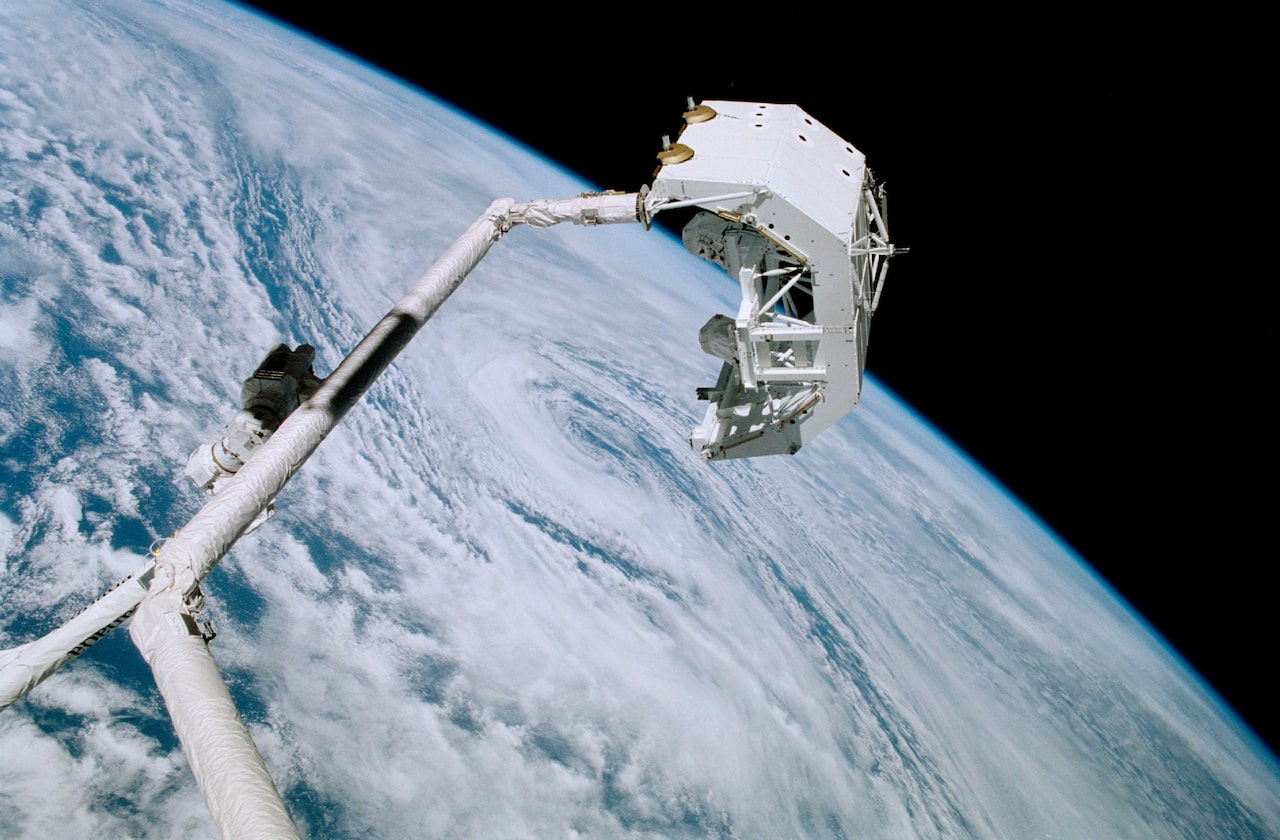
The Canadarm2, the station’s robotic arm, was used by astronauts on board to reach out and grab an uncrewed Cygnus spacecraft loaded with 5,000 kilograms worth of supplies and scientific gear.
A team of Canadian and U.S. operators at NASA’s Johnson Space Center in Houston then took control of the arm to manoeuvre the spacecraft into position so it could attach to the station’s Unity module for unloading.

On April 13, NASA astronaut Chris Williams, with assistance from fellow astronaut Jack Hathaway, captured Northrop Grumman’s Cygnus XL spacecraft using the Canadarm2 robotic arm. The spacecraft is seen arriving at its capture point 12 metres away from the ISS before the robotic arm reaches out and grapples the resupply ship.NASA
Bringing together two massive vehicles, each one racing around the planet at about 28,000 km per hour, is no small feat. The operation, nicknamed a “cosmic catch,” is akin to reaching a hand from a speeding car into the open window of another while racing down the highway. While it has been accomplished well over 50 times on the station, it requires months of planning and a deep understanding of the Canadian-built machine that makes it all possible.
“It’s very high stakes,” said Tim Braithwaite, the Canadian Space Agency’s liaison manager in Houston. “If those supplies don’t get on board, then there’s a problem.”
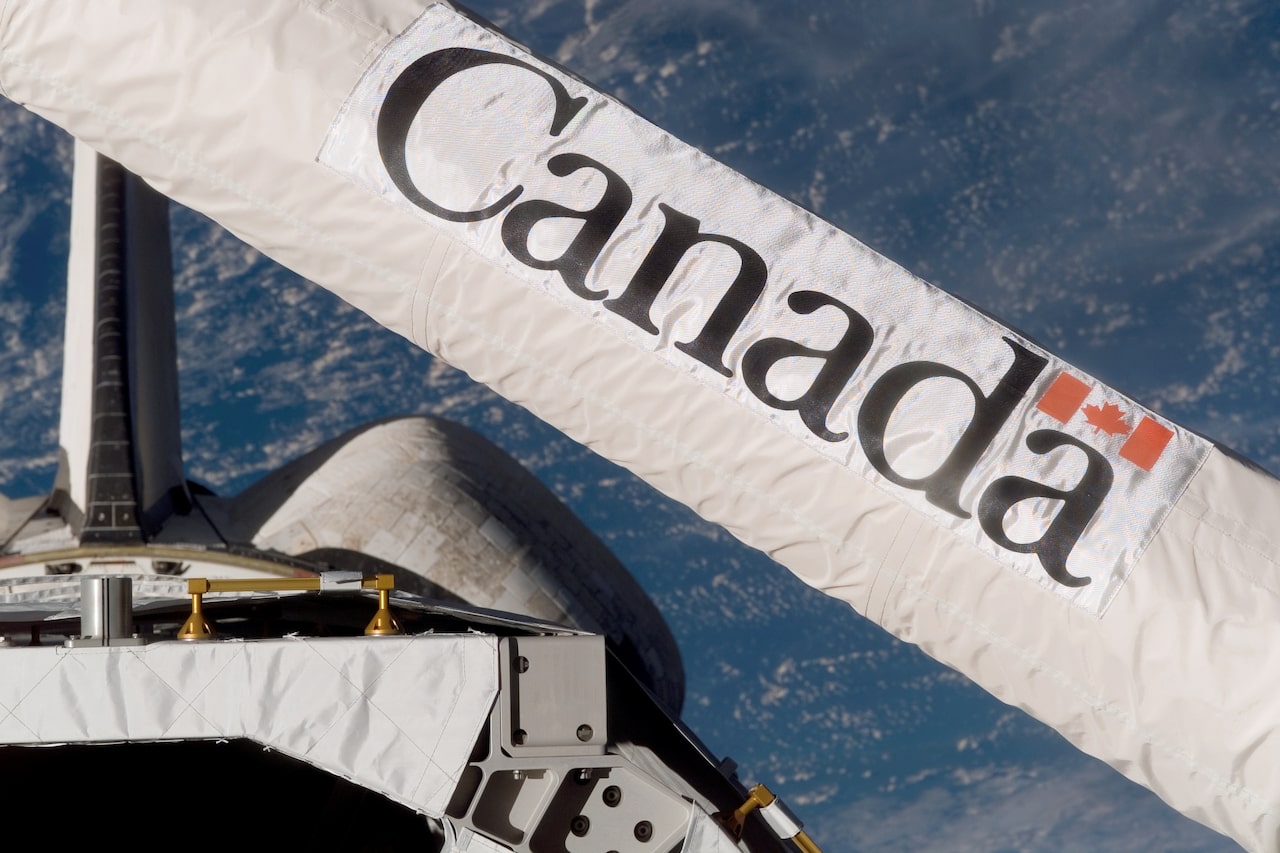
On Sunday, Canadarm2 will mark its 25th year in space.
In that time, the iconic arm has not only proved essential for building the station, but for maintaining it day to day. It is the orbiting facility’s all-purpose handyman: Looking, adjusting, swapping parts and generally keeping things in running order.
“It’s all the stuff that we’ve been able to do robotically to free the crew up to so they can do science inside while we do the maintenance stuff outside,” said Isaac Mensah, a senior robotics engineer with the Houston office of MDA Space, the Canadian company that designed and build the arm.

Engineers Michael Klamph, Justin Goolsby, Jason Campbell and Isaac Mensah have spent years operating or working on various aspects of the Canadarm2 robotic system.Ivan Semeniuk/The Globe and Mail
And the arm has endured. It has survived the vacuum of space, the harsh radiation, the temperature extremes (it is flying in and out of Earth’s shadow every 90 minutes), and everything else it encounters, from corrosive ions to micrometeoroid impacts.
“How many cars from 2001 are still rolling today?” Mr. Mensah said. “I dare anybody to find any sort of mechanical system from any industry that has been this well behaved over that long of a time.”

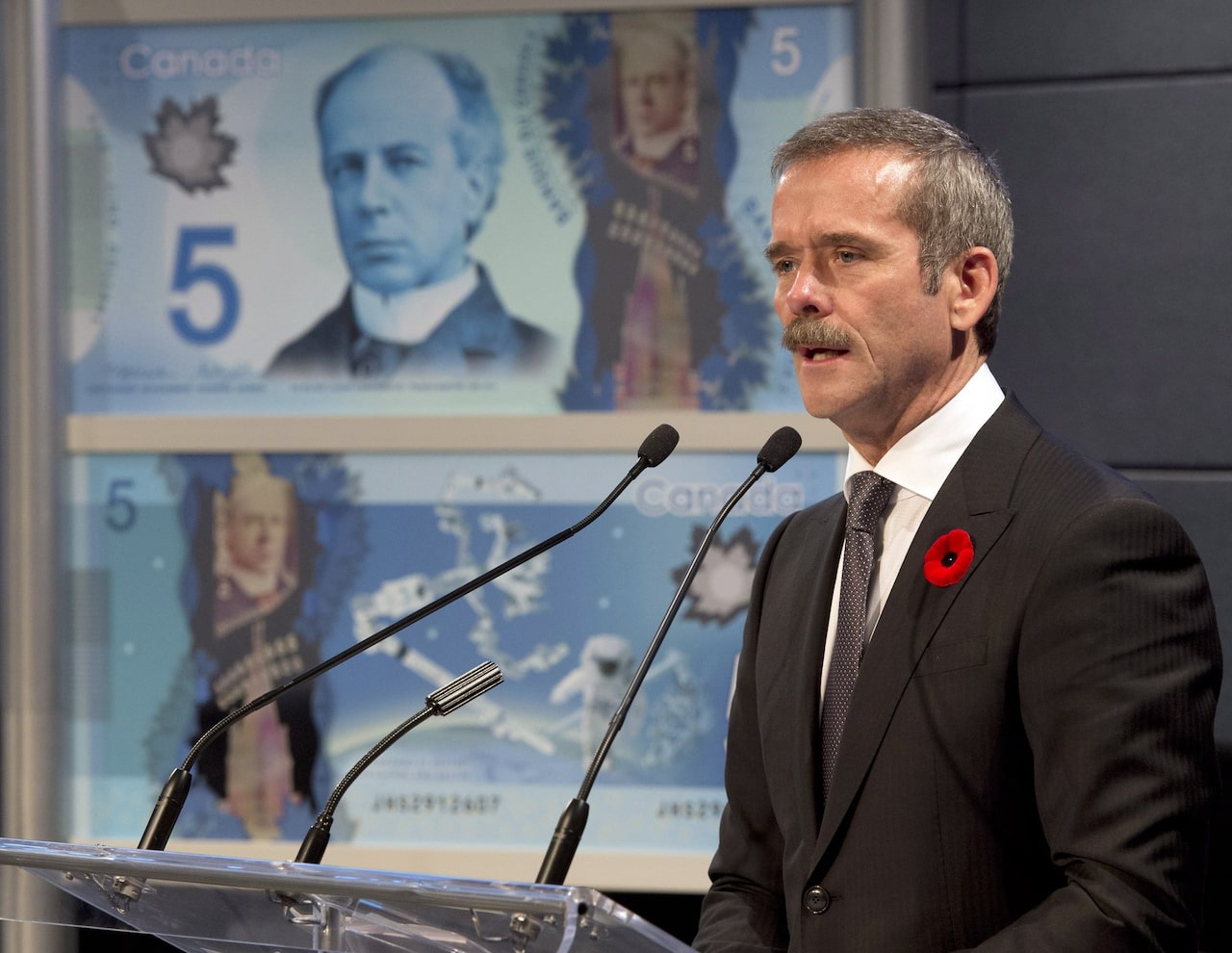
Chris Hadfield conducts a briefing on the Canadarm2 in Toronto in October, 2000.FRANK GUNN/The Canadian Press
That was certainly the hope when MDA first envisioned the arm in the 1990s. It was a huge leap from what came before. Starting in 1981, Canada had provided a generation of robotic arms for NASA’s space shuttle fleet, which tackled the challenges of how to grasp and move objects in orbit.
But unlike that first generation of Canadarms, which returned to Earth with each flight and could be carefully maintained at the company’s headquarters in Brampton, Ont., Canadarm2 had to be in space full time and perform far more complicated tasks.
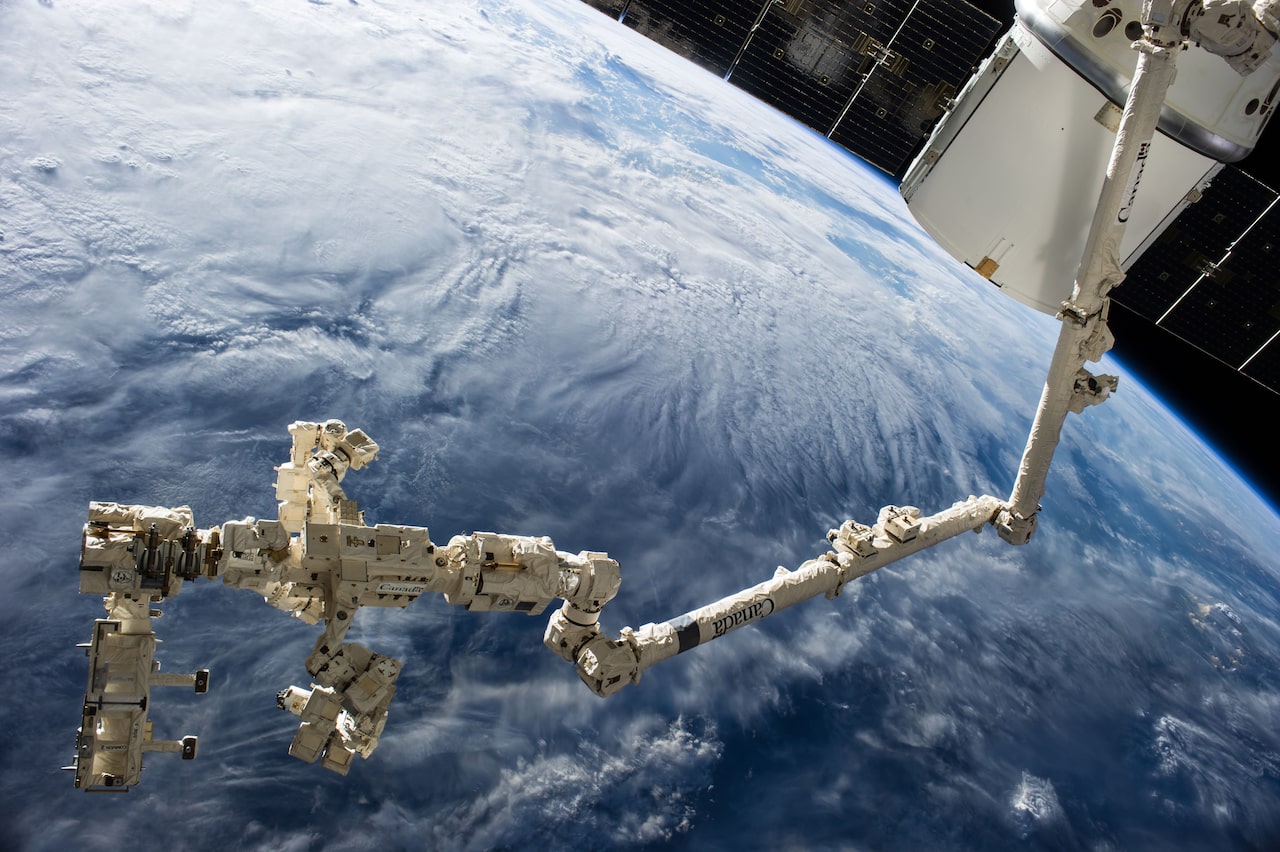
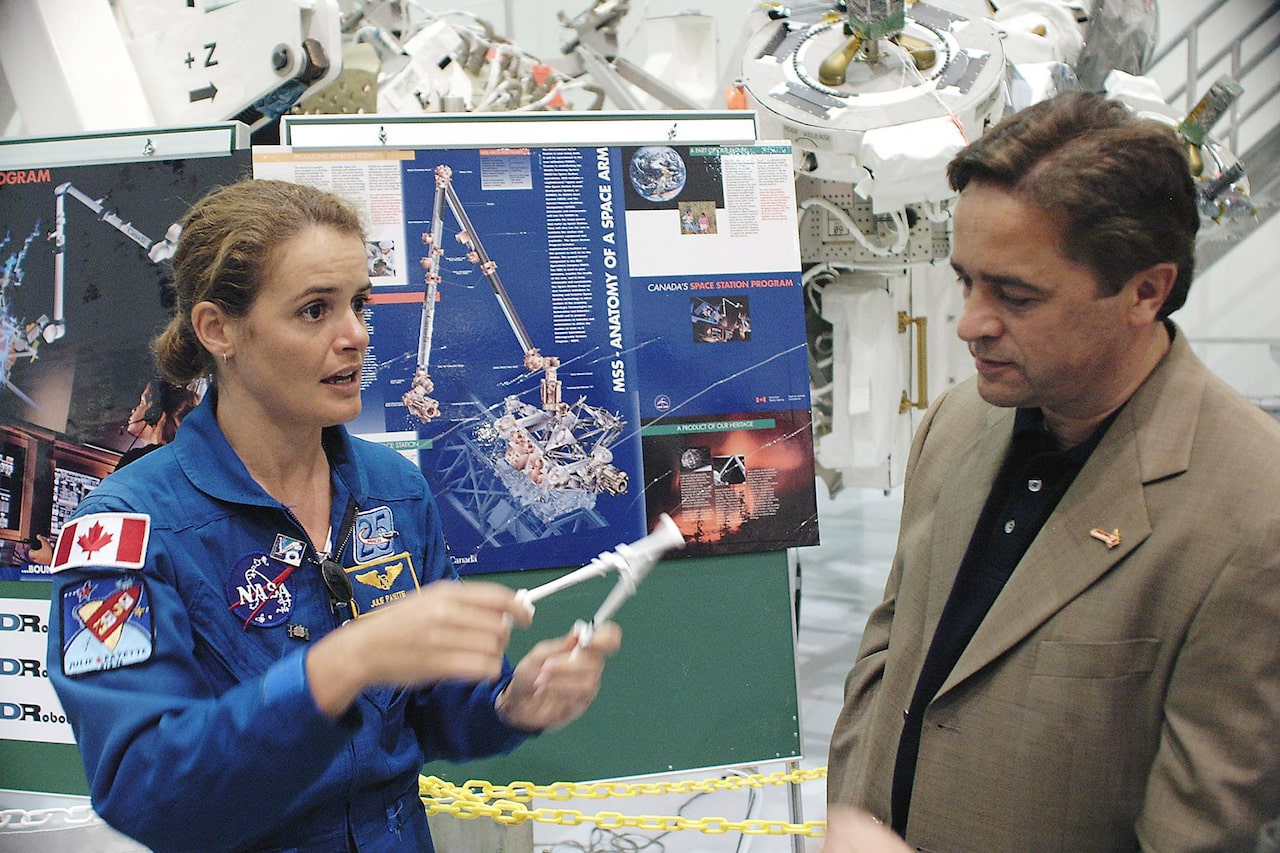
To enable a wider portfolio of tasks, the arm was built with “end effectors” – the Canadarm version of hands – on both sides. This means it can anchor itself at either end, leaving the opposite end free to perform a task, or to find a new anchor point so that it can effectively walk its way around the outside of the station. And each attachment connects to power and data lines so that it remains alive and in constant communication with engineers on Earth.
The arm also has a mobile base that can roll along the station’s main truss to transport the arm to different work stations. And it has an additional robot, nicknamed “Dextre,” with two smaller arms that can sit on one end of the main arm and move into position to make precision movements and repairs.
Collectively, the entire system is the most sophisticated assortment of space hardware ever built by Canada. After 25 years, it remains the country’s orbiting calling card. This has led directly to Canada’s participation in the Artemis lunar program and to commercial possibilities as private space companies look to emulate what the space station achieved.

The space shuttle Endeavour, carryng the Canadarm2, clears the launch pad at the Kennedy Space Center in April, 2001.GARY I. ROTHSTEIN/CSA
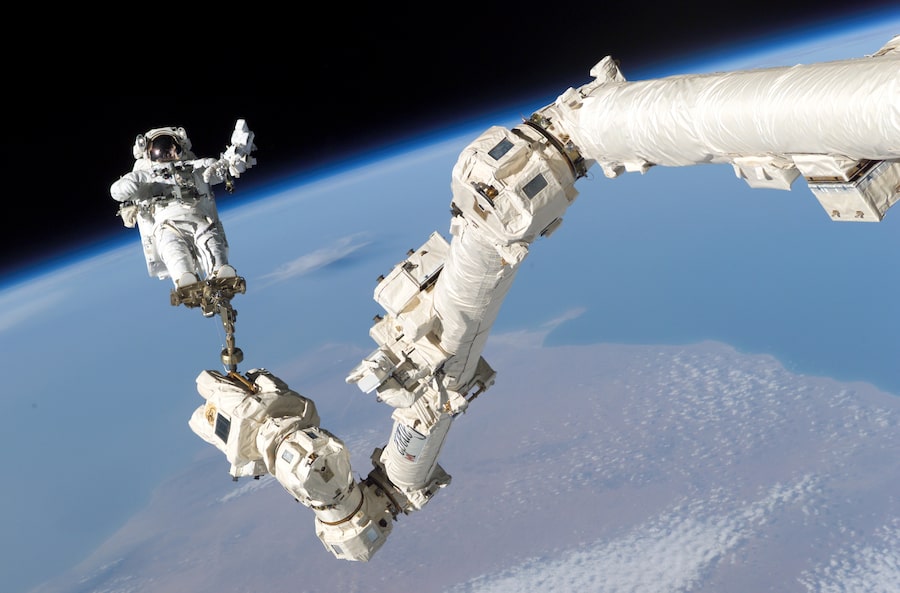
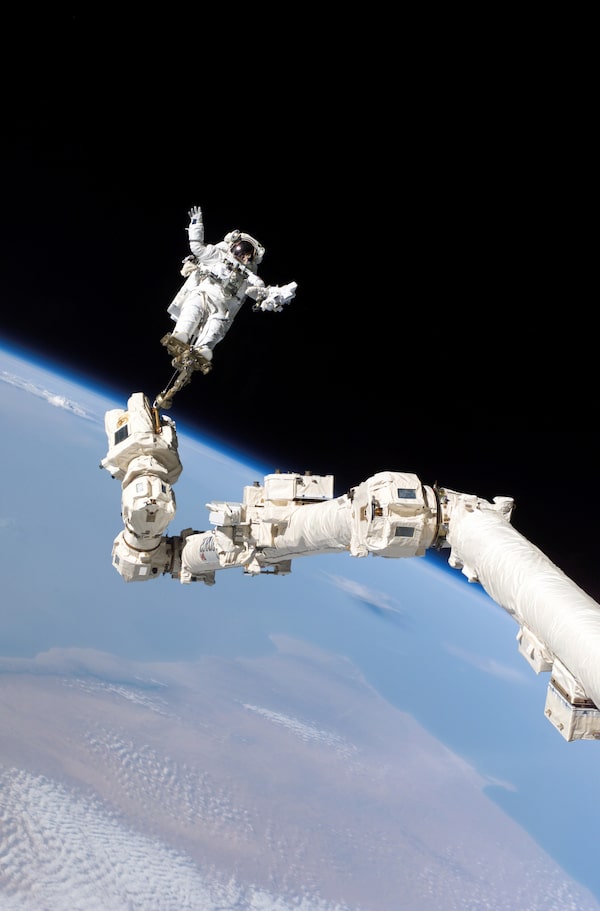
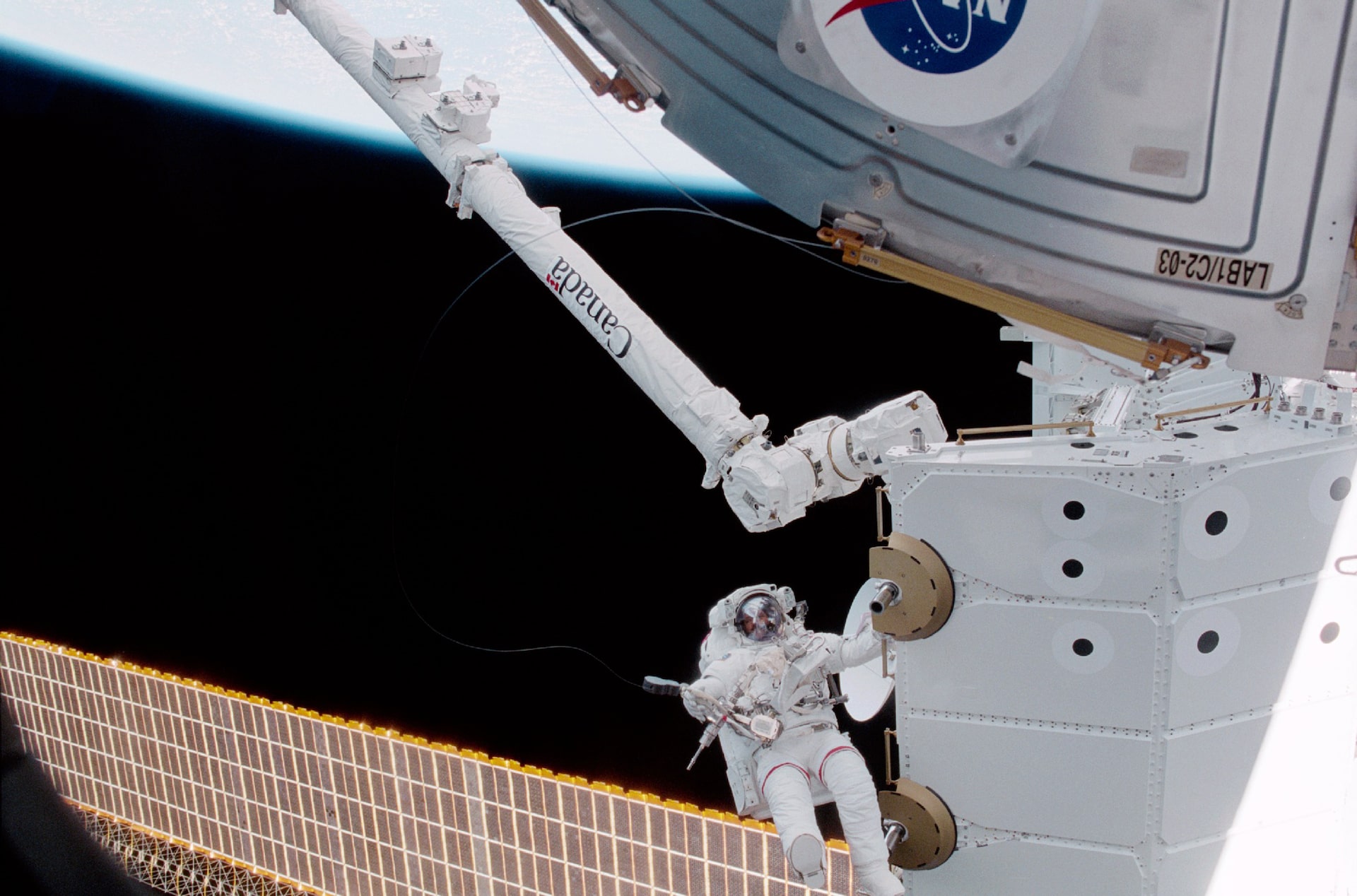
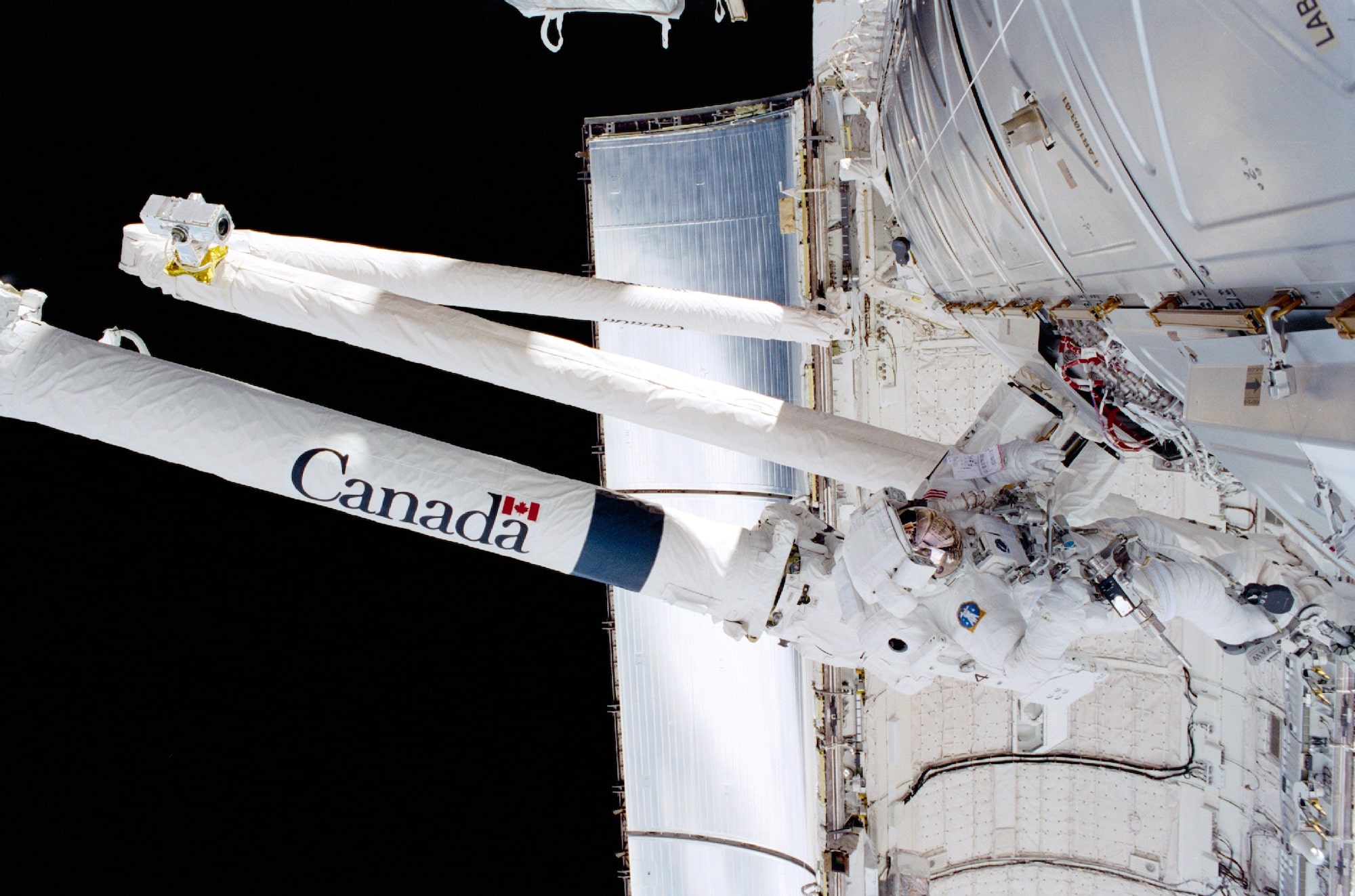
The space shuttle Endeavour carried Canadarm2 into orbit on April 19, 2001 and arrived at the station two days later. On April 22, Chris Hadfield became the first Canadian to perform a spacewalk when he and NASA astronaut Scott Parazynski emerged to unpack and install the arm over the next two days.
In an interview with The Globe and Mail this week, Mr. Hadfield vividly recalled the challenge of assembling the main arm with its tree-trunk size booms and bolting the sections together. The fasteners, however, did not perform as expected in the free-fall environment.
“We ended up having to use the power drill as a manual ratchet,” he said, “just strong-arming in order to to get them all tightened up.”

Inside the cupola of the ISS, Hadfield sits in for a refresher session at the controls of Canadarm2. The robotic arm was used to capture SpaceX’s Dragon on March, 2013.NASA
It was during this operation that some contamination from his spacesuit’s visor temporarily blinded him, Mr. Hadfield said. He resorted to using his emergency oxygen supply to evaporate his tears and was then able to continue.
He remembers what it felt like to tighten the bolts. “You don’t want to strip the bolt, but you’re trying to get as much into it as you can ... because I knew that if I didn’t get it tight enough, then some poor astronaut in the future would have to fix it.”
Twenty-five years later those bolts are holding and the arm has done much more than save one poor astronaut a repair job.
“It has saved us thousands of hours of spacewalking, which helps with safety and decreased complexity and necessary use of oxygen resources and suit lifetimes,” Mr. Hadfield said. " So it’s been a tremendous asset."
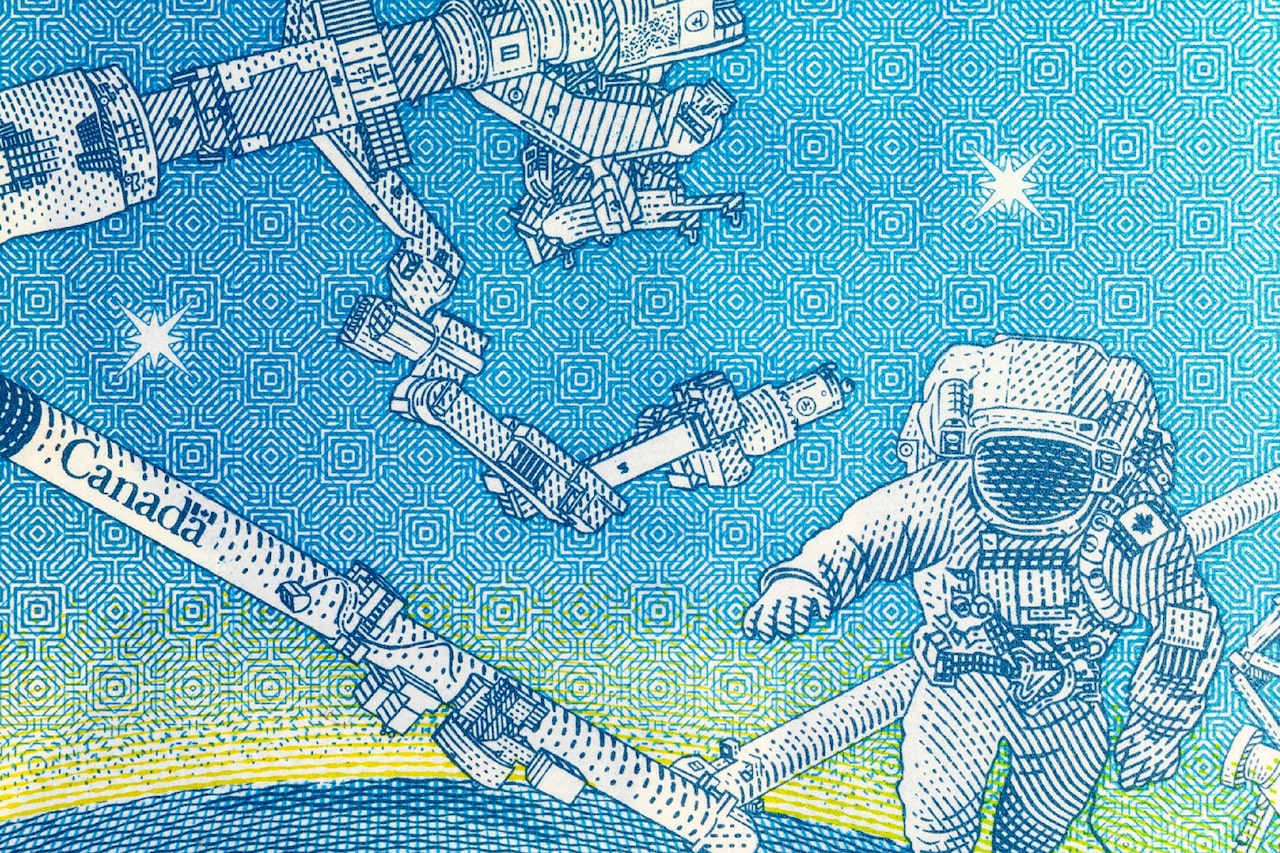
Now with construction of the station long completed, the arm remains as busy as ever keeping the station maintained, much of which is done from the ground without needing to take up precious crew time on board.
As time has gone on, the arm – which engineers call the MSS, for “mobile servicing system” – has taken on more complex tasks and repairs, well beyond what was originally envisioned when the system was designed.
Typically, these are managed by teams led by a robotics officer flight controller who sits at a console in mission control in Houston, or at a parallel facility at Canadian Space Agency headquarters in Longueuil, Que.

Tim Braithwaite, liaison manager for the Canadian Space Agency at NASA's Johnson Space Centre in Houston, was among the first to be certified to operate the arm in mission control when it was installed in 2001.Ivan Semeniuk/The Globe and Mail
Activities with the arm are frequent, but there is little room for spontaneity, said Ed Birchnall, a senior engineer who supervises operations and training at the agency.
“There’s a lot of planning,” he said. “For anything that is not a visiting vehicle capture or a spacewalk, everything is incredibly highly scripted weeks in advance, if not months in advance.”
That means working with a deep understanding of the arm, which can move with seven degrees of freedom, and determining the best and safest way to accomplish a task.
“That’s what we love about this job – it’s finding the things that are different, finding the problems, creating solutions,” said Jason Campbell, a senior flight controller with MDA in Houston who regularly operates the arm.
It’s a role that will continue as long as the station is occupied – and even longer, since it will likely be the final inhabitant on board, after humans have left and the station is decommissioned and ultimately de-orbited.
But there will be many more orbits, repairs and cosmic catches before then.
Michael Klamph, a senior engineer with MDA in Houston, said one of the most satisfying things about working with the arm has been understanding how the system has held up and finding ways to keep it going, particularly the end effectors, which have done so much gripping and releasing over the years.
Next week, the arm will be at it again, celebrating its anniversary by replacing a remote power control module on the station.
Justin Goolsby, a senior flight controller with MDA in Houston, will be leading that effort, which has been planned out over several weeks.
Such moments are a highlight, he said. They require focus and can be challenging, but watching the arm doing its work as the Earth rolls by below also comes with a certain serenity.
“It’s not a simple machine, but it’s also not overly complex,” Mr. Goolsby said. “It does what we need it to do, and we use it to our best ability. It’s pretty awesome.”
Editor’s note: A previous version of this story had a misspelling of Michael Klamph’s name in a caption. It has since been corrected.
Canadarm2 has an additional robot, nicknamed 'Dextre' that is capable of fine-tuned sophisticated movement. Prior to Dextre, astronauts ventured outside of the space craft to make repairs.
Canadian Space Agency