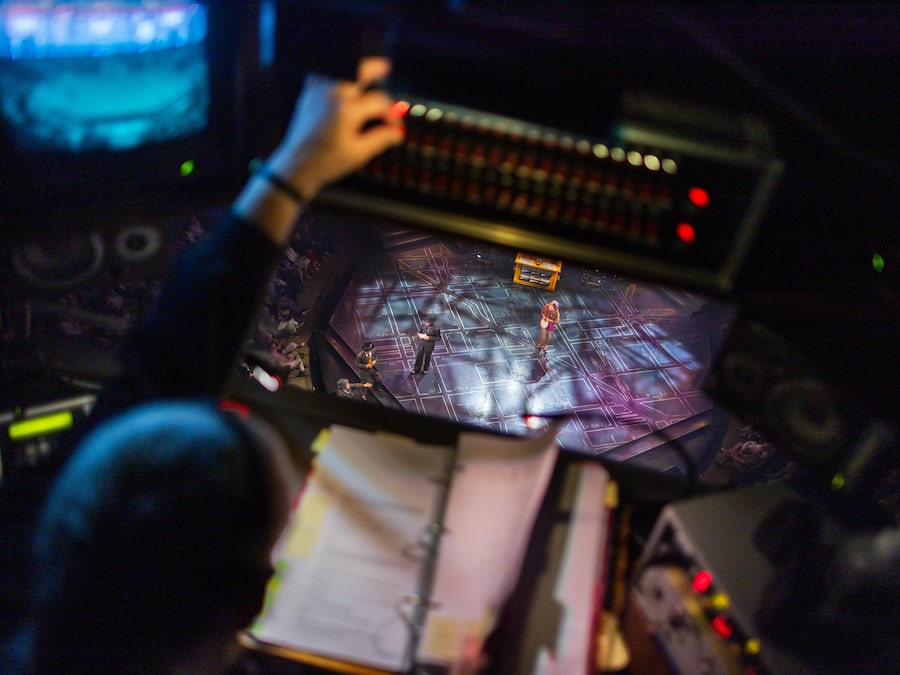
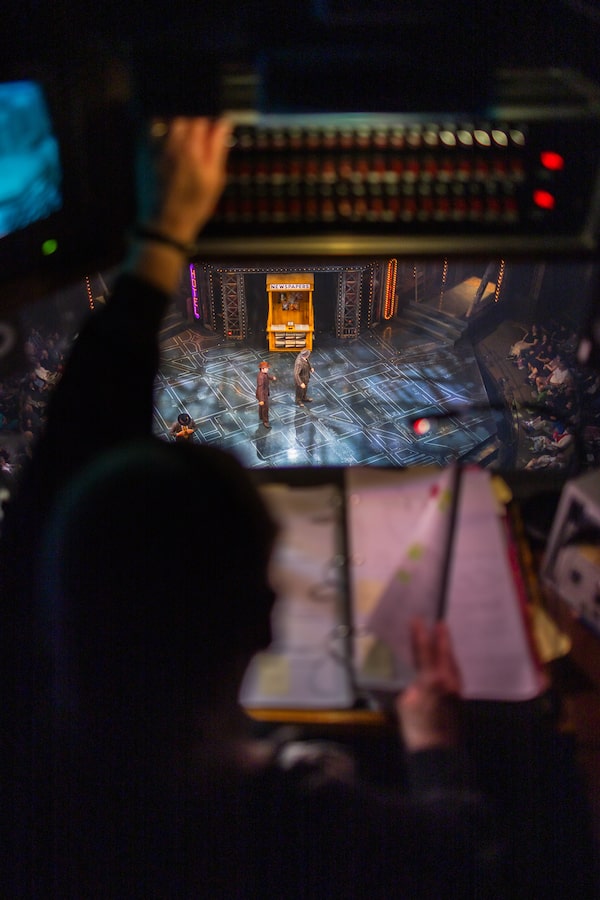
Cynthia Toushan is perched in a control box above the audience at Stratford’s Festival Theatre. Under the dim lights, she takes a sip of water and two deep breaths. She adjusts her headset.
Then she gives the cue for the show’s first orchestra note.
It’s the first of 3,800 stage cues Toushan will give today as she tackles a monumental task – managing a double-header production with two back-to-back musicals, on the same stage, with largely the same cast. This season, Stratford will offer the double-header on more than 30 days. While it’s not unheard-of for the company to schedule two productions in one day, hosting them on the same stage with little time in between is unusual. It does, however, allow travelling theatre-goers to make a full day out of their time in Stratford.
The afternoon begins with a 2 p.m. showing of 1950s-era gangster comedy, Guys and Dolls. By 8 p.m., the stage – and the performers – are transformed for Something Rotten!, a bombastic romp that chronicles two brothers trying to write a play that outshines the work of William Shakespeare. Though wildly different stories, both shows are directed by legendary choreographer and theatre director Donna Feore, known for her energetic, large-scale dance breaks. Sometimes the sequence of shows is reversed but the pressure is always the same, says Toushan, who’s in her 30th season with Stratford. Dancers’ preference for which show they perform first is split 50/50.
“Something Rotten! is a marathon. Guys and Dolls is a series of intense sprints,” she says. “It’s nuts.”
As stage production manager, Toushan oversees a crew of operators who control lighting, sound, music, costumes, and set co-ordination. It’s her job to piece together thousands of meticulously rehearsed moments – and replicate the process every production day of the season. “Basically, I’m a professional control freak.”
In stage direction, especially with two shows back-to-back on a single stage, timing is critical. A sound or lighting cue off by a mere half-beat can be disastrous. “If we’re not focused, we’re risking injury,” Cindy Toushan says of her operating crew. “If I call a blackout cue too soon and throw [the dancers] into blackness, that’s not safe. And for them, if they don’t finish right on the note and they’re moving in when I’ve called the blackout, that’s also not safe.”