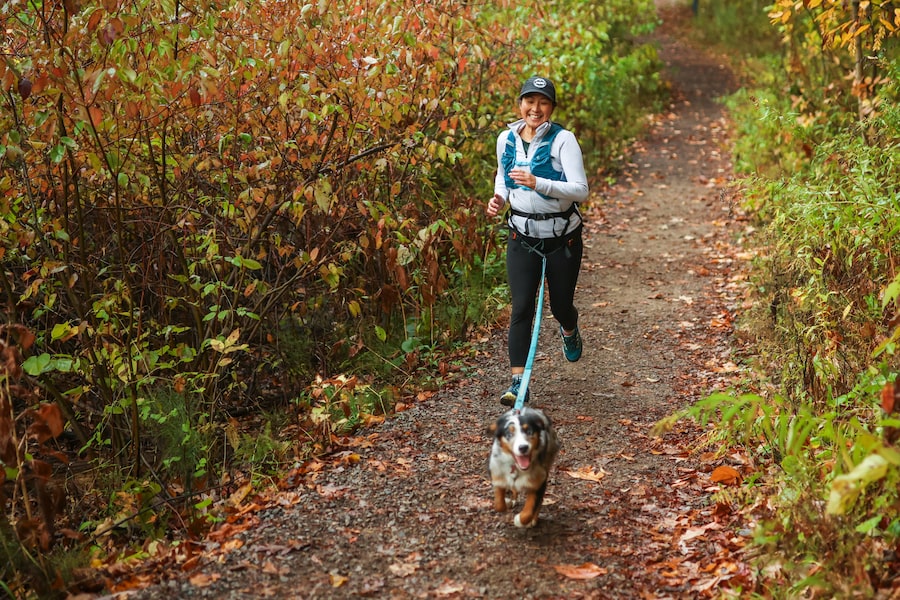
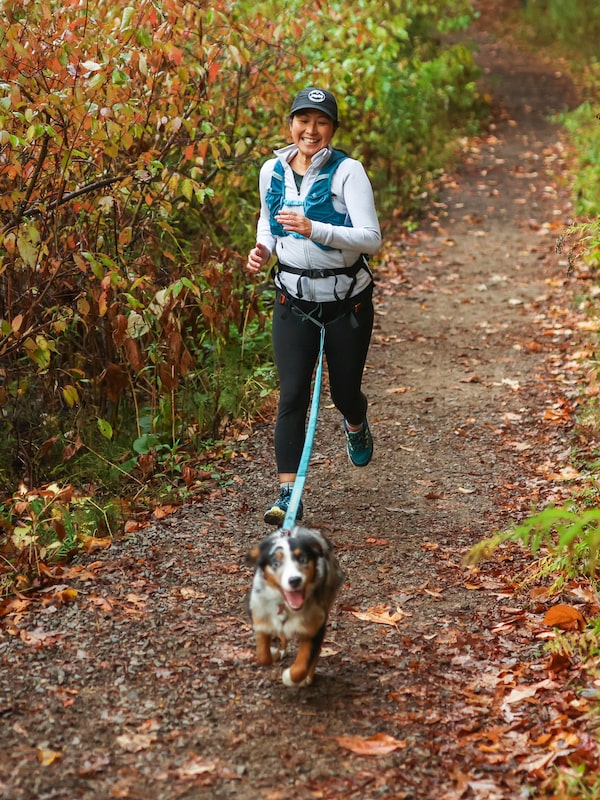
Cross-country running but make it with dogs. For canicross enthusiasts – who run trails while tethered to their pooch, with Fido leading the way – canine-human teamwork is the best way to stay motivated about workouts, especially on crisp autumn mornings.
Ask any participant about the sport’s appeal, and most mention the connection it fosters with their pup.
“Moving together as a team and being a working unit is a big part of what draws me to canicross,” says Jessica Tuomela, who owns True North Canine, a Victoria-based company that trains dogs in canicross and scent detection.

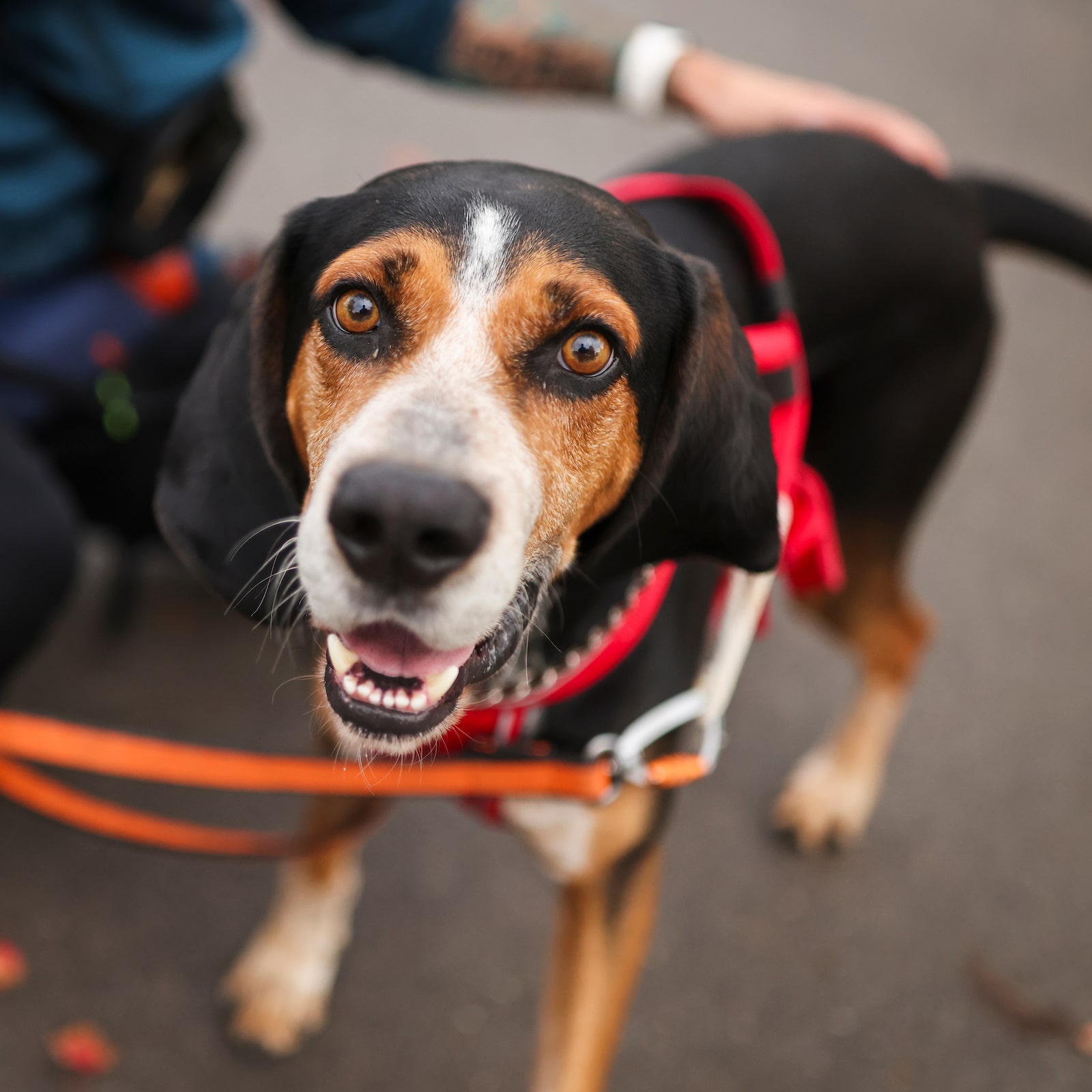
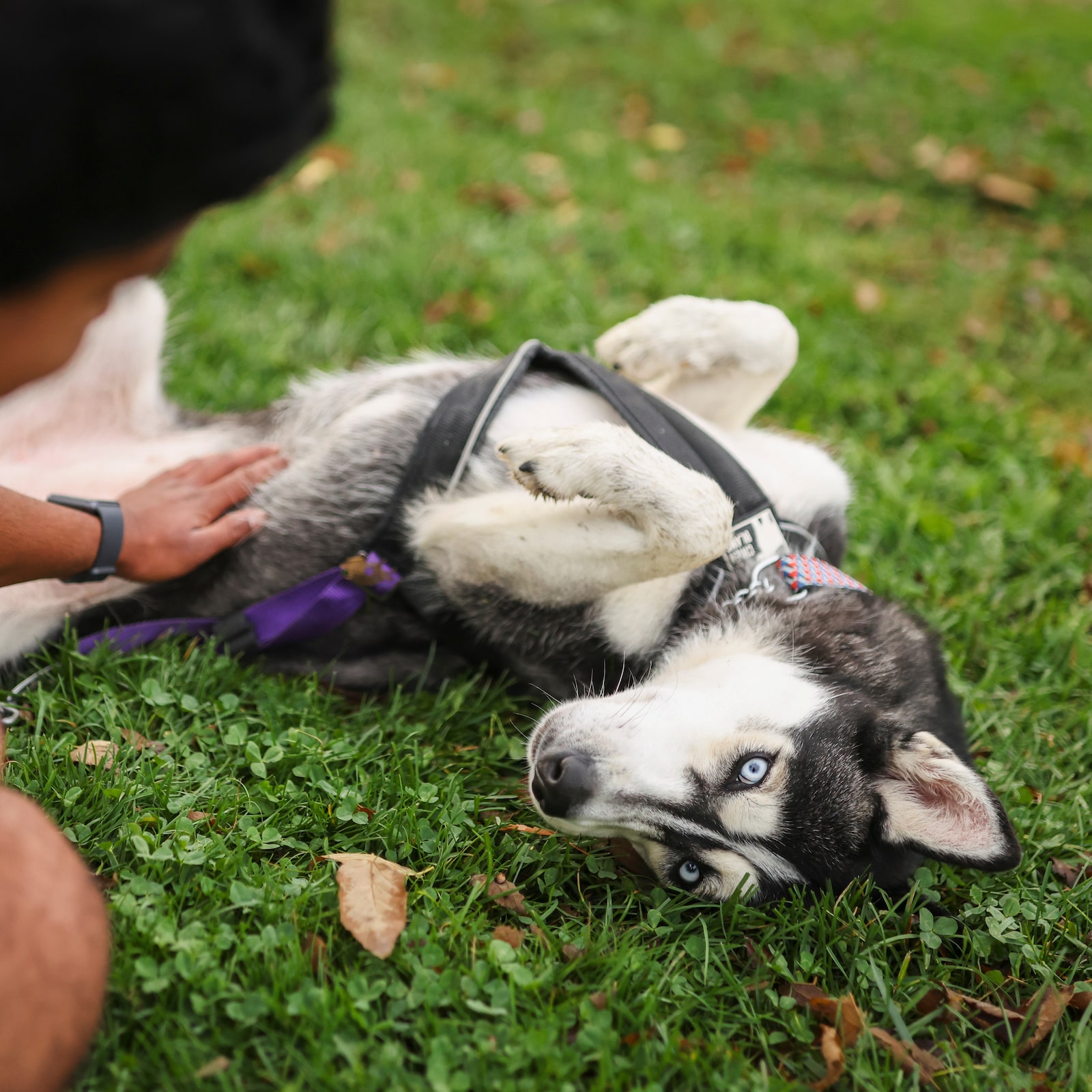
Dogs and owners gather before a canicross morning run at Churchill Park in Hamilton, on Oct. 18.
The four-time Paralympic triathlete runs with her guide dog, B, a six-year-old German shepherd mix. “For me – being completely blind – one of the things I fell in love with is, this is the closest I will ever come to running solo,” says Tuomela, who competed alongside a sighted guide.
For others, canicross brings a different kind of freedom: the ability to run without fear.
“I’ve always avoided less crowded trails for safety reasons. I was the victim of assault on a trail back when I lived in England, and that fear stayed with me throughout my adult life,” says Helen Cook, a marketing manager in Hamilton, who runs two or three times a week with Luna, her three-year-old border collie/blue heeler mix.
“I started canicross primarily because I was looking for an outlet for Luna, who is a double herding breed, but I love being able to explore trails I wouldn’t normally attempt on my own. I’m definitely seeing more of my city,” she says.

Running fast and pulling hard helps satisfy the exercise needs of high-energy, high-drive dogs, like Margaret Watson’s dogs, Zoe and Ruby.
For humans, canicross delivers the typical benefits of running: reduced blood pressure, better mood and more restful sleep. For dogs, it can help maintain heart, muscle and joint health, improve mood and reduce reactivity.
Running fast and pulling hard helps satisfy the exercise needs of high-energy, high-drive dogs in particular, says Jenna Blagdon, a high-school teacher in Bloomfield, N.L., whose three-year-old rescue dog, Yeti, is an ambassador for North American Canicross, an organization that promotes the sport across Canada and the U.S.
“Yeti is a Siberian husky-Eskimo dog with some Labrador retriever in him. I wanted him to have an outlet to satisfy his genetic fulfilment needs because he has such an instinct [for dog sports],” Blagdon says.
The dog-powered running boom
Canicross got its start in France and Belgium in the late 1980s, spreading across Europe alongside other niche human-canine sports such as bikejoring (mountain biking while being pulled by a dog) and skijoring (Nordic skiing while being pulled by a dog).
In Canada, the sport has grown in recent years, with clubs promoting casual runs and organized races that attract human-dog teams of all paces, skill levels and sizes, from dachshunds to Cane Corsos and their human equivalents.
Steeltown Canicross, the Hamilton-based club Helen Cook trains with, began with just two members in early 2024, and has since blossomed to approximately 100.
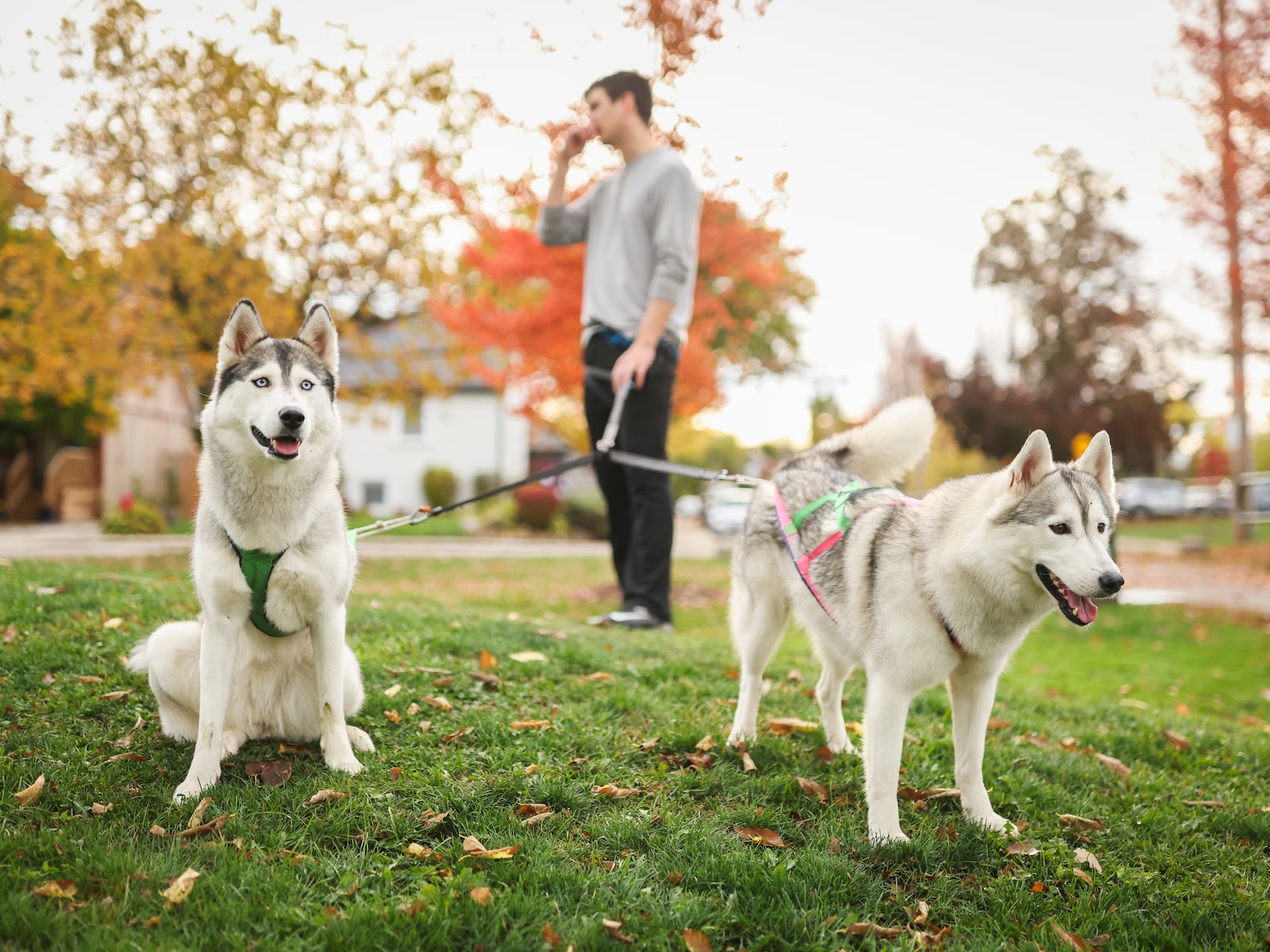
“We have new members joining weekly, and we’re frequently getting more than 30 teams at our weekly Saturday morning runs,” says co-lead Mikaela Eng-Toogood, a clinical trials manager who participates with her two Siberian huskies, Niska, 4, and Kaia, 2.
This growth at casual clubs mimics participation at the elite level. November’s 2025 International Canicross Federation World Championship in Pardubice, Czech Republic, is expected to draw a record 1,000 teams from 31 countries. In 2000, the event had just 80 teams and was limited to European competitors.
Field trips for shelter dogs
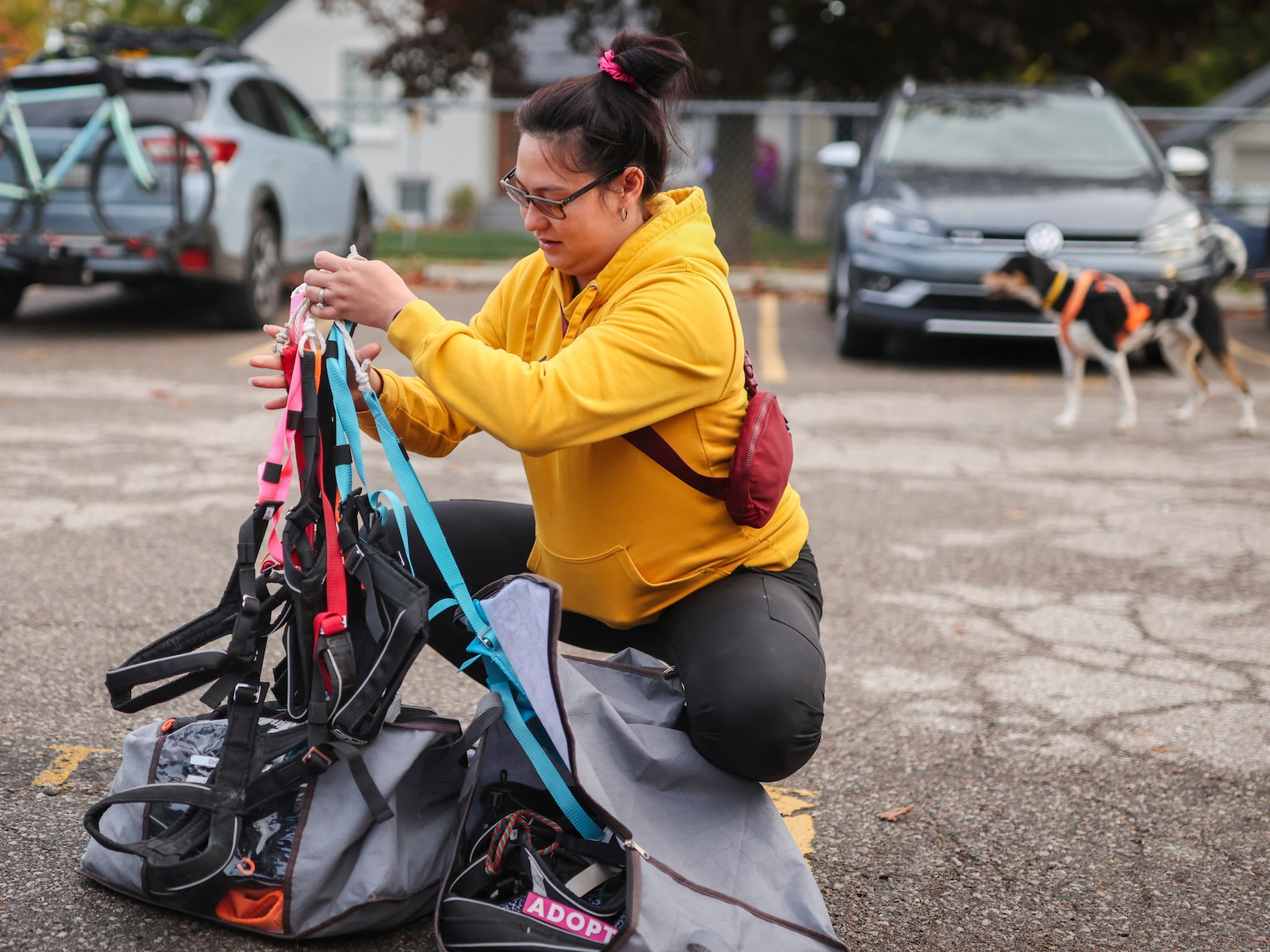
In Hamilton, not owning a dog is no problem for those looking to try out the sport: Steeltown Canicross can provide shelter dogs for those lacking a pup.
“We typically have four to eight shelter dogs coming out to run with volunteer handlers,” says Eng-Toogood, who started the “shelter-dog field trip” program to help high-energy canines whose needs aren’t met by basic walks.
“Taking them out lets us see them in a car, see them around bikes and around other people and dogs in a very high-drive environment on the running trail,” she explains. “This information helps the shelter build their adoption profiles.”
Postworkout, the dogs are more relaxed and can present better to potential adopters.
To date, more than 75 dogs have been adopted or have found long-term foster homes after participating in the program.
Start running with your canine
Ready to hit the trails with your dog? Miranda Logan is a veterinarian and canicross enthusiast based in Okotoks, Alta., who runs with Fitz, a five-year-old whippet. She recommends getting your vet’s all-clear before starting.
Logan says joining a local or virtual canicross group, such as North American Canicross, will provide newcomers with been-there, done-that advice and community support (particularly for reactive dogs). Another option is a couch-to-5K canicross program, so both partners can comfortably scale up their running practice.
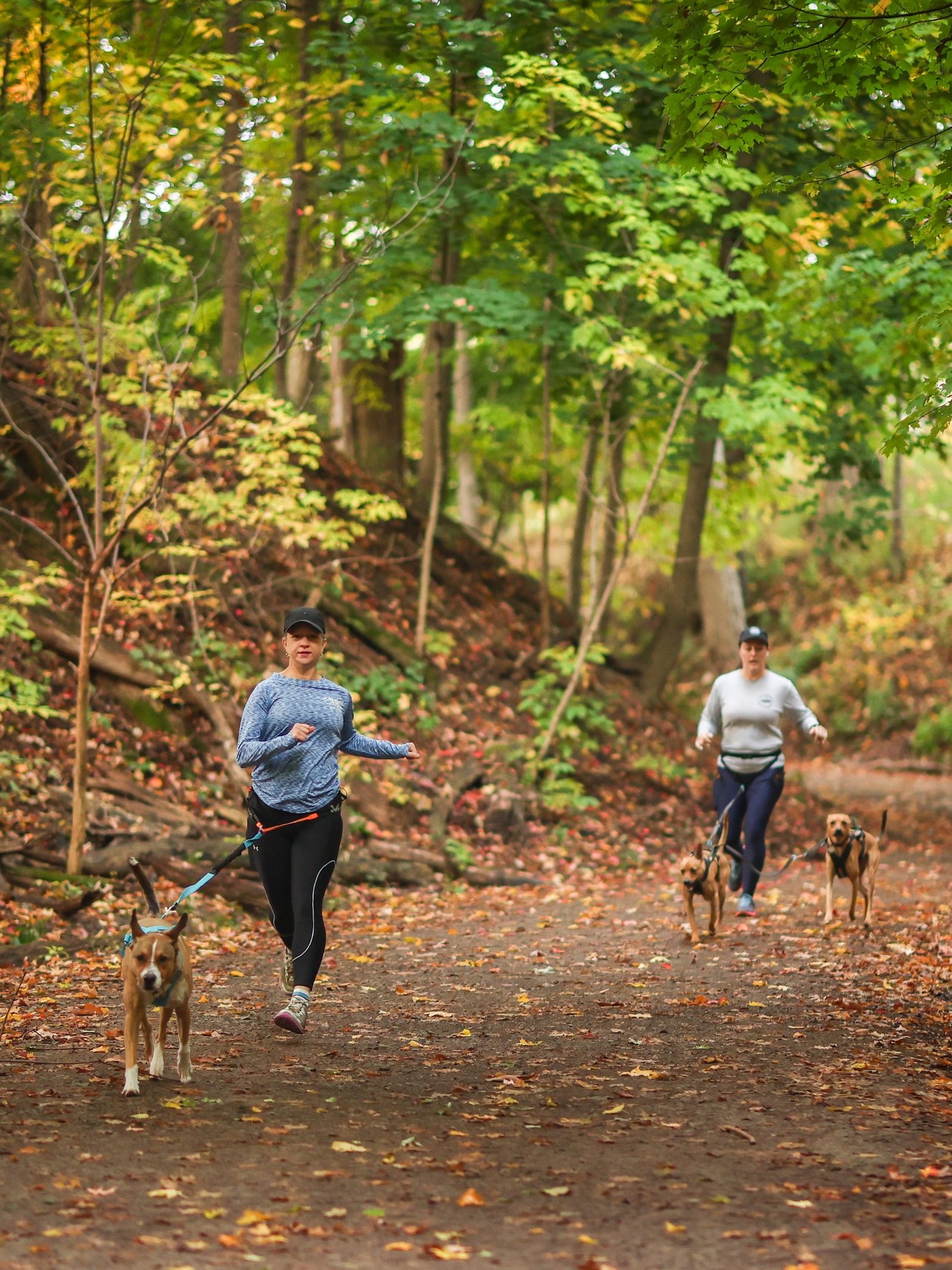
Properly fitted gear is key for both humans and dogs. A canicross harness promotes full range of motion and unencumbered breathing for a dog (even when pulling hard), while a hands-free leash belt reduces back strain for the human runner and helps maintain balance. The bungee line connecting the two absorbs shocks, reducing the likelihood of the runner being thrown off balance if the dog makes any sudden movements.
In winter, consider grippy booties to protect your dog’s toe pads. Non-Stop Dogwear, Nahak and Quebec company Le Chien Blanc are quality brands.
Finally, invest in cozy running clothes for you and your canine (some dogs may need an extra layer of warmth) since peak canicross season extends from late fall through late winter.
“I do it all for Fitz,” Logan says. “He’s the one who got me into these shenanigans. The joy he has doing it – I just feel good because Fitz is so happy. I feel like a rock star.”

The bungee line connecting Nick and his dog, Spud, absorbs shocks, reducing the likelihood of the runner being thrown off balance if the dog makes any sudden movements.