Tim Cook is chief historian at the Canadian War Museum and the author or editor of 18 books of military history.
Eighty years ago this month, an American, British and Canadian armed force set off from Britain to launch a fraught assault on Northwest Europe to liberate the oppressed people from their Nazi overlords. And the Allied generals were worried.
They had been sweating for months over multiple drafts of the operation, gathering military assets and formulating complex deceptions to trick Adolf Hitler’s forces about the location of the real attack. Even then, the generals felt that the amphibious landing force had only about a 50-per-cent chance of surviving the coming battle on the beaches at Normandy in France.
World history would have looked very different if they failed. The German defenders had spent years building up the “Atlantic Wall” along the French coast, with thousands of kilometres of concrete fortifications that were protected by garrison forces and armed to the teeth. If the forward defence could cordon off the Allies, trapping them on the landing sites in the Normandy area, counterattacking armoured regiments would unleash a killing blow. In the aftermath of this Allied defeat, German forces would have likely pivoted, moving armoured and infantry formations to their collapsing eastern front where the Red Army was steamrolling forward. Perhaps the Germans might have held off the Soviets; likely they would have died in a slaughter of unimaginable fury. At the end of the campaign, the Soviets would have occupied Germany and then all of Western Europe as the wounded Western Allied forces stared on impotently from Britain.
Instead, the high-stakes and dangerous Operation Overlord – usually known today as D-Day – was a success, albeit one with a terrible and bloody cost. And it marked the years-long culmination of Canada’s arrival as a country of consequence, standing by its key allies and carrying out its own national interests while showing surprising martial and industrial might in spite of its relative size.
Far away from the immediate threat, Canada had nonetheless gone to war at Britain’s side against Nazi Germany in September, 1939. When Hitler’s armies conquered France and Western Europe in June, 1940, hurling the ragged and bloodied British forces back to its island, Soviet Union dictator Joseph Stalin was only too happy to join the Nazis in feasting on defeated Poland. Already united in a non-aggression pact, Hitler and Stalin might have divided up Europe, especially with the U.S. remaining aloof and neutral.
Luckily for the world, the Nazi Führer despised Communism. When Britain survived Germany’s bomber onslaught on its cities, where more than 40,000 British people were killed in relentless aerial assaults, Hitler turned on Stalin with an invasion of Russia in June, 1941. The Soviets then became unlikely partners to the Western democracies in an Orwellian 1984-like shifting of alliances.
A continent away, Canadians ramped up their war economy, turning to the U.S. for a North American defence pact and to supercharge the economy. Canada proved itself a good ally to the U.S., overcoming challenges in negotiating national differences in the fight against the coalition of fascists that by that point included Italy and Japan.
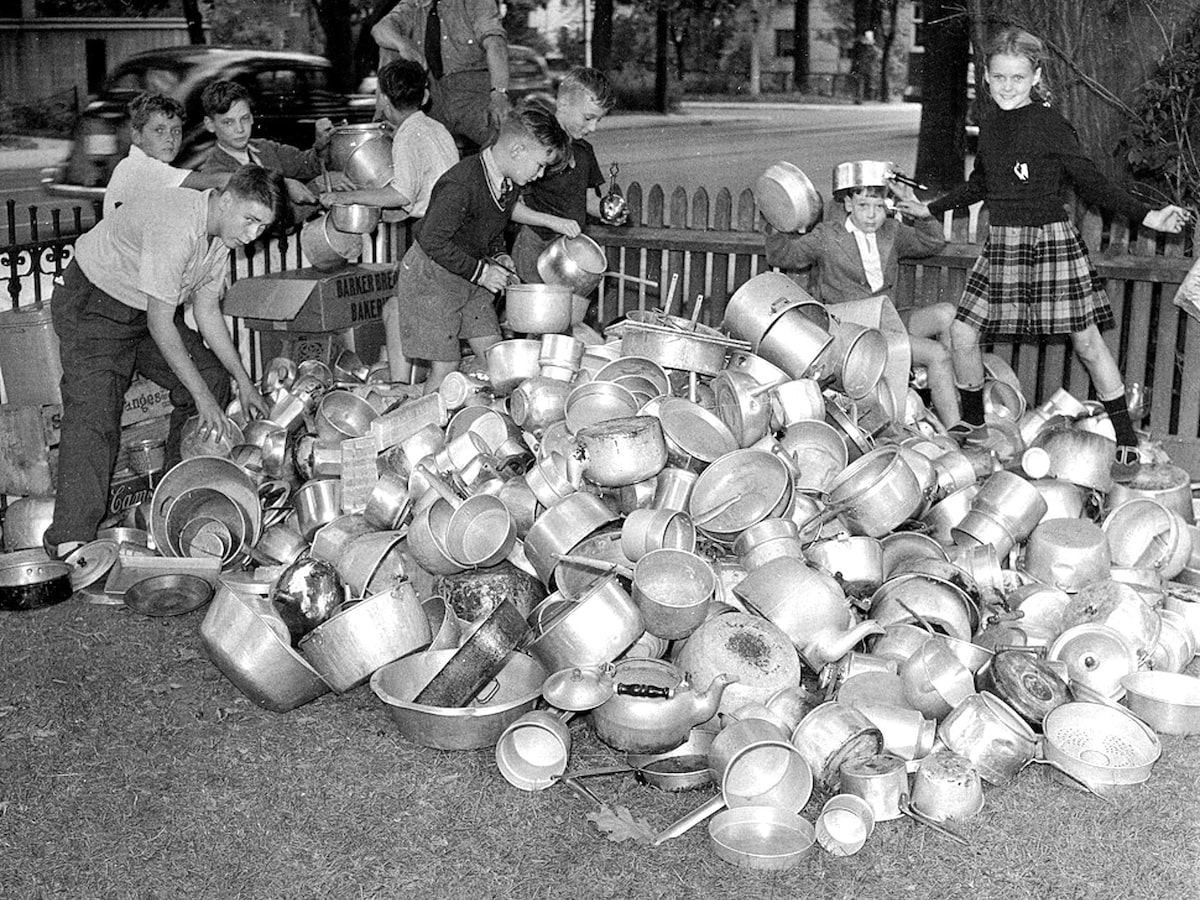
With Canada in a total war effort, it emerged as a major supplier of weapons for Britain, the Soviets and its own expanding armed forces. More than 16,000 aircraft, 850,000 military trucks and armoured vehicles, and tens of millions of high-explosive shells were produced in factories.
Crucial food was grown, with Canada’s farmers feeding its allies. Mountains of minerals were extracted, including uranium for the U.S. atomic bomb program, as well as aluminum and hydroelectricity for American industry. Next to Britain, the Soviet Union, and the U.S., Canada was the fourth-largest Allied producer of war materiel in the battle against the fascists.

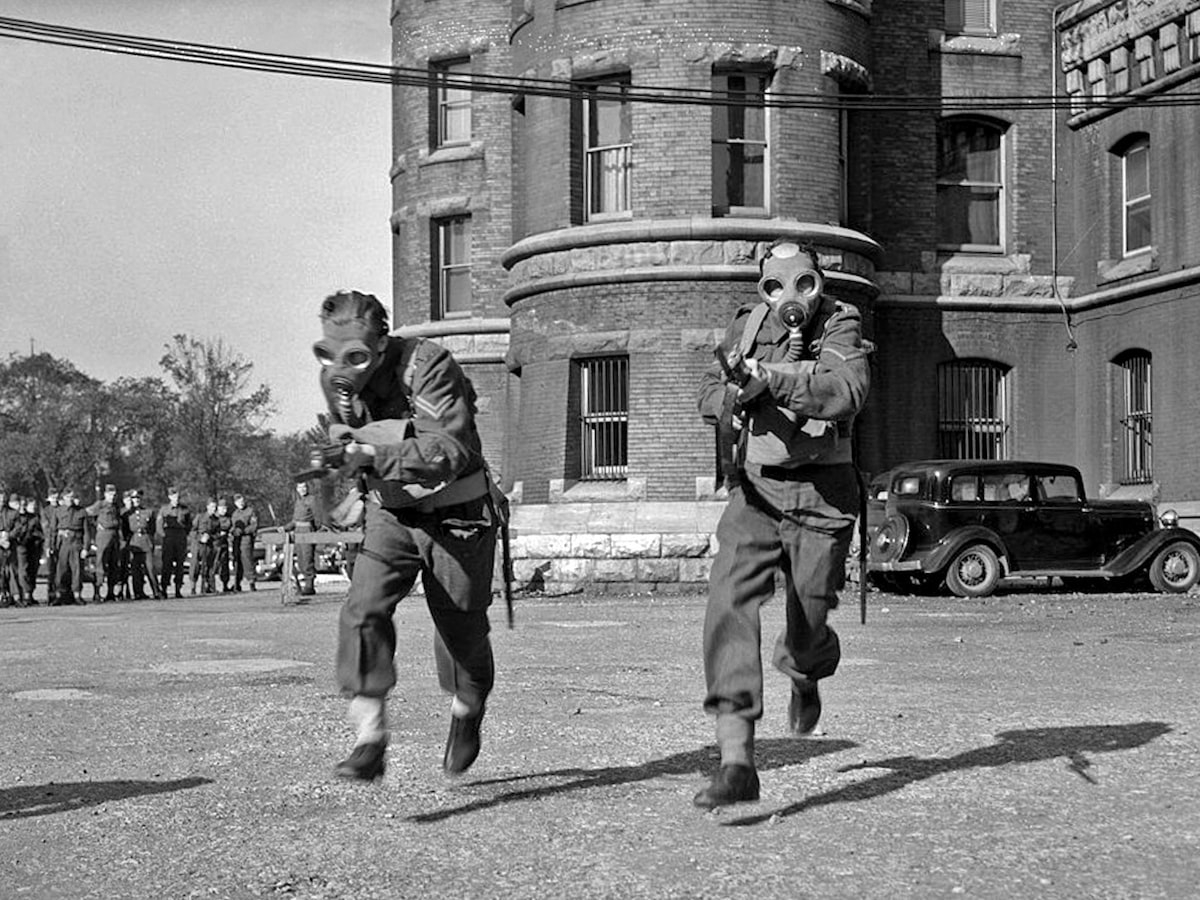
Canada was also a military power. From a country of only 11.5 million, almost 1.1 million men and women served in uniform: first, defending the east and west coasts, including the separate dominion of Newfoundland; then, after the U.S. entered the war in December, 1941, defending the north; and finally, in the armed struggle overseas.
The Royal Canadian Navy and Canada’s merchant fleet served on the seas around the world, but most importantly, they kept Britain supplied. Brave ships ran the gauntlet of enemy U-boats that sought to cut the lifeline and starve Britain into submission. Those efforts failed, owing to Canadian sailors’ bravery, tenacity and skill.
Against German-occupied Europe, the Royal Canadian Air Force’s heavy bombers steadily took the fight to enemy infrastructure, industry and anyone caught beneath the fall of the bombs.
Canada’s army suffered defeat during the battle for Hong Kong in December, 1941, and at Dieppe in August, 1942. But it stood with American and British forces in the gritty invasion of Sicily in July, 1943. More than 90,000 Canadians would fight on the Italian mainland beginning in September, 1943, forcing Hitler to divert precious resources to that southern front.
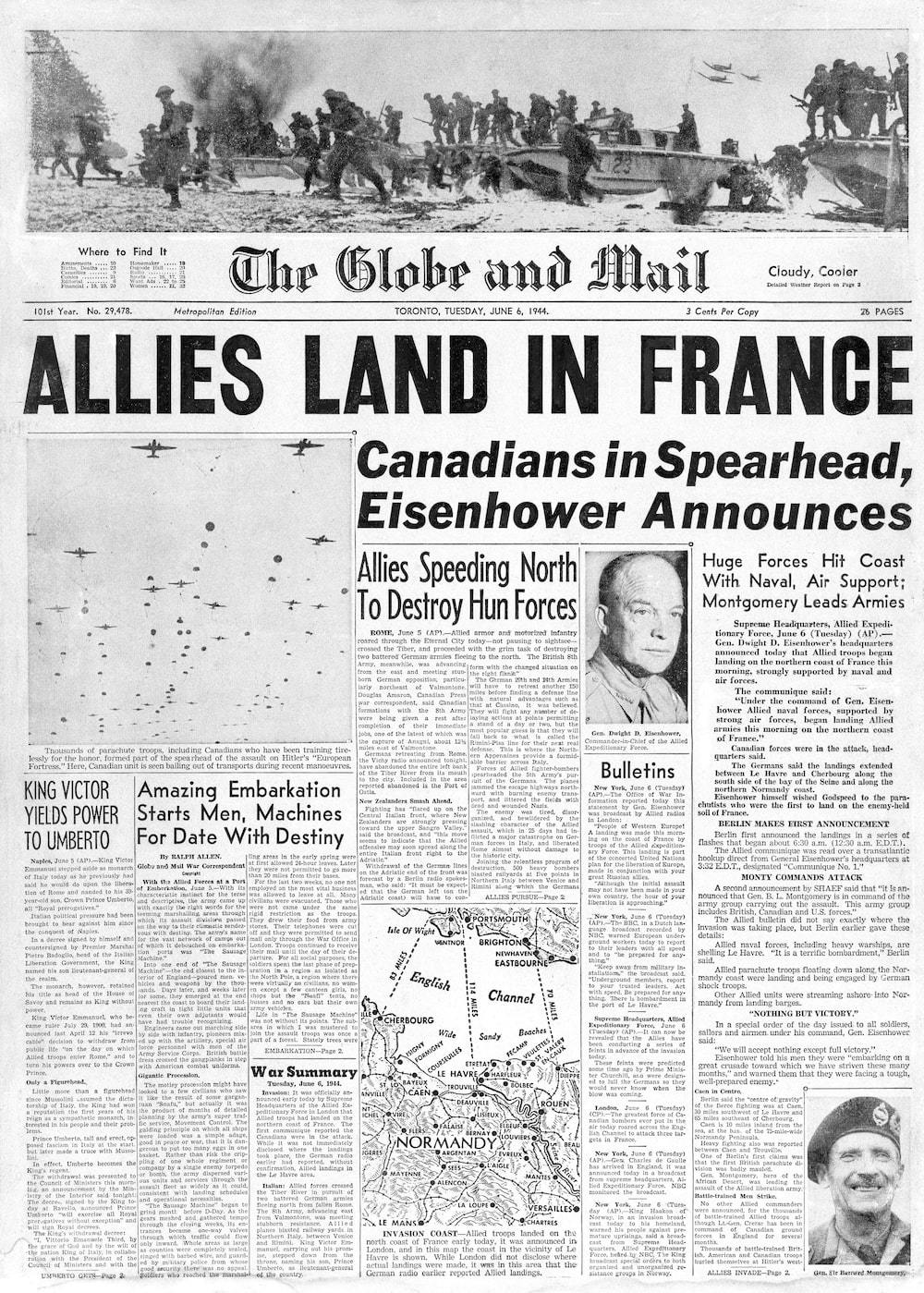
But it was on D-Day when the three Canadian services would come together in greatest numbers for the desperate strike against the Nazis’ Fortress Europe in Normandy. Above the beaches, hundreds of RCAF fighters provided high cover, while 126 RCN warships were involved in protecting the landing craft ferrying the Canadians to Juno Beach.
That landing site, in between the British and the American sectors, was a sign that Canada had come of age in the eyes of its two major allies.

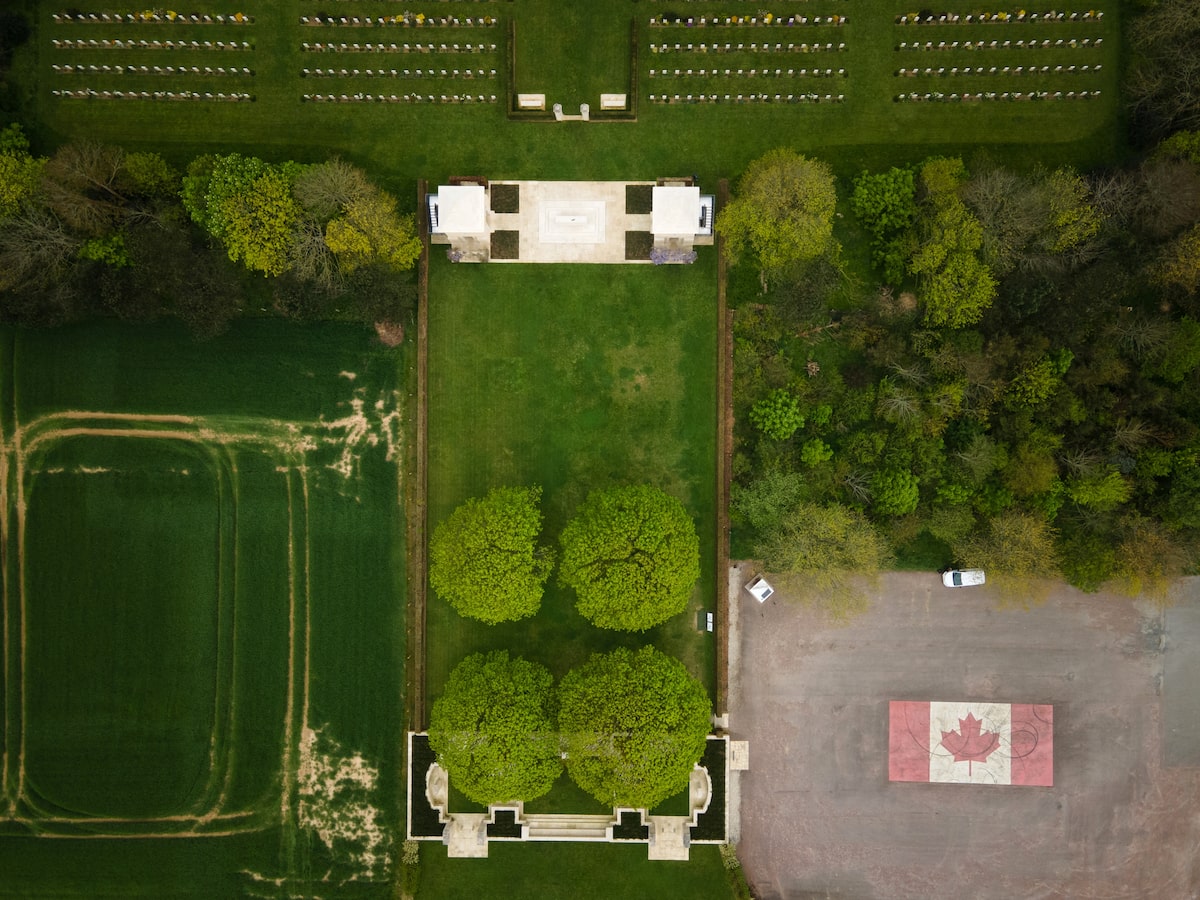
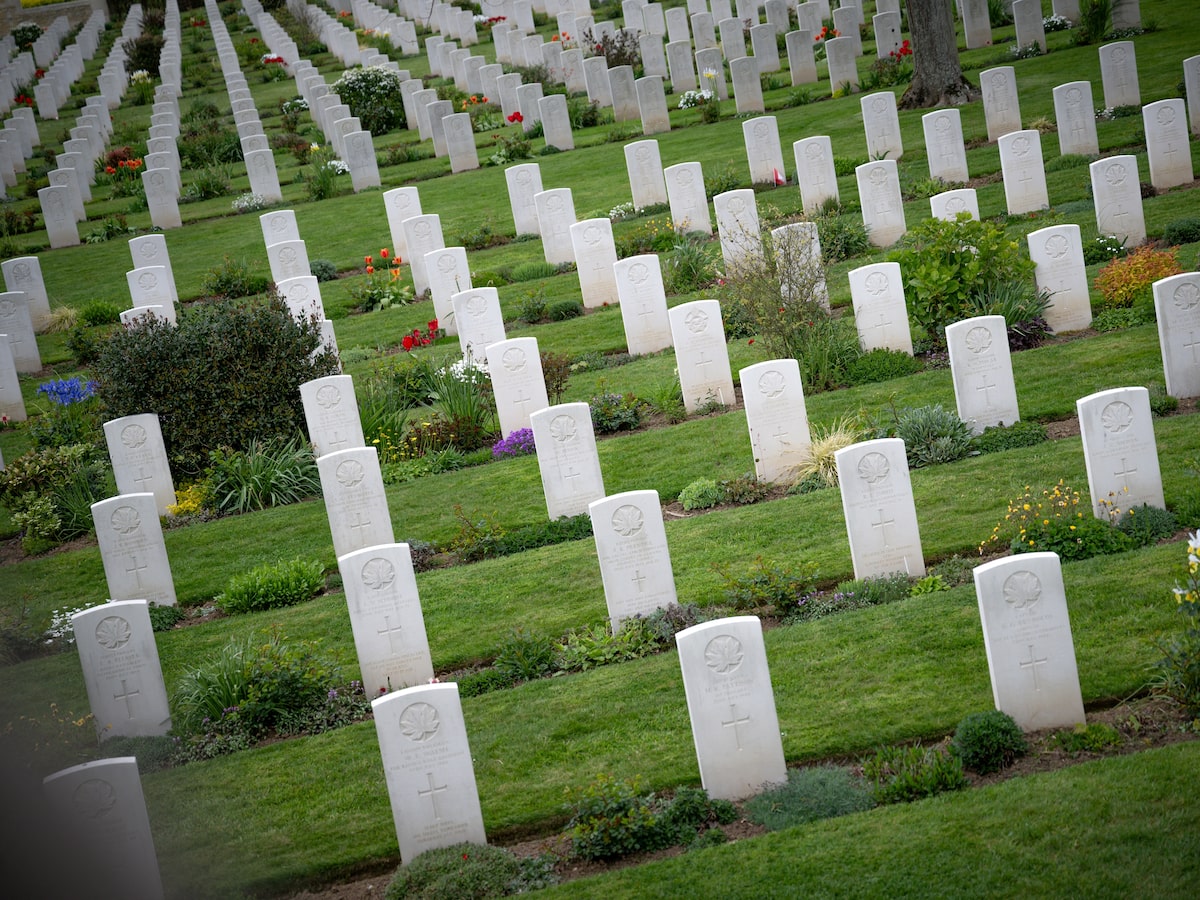
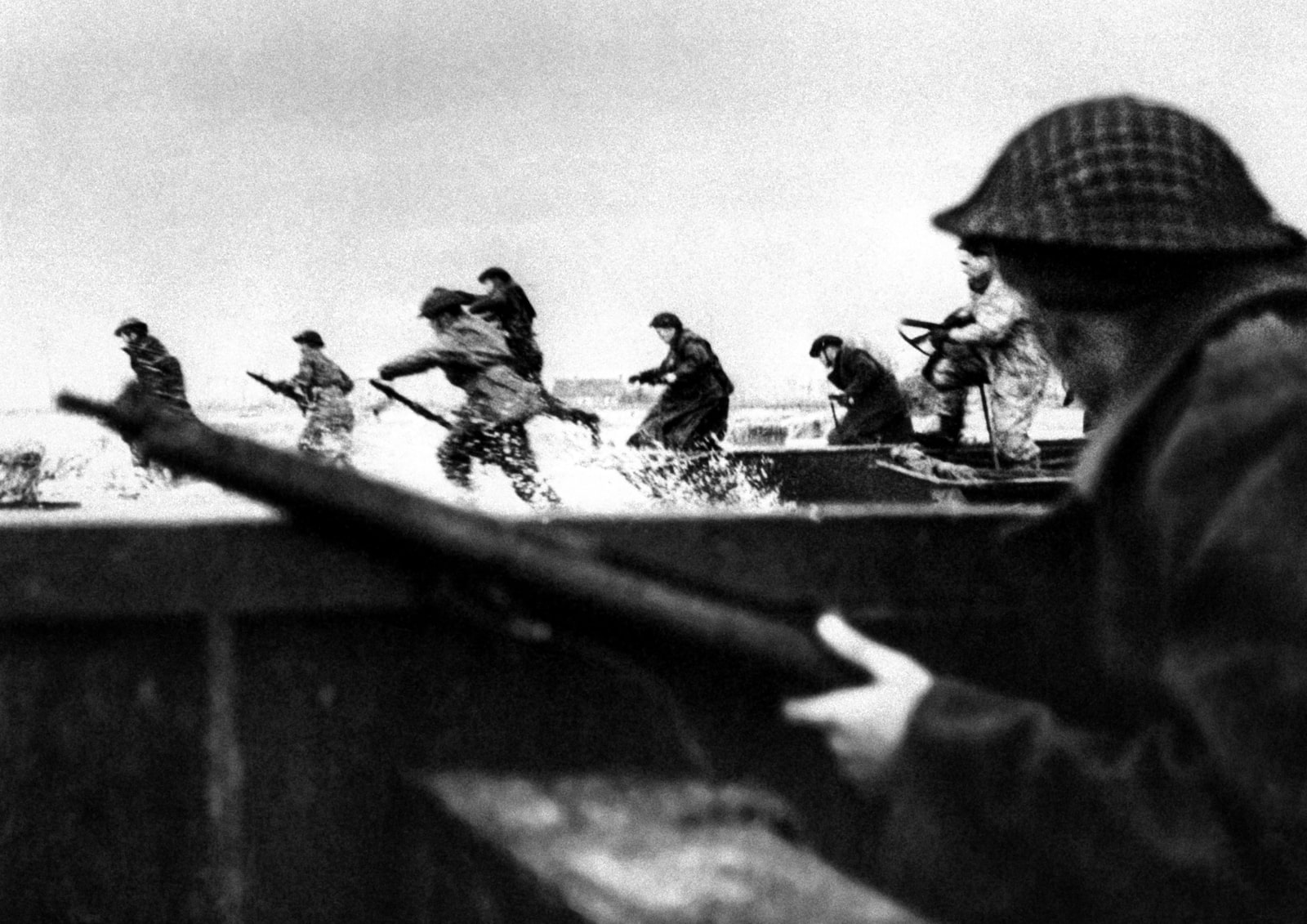
In the minutes before those young Canadians hit Juno Beach, they faced their own mortality, contemplating the space of unimaginable violence in front of them as vomit sloshed over their boots and machine-gun bullets rang eerily off the steel landing craft.
The doors dropped around 8 a.m. on June 6, 1944, and Canadians from across the country – English, French, New Canadians and Indigenous – surged forward into a buzz saw of enemy bullets, bombs and shells. The carnage was ghastly. And yet, amid this storm of steel, the Canadians clawed their way forward, sometimes over the bodies of their comrades. By the end of the day, the Canadians had advanced further than any other Allied force, but at the cost of almost 400 killed and another 700 wounded.
Most of those Canadians who landed that day never returned to Juno Beach, continuing to push inland in brutal, attritional fighting. That steadily dwindling band of D-Day survivors, along with their vast reinforcements, liberated the French by the end of August, and then continued to move northward, freeing the Belgians and, at war’s end, the starving Dutch.

'This is victory,' reads The Globe's front-page headline on May 8, 1945, the day after Germany's surrender.
After the Allied victory in 1945, Canada emerged poorer for the loss of the 45,000 Canadians killed. Today’s equivalent for a country four times as large would be more than 150,000 dead. When a million veterans returned to their homes, they built up the nation. Most took that responsibility seriously, reminded sometimes by the fierce shocks around the world caused by the war’s still unfolding legacy, especially the evils that emerged in revelations about the scope of the Holocaust, an unparalleled refugee crisis in Europe, the bloody process of decolonization and the emerging Cold War.
And yet, in this time of great crisis, Canada had become a consequential country – a significant martial power and an industrial giant.
Now, 80 years later, with the generation of Canadians who served in the Second World War all but gone, one wonders about what they could teach us in a world plagued by similar fractures and fault lines – of wars raging and alliances frayed, of the chimeric feeling of safety in North America while others sacrifice on the front lines for freedom. Indeed, it might be asked: what future beaches will Canadians be willing to die on in defence of others and to liberate the oppressed?
Legacies of war: More from The Globe and Mail
Video: Eyewitness to D-Day
On June 6, 1944, Jim Parks of the Royal Winnipeg Rifles was among those storming Juno Beach, and would go on to fight in numerous battles through to the end of the war. He shares his story.
The Globe and Mail
More reading
In the Second World War, The Globe’s skirmishes with the censors nearly sent its publisher to jail
Sarah Percy: The forgotten contribution of female soldiers
Tim Cook: D-Day gets all the attention, but don’t forget Canada’s role in the invasion of Sicily