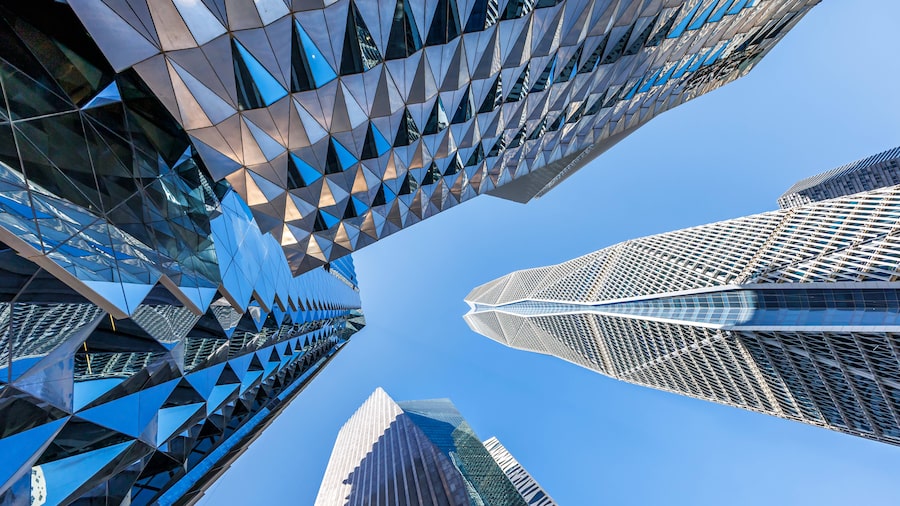
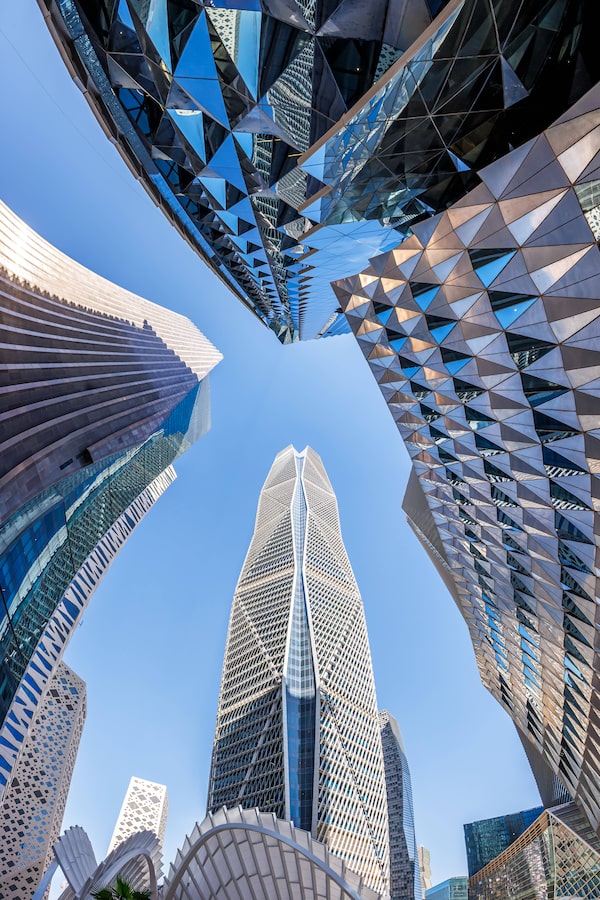
The view from atop the high-rises that form Riyadh’s central glass canyon along King Fahd Road has long been a beige panorama of low residential districts descending into the sands of the Arabian Desert. These days, that view is interrupted by thick forests of tall cranes bristling around the Saudi Arabian capital’s horizon – each cluster a multibillion-dollar megaproject intended to transform the nature and purpose of the kingdom.
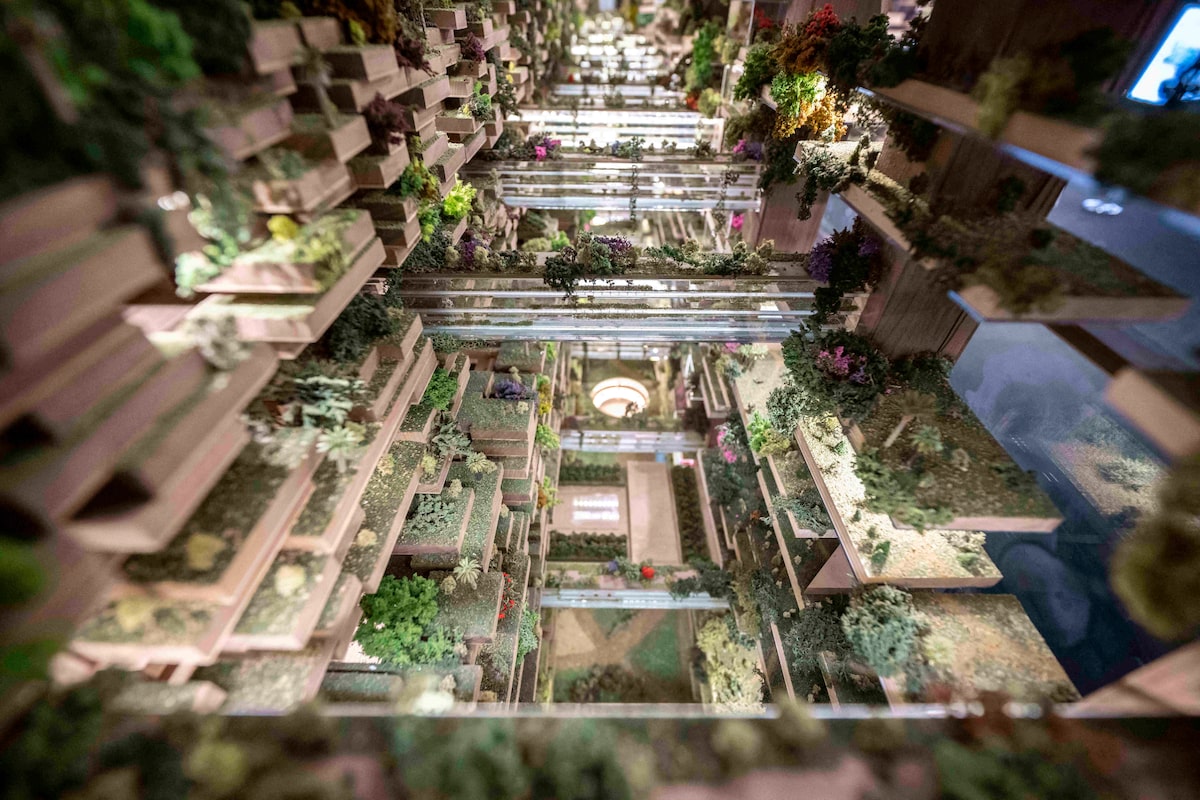
They include eight major stadiums, holding as many as 92,000 people, being completed around the city for the 2034 World Cup; six million square metres of pavilions, ecosystems, model cities and theme parks for Expo 2030; sprawling artificial-intelligence research and processing complexes; a cubic skyscraper almost half a kilometre on a side, set to be the world’s most voluminous building; and a sprawling array of mega-attractions and entertainment districts intended to draw tens of millions of visitors to the country for something other than its oil wealth and its Islamic holy sites.
They’re coupled with reforms that have allowed women to drive cars and attend sporting events, non-Muslim foreigners to buy alcohol at a handful of unmarked stores, and, in a 2022 decree, separated the Saudi state from its former role as an enforcer of ultrastrict Wahhabi Islam.


Crown Prince Mohammed bin Salman has championed Vision 2030 as a plan to diversity the Saudi economy.Ludovic Marin/Reuters; Karim Sahib/AFP via Getty Images
These are the most visible parts of Vision 2030, the multi-trillion-dollar post-petroleum transformation plan launched 10 years ago last week by Crown Prince Mohammed bin Salman just as he was assuming power as the country’s absolute ruler. The plan’s underlying premise was that in a stable, secure Middle East supported by good relations with the United States, Israel and Iran, the kingdom’s Arab monarchy could throw off its harshly conservative, terror-exporting reputation and renew itself, using megaproject investments, as a pan-continental hub linking Asia, Africa and Europe through an ultra-high-tech service economy.
This year, that premise fell apart violently. The result was evident when I looked across the horizon from one of those glass towers the other day, and saw that many of the clusters of cranes had become motionless and their sites empty – some temporarily because of the continuing threat of Iran’s bombardment, many of them, including the giant cube, for good. Beyond Riyadh, some of the most lavish elements of the plan, including the US$8-trillion, 170-kilometre-long science-fiction indoor city near the Jordanian border known as The Line, and the improbable ski resort nearby that was meant to host the 2029 Asian Winter Games, had already been cancelled as the Saudis entered a surprisingly deep fiscal crisis last year.
Then came the U.S.-Israeli war on Iran, and the six weeks of Iranian counterstrikes after Feb. 28 that hit the heart of the kingdom’s petroleum economy and its U.S.-provided military defences. That war, combined with the resulting economic crisis caused by the Strait of Hormuz closure and the looming possibility of future violence across the region, has raised a constellation of question marks around Vision 2030’s raison d’être, and forced Riyadh’s rulers to rethink Saudi Arabia’s future place in the world.

Although the Crown Prince and his ministers insist publicly that Saudi relationships with the West will remain the same – albeit “diversified” with Pakistani soldiers and Chinese munitions – and the transition plans largely remain on track, there is a consensus among well-connected Saudis that their country cannot return to its pre-war role or hope to achieve the core ambitions of Vision 2030.
At the very least, postwar Saudi Arabia will no longer have an incentive to move closer to the democratic world. Indeed, it is already hedging itself into the more welcoming sphere of highly armed autocracies, while falling into economic and political warfare with its Mideast neighbours and suffering a series of major fiscal losses. It is the diametric opposite of what Mohammed bin Salman set out to attain a decade ago.
“MBS had big dreams,” said Abdulaziz Alkhamis, a veteran human-rights activist and editor who is one of the few elite Saudis willing to express on the record the sort of criticisms I heard privately from people close to the ruling family. (It was less than eight years ago that the kingdom had journalist Jamal Khashoggi assassinated.)
“He thought he could deliver something for the Saudi people, especially the young, through these projects, that he could diversify the economy. He wanted to show public opinion that he is a good young leader with big dreams who can deliver. But it has failed. He knows that Vision 2030 will not deliver what he promised the nation.”


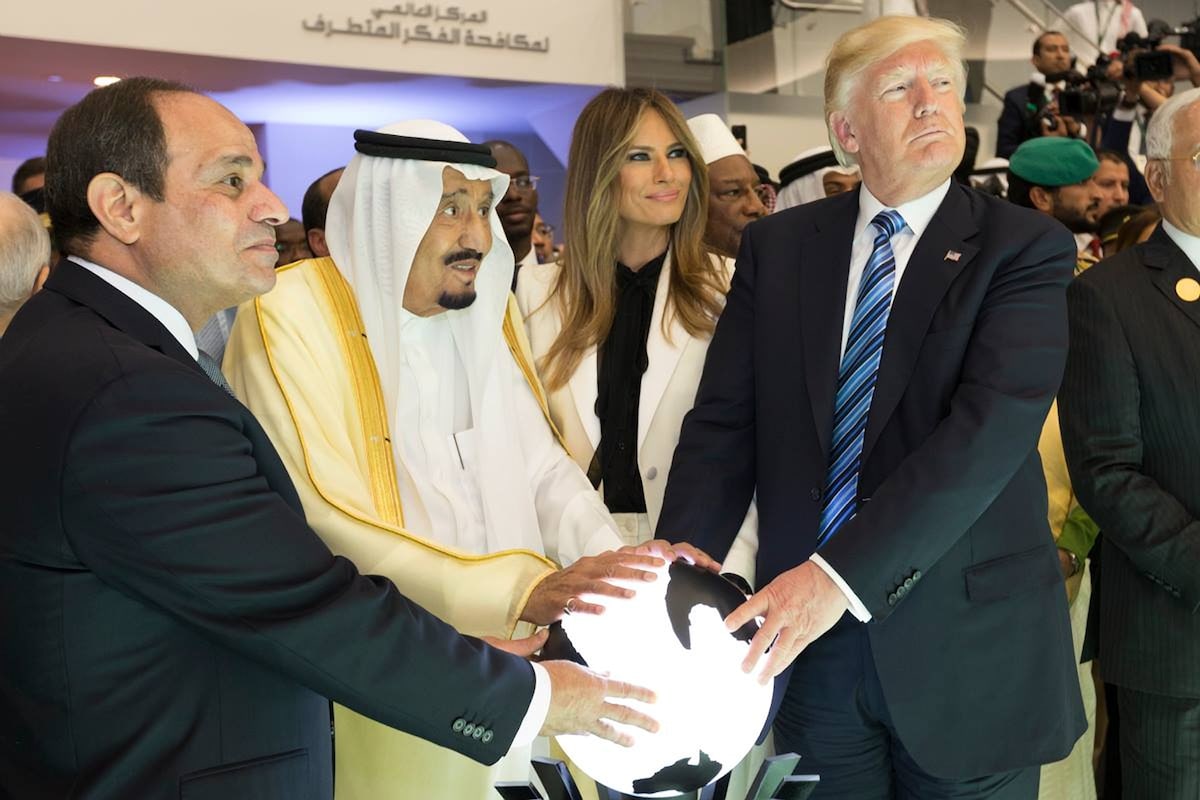
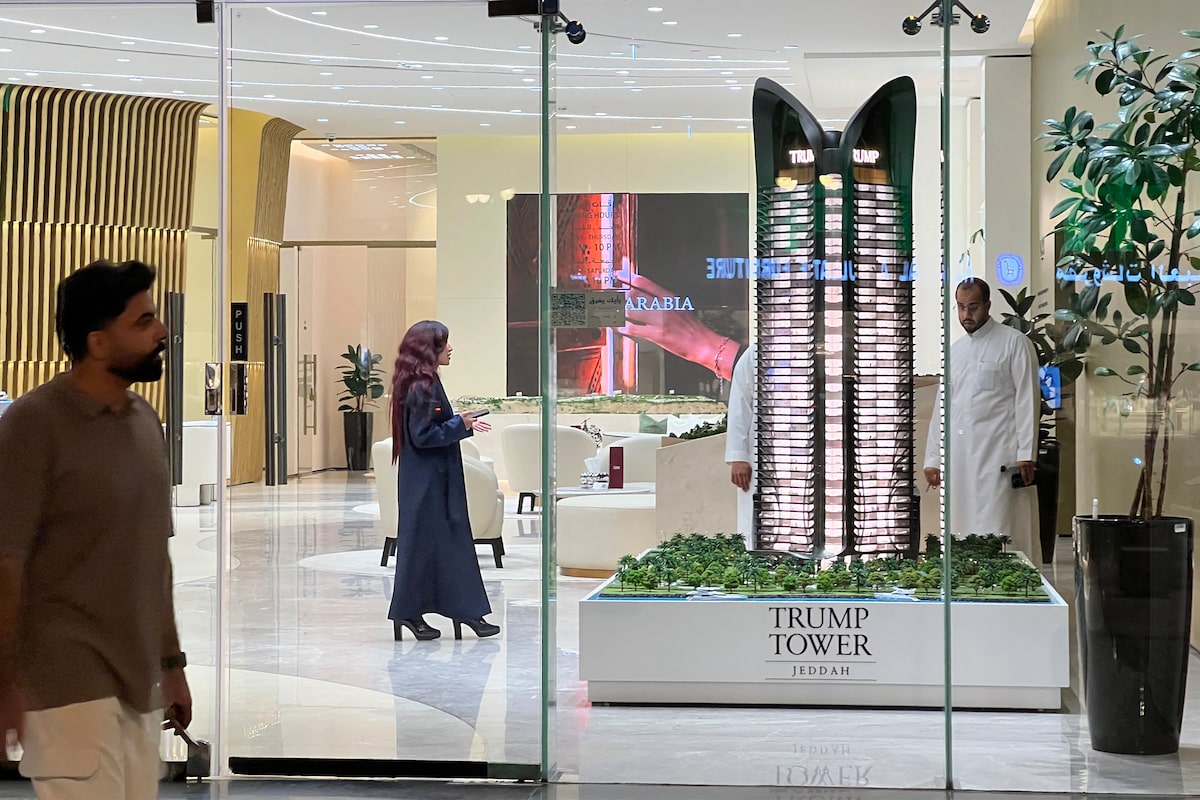
The Crown Prince’s vision began nearly a decade ago with the negotiation of a set of unlikely alliances and pacts – most flashily, with a first-term Donald Trump, who agreed to sell US$110-billion in U.S. arms to the kingdom in exchange for even larger, albeit vague, pledges of American business investment in the new Saudi economy. Most quietly, with Israel, which entered a low-key, unwritten pact of defence and intelligence co-operation that culminated in 2017, built upon a mutual fear of Iran’s regional dominance. And finally, a tentative truce negotiated with Tehran’s rulers in 2023.
Those agreements were all rendered worthless when the Feb. 28 attacks began without a word of warning or advance notice from the kingdom’s supposed partners. (In fact, Mr. Trump crudely insulted MBS during an investment summit at the height of the war.)
In the weeks since, Saudi Arabia has raced to replace those failed partners with a new set of alliances deep in the autocratic, anti-Western world.
On April 11, Riyadh activated the NATO-like mutual-defence clause in its formal alliance with Pakistan’s de facto military rulers, signed in 2025. Within days, Islamabad had sent 13,000 troops and a flock of advanced fighter jets to defend Saudi Arabia’s eastern oil and gas fields against Iran – an acknowledgment that the huge U.S. military bases in the kingdom had transformed themselves overnight from sources of protection into targets and potential threats.

Islamabad is the main broker of peace talks between Tehran and Washington. It is also a military ally of the Saudis, who have asked for Pakistan's help in their defence.
Then on April 18, Saudi Foreign Minister Faisal bin Farhan convened a new alliance known variously as the Antalya Quad or the West Asia War Quad – an independent security framework linking Saudi Arabia, Pakistan, Egypt, and Turkey, without the U.S. or its allies (in fact, he reportedly assembled the group while communicating with U.S. Secretary of State Marco Rubio, who was unaware of the parallel action). Saudis describe it as a strategic mix of Saudi financial dominance, Turkish NATO membership, Egyptian military mass, and Pakistani nuclear deterrent – the latter with the potential to replace the U.S. nuclear umbrella, if necessary.
Two days later, the Crown Prince held a much-publicized phone call with Chinese president Xi Jinping in which the two, in Beijing’s words, agreed “that the relationship between Saudi Arabia and China is strategic in nature, and growing ties with China is of vital importance to Saudi Arabia.” Those ties appear to include further purchases of Chinese advanced FC-31 stealth fighters and other high-end military hardware, reducing Riyadh’s dependence on U.S. weapons systems.

China's military is, in Riyadh's view, a potential source of weapons that could reduce its reliance on U.S. sources.Kevin Frayer/Getty Images
Saudi leaders call this “hedging” or “diversification” rather than a break from their decades-long relationship with Washington. But beneath it is a flailing effort to hold on to the remnants of the predictable, stable world of carefully negotiated alliances that might have permitted Vision 2030 to become reality.
“What the war has done is to rattle the Saudi leadership,” said Fawaz Gerges, a professor of international relations at the London School of Economics whose works chronicle the history and politics of the Arab Middle East.
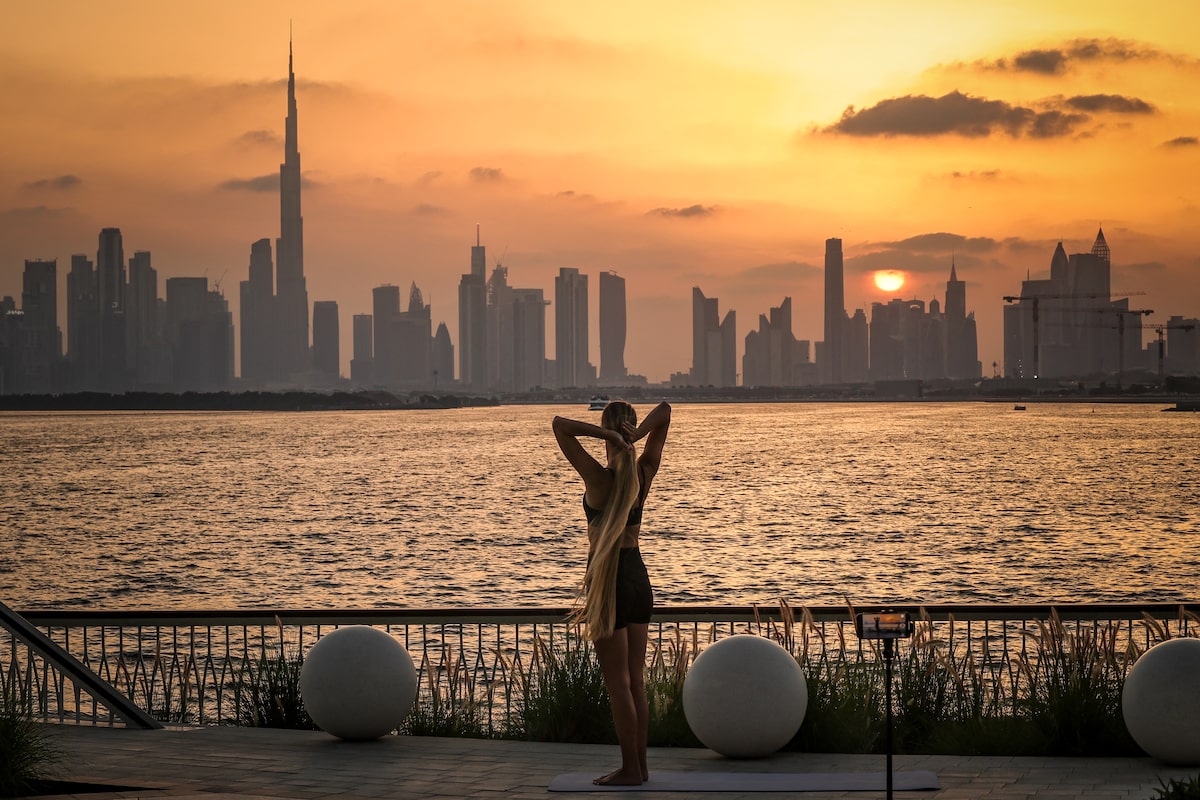
“The entire Gulf security architecture relies on stability – on energy, shipping, entertainment, soft power, technology. Saudi Arabia was pushing very hard since the Crown Prince emerged as de facto leader, pursuing a path similar to Dubai” – that is, to replace petroleum with technology, entertainment and foreign investment, which the Emirati megalopolis has done very successfully. “But now Iran has shown that it can unravel the entire security architecture that allowed these ‘secure oases’ in a sea of instability. It’s not just about hard security – it’s about soft power, open societies, open borders, tourism. The war has upended the whole strategic logic of the Gulf states.”

From its headquarters in Riyadh, Saudi Aramco still presides over a large share of the national economy, though not as large as in decades past.Fayez Nureldine/AFP via Getty Images
Despite the hundreds of billions invested in post-petroleum transformation, hydrocarbons still make up almost half of the Saudi economy – a proportion that has barely changed, and far from the less than 25 per cent of the neighbouring United Arab Emirates, which began its own transformation 30 years earlier.
This makes this week’s surprise announcement that the UAE is pulling out of OPEC, effectively ending the cartel’s ability to control Gulf oil prices, doubly devastating for Saudis, who weren’t informed in advance of this move, either.
Although the kingdom hasn’t been hit as hard by the Strait of Hormuz blockade, because it is able to export about half its oil production by pipeline to the Red Sea, it is now highly vulnerable to energy markets. Saudi Arabia’s “fiscal breakeven” oil price – the point at which it can balance its budget – was last year estimated at more than US$90 per barrel. Since crude prices generally stayed below US$70 last year, the result was fiscally catastrophic and forced the cancellation of large parts of the Vision 2030 agenda. If, after the Strait reopens, the UAE decides to raise exports and keep prices below that threshold, the Saudis will have a hard time recovering – and will likely cause their simmering rivalry with the Emirates, already tense over relations with Israel and Iran, to erupt into overt economic and political warfare.

You might expect the Crown Prince to be using these new international military alliances to secure the Saudi territory and get Vision 2030 back on track. In fact, informed observers say the outcome is likely to be further withdrawal from the plan, certainly its megaproject components, which were already being written off as failures months before the war began.
“I think you’re going to see a lot of restructuring economically and socially,” said Dr. Gerges. “The logic of the Saudi investment strategy was based on more and more – expanding economy, growing tourism, the Gulf as a new kind of Mecca, a commercial one. There will be a great deal of contraction and recalibration of how they spend money.”
On Feb. 11, two weeks before the war, Saudi investment minister Khalid Al-Falih delivered a rare public criticism of Vision 2030, describing the “declining viability” of projects such as The Line and controversially calling for a “reordering of priorities.” Days later, he was shuffled out of his portfolio by royal decree, in what some Saudi observers feel was punishment both for making the plan’s recalibration public and for his own failure to meet the impossible goal of attracting US$100-billion per year in foreign direct investment to the kingdom’s projects (he managed to secure about a third that much, before the war).
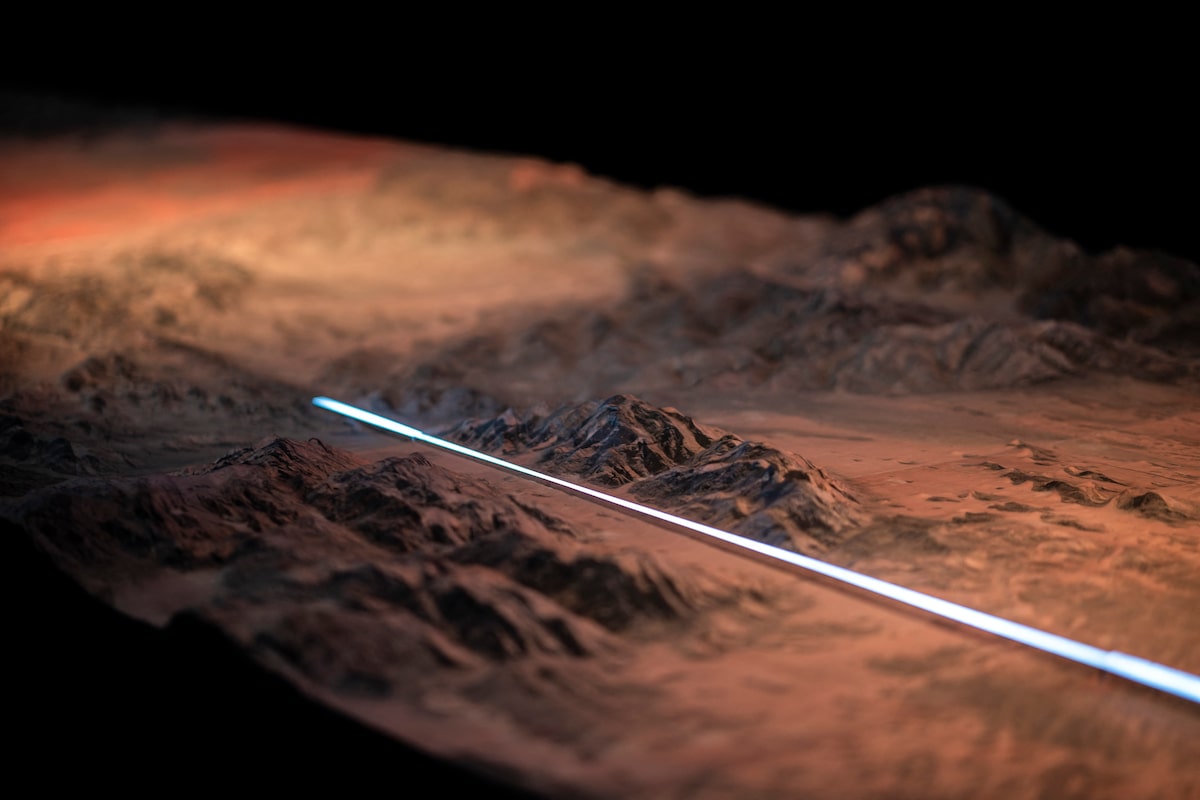
Indeed, some of the most visible parts of Vision 2030 never made sense. The NEOM project in the country’s north, which included The Line – basically a single-street-wide mirrored stainless-steel indoor megalopolis scores of kilometres long, like something out of a Larry Niven or Arthur C. Clarke novel – was seen from the beginning as a folly of impractical and ecologically awful urbanism without a market or audience, with a cost estimate that grew to dwarf the entire Saudi economy. All that remains now is a string of unnatural canyons carved across the desert at a reported cost of US$50-billion.
But as the minister’s sacking suggests, many of the more plausible parts of the vision were based on assumptions of foreign investment that simply never materialized. A decade ago, it was assumed that Saudi Arabia possessed almost limitless petroleum wealth – much of which it squandered in ill-advised international investments. Vision 2030 was an effort to invest much of that revenue at home in order to create new sources of wealth. It was a belated effort to attempt what the United Arab Emirates successfully accomplished starting in the 1980s – but the Emiratis invested in basic infrastructure and social services, expecting foreign investors to pay for the megaprojects. The Saudis mostly paid their own way, and by the mid-2020s low worldwide oil prices were choking off their capacity to build. And that was before almost half the Saudi hydrocarbon exports were cut off due to the Strait of Hormuz closure.
The Saudi rulers, Mr. Alkhamis observes, have managed to turn a bottomless well of wealth into a fiscal crisis.
“They have money, but they spend a lot. Unlike Qatar or the UAE, they have a large population and big plans. Their maintenance bill is very high, and their defence bill is very high … Dubai is different. It’s a city with civil rights and an open economy. It satisfies its people. It’s a hub for the region. Anyone can come, invest and keep their money there. In Saudi Arabia, they can’t do that. They thought Gulf investors would come running to invest, but they found themselves alone, without support from any Gulf country.”
At root is an underlying paradox of Mohammed bin Salman’s reforms: Although intended, reportedly quite earnestly, to move his country into the modern world and shake off some of the almost medieval religious restrictions that held back its development, Vision 2030 was also designed to secure his family’s hold on power through the next century. And the Saudi royal family are deeply conservative, fundamentally resistant to democracy and transparency, and still prone to cruelly punish dissent.
“It’s not just a matter of alcohol,” says Mr. Alkhamis. “It’s the legal environment, tolerance, the investment climate. He can’t deliver that. He tried to push companies to move their regional headquarters to Riyadh, but he failed. They open a token office to satisfy him, then close it and go back.”


Patrons browse for keffiyehs and prayer beads at Riyadh’s Al Zal market. While the Saudi royal family has liberalized many facets of daily life, they remain deeply conservative.AFP via Getty Images
It isn’t just the megaprojects that have been reversed. The mildly liberalizing reforms of Vision 2030, intended in part to erase Western memory of the Saudi role in the Sept. 11 attacks and other Wahhabi-rooted terrorist acts, have not changed the deeply conservative and essentially authoritarian-minded nature of the kingdom. Riyadh continues to support the worst actors in places like Sudan and Libya. It reportedly continues to support Russia’s Vladimir Putin with arms and energy deals. And, now that Mr. Trump and Israeli Prime Minister Benjamin Netanyahu have destroyed any trust the kingdom had developed in the Western world, it appears to prefer longer-term alliances with authoritarian powers.
“All in all, I don’t think we’re going to see a rupture in U.S.–Saudi relations,” said Dr. Gerges. “I think we’re going to see more and more distancing, more hedging – and the hedging started ten years ago. What the American–Israeli war has shown is the vulnerability of the security on which the Arab Gulf states rely.”
What the Iran war of 2026 revealed to Saudis was the fundamental humiliation of their almost century-long pact with the United States – that you cannot buy your way into the Washington-centered club of Western nations, economically or militarily, even if you spend trillions on a decade-long plan to remake yourself, even if you pour huge sums of money into American coffers.
“Despite hundreds of billions of dollars invested in the American security umbrella, they found themselves under attack – constant, systemic attacks,” says Dr. Gerges. “What Iran did was to expose their precariousness and vulnerability. They’re not going to rely on one layer any longer. They won’t put all their eggs in the American basket like before, this is for sure.”

Chris J. Ratcliffe/Getty Images
The new Middle East: More from The Globe and Mail
From our correspondents
War broke the Gulf states’ security umbrella. Now, the UAE fears stormy weather ahead
Israel’s ceasefire with Lebanon shows Trump’s desire for way out of the wider war
U.S. negotiators would do well to read some Iranian poetry. It matters, greatly
Commentary
Rashid Husain Syed: Behold, the decline of OPEC and the twilight of the Arab oil age