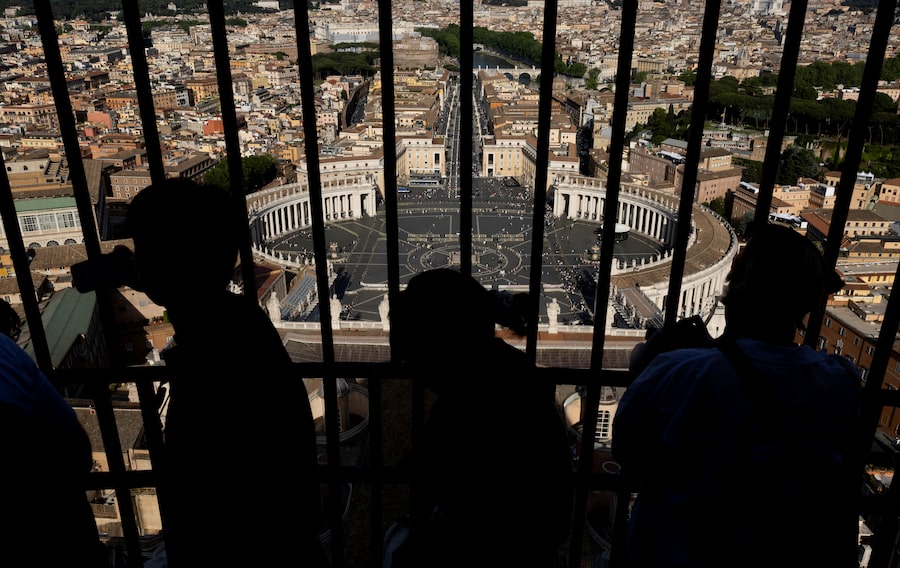
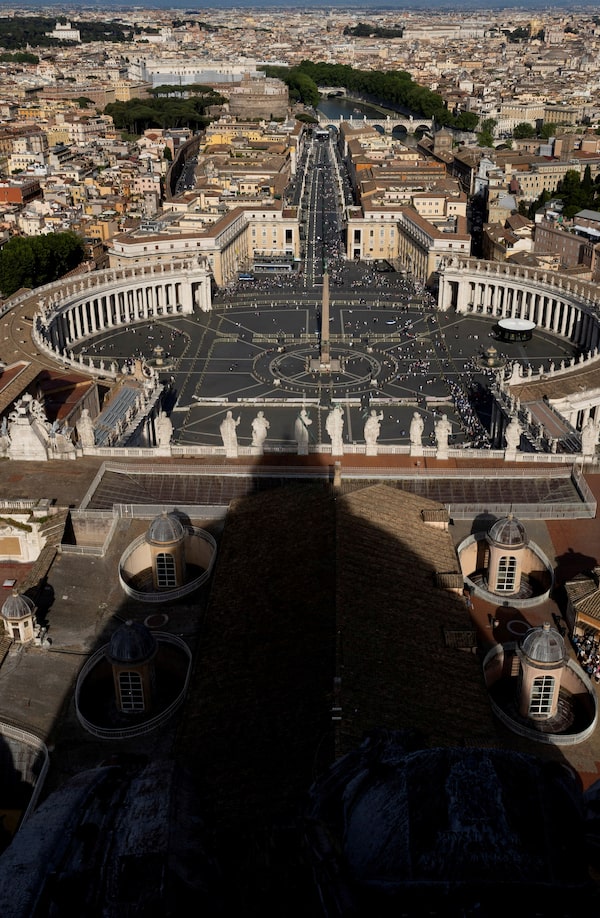
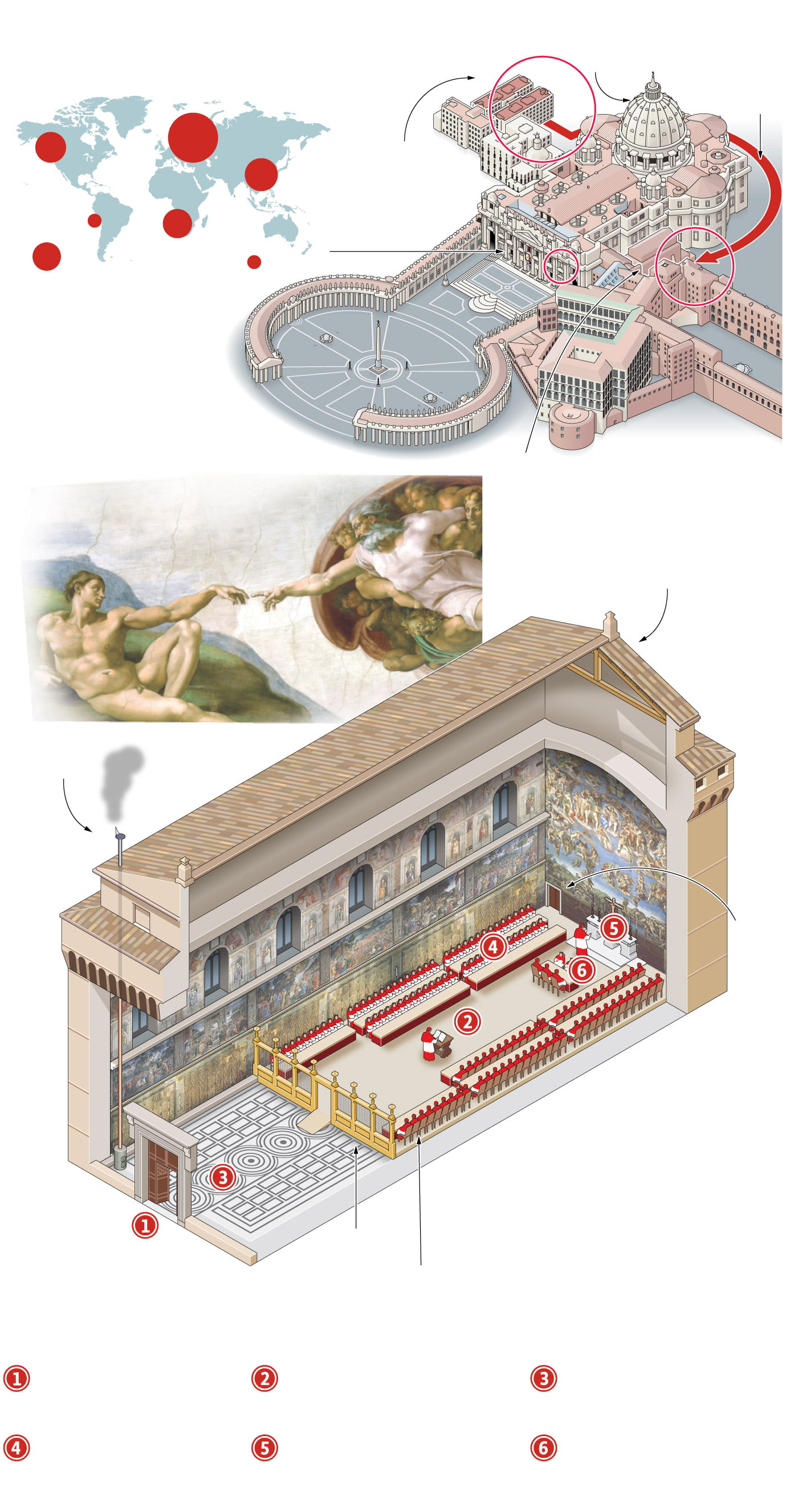
The furnace and chimney have been installed in the Vatican’s Sistine Chapel, the High Renaissance stage for papal conclaves ever since Columbus’s voyage to America in 1492. At some point after Wednesday, when the cardinals enter the chapel to select the replacement for Pope Francis – he died on April 21 – a plume of white smoke will emerge from the rooftop to signal the church has a new holy father.
Black smoke means the vote was inconclusive. Sometimes the keepers of the furnace toss the wrong mix of chemicals into the furnace, as they did in the 2005 conclave, which thrust Francis‘s predecessor, Germany’s Joseph Ratzinger – Benedict XVI – to the head of the cardinals’ pack. At one point, the smoke came out an ambiguous grey. Hundreds of journalists ran into St. Peter’s Square to watch the new pope emerge, only to be told: Sorry, mistake.
The secret vote, which is entirely free of electronics, has gone largely unchanged for almost a millennium. Since the 1179 conclave, every papal election but one has been decided by the elector-cardinals.

The first papal conclave in the Sistine Chapel, held in 1492, elected a Spaniard to serve as Alexander VI. The first conclave was established in the 12th century.Hulton Archive/Getty Images
In the early church, noblemen, kings and emperors interfered in the elections, which sometimes saw thugs hired by rival factions invade churches to kill opponents, according to Thomas Reese, a Jesuit priest who is the senior analyst at Religion News Services of Washington. There was blood, and lots of it, in the name of God – a testament to the massive power of popes in that era and beyond.
Today’s conclaves are more civilized, though there are no cameras in the Sistine Chapel to prove that tempers do not flare. The winner must take two-thirds of the vote. No one knows how many hours, days or weeks the 2025 conclave will take, but the general guess is that it will be fairly short, perhaps two or three days, with several votes each day. Cardinal Jorge Mario Bergoglio won after five rounds of voting over two days, and took the name Francis.
“If the vote goes long, it gives the sense of a divided church, and the conclave does not want that,” Marco Politi, an Italian journalist and veteran Vatican watcher, told The Globe and Mail.
Still, the conclave could be messy for the simple reason that the collection of cardinals wielding the ballots will be the biggest and most international in the history of the church. Only cardinals under the age of 80 are eligible to vote. In this conclave, there will be 133 elector-cardinals, meaning the winner will require 89 votes. Each of the 2013 and 2005 conclaves had 115 elector-cardinals.

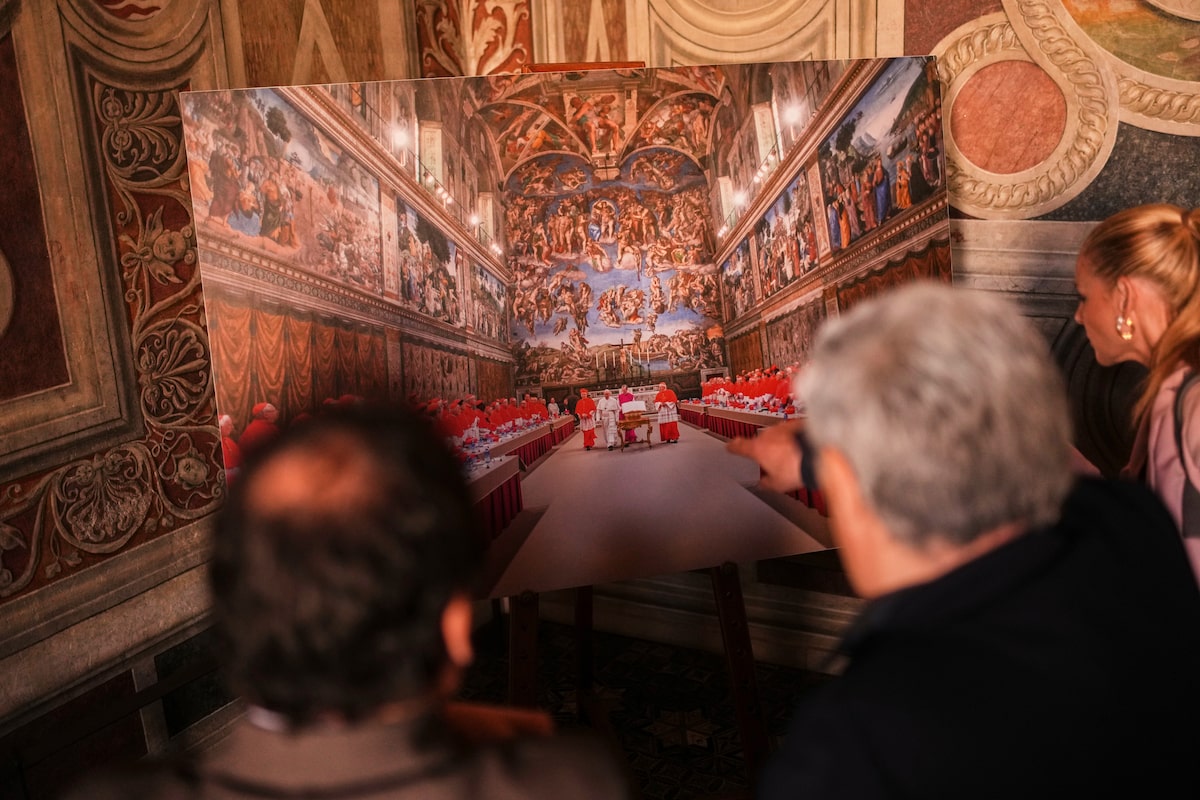
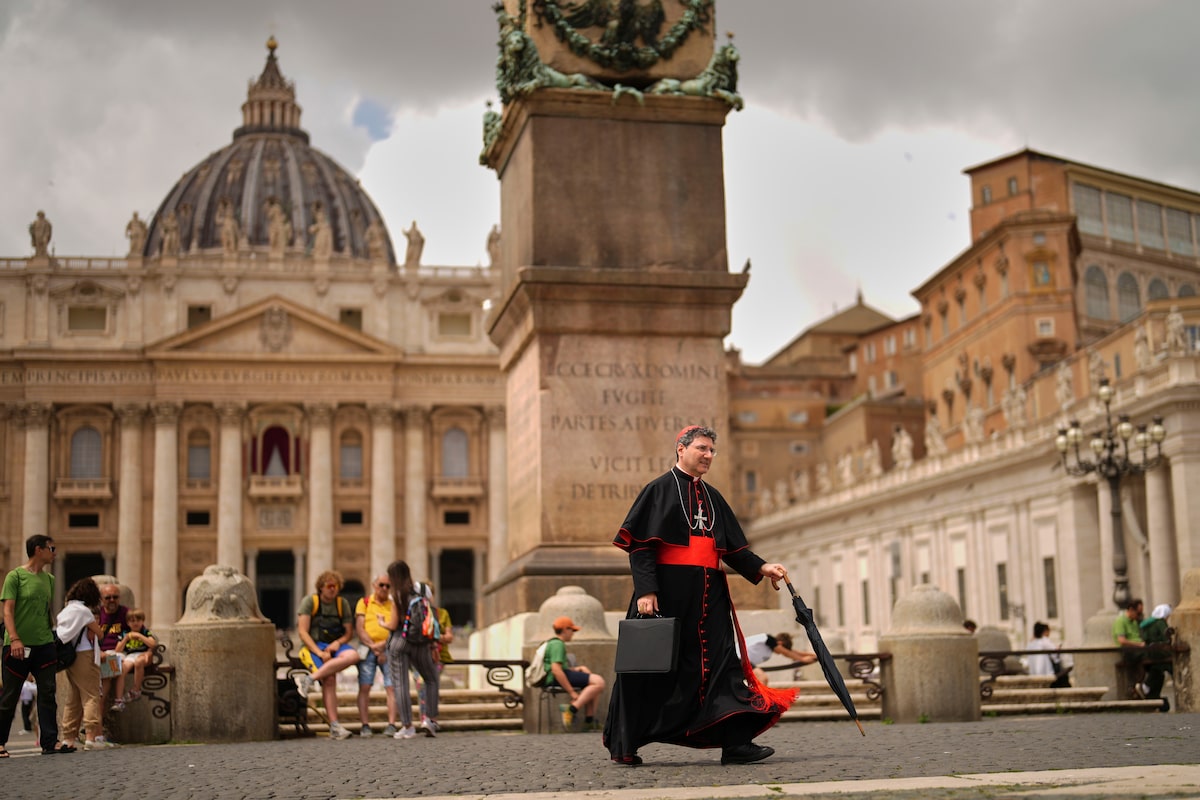
The men in red come from everywhere, and many do not know one another, since Francis appointed 108 of them, according to the Catholic News Agency, over the past dozen years. The last batch – 21 of them – came late last year. They included Francis (Frank) Leo, 53, the archbishop of Toronto, the only new North American cardinal appointed in that round.
In the crucial preconclave sessions in the Vatican auditorium, one of the few modern buildings in the world’s smallest state, the cardinals reportedly wore name tags because so many were strangers to one another. Among the elector-cardinals, there are only 52 Europeans, of whom just 17 are Italians, compared with 28 in the 2013 conclave.
The number of cardinals from Asia and Africa has burgeoned, to 23 and 18, respectively, reflecting Francis‘s nod to the growth of the church in those regions. Many of the men come from countries not represented in the past. First-time cardinals include citizens of Haiti, Mongolia, Myanmar, Tonga, Cape Verde, Central African Republic, Papua New Guinea and other countries that many mere mortals could not find on a map.

A nun prays for the late Pope Francis during an April service in Port-au-Prince, Haiti. The cardinals choosing a new pope represent Catholic communities from all over the world.Fildor Pq Egeder/Reuters

Vatican City is an independent state within Italy. Its post office recently issued stamps reading 'sede vacante,' Latin for ‘empty chair,’ to mark the period between papacies.Alkis Konstantinidis/Reuters
The international diversity no doubt made the preconclave sessions difficult, intriguing, wide-ranging and tense on occasion. Many of the new or newish cardinals do not speak Italian, which is the lingua franca of the Vatican. English and Spanish are also widely spoken, though the official language remains Latin – the Vatican uses ATMs with Latin instructions. Father Reese compared the get-to-know-you encounters to “speed dating.”
Those from the Global South, such as Francis, who was the first non-European pope in 1,300 years, would have tested their colleagues for their views on poverty and how they would address what Francis called “an economy of exclusion and inequality,” or, as he also put it, an “economy [that] kills.” Another theme would have pitted the cardinals who advocate doctoral discipline over the generally liberal trend pushed by Francis, who authorized the blessing of same-sex couples and the promotion of women in the church, though short of making them priests. Traditional churches in Africa rejected the same-sex blessings, pushing instead for pastoral outreach to those in polygamist relationships.
Another theme of preconclave sessions would have been synodality – that is, making the church more inclusionary by being less of a top-down structure. The Vatican’s Dicastery for Promoting Christian Unity says synodality broadly “refers to active participation of all the faithful in the life and mission of the Church.”
Father Reese said North American and European cardinals would have tested the room to find a papal candidate who supports ecumenical dialogue with Protestants and Jews, those who are attuned to women’s concerns, and others who can deal with the continuing sexual-abuse crisis. He said Latin American cardinals are worried about evangelicals and Pentecostals “stealing their sheep.” Many of the cardinals would want to find a contender who has ideas for reviving the church in Europe and North America, where secularization is on the rise and churches are turning into echo chambers.
The ultimate goal of the preconclave sessions is for each cardinal to pick a contender who shares his vision of the church and the values for which it should strive, and also someone with charm and strength of personality – that is, someone who can get along with all, or most of, the cardinals without necessarily being a pushover. No cardinal would endorse a candidate for pope who would be disliked or not trusted in his home country. The U.S. adage “all politics is local” certainly applies to conclaves.
On Monday, the Holy See press office, in its general synopsis of the preconclave sessions, said: “The profile of the future Pope was also discussed: a figure who must be present, close, capable of being a bridge and a guide, of favouring access to communion for a disoriented humanity marked by the crisis of the world order; a shepherd close to the real life of the people.”
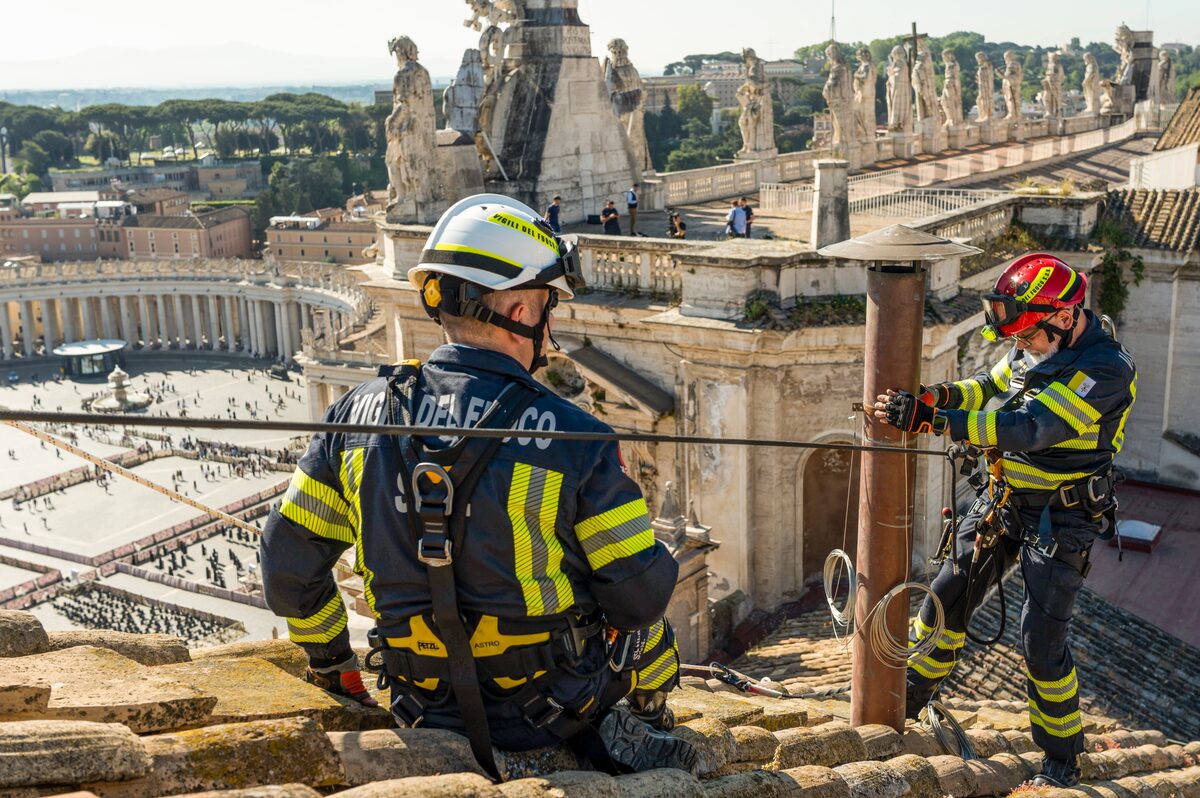
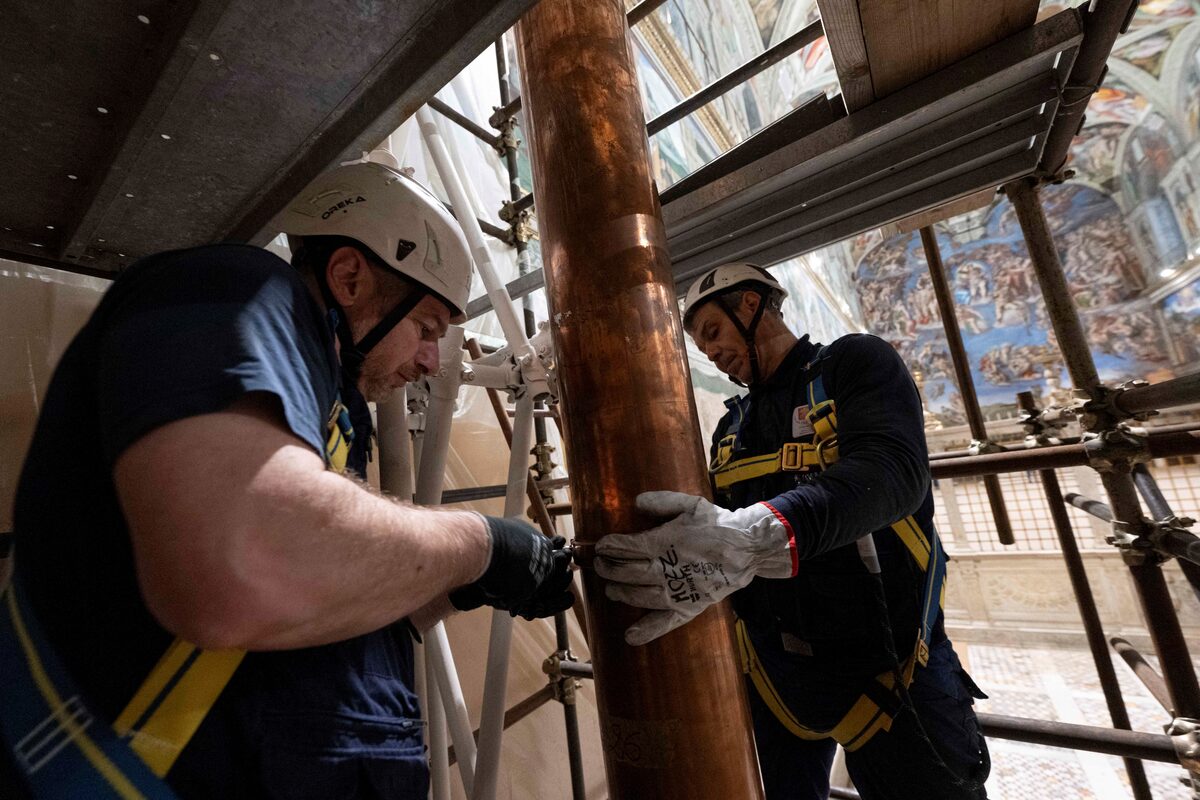
How does the chimney work?
The conclave’s chimney is not a permanent feature of the Sistine Chapel - it would spoil the view for the millions of tourists who visit it each year. On May 2, firefighters began installing the chimney and furnace. If a vote yields no definite result the ballots go into the furnace with potassium perchlorate, anthracene and sulfur, resulting in black smoke. If there is a result white smoke is produced with a mixture of potassium chlorate, lactose and chloroform resin.
Who are the front-runners?
There are no official front-runners, and cardinals who are prone to bragging or humblebragging may get sidelined. “He who enters the conclave as a pope leaves as a cardinal,” is one old Italian saying that seems to ring true.
Still, lists abound of those who are considered papabili, or pope-able. A few of the lists are to be taken more seriously than others. One that is considered credible is published by Cardinalium Collegii Recensio (Latin for the Review of the College of Cardinals). Written by an independent group of Catholic journalists and researchers, the site is known to be read by the elector-cardinals themselves to learn more about colleagues before they enter the Sistine Chapel.
The site lists 21 elector-cardinals as papabili. None is from Canada, though the Czech-born Canadian Cardinal Michael Czerny, 78, has surfaced on a few other lists; two are American.

Cardinal Luis Antonio Tagle, on the right, and Cardinal Pietro Parolin, the Vatican Secretary of State, are high-profile names on the lists of candidates for the papacy.Guglielmo Mangiapane/Reuters
A few names pop up at or near the top of most lists. They include Italy’s Pietro Parolin, 70, the career diplomat who is the Vatican’s secretary of state and considered a compromise candidate between the conservative and progressive arms of the church; Luis Antonio Tagle, 67, a youngster by cardinal standards, the Filipino whose nickname is “Chito,” has been dubbed the “Asian Francis” and has a strong social-media following; and Italy’s Matteo Maria Zuppi, 69, the archbishop of Bologna who occupies the leftist wing of the church and who favours keeping the Vatican’s accord with China that allows Chinese officials to nominate a list of bishop candidates for approval by the Vatican.
British bookmaker William Hill lists Cardinals Parolin and Tagle as the leading candidates, with Parolin’s latest odds at 9 to 4 and Tagle‘s a bit lower at 3 to 1. They are highly risky bets, since cardinals tend not to vote in packs, going instead with their hearts and minds, according to some insiders.
Indeed, Francis was considered a long shot in 2013. The few who bet on him made a lot of money.
Where and how will the conclave be held?
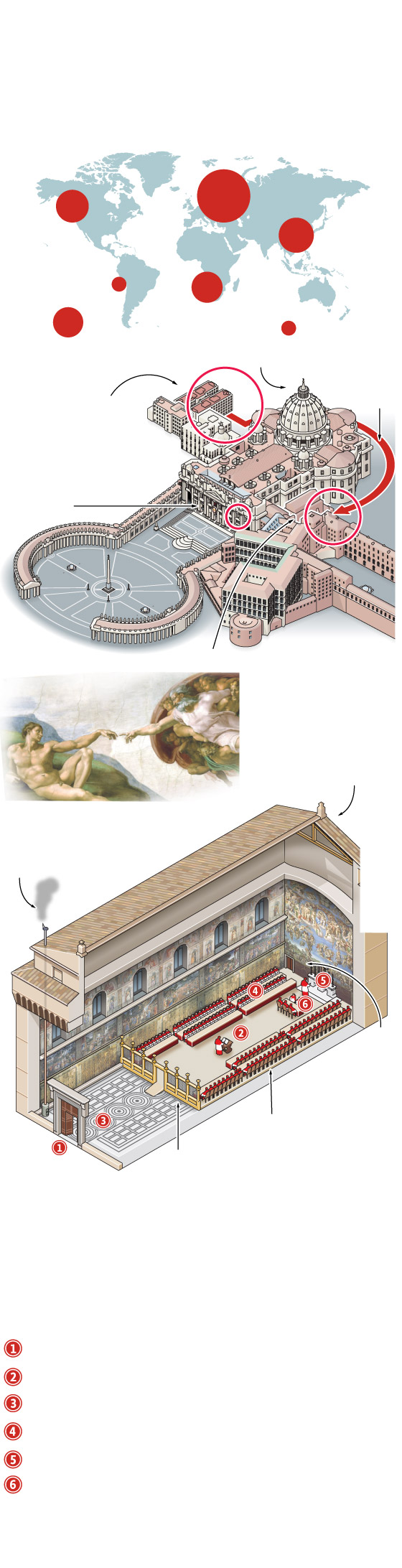
The Vatican has a time-tested, meticulous process
to keep cardinals isolated while they decide
who the next pope will be.
WHO CAN VOTE?
Of the 252 members of the College of Cardinals, 135 are
under the age of 80, which makes them eligible to vote,
but only 133 are coming to Rome.
North
America
Europe
53
Asia
16
Central
America
4
23
Africa
South
America
18
Oceania
4
17
Cardinals walk
every day to
Sistine Chapel
to vote
Saint Peter’s Basilica
Domus Sanctae
Marthae: Lodgings
for cardinals taking
part in the conclave
Balcony
St. Peter’s
Square
SISTINE CHAPEL
The chapel, first used for conclaves in 1492, has an ornate ceiling of biblical scenes painted by Michelangelo, such as
The Creation of Adam, left.
Smoke signals
vote outcome
Door to
access
Room of
Tears
False floor: Jamming
devices hidden under
floor prevent cell
phones from working
Screen, or
transenna
ACCEPTANCE
Having given his consent, new pope goes to the adjacent
Room of Tears, where he changes into papal vestments
before receiving pledges of obedience from fellow cardinals
REACHING A DECISION
After a first ballot and associated holy rites, cardinals hold as many
ballots as needed until they reach a two-thirds-plus-one majority.
Cardinals enter the chapel after a Mass
Cardinals swear oaths of secrecy
Chamberlain orders cardinals not to leave, then seals the door
Each cardinal-elector writes his preferred candidate
Electors approach the altar with ballots and place them in an urn
Scrutineers tally ballots, read names aloud and thread
them together
source: graphic news; vatican
Pictures: Getty Images, Newscom
The Vatican has a time-tested, meticulous process
to keep cardinals isolated while they decide
who the next pope will be.
WHO CAN VOTE?
Of the 252 members of the College of Cardinals, 135 are
under the age of 80, which makes them eligible to vote,
but only 133 are coming to Rome.
North
America
Europe
53
Asia
16
Central
America
4
23
Africa
South
America
18
Oceania
4
17
Cardinals walk
every day to
Sistine Chapel
to vote
Saint Peter’s Basilica
Domus Sanctae
Marthae: Lodgings
for cardinals taking
part in the conclave
Balcony
St. Peter’s
Square
SISTINE CHAPEL
The chapel, first used for conclaves in 1492, has an ornate ceiling of biblical scenes painted by Michelangelo, such as
The Creation of Adam, left.
Smoke signals
vote outcome
Door to
access
Room of
Tears
False floor: Jamming
devices hidden under
floor prevent cell
phones from working
Screen, or
transenna
ACCEPTANCE
Having given his consent, new pope goes to the adjacent
Room of Tears, where he changes into papal vestments
before receiving pledges of obedience from fellow cardinals
REACHING A DECISION
After a first ballot and associated holy rites, cardinals hold as many
ballots as needed until they reach a two-thirds-plus-one majority.
Cardinals enter the chapel after a Mass
Cardinals swear oaths of secrecy
Chamberlain orders cardinals not to leave, then seals the door
Each cardinal-elector writes his preferred candidate
Electors approach the altar with ballots and place them in an urn
Scrutineers tally ballots, read names aloud and thread
them together
source: graphic news; vatican
Pictures: Getty Images, Newscom
The Vatican has a time-tested, meticulous process
to keep cardinals isolated while they decide
who the next pope will be.
Saint Peter’s
Basilica
Cardinals walk
every day to
Sistine Chapel
to vote
North
America
Europe
53
Asia
16
Domus Sanctae
Marthae: Lodgings
for cardinals taking
part in the conclave
Central
America
4
23
Africa
South
America
18
Oceania
4
Balcony
17
WHO CAN VOTE?
St. Peter’s
Square
Of the 252 members of the
College of Cardinals, 135 are
under the age of 80, which
makes them eligible to vote,
but only 133 are coming
to Rome.
SISTINE CHAPEL
The chapel, first used for conclaves
in 1492, has an ornate ceiling of biblical scenes painted by Michelangelo, such as The Creation of Adam, left.
Smoke signals
vote outcome
Door to
access
Room
of Tears
ACCEPTANCE
Having given his consent,
new pope goes to the adjacent
Room of Tears, where he
changes into papal vestments
before receiving pledges of
obedience from fellow cardinals
False floor: Jamming
devices hidden under
floor prevent cell
phones from working
Screen, or
transenna
REACHING A DECISION
After a first ballot and associated holy rites, cardinals hold as many ballots
as needed until they reach a two-thirds-plus-one majority.
Cardinals enter the chapel
after a Mass
Cardinals swear oaths
of secrecy
Chamberlain orders cardinals
not to leave, then seals the
door
Each cardinal-elector writes
his preferred candidate
Electors approach the altar with
ballots and place them in an urn
Scrutineers tally ballots, read
names aloud and thread them
together
source: graphic news; vatican Pictures: Getty Images, Newscom
The changing Vatican: More from The Globe and Mail
The Decibel
Since Pope Francis’s death, many Indigenous people in Canada have asked what will happen to his work toward reconciliation and a more progressive Catholic Church. Anishinaabe journalist Tanya Talaga spoke with The Decibel about his 2022 apology for residential schools and and what it actually achieved. Subscribe for more episodes.
From our correspondent in Rome
How Francis likened (inclusive) capitalism to good Catholicism
A tale of two papal tailors in Rome, one happy, one not so much