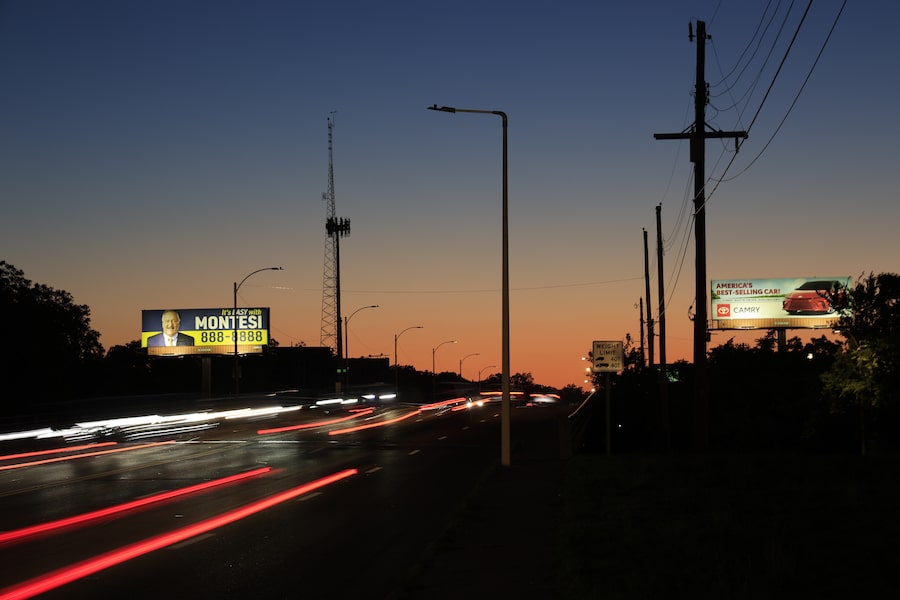
A short drive from downtown Memphis, the overpass on Poplar Avenue crosses train tracks, invisible below, as it whisks drivers past self-storage units and billboards for personal injury lawyers. A smoke shop occupies one side of the road, a military recruitment centre the other.
In a city of streets soaked in history – of music, of protest, of bloodshed – this concrete junction excites no imagination.
But it has suddenly become “a fault line,” said Otis Sanford, a well-known Memphis columnist, commentator and historian. Only, he said, it’s a fault line “with nothing there, except a fault of the legislature for doing this craziness.”
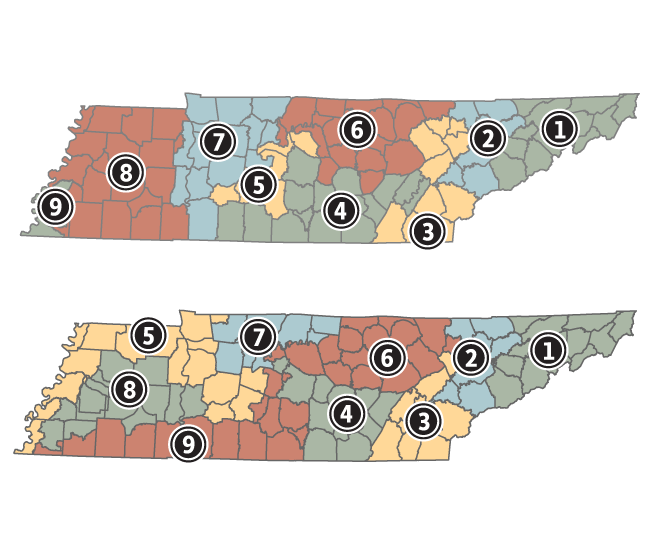
This spot has become a critical new intersection in American politics, the place from which three Congressional districts now radiate out across Tennessee. Each takes in a slice of Memphis, but then reaches far out over the state; to cross one of them by car would take an arcing route of roughly 500 kilometres. The entirety of Tennessee itself is little more than 700 kilometres in width.
The new Tennessee electoral map was born from cold political calculation – an attempt, local Republicans say, solely designed to diminish Democratic hopes of retaking power in Congress. In that, it has almost certainly succeeded. In each of the three new districts that divide Memphis, Republicans make up roughly 60 per cent of the population. In each, Black voters make up roughly 30 per cent. Republicans say they had no racial motivation.
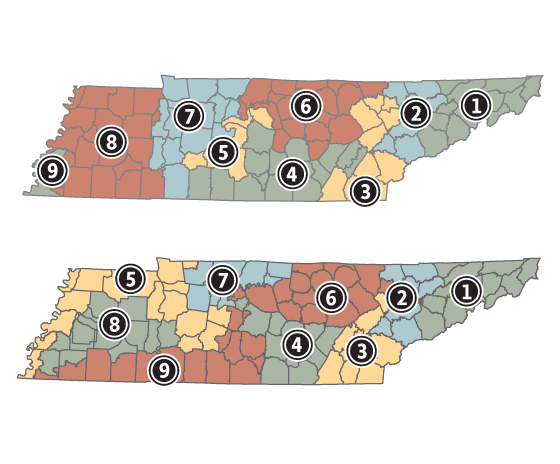
U.S. congressional districts in Tennessee
2022
2026
the globe and mail, Source: tennessee comptroller of the treasury
U.S. congressional districts in Tennessee
2022
2026
the globe and mail, Source: tennessee comptroller of the treasury
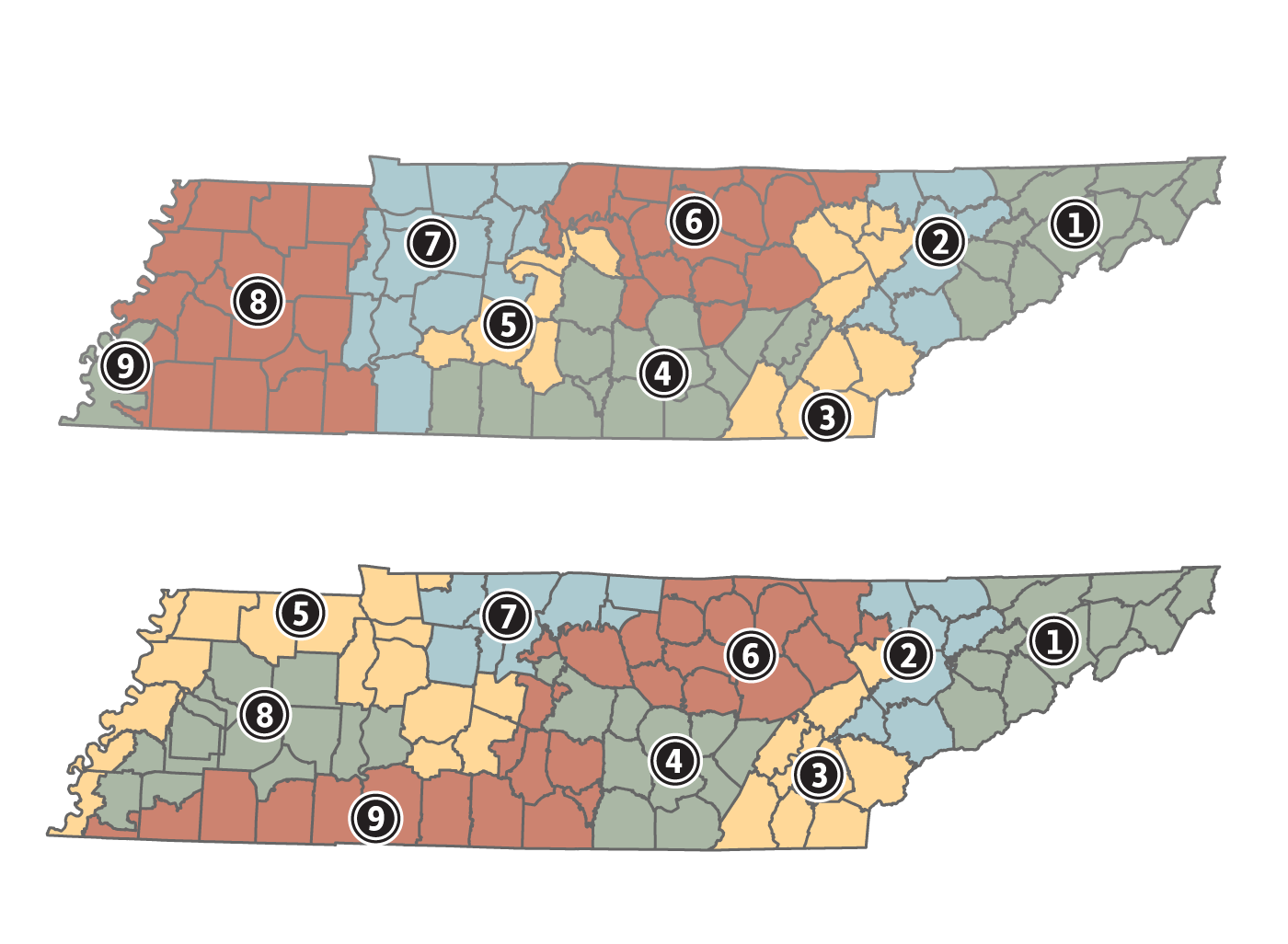
U.S. congressional districts in Tennessee
2022
2026
the globe and mail, Source: tennessee comptroller of the treasury
But broadly speaking, “there is no difference between African-American voters and Democratic voters within the city of Memphis,” said Mr. Sanford. “They are saying it’s all for politics. But you can’t separate the racial from the party.”
Nor, for him and many others, can you separate the political from the personal. That new fault line separates a city from itself. It also, people here worry, will sever people from each other, and from their shared pasts.
One of the newly formed districts now encompasses both the Abyssinian Missionary Baptist Church in Memphis – which calls itself the Blackest congregation in the city – and Pulaski, the small Tennessee city where the Ku Klux Klan was founded. “I am saddened. I am not shocked, I’m not surprised. I know history,” said Earle Fisher, pastor at the Abyssinian church.
Memphis has long occupied a single electoral district, a small but important spot on the national electoral map where voters in the largest Black-majority city in the country could choose their own representative. With one brief exception, that representative has always been a Democrat. On Friday, the current occupant of that seat, Steve Cohen, said he would not seek re-election.
By splitting apart the city’s votes, the Republicans who govern Tennessee have almost certainly wiped out that Democratic seat, ensuring the preferences of Memphis voters will be overwhelmed by conservatives elsewhere in the state. A raft of lawsuits has been filed to challenge the law, which was passed in the wake of a landmark Supreme Court decision that removed key protections for districts drawn to protect minority votes.

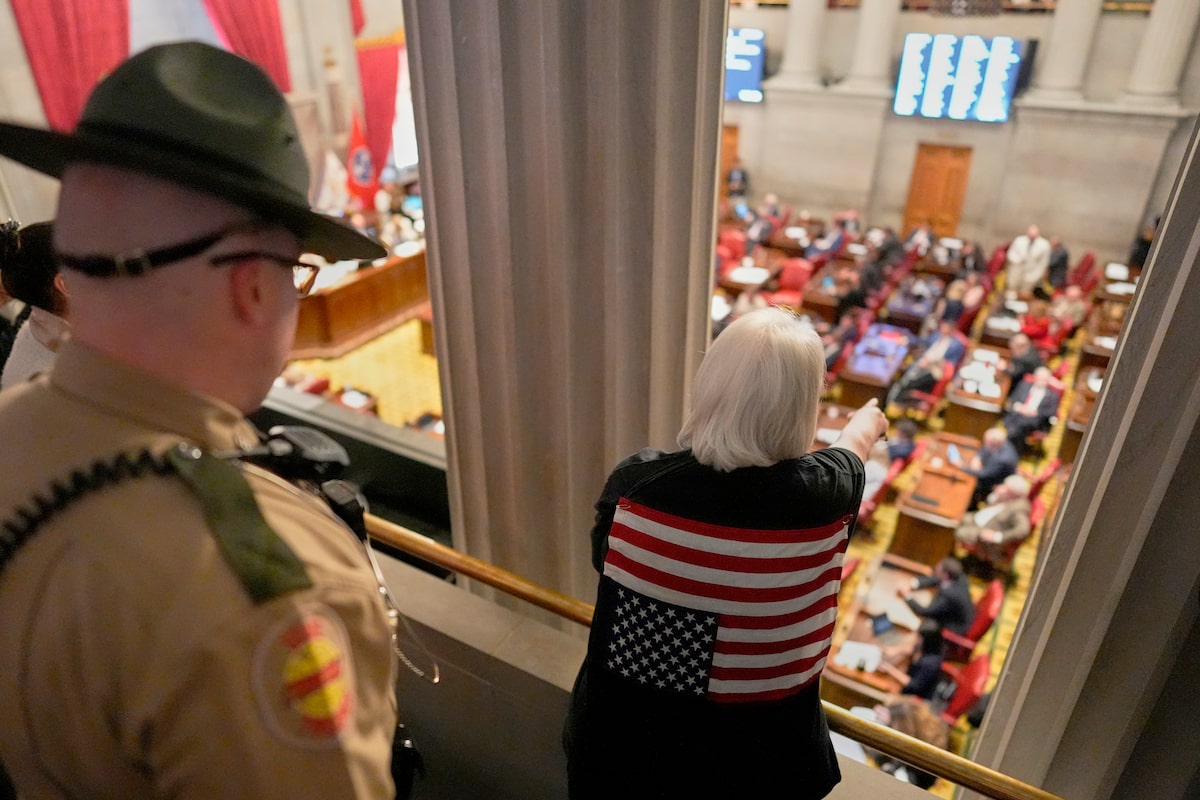
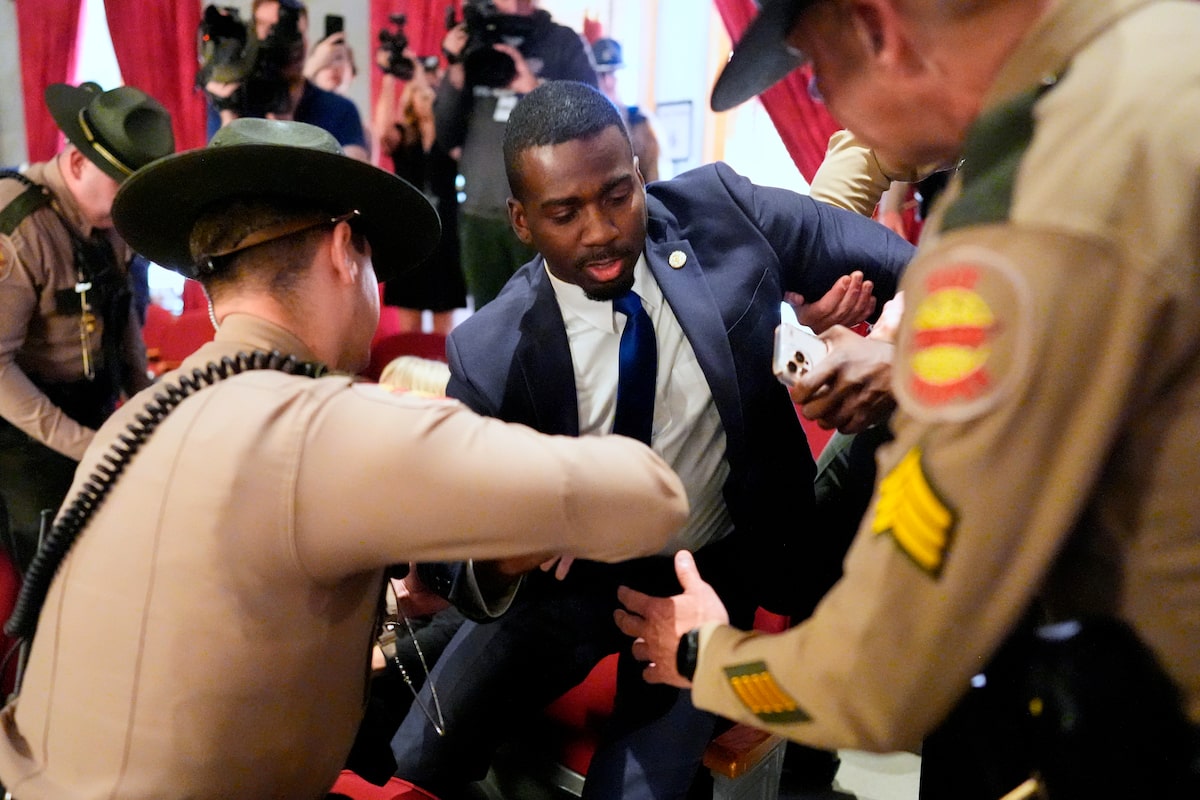

The new map carves up the district of Steve Cohen, who has represented it in Congress for 19 years. Unless the changes are stopped in the courts, he says he will not run again.Andrew Harnik/Getty Images
When Gov. Bill Lee signed it into law last week, Memphis author Tara Stringfellow “just broke down. I sobbed.”
She recalled how in 1960, the body of her grandfather, the first Black homicide detective in Memphis, was pulled from the Mississippi, with signs he had been beaten to death. Her grandmother, an activist, knew Martin Luther King Jr., who was fatally shot in downtown Memphis.
Long before then, the surrounding Shelby County had the greatest per-capita number of lynchings in the country.
There was a time when all of that history felt like the rough road toward progress.
Now, Ms. Stringfellow, whose 2022 novel Memphis celebrates her city, questions what many decades of sacrifice accomplished. If her vote has been engineered to no longer matter, she asked, then, “Who are we now as Americans?”
“I want to love my country. But I also want my country to love me,” she said.

When Memphis historian Otis Sanford was a child, Tennessee still charged a poll tax, a deterrent for Black voters who earned less than whites. The 24th Amendment made such taxes illegal.Nathan VanderKlippe/The Globe and Mail
Mr. Sanford has in his possession a small slip of paper that his mother received as a receipt on Aug. 10, 1964, the day she paid the $2 poll tax that allowed her to register to vote. He remembers that day. He was 11, his mother 53. His father stayed outside in the truck.
“He wanted to make sure that nobody was going to intercede and stop her,” Mr. Sanford said. A few months later, his mother cast her first ballot, for Lyndon B. Johnson. The family swelled with pride.
“We lived this. I lived this. And it’s indelible in my mind,” he said. “Seventy years later, to see what is now happening by rolling back the gains that people got in order to have a political voice – yes, it’s personal.”
The redrawing of an electoral map is an act of power, an imposition of political will at a moment in time. But it cannot be understood without also understanding history, argues Jasper St. Bernard, a historian who leads a project to identify lynching sites around Memphis.
The Memphis writer and early leader in the civil rights movement Ida B. Wells described attaining the right to vote as a confirmation of human dignity. To Mr. St. Bernard, it feels as if “we’re entering a world where my dignity is no longer taken for granted.”
“I can’t help but suspect at times that these reversals, these undoings, are trying to take us back to a time that maybe many of us thought were over,” he added.

Jasper St. Bernard, who teaches history in Memphis, visits the site on Memphis's outskirts where a Black man was lynched in 1917. The mob tied Ell Persons to a log, doused with gasoline and burned him alive.Nathan VanderKlippe/the Globe and Mail
In Memphis, like other places in the country, those who lament the changes brought by redistricting also acknowledge that electoral politics in the city has struggled. In the 2024 election, 55 per cent of eligible voters cast ballots, well below the national average. Just 16 per cent voted in a primary last week.
Low voter participation is a problem that extends beyond racial divisions. Tennessee, which is 78 per cent white, ranks among the bottom five states for turnout. And across the South, the creation of so-called “majority-minority” districts, which Republicans nationwide are now working to dismantle, has succeeded in bringing Black voter participation rates to parity with white turnout.
Still, the dominance of the African-American population in Memphis – which only became majority Black in 1990, after years of white flight – has given fodder to critics.
“The Blacks here have ruined this city,” said Mike Crocker, a Memphis-born business owner who has commercial property just off the new electoral junction on Poplar Ave.
When it comes to new voting districts, “anything that happens has got to be better,” he said.
“You got too many Blacks here. The only way you’re going to fix it is to get rid of them. That sounds terrible, but they’re the problem.”

Erskine McCreight, a former police officer and prison worker, now serves on Memphis's police oversight board.Nathan VanderKlippe/The Globe and Mail
For Erskine McCreight, that’s a hard concept to reconcile with a broader reality. Even before the lines were redrawn, only one of Tennessee’s 11-person congressional delegation was a Democrat.
“You don’t have much of a voice when you are in a red state, anyways,” said Mr. McCreight, a former prison worker who now sits on the Memphis police oversight board.
Nonetheless, a Congressional seat gave Memphis what he calls a “small voice.”
And “when you take that away in politics – it takes something from you,” said Mr. McCreight, an independent voter.
Early in his career, he served with the Memphis Police. On his phone, he keeps X-ray images that show a bullet still lodged in the back of his skull from when he was shot during a drug raid.
How much, he asks, could he possibly have in common with a voter from the rural hills hundreds of kilometres away? And how could a politician from a distant part of the state understand him?
It comes down to “what you are accustomed to – what you’ve been through,” he said. “You can’t come here and be a representative of this, because you’re not from here.”
For Ms. Stringfellow, the recent electoral changes magnify a larger trend. In 2022, Tennessee largely banned abortion. Now Ms. Stringfellow believes her vote has been devalued, too.
“My America is no longer free. I, as a woman, no longer have at least two civil rights that I had when I was born in this country,” she said.
She has begun to seriously consider leaving the country. Perhaps only outside U.S. borders, she said, can she “be in a place where I can feel free to write my beautiful, Black, Southern stories.”

Mark Humphrey/The Associated Press
U.S. politics in depth: More from The Globe and Mail
The Decibel podcast
Before the U.S. midterm elections begin, Washington, Ottawa and Mexico City have a decision to make by July 1 about the future of their continental trade pact. Economics reporter Mark Rendell spoke with The Decibel about where the countries stand. Subscribe for more episodes.
From our correspondents
U.S. primary season is beginning. Here’s what that means
Ahead of midterms, worries in Georgia set in about Trump’s tactics to win
In this Pennsylvania town, even Trump voters are split on Iran war