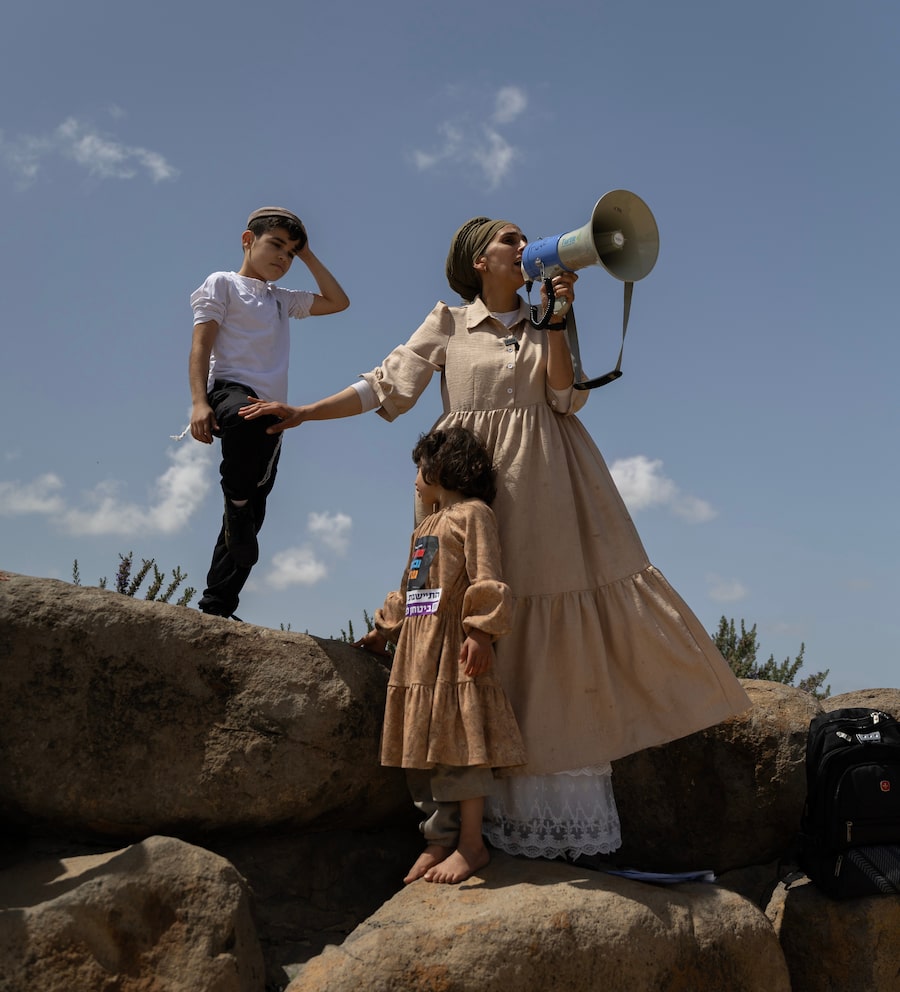
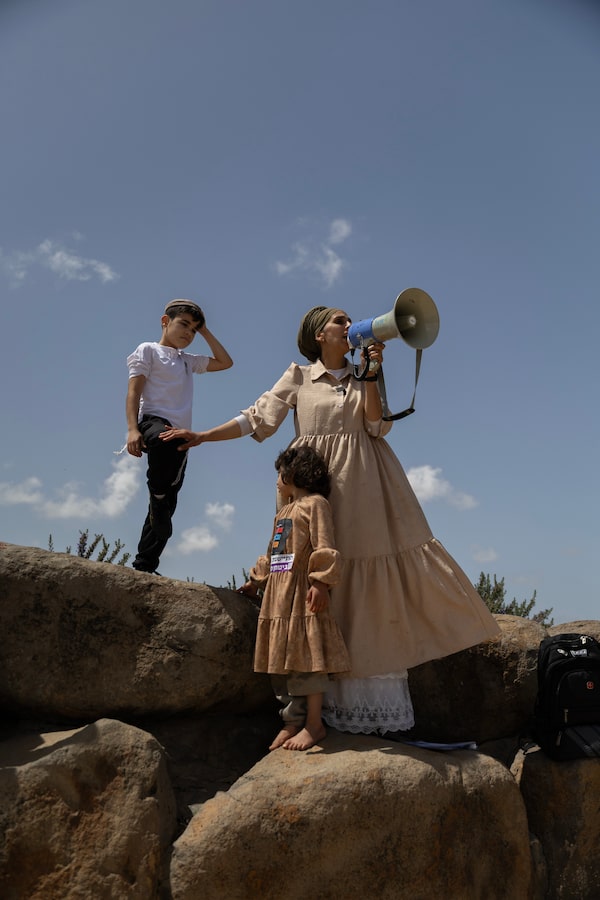
Hadar Bar-Chai stood on a green hill in southwestern Israel, the grey ruins of Gaza visible behind her, and raised a megaphone to her lips.
Soon, she shouted to a crowd of several hundred would-be settlers, the fence that marks Israel’s frontier with Gaza would be gone, and Jews would again live in the coastal territory that is currently home to some two million Palestinians.
“On the other side is Beit Hanoun – which you don’t see any more because it is destroyed!” Ms. Bar-Chai said as her audience cheered the annihilation of a city that was once home to 52,000 people.
“With God’s help, we will go back to Gaza, and Beit Hanoun will be a neighbourhood of Sderot!” she shouted, referring to a nearby Israeli city. “Here today, we stand and say this is ours − Gaza will be ours again!”
With that, the crowd – some with assault rifles dangling from their shoulders, others with pistols tucked into their belts − set off on a march along the perimeter of Gaza. An Israeli drone buzzed overhead, a reminder of a war on pause that has left more than 70,000 Palestinians dead as Israel seeks to destroy Hamas, the Iran-backed militia that set the war in motion with the Oct. 7, 2023 attack on southern Israel.

The border march was organized by Nachala, or Homeland, a hardline Jewish group founded two decades ago in the wake of Israel’s withdrawal from Gaza, after a 38-year occupation. Israel’s settler movement was on its back foot then, widely dismissed as a radical fringe. The country was moving on, “disengaging” from the Palestinians by pulling its soldiers and settlers from Gaza and building an eight-metre-high barrier that was meant to create a new de facto border with the other main Palestinian territory, the occupied West Bank.
Today groups such as Nachala are very much at the centre of Israeli politics, with far-right settlers occupying key posts in the government of Prime Minister Benjamin Netanyahu.
The nationwide shift to the right − and increasingly, embrace of the far right − has been driven by the trauma and the wars that have sprung from the Oct. 7, 2023, attack. More than 1,200 people were killed in the Hamas assault, while 251 others were taken to Gaza as hostages.
In the aftermath, the peace camp’s argument that Israel needed to withdraw from the lands it had occupied in order to have peace appeared dangerously naive. Israel, the new mainstream believes, can only protect itself by expanding.
The settlers in Mr. Netanyahu’s cabinet have driven a post-Oct. 7 policy of creating what the Israeli government calls “security zones” in not just Gaza and the West Bank but also southern Lebanon and southwestern Syria. It’s a policy that has put U.S. President Donald Trump’s ceasefire with Iran in jeopardy, as Israel initially refused to halt its war against the Tehran-backed Hezbollah militia in Lebanon, before finally agreeing to a ceasefire that allows its troops to remain in the south of the country.
Mr. Netanyahu – who has repeatedly declared that he intends to “change the Middle East” – isn’t yet ready to end the wars. Israel’s neighbours are being driven back, their homes demolished. Settlers such as Ms. Bar-Chai stand ready to move in and build Jewish communities on the ruins of Arab ones.
The settlers − many of whom speak English with North American accents that hint at upbringings far from Gaza − see another ally in Mr. Trump.
“Settlers” is a collective term for Jewish Israelis who live in the territories − the West Bank, East Jerusalem and the Golan Heights − that Israel captured in the 1967 Six-Day War.
While most of the world, including Canada, considers the Jewish settlements built beyond Israel’s recognized borders to be illegal, the mercurial Mr. Trump doesn’t seem to.
He used his first term in office to recognize Israel’s 1980 annexation of the Golan Heights from Syria. He also moved the U.S. embassy from Tel Aviv to Jerusalem, effectively endorsing Israel’s claim to the entire city and adding a major roadblock to the Palestinian dream of an independent state with East Jerusalem as its capital.
With the support of a superpower, the settlers believe their dream of a Greater Israel − an idea rooted in a biblical passage in which God promises Abraham “this land, from the river of Egypt to the great river, the river Euphrates” − is closer than ever.
The settler rally on the edge of Gaza featured songs, food, prayer and even a merchandise table. Among the items for sale was a trivia game called Return to Gaza, as well as an illustrated children’s book about a little Jewish boy named Alon who grew up looking across the border into southern Lebanon and dreaming of living there. At the end of the story, Alon’s wish comes true and “there was no one happier than Alon in his new house in Lebanon.”
Ms. Bar-Chai, a 36-year-old mother of nine, has a ready answer when she’s asked what Israel’s borders should be. She pulls out a laminated map of a Jewish state that matches the territory promised to Abraham, stretching from the Nile in Egypt – across all of Lebanon, Syria, Jordan and part of Saudi Arabia – to the Euphrates in faraway Iraq.
Conveniently, Mr. Trump’s ambassador to Israel shares that vision.


Jerusalem
Seven days before the United States and Israel launched their attack on Iran, the Middle East was rattled by a different kind of salvo. Mike Huckabee, the U.S. ambassador to Israel and a self-described “Christian Zionist” who believes the Jews, as God’s chosen people, are entitled to almost the entire Middle East, said in a Feb. 21 interview with podcaster Tucker Carlson, “It would be fine if they took it all.”
After the ensuing diplomatic firestorm, Mr. Huckabee walked back that remark as “somewhat of a hyperbolic statement.” But he has been firmer in endorsing Israel’s continuing hold over most of the West Bank. When Canada, Britain, Australia and Portugal recognized an independent Palestinian state in September, Mr. Huckabee suggested Israel should consider responding by “declaring sovereignty over parts of Judea and Samaria” − using the same biblical names for the West Bank that the Israeli government does.
Speaking with Mr. Carlson, Mr. Huckabee was more specific about what he meant: “Area C is Israel,” he said.
Area C is the largest of the three administrative areas inside the West Bank that were created by the Oslo Accords of the early 1990s, signed by then-Israeli Prime Minister Yitzhak Rabin and Palestinian leader Yasser Arafat. The process was supposed to culminate in a peace deal establishing two states for two peoples.
In the meantime, Areas A and B, encompassing the main Palestinian population centres, were transferred to the nascent Palestinian Authority, though Israel retained overall security control. Area C, which accounts for more than 60 per cent of the entire territory, remained under direct Israeli administration, pending agreement on final borders and other issues.
The Oslo Accords were viewed as a betrayal by Israel’s far right, and Mr. Rabin was assassinated in 1995 by Yigal Amir, a Jewish extremist. Within six months, Mr. Netanyahu – an opponent of the accords whom some have accused of helping incite Mr. Rabin’s murder – had been swept to power.
At the time of the accords, there were 250,000 Jewish settlers living in the West Bank; today, there are more than 730,000 in more than 150 settlements.
Those numbers don’t include the “outposts” established on Palestinian lands. They usually begin as just a few caravans of people and are illegal under Israeli law, since they are built in Areas A and B.
The establishment of outposts is led by the Hilltop Youth, an extremist group under sanctions imposed by Canada, the European Union, Britain and Australia. Then-President Joe Biden also imposed sanctions on the group in 2024, but they were lifted the day Mr. Trump returned to the White House.
Ameer Dawood, who keeps track of settlement building for the Palestine Liberation Organization, said Mr. Huckabee’s words were followed by a surge in outposts in the West Bank − 46 new ones in the first three months of 2026, compared with 12 in all of 2022, the last year of relative peace.
On April 9, as the Middle East was reeling from Israel’s decision to continue its war against Hezbollah in Lebanon – badly undermining the ceasefire with Iran that Mr. Trump had announced 48 hours earlier – Israel announced the approval of 34 new, supposedly permanent settlements in the West Bank.
With the building spree has come yet more violence.

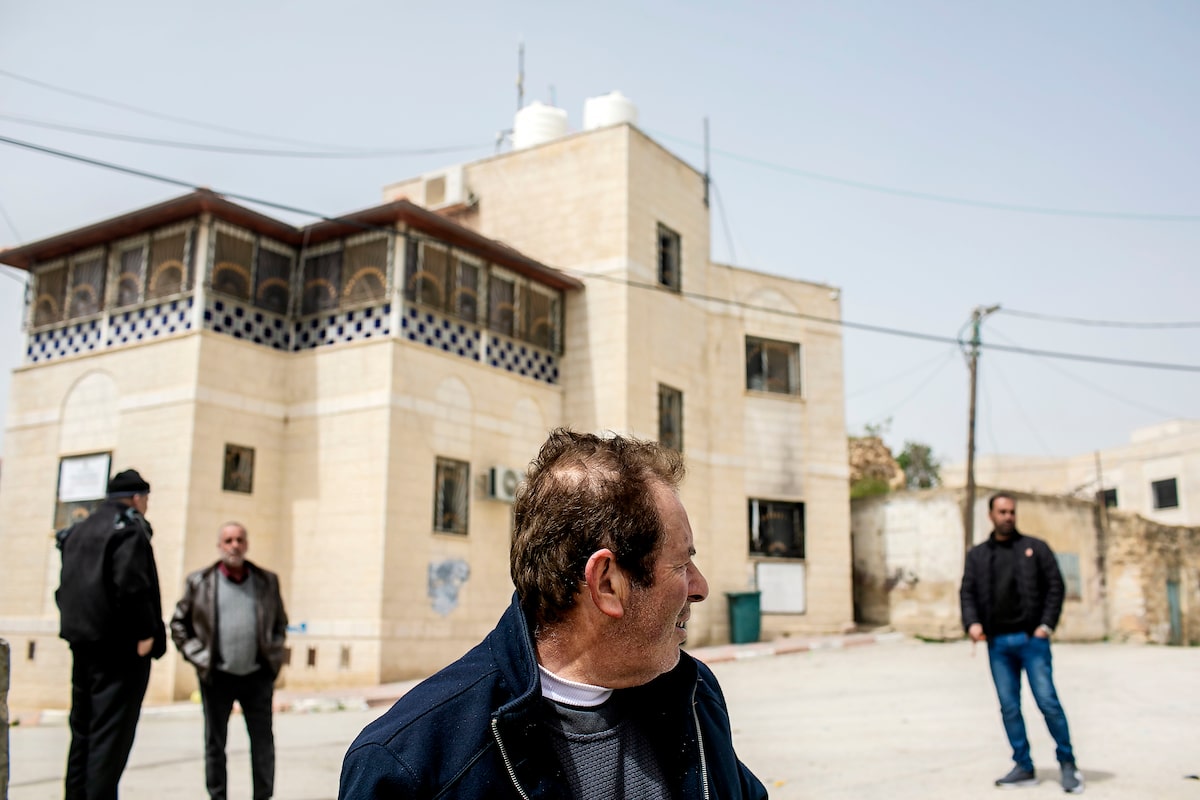
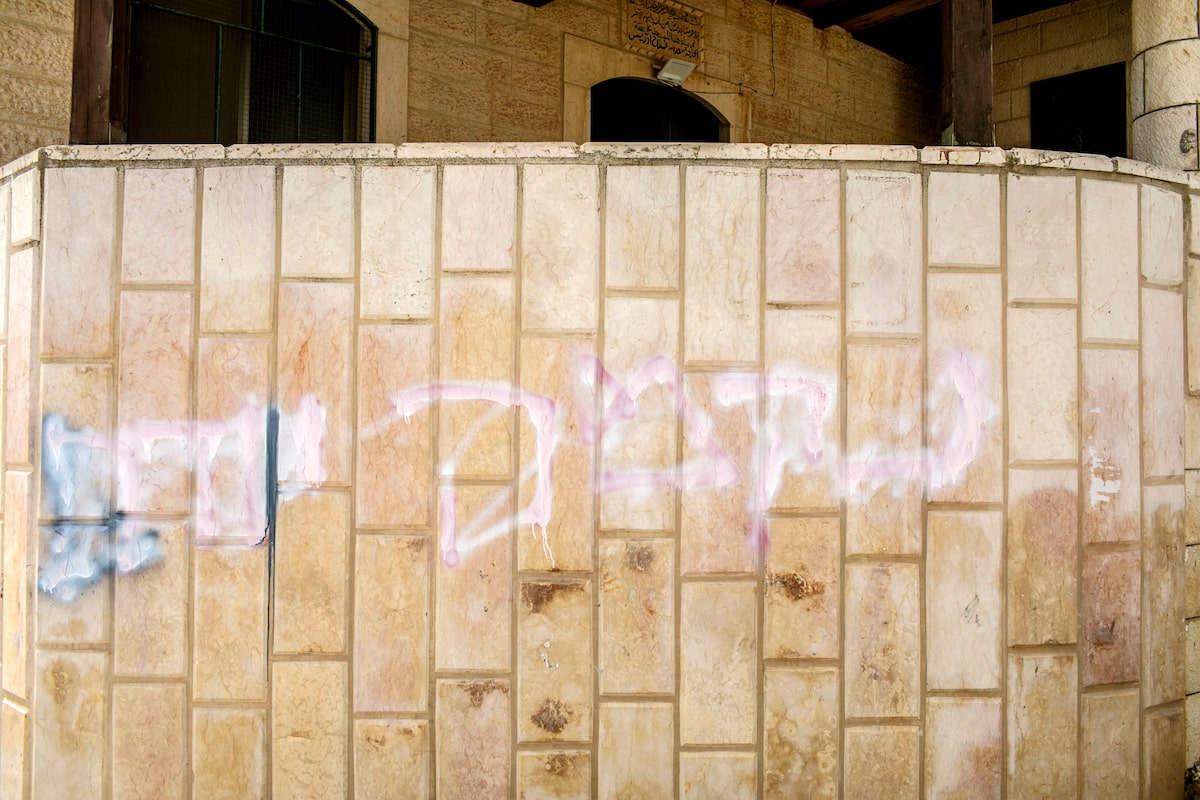
Qaryut, West Bank
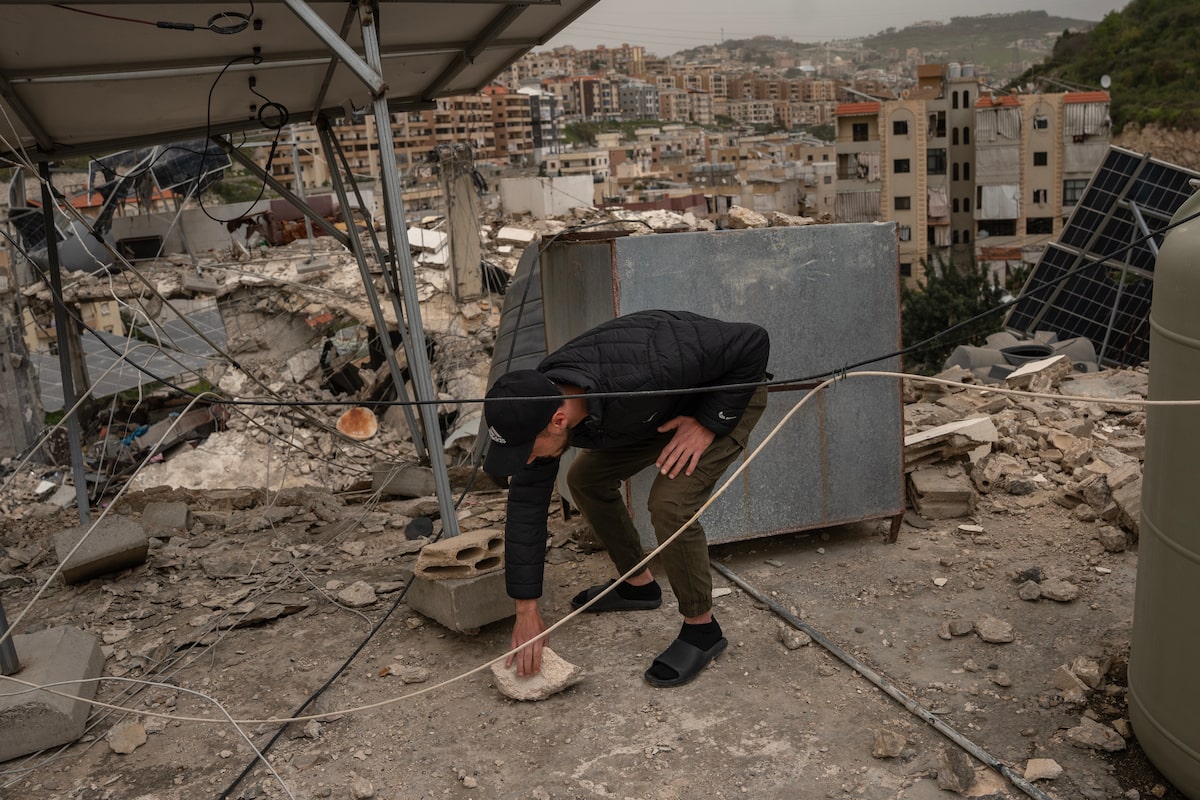
Jamil Moammar and his brothers Mohammed and Fahim were tending to their hilltop olive grove on the morning of March 2, 48 hours after the start of the U.S-Israeli war against Iran, when they heard the rumble of a bulldozer in the valley below. Along with a quartet of other men from Qaryut, a hardscrabble village of 3,000 people just south of Nablus in the heart of the West Bank, they clambered down to investigate.
The bulldozer was constructing a new road, tearing through the olive grove on the next hill – just west of the Moammars’ property, where the extended family lives in five small concrete houses. More worryingly, the driver was armed and escorted by a uniformed security guard from the nearby settlement of Shiloh. Jamil Moammar said the guard fired his weapon in the air as the villagers approached, and the Palestinians retreated.
Then the settlers went on the attack. A video shared with The Globe and Mail shows at least 10 settlers standing in Mr. Moammar’s olive grove, directly outside his home. Rocks are thrown in both directions, and two settlers carrying assault rifles point them at the family’s homes. At least a dozen gunshots, and several screams, are heard in the three-minute-43-second clip, which has been spliced together from several shorter videos taken by neighbours.
By the end of the attack, Mohammed, 52, and Fahim, 48 – both fathers of six – were dead. Three others were injured, including 46-year-old Jamil, who was shot in the leg.
“They were just shooting randomly at us − and shooting to kill,” Mr. Moammar said. “What could we do? We are helpless, unarmed farmers facing armed people raised to believe that this is their land.”
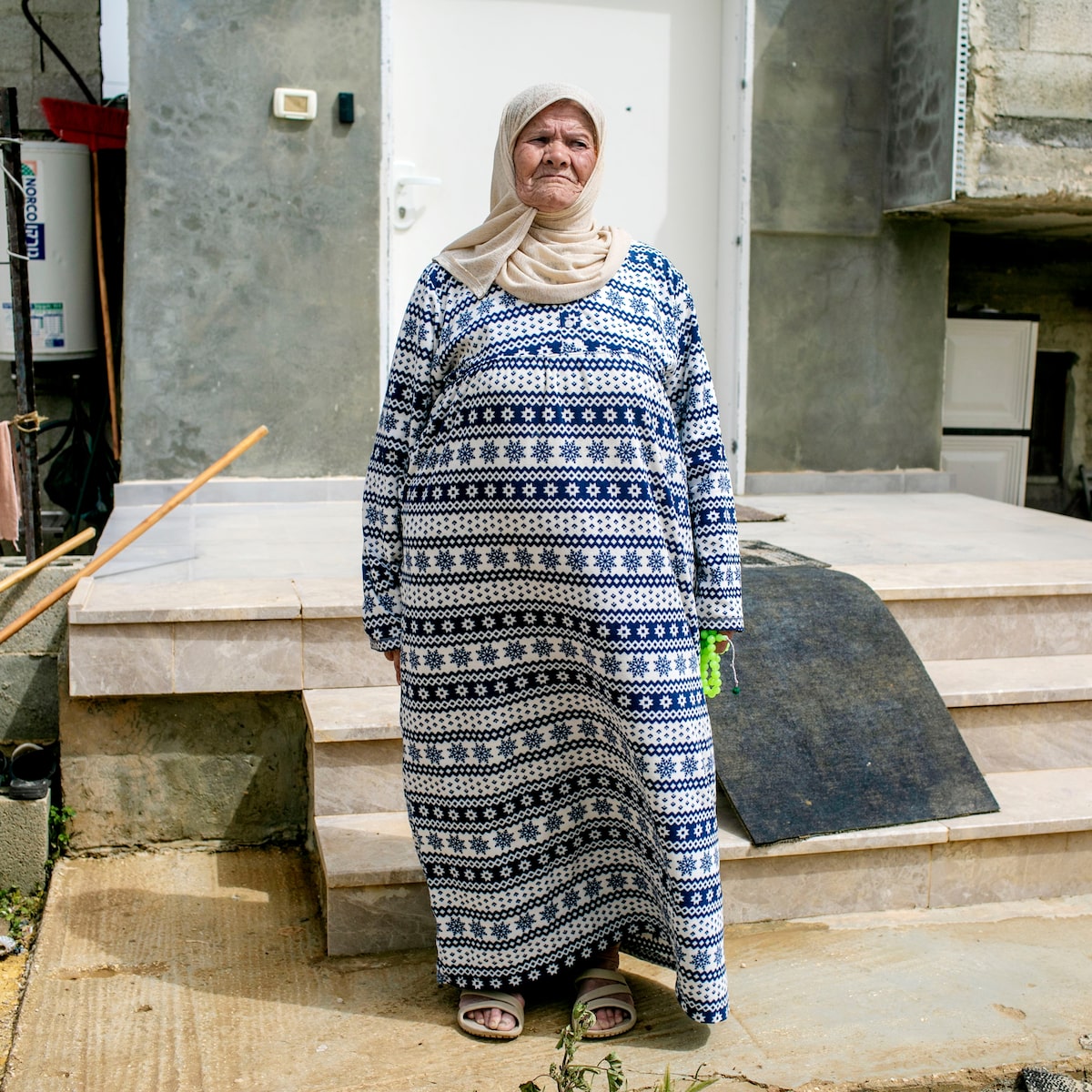
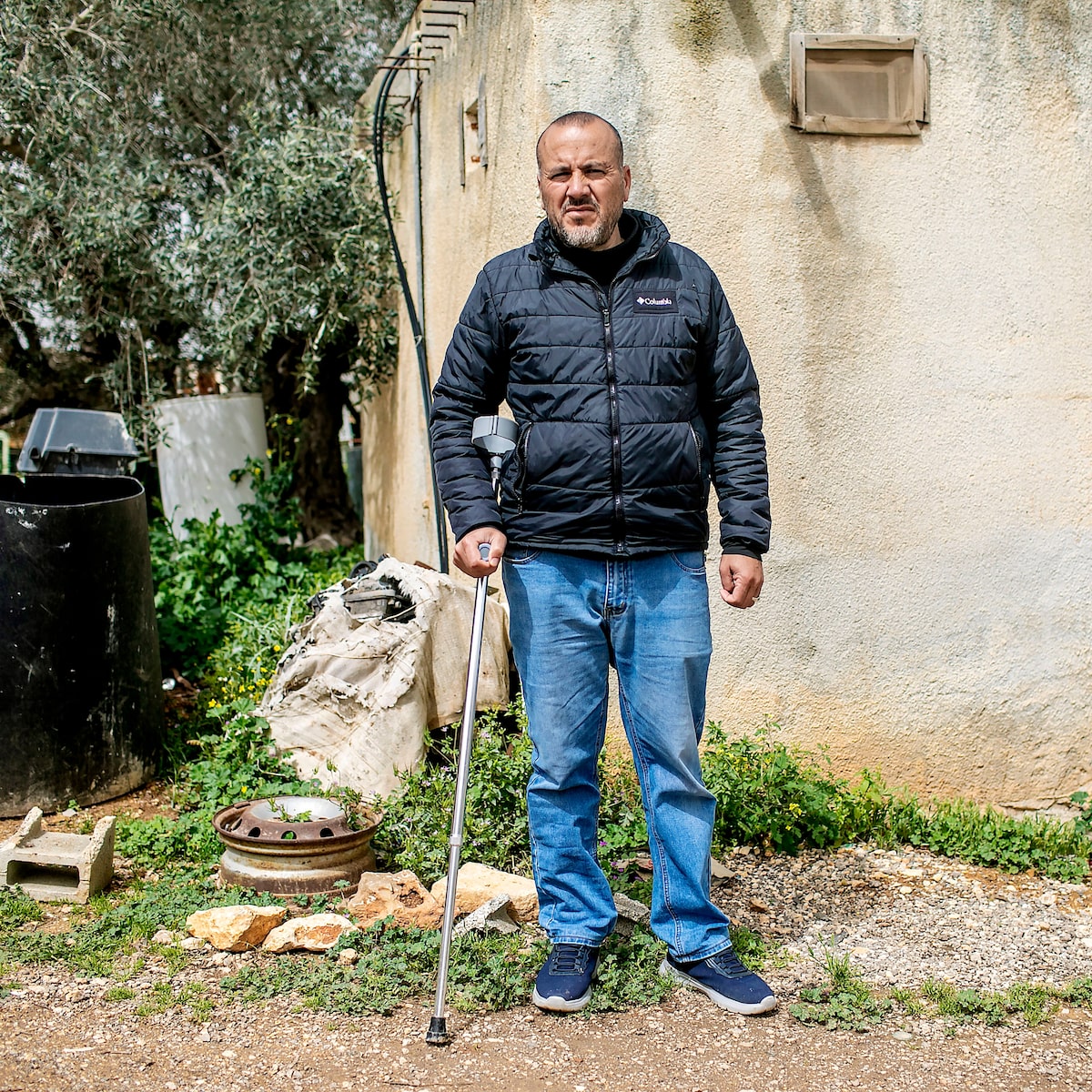

His brothers are among 13 Palestinians who have been killed in settler attacks in the West Bank since the start of the war in Iran, making March the deadliest month for such violence since the immediate aftermath of Oct. 7, 2023.
Mr. Moammar believes the next step will be the establishment of an outpost on the hill across from his family’s property. The dirt road the bulldozer started to clear on March 2 remained half-finished, and two cars were parked near the base of the hill, when The Globe visited earlier this month.
They were settlers from Shiloh, Mr. Moammar said, adding that Palestinians no longer feel safe approaching the area. “Please don’t go near them,” he cautioned. “They could shoot at you, and even if they don’t shoot at you, they will make trouble for us afterwards.”
Days earlier, a group of Israeli soldiers – members of an ultra-Orthodox unit seen as working alongside the Hilltop Youth – assaulted a team from CNN, one of a series of recent attacks on international media reporting on the rising settler violence in the West Bank.
“Their alliance with the U.S., instead of making them abide by the rules, means that more and more they don’t have to abide by the rules,” said Omar Awadallah, the Palestinian deputy minister of foreign affairs. “They’re becoming a rogue state that’s above international law.”
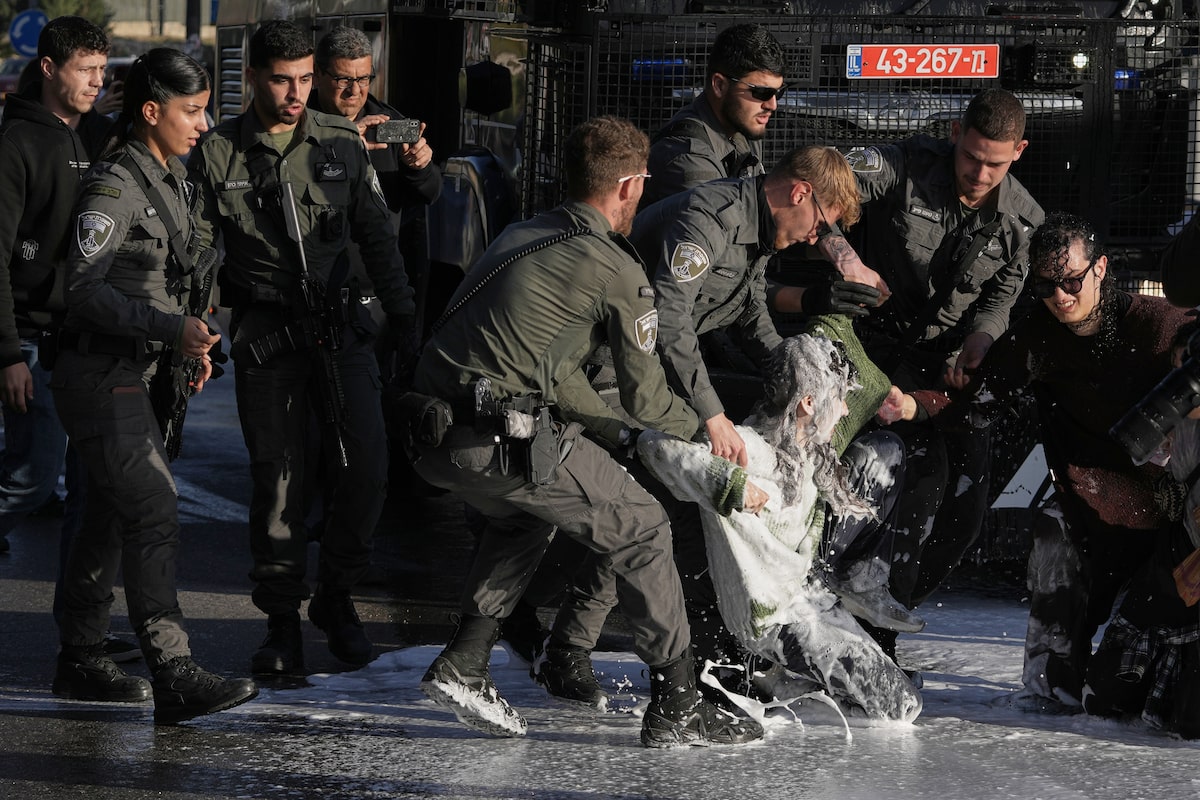
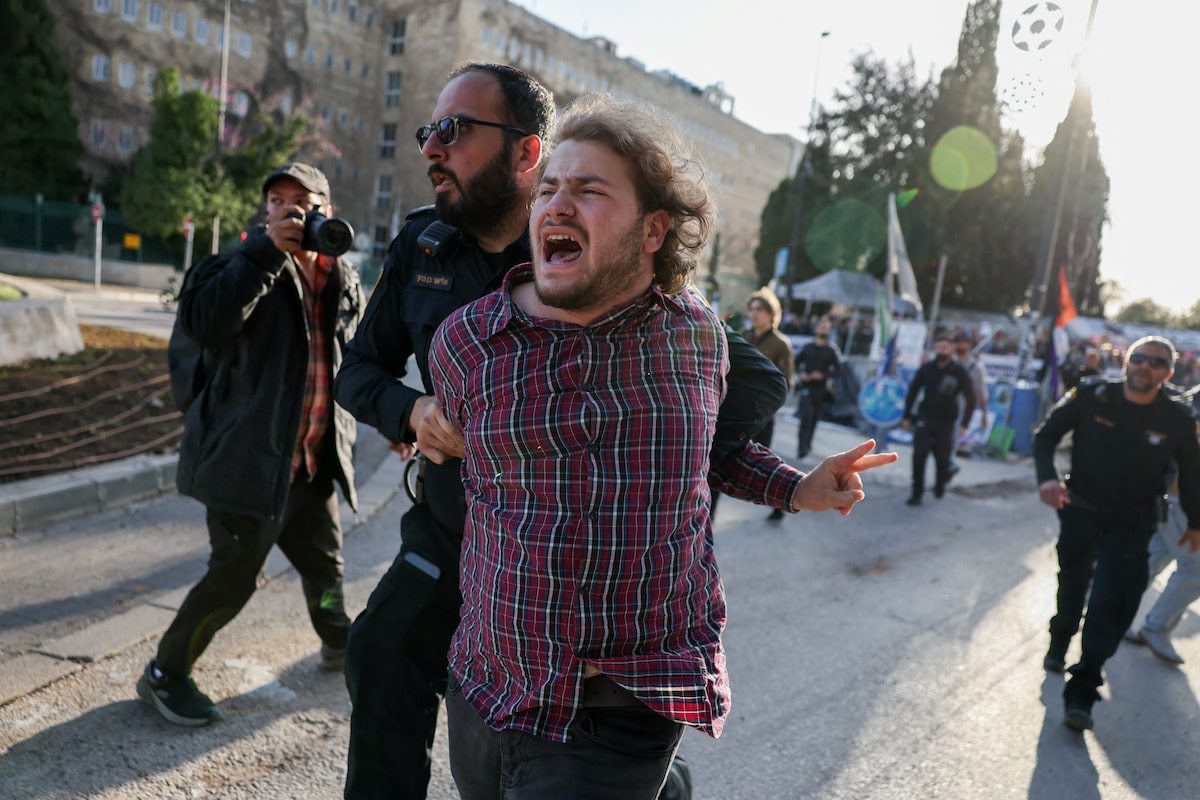

Itamar Ben-Gvir, a far-right politician who championed the law, brought out a bottle to celebrate after it passed.Oren Ben Hakoon/Reuters
Jerusalem
Itamar Ben-Gvir was jubilant. It was March 31, and Israel’s parliament, the Knesset, had just passed a law allowing Israeli courts to sentence “terrorists” to death – by hanging.
While Canada, the European Union and other countries decried the new law – which is worded in such a way that it will almost certainly apply only to Palestinians – as discriminatory and dehumanizing, Mr. Ben-Gvir, the National Security Minister, and his fellow far-right parliamentarians celebrated in the Knesset halls with champagne. “With God’s help, soon we will execute them one by one!” Mr. Ben-Gvir shouted, wearing a golden noose-shaped pin on his lapel.
Watching the scene, Hanna Barag felt she no longer recognized the Israel she grew up in, the homeland created for a people fleeing the horrors of the Holocaust. Instead of protecting the persecuted, she sees an “apartheid” Israel that increasingly resembles the kind of states Jews were forced to flee in decades and centuries past.
Twenty-five years ago, Ms. Barag was one of a small group of Israeli women who founded Machsom Watch, a group dedicated to recording the abuses and humiliations suffered by Palestinian civilians at the dozens of Israeli military checkpoints that dot the West Bank.

Hanna Barag is a founding member of Machsom Watch, which monitors how soldiers and police treat people at West Bank checkpoints.Amnon Gutman/The Globe and Mail
Back then, she believed the problem was a lack of information – that if enough Israelis knew what their army was doing, they wouldn’t allow it to happen. A quarter of a century later, the 89-year-old feels that most of her fellow citizens simply don’t care what happens to the Palestinians.
Today, she said, the right wing has all the momentum it needs to push through an agenda that was seen as extremist until it suddenly became mainstream. It’s a situation Ms. Barag says was born out of Mr. Netanyahu’s legal troubles. He is facing corruption charges that date back to 2016, and remaining in the prime minister’s office – as he has for all but 18 months since 2009 – has allowed him to repeatedly postpone his trial.
With most of Israel’s centrist and centre-right parties – as well as what remains of the left – refusing to work with Mr. Netanyahu because of the corruption charges, he was forced to turn to the settler movement to build a coalition government. The Religious Zionist Party headed by Bezalel Smotrich and Mr. Ben-Gvir’s Jewish Power movement ran on a combined platform in the 2022 election and won 11 per cent of the vote, the strongest showing for the far right in Israel’s history.
What each side gets from the coalition deal is plain to see: Mr. Netanyahu − who is seen as far less ideological than Mr. Smotrich and Mr. Ben-Gvir − gets to remain in office and avoid his reckoning with the justice system, while his new allies have been given unprecedented power.
“He needed the votes that the extreme right had, and so here we are,” Ms. Barag said. “When you add in Oct. 7, it’s a perfect storm.”

Shave Darom, Israel
Daniella Weiss, the godmother of the settler movement, feels like she’s winning.
After decades on the political margins, the 80-year-old Ms. Weiss now lists off her friends in cabinet. Mr. Smotrich – her neighbour in the West Bank settlement of Kedumim – is Finance Minister, empowering him to fund the construction of new settlements. Mr. Ben-Gvir, another settler who threatened Mr. Rabin on live television days before he was assassinated, is in control of security.
And with the Trump administration withdrawing Mr. Biden’s sanctions, Ms. Weiss feels there’s nothing standing in the way of her dream of returning Jewish settlers to Gaza, which was also supposed to be part of a future Palestinian state.
“Half of it, even now, is in our hands,” she said, referring to the so-called Yellow Line inside Gaza that was established as part of the October ceasefire between Israel and Hamas. That agreement left the Israeli military in control of 53 per cent of the strip, with Gaza’s two million residents crammed into the remaining 47 per cent.
A United Nations commission found in September that Israel’s actions in Gaza met the definition of genocide. No foreign journalists have been allowed independent access to the territory since Oct. 7, 2023.
While many Palestinians are worried the Yellow Line will become a de facto border, that’s not what Ms. Weiss has in mind. She envisions a Gaza populated with more than a million Jews – and no Palestinians at all. The Arabs who have called Gaza home for generations, Ms. Weiss says − always avoiding the word “Palestinians” since she doesn’t believe such a people exists − have lost their right to live there.
“And everything I say for Gaza, I say for Lebanon as well,” she added, referring to the Israeli military’s plan to remain in southern Lebanon after the current war with Hezbollah.
Ms. Weiss was escorting Kenneth Abramowitz – whose website says he “oversees a half-billion-dollar worldwide healthcare venture capital fund” – around the Gaza perimeter on a recent Sunday, showing him where she hopes Jewish settlements will be built. Mr. Abramowitz told The Globe he was providing financial assistance to the settler movement.
Sporting a red, white and blue “America 250” ballcap, Mr. Abramowitz said he believed that settling not just Gaza, but southern Lebanon and Syria as well, is realistic while Mr. Trump and Mr. Netanyahu are both in power. “They’re the best that either country can hope for, and to have them together is extra wonderful.”
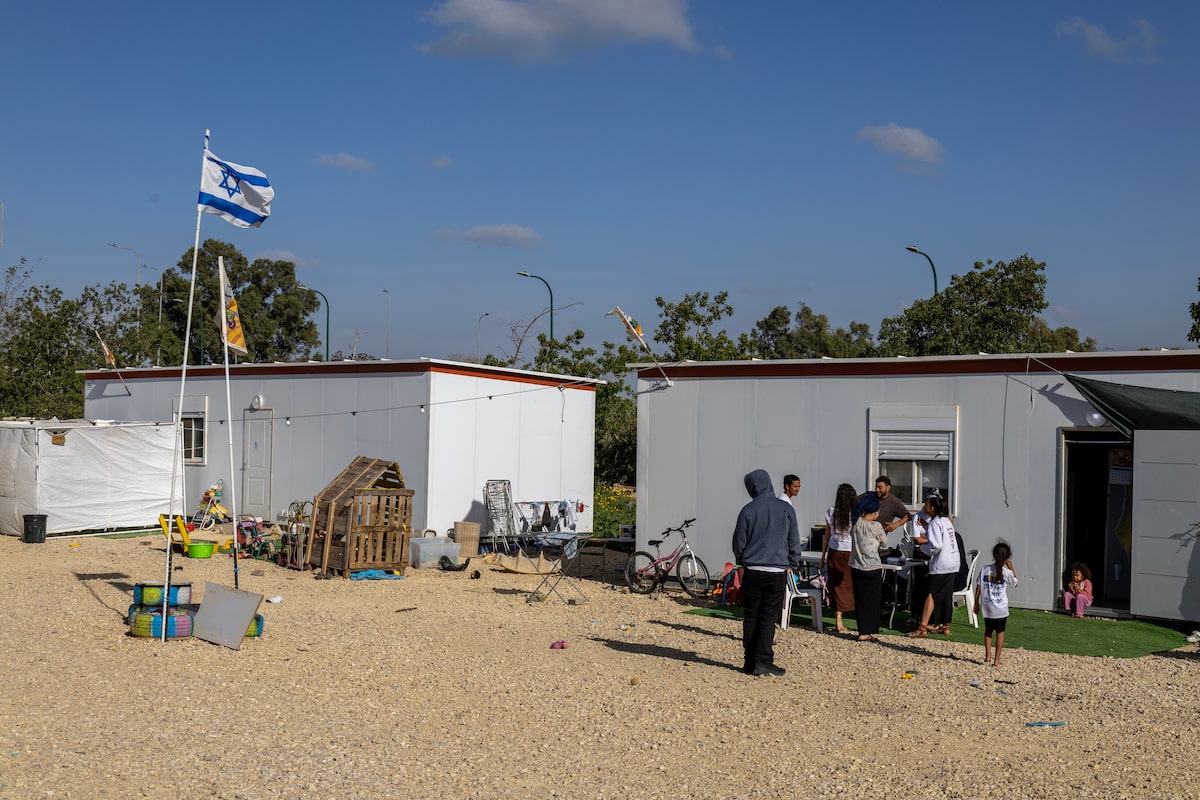
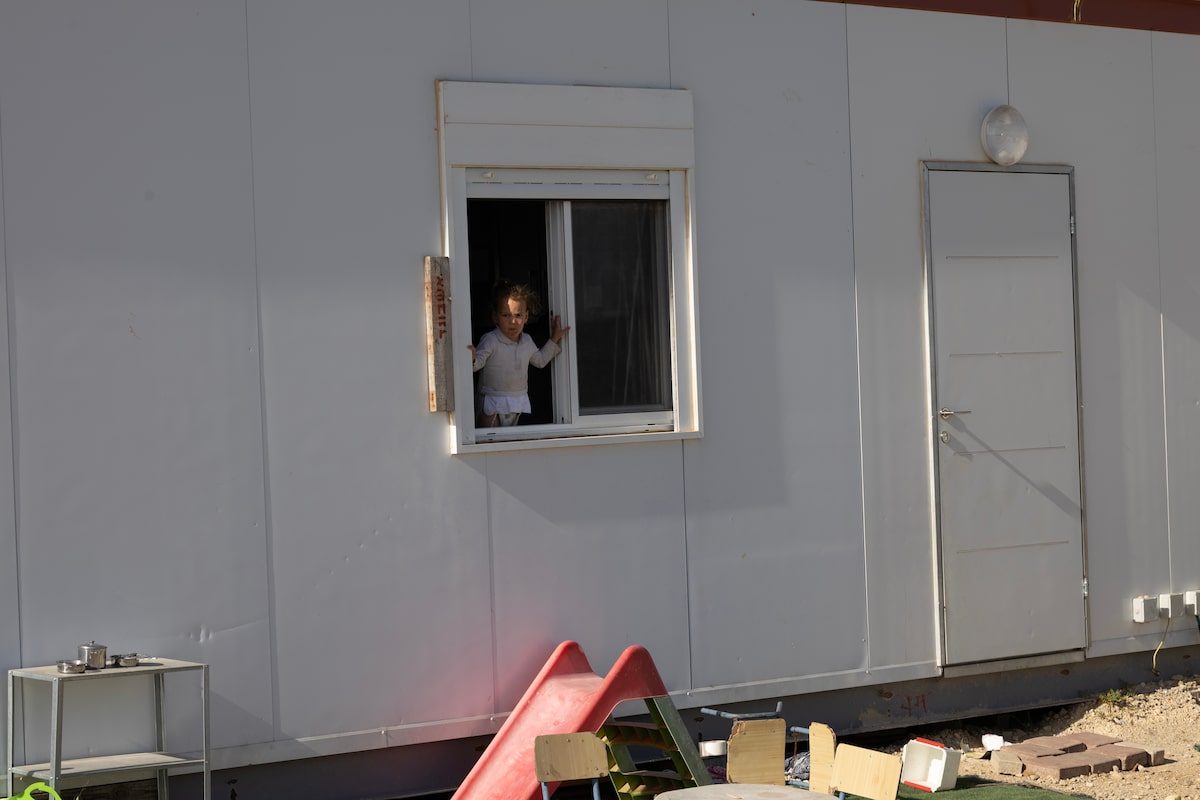
Ms. Weiss – who, like Mr. Smotrich and Mr. Ben-Gvir, has been sanctioned by Canada for encouraging settler violence against Palestinians – said she had a group of families ready to move into Gaza as soon as she gave the order. The Globe found them a short drive away: a cluster of 10 caravans, home to perhaps 100 people, living just a few kilometres from the Gaza border fence. A flag reading “Pioneers of Gaza” flew over the outpost-in-waiting.
The residents of the caravans, clad like Ms. Weiss and Ms. Bar-Chai in the long, loose clothing of the Orthodox Jewish community, refused to be interviewed. “I don’t give a shit about the world,” one young man said. “I have permission from God to live here.”
Rosh Pinna, Israel
Rachel Ben Dor can’t believe it’s all happening again.
Almost three decades ago, Ms. Ben Dor gained fame as one of the “Four Mothers,” a group of Israeli women who wanted their sons – then serving in the Israeli military as it occupied southern Lebanon – brought home and for Israel to “Leave Lebanon in Peace,” as the group’s slogan went.
After three years of protests and lobbying, an effort that brought Ms. Ben Dor face to face with Mr. Netanyahu and other leaders, the Four Mothers got their wish in 2000, when Israel withdrew its troops after an 18-year occupation. Twenty-six years later – after Hezbollah attacked Israel on March 2 in retaliation for the assassination of Iran’s supreme leader, Ayatollah Ali Khamenei – the Israeli army is back in southern Lebanon and once more declaring that it intends to remain.

Rachel Ben Dor lobbied decades ago against Israel’s military presence in Lebanon. A war injury is the reason she uses a wheelchair.David Blumenfeld/The Globe and Mail
The plan announced on April 19 is to establish another “security zone” that, at various points, is between five and 10 kilometres deep into Lebanese territory. The residents of the 55 villages that lie south of what’s also being described as a “Yellow Line” are to be prevented from returning. Many of their homes have already been demolished.
Ms. Weiss and her movement see the destroyed villages as fertile ground to expand Israel’s borders. Small groups of radical settlers managed to cross the border into southern Lebanon in December and again on Feb. 12, before they were forced back by the Israeli military. Late last year, settlers also entered southern Syria, where Israel has established a series of new military posts after the 2024 collapse of Bashar al-Assad’s regime.
“It’s not even déjà vu. It’s copy-paste. But even stupider,” Ms. Ben Dor said, in an interview at her home in Rosh Pinna, just 15 kilometres from the Lebanese border on the slopes of the Upper Galilee. “Nobody is trying to hide it any more. We’ve gotten to a place where someone who was trying to assassinate Rabin is now the Minister of Security. We’ve crossed all the red lines.”
The 68-year-old said Israel’s pro-peace left should even be prepared to make a deal to support Mr. Netanyahu and allow him to remain in power – if that’s what it takes to derail Ms. Weiss, Mr. Smotrich and Mr. Ben-Gvir.
“I think that’s our best chance – because if not, oh my God, he can do so much damage. He will give them everything.”

Ramallah and Jerusalem
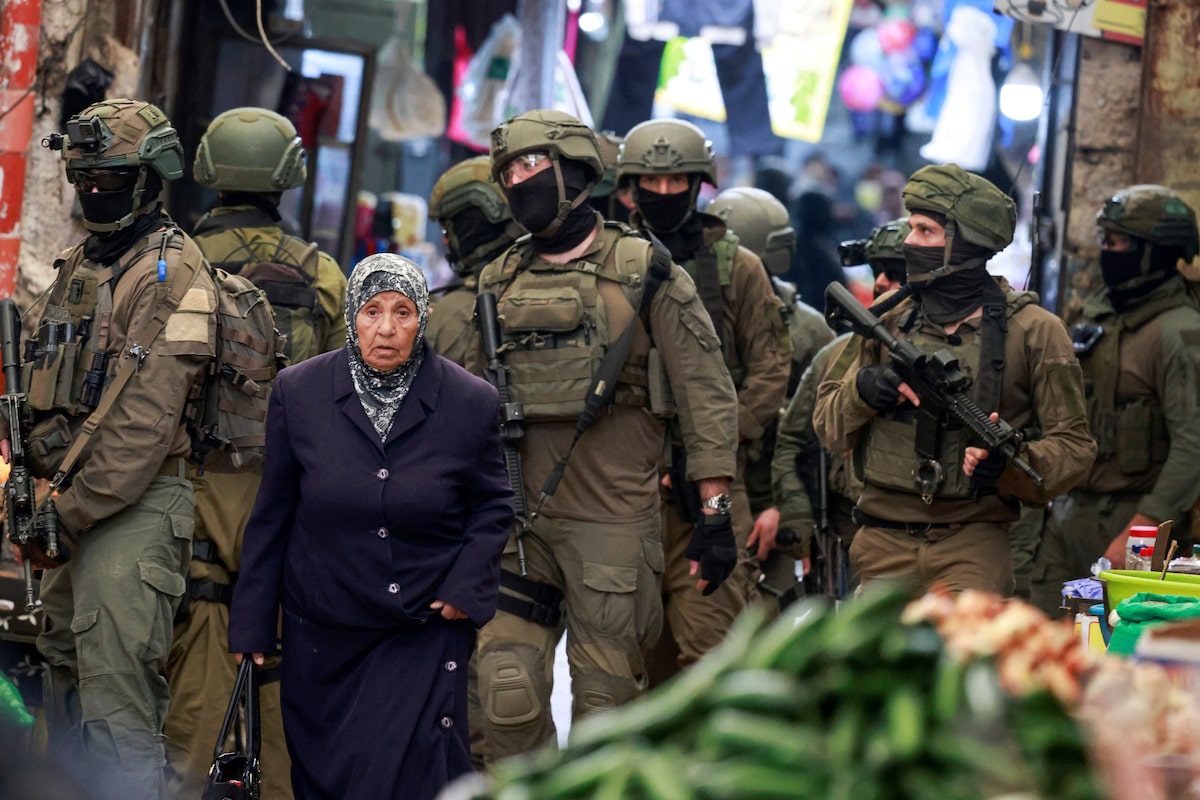
Driving north on Highway 60, from the de facto Palestinian capital of Ramallah to Nablus, the second-largest West Bank city, provides a view of the creeping annexation. The two-lane road is framed by dozens of Israeli flags, even though it cuts entirely through what most of the world recognizes as Palestinian land.
On the left is Ariel, home to some 21,000 Jewish settlers. It’s a city that few expect Israel to concede if and when a peace deal is ever struck. To the right are the harder-line settlements of Shiloh and Eli, which former Israeli prime minister Ehud Olmert proposed evacuating as part of a 2008 peace proposal he put to Palestinian President Mahmoud Abbas. Both settlements have only grown in size since the collapse of that peace initiative, the last serious effort of its kind.
On hilltops between the larger settlements are some of the outposts that have sprung up in recent months. Under Mr. Netanyahu’s government, such outposts have been quickly absorbed as official settlements, which are provided with electricity, water and other utilities – and protected by the Israeli military.
In between are Palestinian villages where the local populations say it can take them hours just to go to work or school because of all the Israeli military checkpoints they have to pass through.
Unlike in the days of Oslo, or the Olmert-Abbas peace effort, few Israelis oppose the settlement project any more.
Mitchell Barak, a Jerusalem-based pollster and one-time advisor to Mr. Netanyahu, said the country had been fundamentally changed by the last two decades of conflict with its neighbours. The main division in Israeli society was no longer left versus right, but between the right and the further right. The key question in 2026, Mr. Barak said, is whether someone defines themselves as Jewish or Israeli. The majority now see themselves as Jewish first, boosting the vote of religious parties and far-right factions. That put Mr. Netanyahu in a strong position to retain his post in elections that must be held sometime this year.
Younger voters, Mr. Barak said, don’t remember the hopeful days of the Oslo Accords, when genuine peace − with two states living side by side − seemed possible. They grew up during the second Palestinian intifada, or “uprising” against the occupation, and have lived through Oct. 7 and the wars that have followed. They want to see a strong Israel that can protect itself and they support doing whatever it takes to achieve that. “They want to see the powerful Israel, and for that Netanyahu delivers the goods,” Mr. Barak said.
To Ms. Barag of Machsom Watch, the rising religiosity in the country – and the settlers’ pursuit of Greater Israel – has put Israel in danger of becoming the kind of theocracy the U.S. and Israel are fighting in Iran.
“They’re grabbing as much as they can,” she said of the settlers. “Because now is the time when no one is stopping them.”
