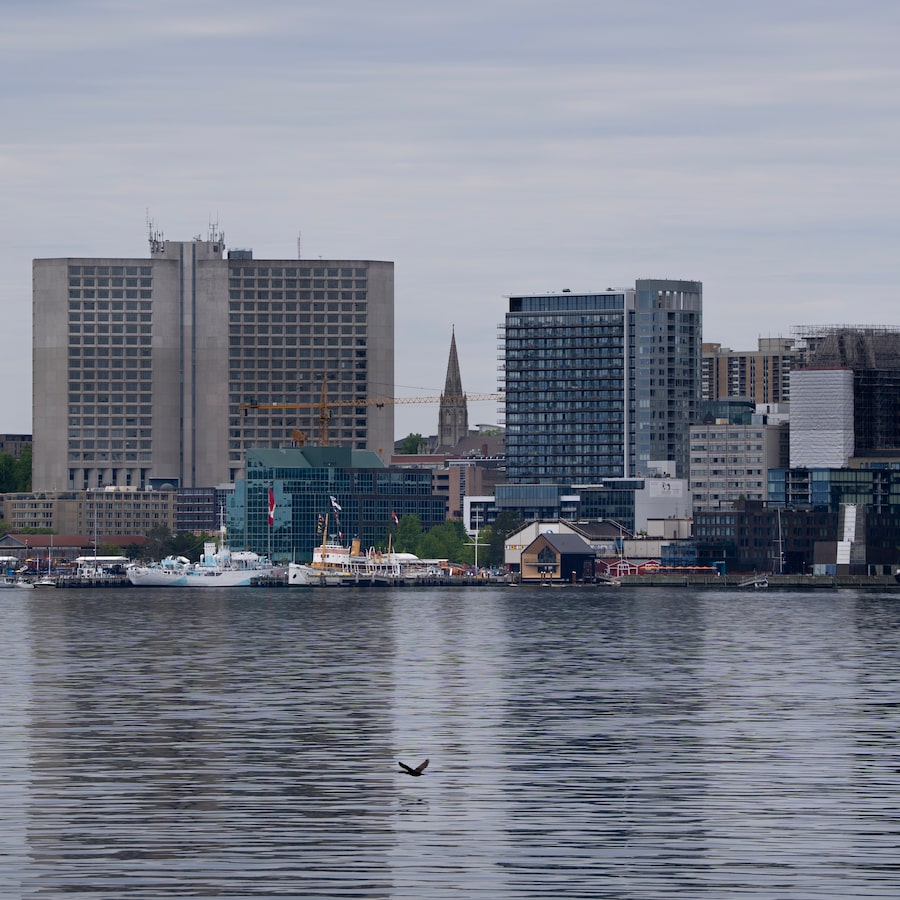
At 8:35 p.m. on the night of Jan. 20, 2025, an off-duty employee of the J.D. Kline Water Supply Plant saw a social media post about a planned power outage in the area. Concerned it might affect the plant, he texted a colleague working the overnight shift asking whether they knew about it.
The two operators on duty that night did not. Nova Scotia Power, the province’s primary electricity utility, had attempted to notify the water treatment facility about the planned outage through its automated system, but the contact numbers on file were no longer active. Tipped off by the text message, operators now had roughly two hours to do what they could to ensure the Pockwock plant, as it’s more commonly known, would continue supplying drinking water to more than 200,000 customers uninterrupted.
From the control room and across the plant, the operators prepared the largest water treatment facility in Atlantic Canada for the transition to backup power. When the external power grid went dark, the main backup generator hummed into gear as designed. The building’s lights flashed back on.
But the transfer of power blew the control transformer fuses for the plant’s service water pumps, lighting up the control room with 175 alarms. With the fuses blown, the critical pumps couldn’t receive a command to run, causing the automated chlorination system to completely lose pressure.
For 66 minutes, while an operator systematically worked through the cascade of alerts, unchlorinated water poured into the main transmission lines – 30 kilometres of four-foot-wide steel pipes snaking across the municipality to feed the peninsula. The decision was made to issue a boil-water advisory.

A Halifax resident stocks up on clean water after a boil water advisory went into effect following a power outage at the JD Kline Lake Water Treatment Facility in January, 2025.Darren Calabrese/The Canadian Press
The fallout was swift and severe, disrupting planned surgeries and shutting down daycares and businesses for days. While the malfunction stemmed from an electrical failure, the breakdown exposed the underlying fragility of the region’s aging utilities. A sharp population spike that had reanimated the region’s economy was also pushing the city’s sewers, roadways, housing supply and labour market to a breaking point.
The Pockwock incident became a boiling point in a long-simmering conflict over the sheer velocity of the city’s growth during the COVID-19 pandemic – when a wave of remote workers from across Canada sought affordable living closer to the ocean. Major roadways were becoming choked beyond capacity. The province designated thousands of acres as Special Planning Areas for new housing, even as developers warned those lands would remain empty for as long as they could not connect to the city’s water supply.
All of this is coming to a head just as Halifax – touted by local politicians as Canada’s defence city – is poised to anchor a generational economic boom driven by a surge in federal military spending. But the region’s basic civic infrastructure can barely handle the status quo, leaving serious questions about whether a city built on a 19th-century foundation can support the weight of its newest national ambitions.
The deluge
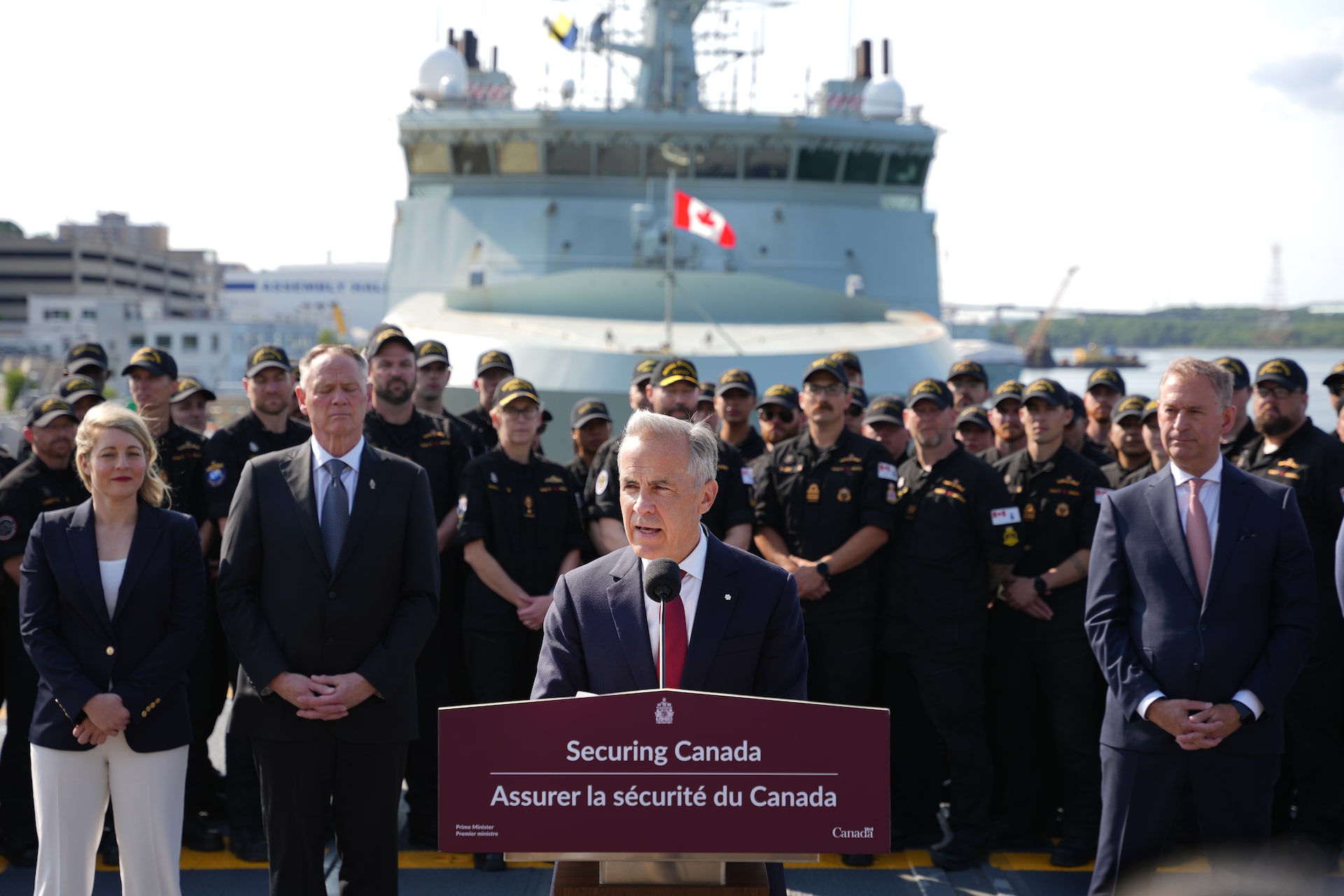
On July 6, Prime Minister Mark Carney travelled to Canadian Forces Base Halifax to announce German defence giant ThyssenKrupp Marine Systems had won a high-stakes battle to build a fleet of submarines for Canada.
In the months leading up to the decision, TKMS and its South Korean rival, Hanwha Group, had dangled massive economic promises to secure the multibillion-dollar contract. If the German proposal for the Canadian Patrol Submarine Project becomes a reality, TKMS has pledged an $86-billion injection into Canada’s GDP and the creation of a sprawling new industrial ecosystem over the lifespan of the 12-ship fleet.

Mr. Carney greets members of the Royal Canadian Navy aboard the HMCS Margaret Brooke in Halifax, where he announced $3 billion in funding for defence infrastructure in the Atlantic region on March 26.Darren Calabrese/The Canadian Press
The announcement marked the second time in less than five months that Mr. Carney used the Halifax naval backdrop to advance the federal government’s new Defence Industrial Strategy. The sweeping economic framework aims to rapidly scale up domestic supply lines as Canada races to hit NATO spending targets in a shifting global security environment.
In March, the Prime Minister announced billions to upgrade naval power grids, expand deep-water berths, and fund advanced combatant training facilities. The work will force an expansion of local supply chains, a rush for new business partnerships, and an unprecedented demand for specialized labour, civic leaders say.
There is a widespread conviction across Halifax that the region will ultimately capitalize on this massive influx of defence spending – an optimism that it will “meet the moment,” as more than one corporate leader predicted.
Yet interviews with a cross-section of business owners and policymakers reveal that it remains fundamentally unclear how the region can realistically bankroll and support the federal government’s grand ambitions beyond the property limits of its military installations.
In this way, Halifax represents an early test of how the country can fulfill wider dreams of defending its sovereignty while building out the domestic infrastructure needed to support it.
“Growth means more people, it means more demand on housing, more demand on transit, more demand on pipe services, water, wastewater,” Halifax Mayor Andy Fillmore said in an interview. “But we’re already stretched so thin because of the growth spurt.”
For Atlantic Canada, it is a chance to return to a position of strength not seen since the Golden Age of Sail in the mid-19th century, when local merchants generated enough capital from the sea to fund the creation of the Royal Bank of Canada and the Bank of Nova Scotia.
But as more federal plans are shared, and work begins on laying the foundations of new and improved military space along the harbour, the region is in a race against time to prevent the opportunity from slipping through its fingers.
The waterfront
There are few better views of Halifax than from the Silva, a steel tall ship built at the beginning of the Second World War that now operates as a sightseeing vessel. From the windy outlook of the ship’s quarterdeck, it’s easy to imagine why this landscape was chosen by explorers and settlers across centuries as a strategic stronghold.
As the three-masted schooner crosses the arrow-like expanse of the harbour, you can see why regional leaders refer to Halifax as “Canada’s defence city.” Not Toronto, Ottawa, Vancouver or Montreal, which are all the apparent frontrunners to host a new NATO-backed defence bank.
Halifax, population 517,115.
Here is Irving Shipbuilding, the private yard constructing the Royal Canadian Navy’s next-generation surface fleet; right next door, the grey warships of HMC Dockyard line the federal military base; farther down the coast, the historic Pier 21 that served as a critical Second World War military hub before welcoming nearly one million immigrants to Canada; nearby, the seaside facilities that house a growing ecosystem of maritime defence researchers and entrepreneurs.
Across the horizon, cranes hover above a skyline being transformed by a new multibillion-dollar hospital and the high-density towers of a booming residential core.

At the tour’s closest point to the open ocean, the widening harbour and a cloud of mist renders those structures into smudges, sharpening into view the wooded shorelines and rocky coves of what the Mi’kmaq called Kjipuktuk, or “the great harbour,” a homeland they had stewarded for thousands of years before British colonization in the 18th century.
Through two world wars, the city served as the primary gathering point for the massive merchant convoys that helped keep Britain alive. During the Second World War’s Battle of the Atlantic, Halifax played a central role in defending the coast and launching the fleet that fought back against the German U-boat threat.
The region’s role as a crucial marine and defence outpost was tempered by a post-Cold War peace and long-held assumptions about Canada’s secure place in the world. Those industries continued to employ thousands – representing roughly six per cent of Nova Scotia’s entire gross domestic product and supporting more than 17,000 workers across the defence and aerospace sector. But decades of industrial decline and the deep military drawdowns of the 1990s – a period known in military circles as the decade of darkness – left Atlantic Canada economically becalmed.
As heavy industry declined, coastal areas including Halifax had to find a delicate balance between a new heritage economy and their old industrial identity – a slow but dramatic drift from its days as a dominant engine of national wealth.
Even during its leanest years, the city’s unique mix of geography and deep-water naval infrastructure allowed it to endure as a natural hub of hubs – a gathering place that anchors global security summits like the Halifax International Security Forum, the North American regional headquarters for NATO’s defence innovation accelerator, and growing ocean-tech clusters.
Long before it drew modern federal transfers, Atlantic Canada’s regional shipyards, timber exporters, and international trading houses generated enormous wealth on the water, said James Frost, a historian and shipping consultant.
Those fortunes funded the bedrock of Canada’s economy, birthing two of the Big Six banks, Samuel Cunard’s steamship empire, Alexander Keith’s brewery, and the merchant dynasties of the Stairs family.
Nova Scotia had been “completely self-sufficient” before Confederation, Mr. Frost said, and customs duties helped fund the colonial government.
But the National Policy introduced by John A. Macdonald’s government in 1879 used tariffs on foreign imports to push Canadians toward manufactured goods from Ontario and Quebec. A measure sold as nation-building tugged the country’s economy inland, away from the Atlantic trading routes that had made the Maritimes wealthy.

The Port of Halifax's location on the East coast makes it a crucial hub for transatlantic trade as Canada seeks to bolster trade and economic ties with Europe.Maria Collins/The Globe and Mail
Entrepreneurs out East initially responded by investing in sugar refining, cotton, boots and shoes, steel and other industries, expecting the new country and a rail connection to Montreal to open larger markets. Instead, Mr. Frost said, many built more capacity than the region could sustain.
“They didn’t count on Montreal entrepreneurs building bigger factories. And eventually, underpricing them, undercutting them.”
Commercial capital followed growth westward. The Bank of Nova Scotia opened branches in Winnipeg and Minneapolis to serve the grain trade. Skilled workers left too. After wooden shipbuilding peaked in the 1870s, Maritime shipbuilders found work building suburbs in Boston and other U.S. cities.
“People come here all the time and tell me, ‘Oh, gee, this looks just like Boston,’” he said. “Yeah, no, Boston looks just like here.”
For much of the next century, Halifax was left arguing for the importance of its port while Atlantic Canada was recast in the national imagination as a region of decline, outmigration and federal dependence.
Ottawa’s port investments have flowed mostly to trade gateways elsewhere in Canada, said Mr. Frost, who chronicled how the region lost its economic independence in his book Merchant Princes: Halifax’s First Family of Finance, Ships and Steel.
After watching decades of slow-moving federal defence plans stall out, Mr. Frost had doubted whether a new government’s change in priorities would reach the East Coast.
“At first I thought we were getting left in the cold,” he said. But the scale of defence spending now being promised has changed his view. “It’s an entirely different focus than what we’ve been used to.”
As Ottawa tries to reduce Canada’s dependence on U.S. trade and strengthen its ability to defend the Arctic, leaders are again looking at Halifax and seeing what British military planners saw nearly three centuries ago: deep water, a clear path to the Atlantic, and room for the warships, builders, and engineers of a crucial naval outpost.
The saturation

Gazing across the landscape from the Silva, you might find yourself almost swept up in the harbour’s vast history, and what it might make possible again.
But the sound that snaps you from your daydream isn’t the ghostly chorus of 19th-century sailors singing Spanish Ladies over a squeaking fiddle. It’s a keyboardist belting out Sweet Caroline. And having just been invited by the crew to pull the sheets and hoist the mainsail, a bachelor party is cheering the man of the hour.
“Heeeeaaaave!” one man hollers, over and over again, to an apprehensive manifest of about 150 souls. “Hooooooooooooo.”
The visual theatre of the harbour – both planned and beer-fuelled – has for decades driven a crucial tourism windfall, pushing passenger volumes for Ambassatours Gray Line, the owner of this ship and a fleet of amphibious Harbour Hoppers and double-decker buses, into steady double-digit increases coming out of the pandemic.
But even on a ship with a skeleton crew, the labour squeeze is a source of deep operational concern.
“From a resource perspective, I think most operators would tell you that finding skilled labour is difficult,” Sean Buckland, proprietor and chief executive, said in an interview at the company’s harbourside headquarters. “Mechanics aren’t easy to find to maintain our vessels. A captain’s ticket takes time to achieve. You need thousands of hours on the sea.”
In June, the annual Halifax Index showed the municipality’s population has begun to level out after comfortably clearing the half-million mark – a “welcome cooling” that followed years of chaotic pandemic expansion, the report said.
But while the population growth has started to slow, the competition for human capital remains at a fever pitch. The city’s finite pool of certified technicians and heavy-duty mechanics is being snapped up by the massive, federally backed defence complex, said Wendy Luther, president of the Halifax Partnership.
“The primes will get their workers,” Ms. Luther said in an interview. “Primes,” an industry shorthand for prime contractors, are the massive global defence giants – such as Irving Shipbuilding and Lockheed Martin Canada – that hold the main, multibillion-dollar federal contracts.

Workers at Irving's Halifax shipyard in February, 2019. The shipbuilding giant has long been a key employer for skilled technicians and mechanics in the Halifax area.DARREN CALABRESE/The Canadian Press
“But what happens to the adjacent businesses?” she asked. “What happens to the restaurants, the local tourism operators, and the critical supply lines if they are completely priced out of the talent market?”
Because the industry giants can offer higher wages and stable shipyard shifts, civilian marine operators and municipal contractors are left incapable of matching those numbers without breaking the bank, she said.
For a time, securing a federal Labour Market Impact Assessment designation allowed companies like Ambassatours to hire from abroad after proving to Ottawa that it could no longer find qualified labour in Canada.
Mr. Buckland said the company resorted to interviewing mechanics over long-distance FaceTime calls.
“We had to ask a candidate to hold his phone over the engine block on FaceTime so our team in Halifax could watch how he turned a wrench.”
Many regional operators remain entirely dependent on sourcing skilled labour from international markets, Mr. Buckland said.
In 2024, however, Ottawa’s sweeping reduction of its immigration targets rendered the federal labour designation effectively useless to companies like Ambassatours. The government shortened those work permits down to a single year, meaning skilled recruits routinely face deportation before they can legally qualify to work independently on the waterfront.
Sponsoring an international recruit through provincially mandated apprentice blocks – the final testing milestones required to earn a Red Seal, Canada’s gold standard for national trade certification – takes years.
Chief executives are leaving strategy meetings and client calls to lobby on behalf of individual labourers, Ms. Luther said.
“If we don’t fix that, all of these adjacent businesses may no longer be as viable as they were.”

The Halifax Waterfront has been transformed in the past decade from a primarily industrial area, to a vibrant commercial and cultural hub for visitors.Darren Calabrese/The Globe and Mail
About 50 feet away from the Ambassatours dock, the Queen’s Marque complex – a $200-million development completed in 2021 – houses a public square crowded with small restaurants and boutiques. Among those shops, it is not uncommon for entrepreneurs to hold an informed outlook on the finer points of marine procurement.
One of those storefronts – The 7 Virtues – was founded in 2010 with a mission to produce “clean, vegan, sustainably sourced” perfume. Barb Stegemann, the founder of the atelier, speaks about the defence sector with the confidence and knowledge of a primary shipyard contractor.
At a decidedly rare intersection of perfumery and Canadian defence, Ms. Stegemann is something of an outlier – in 2011, she was named the first female honorary colonel of 14 Wing Greenwood for her work supporting economic development in post-conflict nations.
Her business was founded on the ideals of building peace through ethical trade after her closest friend was severely wounded by the Taliban in Afghanistan.
But across the local business community, there is a deep respect for the military – and high hopes that defence spending will lift their ledgers.
“Staying up to date on defence happens by osmosis in this community,” Ms. Stegemann said in an interview. “It’s very normal for us to see cadets go by the window at the atelier, or meet soldiers in a restaurant, and connect with family. So I think everybody here does have that awareness, for sure.”
The pipeline
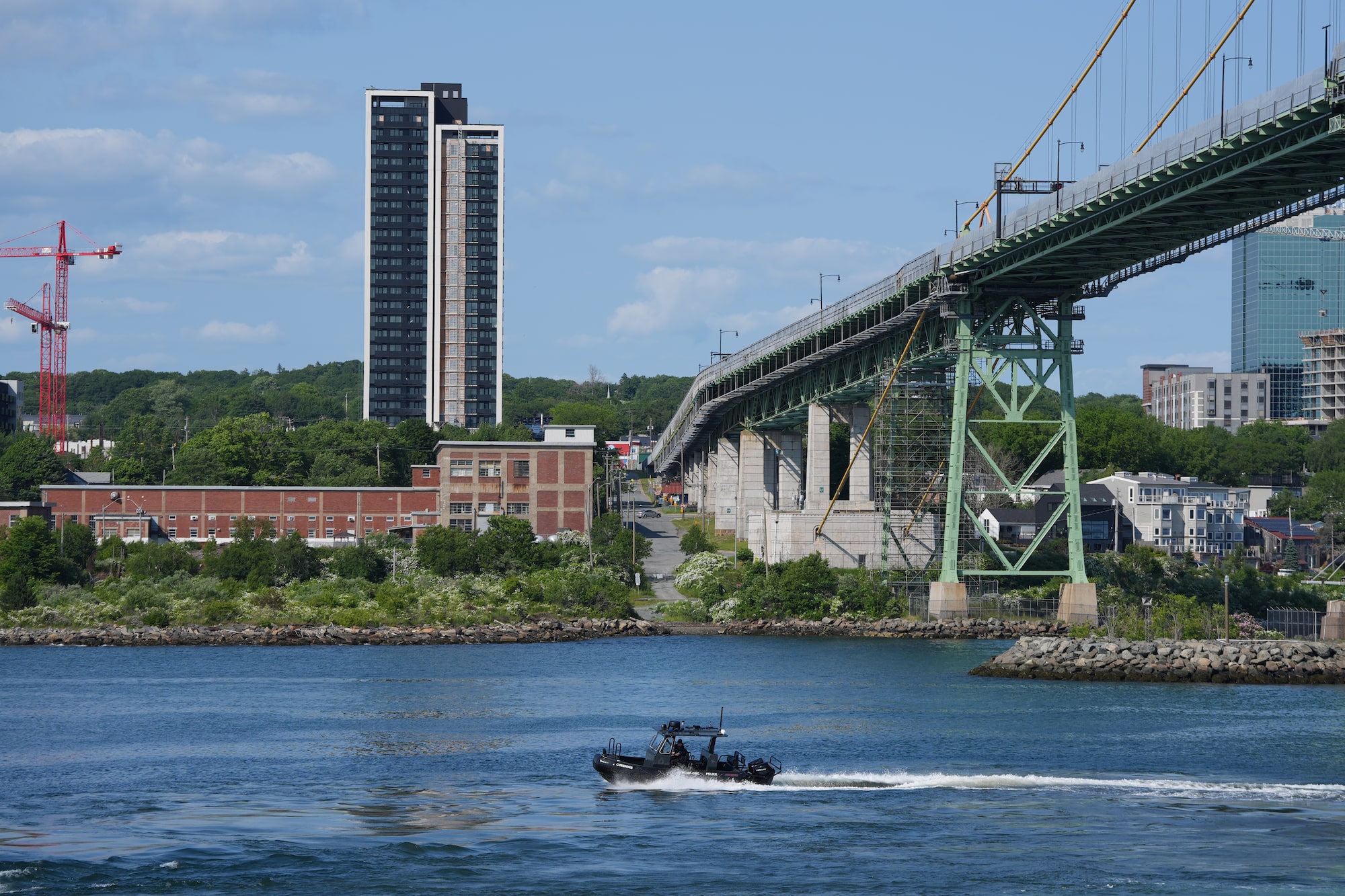
Just a few kilometres up the shoreline from the tourist docks, the massive assembly hall at the Irving Shipyards dominates the waterfront just below the busy Macdonald Bridge.
On a recent night at the yard, I’m led through a network of gates, entry points, and safety precautions that would shame many international border crossings. I’m made to wear an unflattering suit of protective armour and advised repeatedly not to take pictures.
Here, workers are monitoring the automated machinery that helped build a recently unveiled River-class destroyer – the first of 15 funded by a $60-billion investment made by Canada in its surface combat fleet.
A production line spanning the length of four football fields begins with sheets of steel and moves through increasingly large machines before coming into the shape of three colossal hull modules, built to be hoisted and fused together by heavy-lift gantry cranes capable of moving 50-odd tons. The tools of giants.

The keel of the future HMCS Fraser, the first of Canada's future fleet of 15 River-class destroyers, at Irving Shipbuilding's Halifax shipyard in June.Devin Stevens/The Canadian Press
Jean-Francois Séguin, the shipbuilder’s Ottawa-based vice-president of government relations, describes how the company sources specialized steel from European and Asian markets. Domestic producers are traditionally scaled for the automotive industry, not the international structural standards required for warships.
Supply chains are a challenge, but at least a world of producers can account for materials in some way or another. Learning skills takes time, and labour is finite – especially since the federal government tightened immigration targets, he said.
For years, Irving has financed educational pipelines with the help of the Nova Scotia Community College and the provincial government – including a specific shipbuilding program and a college initiative that covers full tuition and tools for students entering welding and pipe trades.
Already, those pipelines are failing to keep pace with the frantic reality of Canada’s marine defence sector. Training programs are currently on track to meet less than 40 per cent of the surging demand, threatening a shortfall of more than 8,000 skilled workers by 2029, according to a study published last year by the Canadian Marine Careers Foundation.
Near the shipyard, Ottawa plans to construct a government-owned, privately contracted maintenance facility to service Canada’s planned fleet of new submarines, The Globe reported in June.
While the submarine project represents another massive federal defence footprint in Halifax, Irving is concerned that it risks siphoning the scarce pool of skilled tradespeople required to build the country’s critical warships.
“Our fear is that if a new entry comes into the market to run a separate submarine facility, they are going to need to staff it immediately. They will come right next door to our yard to get those tradespeople,” he said.

Mr. Carney visits the Irving Shipyard in Halifax as part of his Liberal Party election campaign tour in March, 2025. In June, his government revealed plans for a new submarine maintenance facility in Halifax which will service Canada’s future 12-ship fleet.Blair Gable/Reuters
As the country’s largest industrial marine partner, the 3,000-employee division of the J.D. Irving empire is pushing for a seat at the table to structure how the region’s labour supply is managed before the first submarine arrives.
The federal government has already injected millions of dollars alongside the shipbuilder into local training infrastructure, the company argues – including specific plans to build the work force for the River-class destroyers.
The company expects it will require at least 1,200 more workers in the coming three years to build Canada’s order of surface vessels. Industry analysts say the submarine maintenance facility will require just as many – in addition to specialized electrical engineers, combat systems technicians and hull-integrity inspectors.
“You can’t pick a submarine and say, ‘We’ll wait two years to decide who is going to maintain it,’” Mr. Séguin said. “By then, you’re already too late.”
Governments have made attempts to patch the region’s labour cracks, but their plans haven’t caught much wind.
Colton Leblanc, Nova Scotia’s Minister of Growth and Development, pointed to the Progressive Conservative government’s 2021 plan to steer more local youth into the industrial trades by offering a sweeping provincial income tax break for young workers.
In its first year, the province projected 7,600 applicants, but only 2,200 actually signed up. A few thousand dollars in tax rebates haven’t been enough to compete with out-of-province base salaries that can dwarf local wages by $25,000 or more.
A fast-changing labour landscape is also making outcomes harder to predict, Mr. Leblanc said in an interview. “We’re not just talking about plumbers and electricians. In a world where AI and quantum play an important role, we’re going to need those specific engineers. That’s an important factor as well.”
In its spring economic update, the federal government launched a $6-billion initiative to recruit and train up to 100,000 Red Seal tradespeople over the next five years. While training institutions and construction groups broadly welcomed the announcement, independent builder associations warned that the strategy risks funnelling the wealth into massive, federally backed projects.
Canada’s lack of skilled labour is a slow-moving reality that Mr. Leblanc said is bumping up against a ticking clock.
“We don’t have time to draft a strategy to develop a strategy,” he said.
The tides
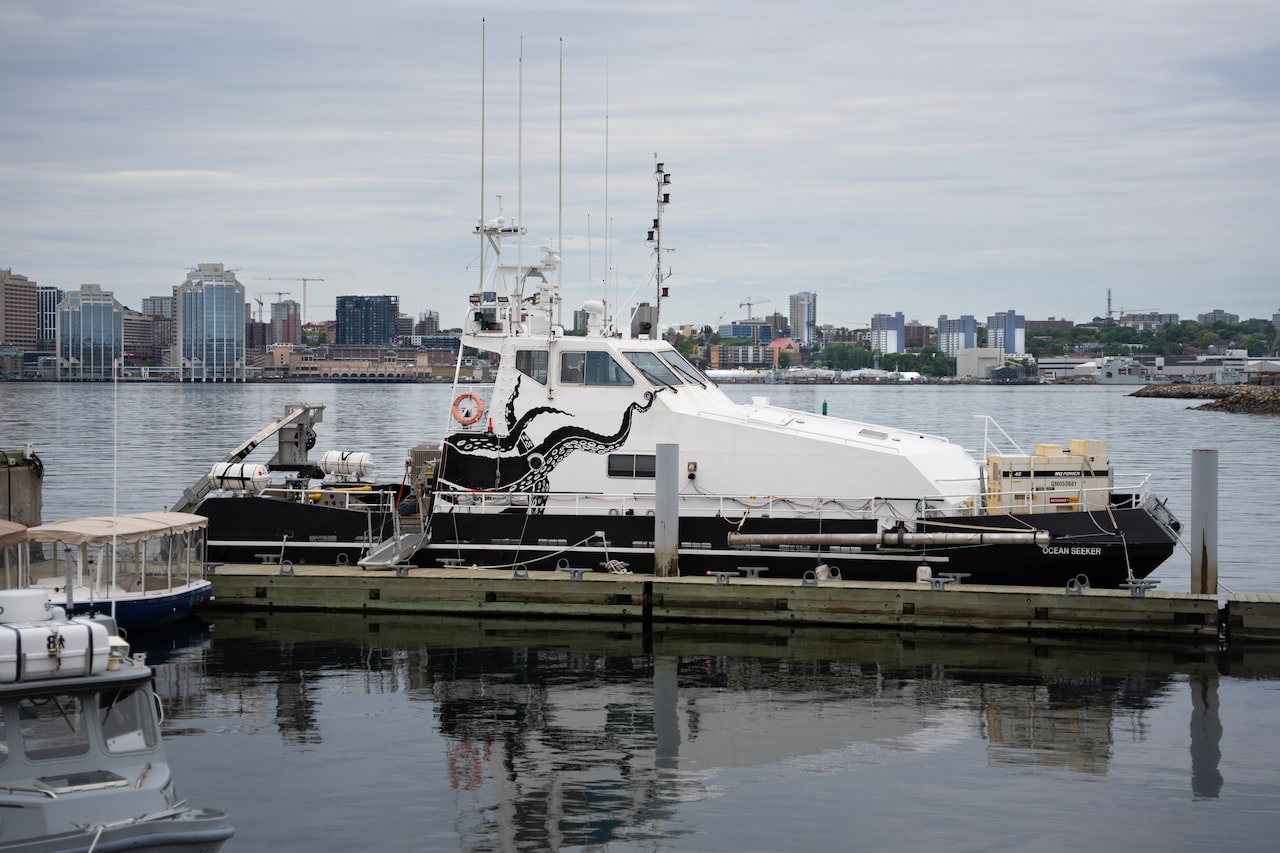
Out past the concrete piers where the heavy grey hulls of the Navy ride at anchor, the Dartmouth side of the harbour was recently overtaken by a village of canvas. Under large white tents pitched against the cloudless sky, dozens of founders prepared to show potential investors the technologies that might one day anchor the region’s industrial future.
Packed into the first two tents, dozens of small- and medium-sized companies from across Canada, the U.S., and Europe handed out brochures and demonstrated sensors, autonomous vessels, and underwater equipment. Under the third, entrepreneurs selected by a NATO program called the Defence Innovation Accelerator for the North Atlantic – or DIANA – were demonstrating commercial designs adapted to serve military purposes.
A little farther along the water, looming over the tents and the hundreds of attendees, was the HMCS Margaret Brooke. The Royal Canadian Navy Arctic and offshore patrol vessel was anchored at the foot of the facility that day to host tours led by members of its crew.
The entrepreneurs had converged upon COVE – the Centre for Ocean Ventures and Entrepreneurship – for its annual Demo Day, an event aimed at networking and showcasing research and technology. This year, just two weeks after the event, at least 15 companies had already reported potential contracts, said Melanie Nadeau, chief executive of COVE, a key tech hub in the region’s marine sector.

Melanie Nadeau, CEO of the Centre for Ocean Ventures and Entrepreneurship (COVE), poses at the company's headquarters in Dartmouth.Darren Calabrese/The Canadian Press
Not every company here hopes to grow into a shipbuilder, or even a supplier to one. But the path from a modest display booth to a permanent place in the Canadian fleet captures, along one dock, the full potential of the region’s growing marine-defence industry.
Over the last decade, the local ocean-tech cluster alone has expanded by more than 40 per cent. An even wider ecosystem has grown from a fragmented network of university labs into a specialized export hub that now includes advanced robotics, data intelligence and cyber infrastructure.
These are entrepreneurs charting new waters, but fighting the pull of institutional undercurrents. If Ottawa’s defence spending is going to create a surge in demand for the people and things that make for a Maritime defence powerhouse – and if these cutting-edge companies are to make the most of that opportunity – the country cannot afford to treat workforce development as an afterthought, Ms. Nadeau said.
“If you wait until it all happens and you think, oh, where’s my workforce? You’ve created your problem.”
And if the Margaret Brooke was a testament to Canada’s naval ambitions, it was hard not to see it as a towering reminder of a Canadian future these companies might struggle to share. Unable to break through Ottawa’s procurement gridlock, some of the country’s most innovative enterprises have turned to global markets to survive.

Bernard Mills, president of Kraken Robotics, at the company's warehouse space at COVE in Dartmouth.Darren Calabrese/The Globe and Mail
Kraken Robotics, a notable COVE tenant that recently surpassed $100-million in annual revenue, grew from a small Newfoundland sonar startup into a global company employing roughly 1,200 people, but it found almost all of its largest customers abroad.
Kraken has secured major naval deployment deals across the United States, Australia, and NATO allies, but Canada’s sluggish bureaucracy has been the most frustrating market to crack, said Bernard Mills, who was appointed president of the company’s operating business in July following the company’s $615-million acquisition of Britain-based Covelya Group.
“The Canadian government certainly supported the growth of Kraken, but what’s frustrating is that until the really recent change in direction from the Carney government, Canada has been very slow to buy Canadian equipment in major programs,” Mr. Mills said in an interview at the COVE facility, where the company maintains an office and at-sea testing assets.
“There was a lot of interest in developing technology and helping us with innovation, but there wasn’t really a path to the Canadian government procuring our systems over an American or European system. That is starting to change now.”
While a company like Kraken is now large enough to scale globally without waiting for Ottawa, smaller companies have far less room to wait. Open Ocean Robotics, a British Columbia-based company with two employees stationed at COVE, brought one of its low-profile, solar-powered uncrewed vessels to the harbour.
Their autonomous boats can remain at sea for weeks, gathering environmental or surveillance data and transmitting it through a secure portal. The company established its Halifax presence specifically to gain access to local testing grounds and military exercises, yet it remains trapped behind the federal purchasing wall.
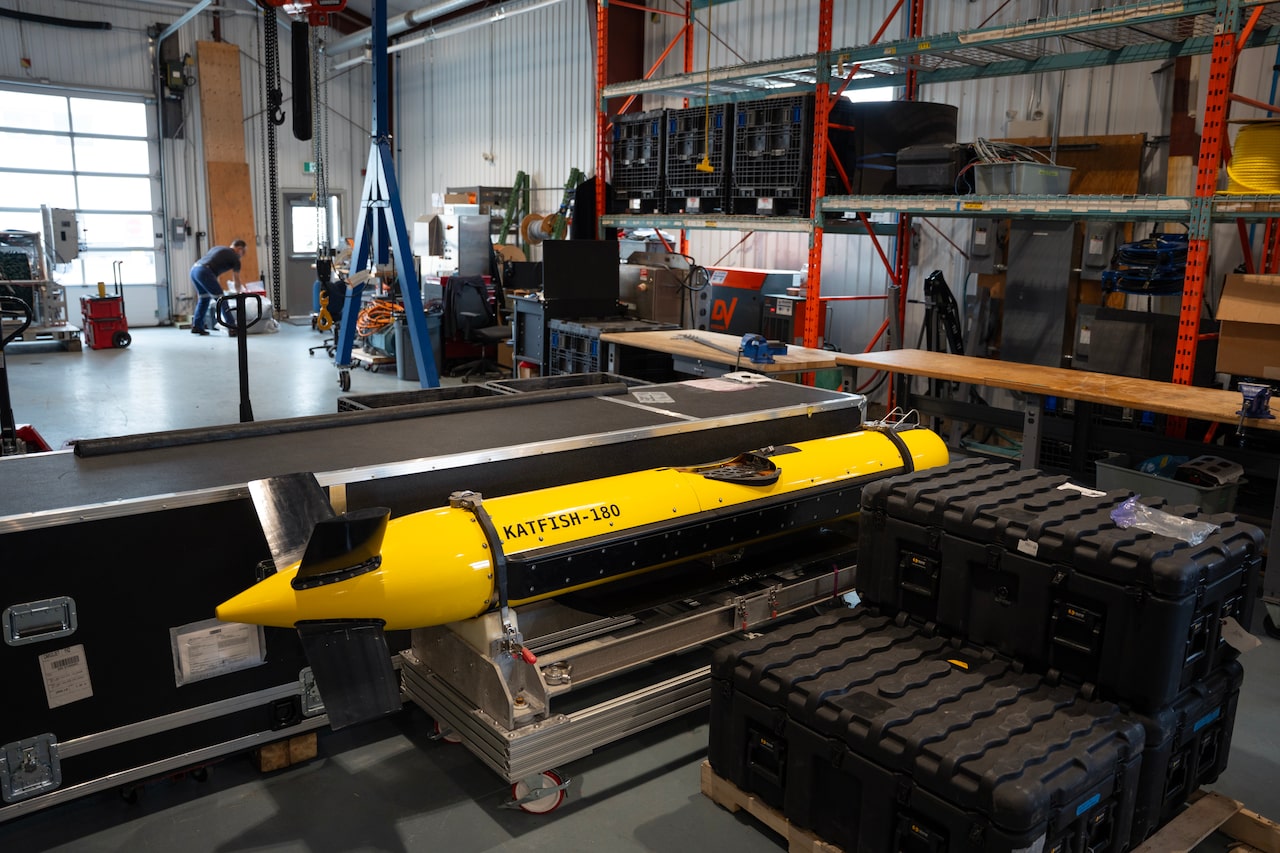
The company had already successfully demonstrated its technology to the Canadian Coast Guard, said Julia Clarke, one of the company’s representatives in the region. “They have said, ‘We want to buy this.‘ But they can’t because there’s no procurement pathway readily available.”
Canada’s new Defence Industrial Strategy was a welcome announcement, she said. “But we’re still waiting for that action.”
As part of its strategy, Ottawa is attempting to break decades of structural inertia through a network of new bureaucratic interpreters and allied partnerships: A new federal office called Borealis is intended to translate abstract military problems into concrete work for Canadian researchers. DIANA supports dual-use technologies. The newly established Maritime Defence and Innovation Secure Hub is testing how these moving pieces can collaborate.
Atlantic Canada has a complex ecosystem of agencies helping founders navigate the complex ecosystem of commerce. But small commercial tech developers can’t be expected to navigate the security clearances and technical demands of the military on their own, Ms. Nadeau said. Each of these agencies has a role to play.
“You need those interpreters or that concierge to communicate that if there’s this event happening in a global conflict, then these are the requirements. Maybe it’s going to be Borealis, maybe it’s going to be something else. We’re all trying to figure out how these moving pieces are going to fall into place.”
If the pieces do align, the industrial potential spans the entire Atlantic region, reaching far beyond the Halifax municipality.
Victoria Belbin, the chief executive of the Atlantic Canada Aerospace and Defence Association, said her 250 members across four provinces aren’t waiting on Canada to fix its procurement pathways. Like Kraken, they’re already doing business with international allies.
“We’re not at a start state,” Ms. Belbin said. “We’re already there.”
These new kids on the block face the same talent and infrastructure pressures as the local heavyweights.
Sean Fraser, the federal minister responsible for the Atlantic Canada Opportunities Agency, said local housing and labour markets are “certainly” under strain, though managing the friction of rapid expansion is a luxury compared to the slow years that defined the region’s past.
“There are challenges that come with growth, but I can tell you they are far greater than the challenges that come with stagnation,” said Mr. Fraser, who is also Minister of Justice and Attorney General of Canada.
To solve the region’s labour squeeze, a simple solution might seem to be recruiting skilled tradespeople from other parts of Canada. But mechanics and technicians from Ontario, Alberta, and Quebec are looking at the region’s housing market and deciding to stay put.
It’s hard to blame them.
The drought

In less than six years, the average price of a single-family detached home in Halifax has climbed from $301,310 to $654,973, according to local real-estate data – an upward spike that ranks among the steepest growth trajectories in the country over that same period.
In June, Nova Scotia became the most expensive province in Canada for average monthly apartment and condominium rents. Costs in Halifax climbed past the national average to anchor a market featuring the lowest tenant turnover rate in the country.
Jason Brunt, president of Clayton Developments – the residential development division of The Shaw Group – said the company sees construction companies trying to move east to capitalize on the region’s industrial build-up, but the local housing wall consistently turns them around.
“They come down here with all their gear from Montreal or Ontario willing to do work. But then they end up trying to book floors in an apartment building to put their staff in them, or they bring trailers down, and they have to live in trailers close to the job site.”
Perhaps most troubling, Mr. Brunt said in an interview, are unseen structural needs limited by budgets that are exhausted by repairing centuries-old systems in the city core. Municipal approval on paper creates “a colourful map that says you’re allowed to build there,” Mr. Brunt said, but it is ultimately meaningless without the funding to build the underlying utilities.
“If the defence fund and money is coming down here in such a significant way – we’re talking a few billion – then that global infrastructure of water sewers, housing needs, and transportation, that has to be part of the logistical plan," he said. “It can’t float in from above and just land on top.”
The timeline to unlock these tracts of land is slipping into dangerous territory, Mr. Brunt said. “They’re already late because if you give me an approval today, if you gave me a ‘yes’ on everything today, you do not get a house for four years.”
To meet an estimated population of 525,000 residents by 2027, experts say, the region must construct about 30,000 additional housing units over the next four years alone.
“We need the housing for the workers and their families, and dear Lord, we need them now,” said Ms. Luther of Halifax Partnership, which helps the city’s businesses. “We need them to come, we need them to stay and we need them to contribute to our economy.”
The dam
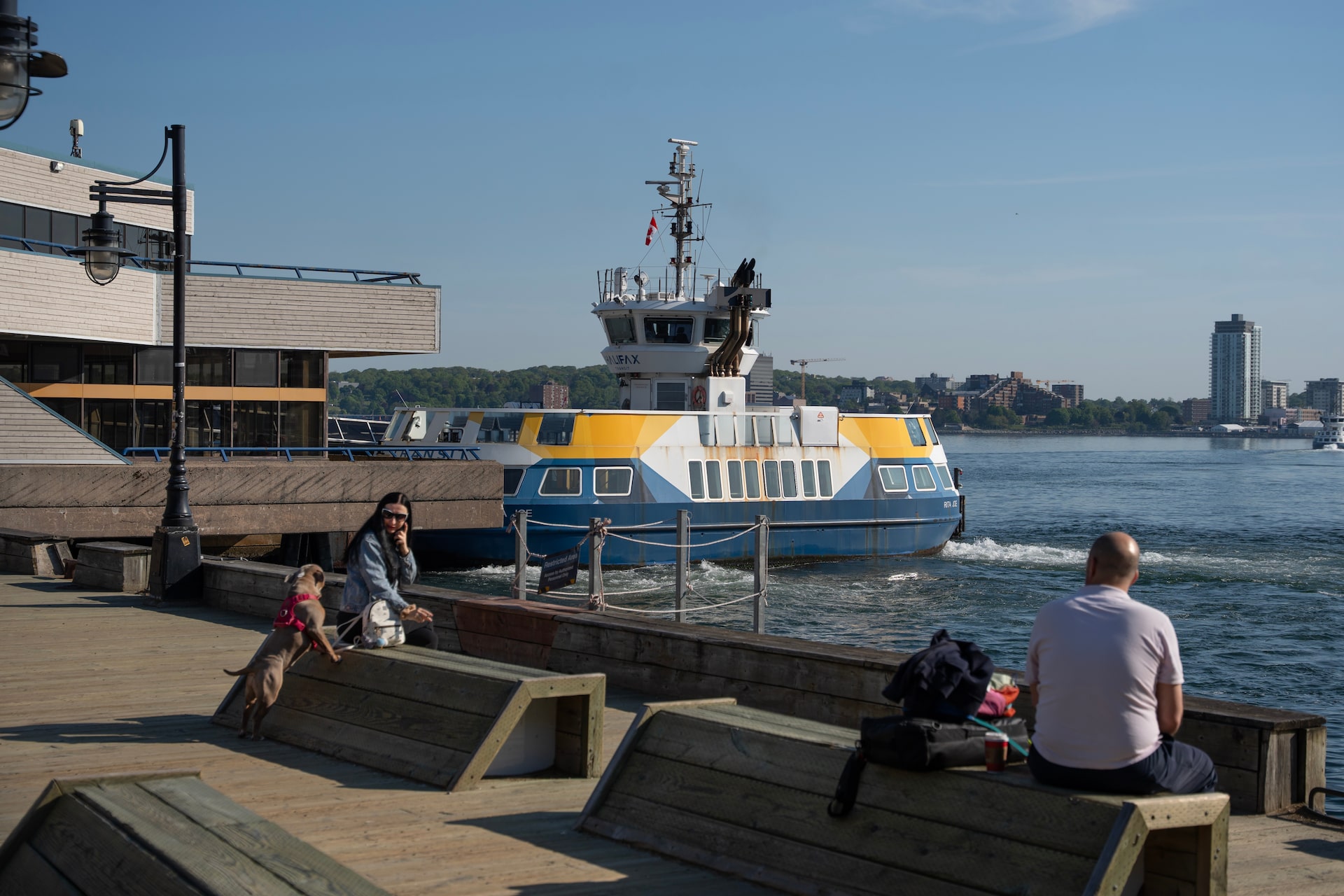
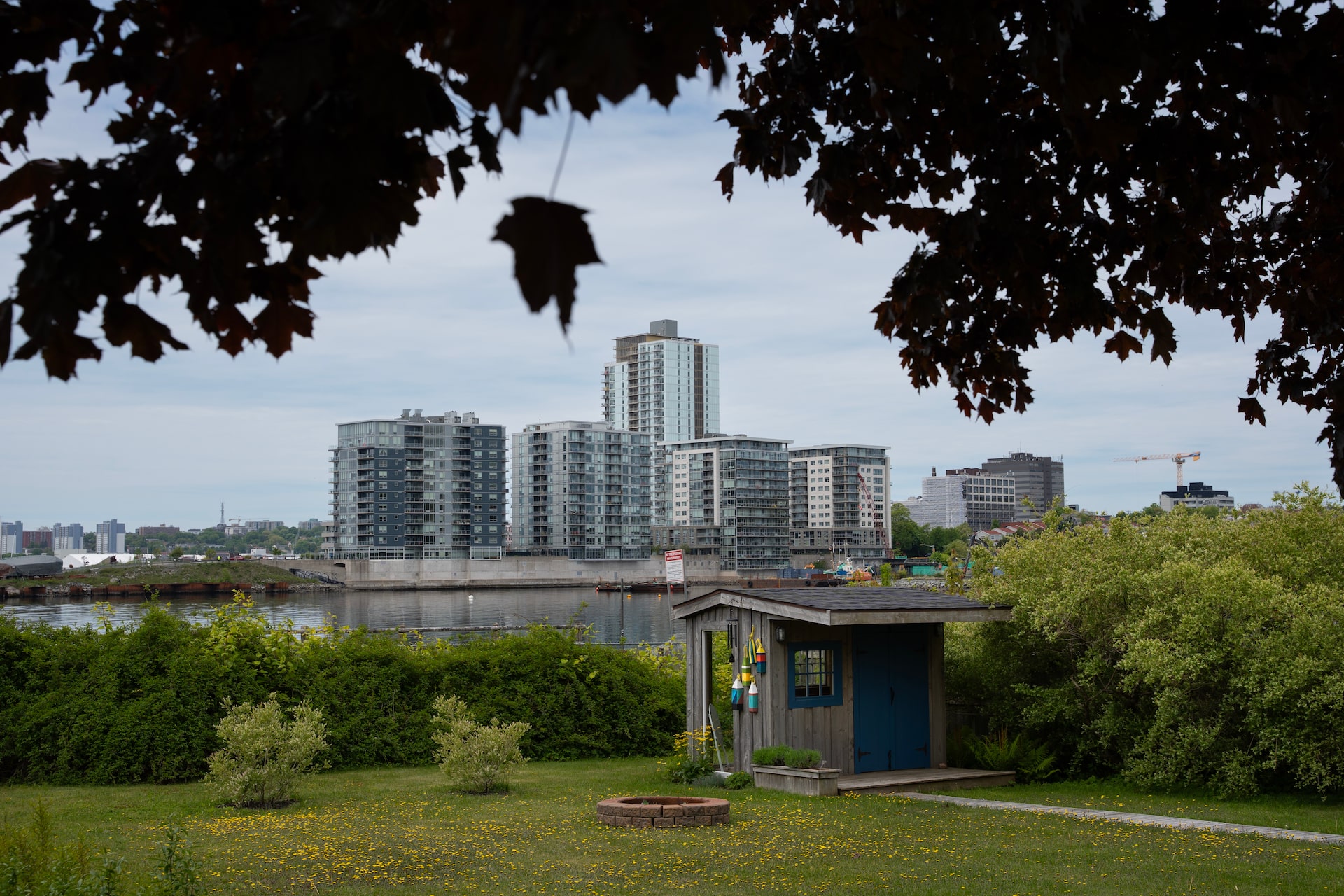
Kenda MacKenzie, the chief executive officer of Halifax Water, was asleep when her phone rang shortly after midnight. On the other end of the line was a shift operator calling to report the breakdown at the Pockwock treatment facility.
Within minutes, Ms. MacKenzie was in the middle of a midnight scramble.
“We immediately gathered the team together and started assessing the severity and duration of the interruption,” she said in an interview.
Throughout that January night, as the operator scrambled to address the 175 alarms, an escalating chain of electricians, health officials, water quality managers, and senior executives traded frantic updates. At 2:45 a.m, a decision was made to issue a boil-water advisory.
Nova Scotia Health was forced to cancel and reschedule 220 non-urgent medical procedures, including surgeries and endoscopies. The regional school board scrambled to tape off water fountains and rush bottled water to 74 different schools. For dozens of local businesses, the lack of clean running water meant shutting their doors.
Many Haligonians expressed anger that the critical failure hadn’t been communicated sooner – pointing out that by the time the official text alerts finally pinged at 6:45 a.m., thousands had already brushed their teeth, brewed morning coffee, and unknowingly consumed unchlorinated water.
Compounding the public frustration was a bitter sense of déjà vu. This was the second time in six months that the city had been plunged into a water crisis; the previous summer, an internal electrical safety failure had knocked out power to the exact same chlorination system, triggering an identical multi-day advisory.
Nova Scotia Premier Tim Houston called the failure a “complete embarrassment” and demanded an immediate investigation into the utility. Mayor Fillmore said a public health threat affecting 200,000 residents required more urgent communication.

Following the the breakdown at the Pockwock treatment facility in 2025, Nova Scotia Premier Tim Houston called for an immediate investigation into the utility.Darren Calabrese/The Canadian Press
The boil-water advisory was lifted days later, and the incident spurred a new 10-year strategy from the water utility that would see millions spent on upgrading failing components – and resolving architectural bottlenecks of a plant built in the 1970s.
In a region battling an affordability crisis, a lack of labour, and systems designed to support a population less than half its current size, there are only so many directions agencies like the water utility can turn. The result has been repeated rate hikes that continue to frustrate residents. The city’s budget, meanwhile, is in a multimillion-dollar hole, the province is running one of the deepest deficits in the federation, and funding from Ottawa has been piecemeal.
“It is no secret the municipality is growing faster than I think we’ve ever seen it,” Ms. MacKenzie told me.
It’s a reality the mayor has been wrestling with since he came to power in late 2024, just months before the Pockwock debacle.
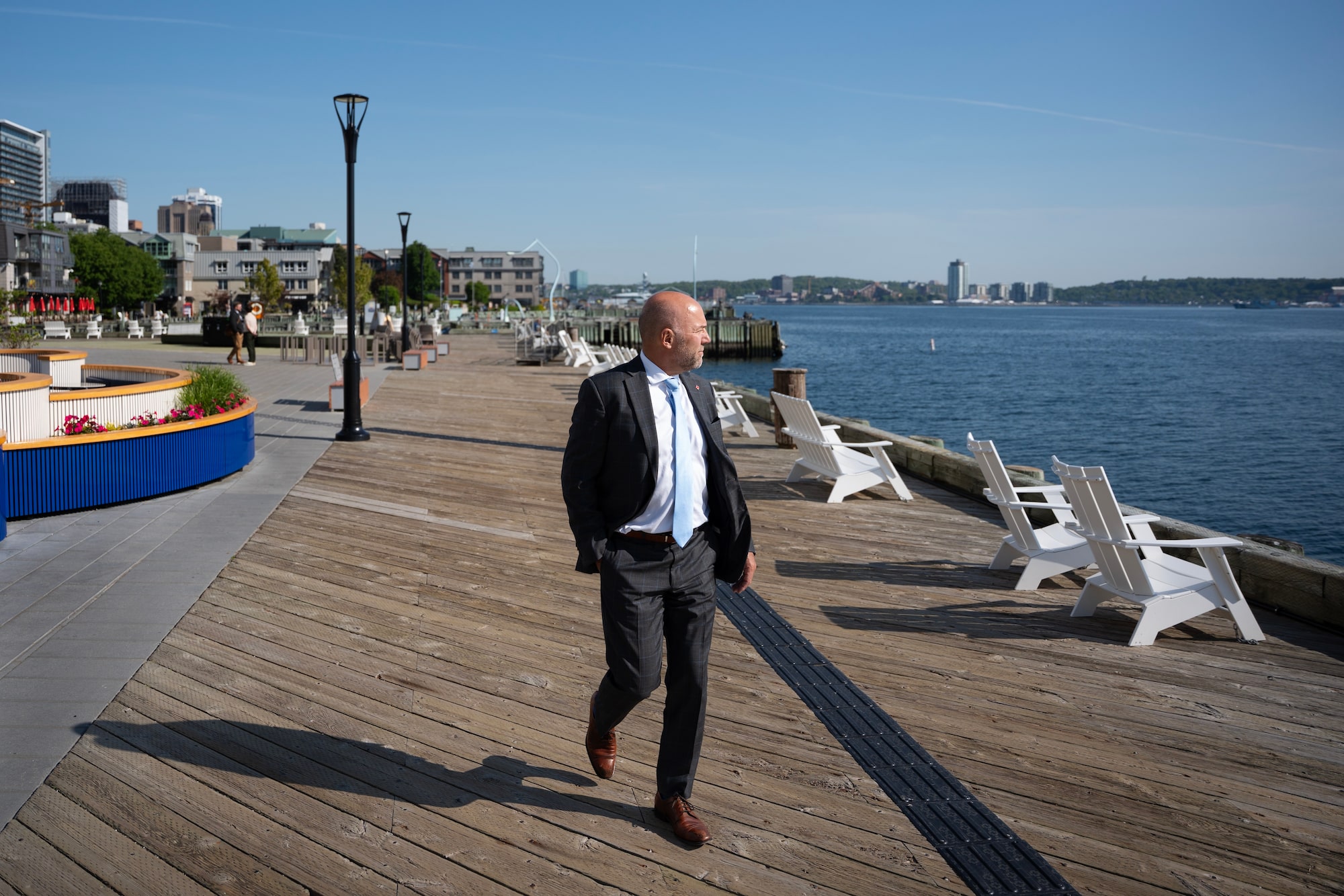
On a bright spring morning the day before Demo Day, I met Mr. Fillmore outside Café Lunette, a four-year-old French bistro that looks as though it was plucked from the Sixth Arrondissement and placed beside the Halifax waterfront.
We set out south along the boardwalk, past the stone and timber buildings of a federally protected historical site - including a 19th-century birthplace of the Bank of Nova Scotia - and the newer glass developments rising around them. As we walk, Mr. Fillmore points out the layers of a city built around its harbour, preserved in pieces, and now being remade for more people seeking more homes, more restaurants, more places to work and more ways to move through it.

Mayor Fillmore says the history of Halifax is inseparable from the martial history of the region.Darren Calabrese/The Globe and Mail
“The story of Halifax is fundamentally inseparable from the martial history of the region here,” Mr. Fillmore said. As we come into closer view of the historic Georges Island, a former military fortress and now occasional music venue, he turned toward the sun. “Two world wars called – the nation turned to Halifax. We feel like we’re being called upon again right now.”
Perhaps more than many civic leaders, Mr. Fillmore is preoccupied with the mechanics of growth – the pipes, roads, transit systems, and serviced land that will shape the city’s fortunes over the coming years. Alongside mayors of other big cities, he’s lobbying Mr. Carney on the idea of a “Defence Impacted Communities Infrastructure Fund.”
During recent budget talks, the mayor, a former urban planner for the city, successfully introduced a motion to enforce a strict cap on how much debt the city can take on to control future capital borrowing.
He also argued with council to pause the city’s $126-million redevelopment of the Halifax Forum sports arena in favour of basic infrastructure – though he ultimately lost the vote.
In June, he delivered a state of the municipality address that warned the city no longer had the luxury of putting opportunities on hold while planners catch up. “We have to do both things at once,” Mr. Fillmore said. “We have to say yes to the defence investments, and we have to say yes to building tens and tens and tens of thousands of homes.”
Looping back toward the café, he stopped for a moment to look up at a construction worker who peered down from the top of a small residential building with a cigarette dangling from his mouth. “But we’re not ready. So we need to get ready.”