
We’re not saying the CEO doesn’t deserve much of the credit for their company’s success. But no organization runs on CEO power alone. And for the most part, all those supporting players toil away in the glory-free shadows, making the success actually happen. And so we present our sixth annual Best Executive Awards, lauding unsung heroes in finance, human resources, marketing, operations, tech and more.
Jessica Tan
Executive VP and president, Sun Life Canada

When Jessica Tan first began to meet financial advisers at Sun Life Canada’s offices across the country, she asked them to show her what their day-to-day was like. While much of it was exactly as expected—portfolio management, team huddles, client research—she began to see firsthand what several of her executives had already flagged: how much time they spent on paperwork. As an early adopter of generative AI, Sun Life began to pilot a note-taking tool, and found that advisers could shave off more than 30 minutes of paperwork from every appointment.
That ability to quickly contextualize feedback on company systems and how people use them is a hallmark of Tan’s leadership at Sun Life’s largest business group, where she’s been executive VP and president since September 2024. “I spend a lot of time visiting people to get a feel for what we can do better,” she says. “We’re already a leader in digital, but I want to know how we can take that to the next level.”
Tan’s love for all things digital goes back to her time at the Massachusetts Institute of Technology, where she graduated with two bachelor of science degrees, and a master’s in electrical engineering and computer science. From there, she landed her first job with McKinsey & Co. in New York—a dream come true for Tan, who was born and raised in Ang Mo Kio, a town in northern Singapore. In 2003, Tan moved back to Asia and spent two decades at insurance giant Ping An, where she was most recently co-CEO.
Despite spending much of her career co-mingling with leaders from some of the world’s biggest financial conglomerates, Tan’s real passion lies in the world of startups. So when she was offered the opportunity to move halfway around the world to run Sun Life Canada, it was the ability to be entrepreneurial in a major organization that prompted her to take the leap.
Now, less than two years into her role, Tan is using digital accelerators—teams of in-house employees that pitch ideas around digitization—to develop new tools to make processes quicker. Recent enhancements to Sun Life’s mobile app have driven a 7% increase in active users, while underwriting timelines—the time it takes to approve a life insurance policy—were reduced to about 24 days in 2025, down from 35 days a year prior. “She brings the discipline of a global operator, the curiosity of a technologist and an unwavering focus on clients,” says Sun Life’s CEO, Kevin Strain.
It’s a winning combination for Sun Life Canada, which has seen double-digit earnings growth since Tan’s arrival. Return on equity, meanwhile, is up five points, to 28%, and the wealth business has seen its assets under management and administration grow 15%, to more than $281 billion. “I’m pleased with the momentum we have, but there’s still room to grow—and more we can do for Canadians,” Tan says.
To that end, this past November she launched a free virtual health care program for 10,000 low-income women and families nationwide through Sun Life’s digital health platform, Dialogue. “It’s about empowering people with more options to get timely and quality access to care,” she says. –Clare O’Hara
Curt Sigfstead
Chief financial officer, Clio
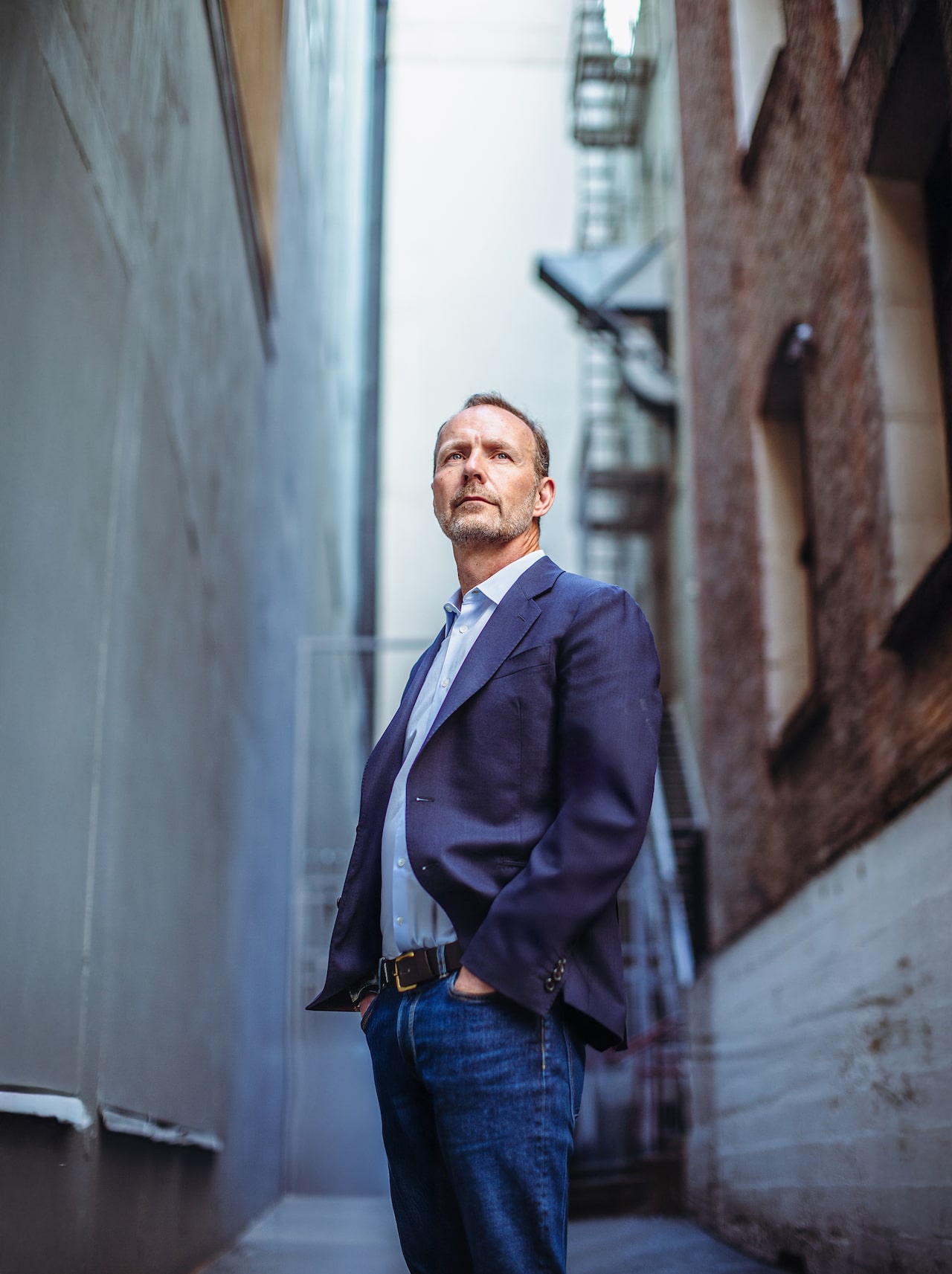
Last year, Curt Sigfstead closed the largest publicly disclosed M&A deal in global legal technology history. For US$1 billion, the legal SaaS platform Clio, based in Burnaby, B.C., purchased vLex, a legal database headquartered in Barcelona that’s “one of the most unique and largest legal-file databases on the planet,” says Sigfstead, with summaries from courts and jurisdictions around the world.
You might not get the hype, but your lawyer does: vLex has more than one billion legal documents from more than 100 countries, meaning lawyers can plug in any question; summarize any case’s statements of claim and defence; analyze contracts; profile any lawyer, law firm or judge; build arguments; and compare laws and decisions across jurisdictions. “It allows legal professionals to do their work in a much more convenient, comprehensive way,” says Sigfstead.
The problem, historically, has been convincing lawyers that technology is their friend. “For a long time, it was almost heretical to say ‘cloud’ and ‘legal’ together,” he says. “Lawyers were never, ever, going to put their documents in the cloud.” Tech was seen as unsafe and unsecure; paper copies in dusty filing cabinets were much preferred. For 18 long years, the company, founded by Edmonton programmer Jack Newton, has been persuading lawyers to modernize their law firms with Clio. “We’re an AI platform that helps lawyers do their legal research, briefs and documents more efficiently while we help run their practice—onboarding new clients, billing and invoicing, client communications,” Sigfstead says.
He joined Clio (the operating name for Themis Solutions Inc.) just as AI hit the general market with the 2022 launch of ChatGPT, presenting Clio with the moment to upscale and accelerate as an AI-first company. To close the vLex deal, Sigfstead raised Clio’s primary capital to close a $500-million Series G deal. “This shows me the confidence our investors have in where legal AI is going,” he says, “and in Clio’s ability to lead the transformation.” To complete his impressive 2025 deal trifecta, Sigfstead scored a $350-million debt facility with Blackstone and Blue Owl Capital, Clio’s American finance partner as it moves aggressively into the U.S., the globe’s largest legal market. A New York office will open later this year.
Under Sigfstead’s watch, Clio’s growth is also strong in African countries, the U.K. and continental Europe. “In four years, we’ve grown to four times our revenue and scaled up to over 2,000 employees globally,” he says. With more than US$400 million in annual recurring revenue, Clio’s SaaS model—not long ago a hard sell for tech-wary lawyers—is now saving some 400,000 legal professionals in 130 countries from piles of papers and dusty law libraries. –Rosemary Counter
Bahar Joshan Poosh
Executive VP, design, Fitzrovia

While stuck in her Toronto condo during the 2020 pandemic lockdowns, interior designer Bahar Joshan Poosh had a revelation. Condos are often built and designed with investors in mind rather than the people who actually live in them. Despite being marketed as high-end, her 635-square-foot one-bedroom-plus-den had an inefficient layout, the materials and appliances felt cheap, and basic details were overlooked. “For me, it sparked a deeper interest in how we can design and build housing that genuinely serves residents—spaces that prioritize livability, durability and thoughtful design over short-term investment appeal,” says Poosh, who joined rental-apartment developer Fitzrovia the following year.
Now, as the company’s executive vice-president of design, Poosh keeps livability and community front-of-mind on everything from apartment tower configurations, structural considerations and retrofits to suite layouts, finishings and amenities. The latter includes daycares and dog spas, high-end gyms and coffee shops that serve up cocktails at night. There are pizza ovens, party rooms and year-round outdoor spaces that encourage socializing. Some buildings, through a partnership with Cleveland Clinic Canada, even have a dedicated space where a tenant can meet virtually with a nurse to fill prescriptions or get relief for minor health issues.
In short, Fitzrovia—which has nearly 13,000 rental units under management or in development in Toronto, Montreal and Vancouver—is on a mission to challenge the stigmas around renting: that rental living isn’t sophisticated, that it isn’t for professionals, that it doesn’t come with many benefits beyond not having to shovel snow.
Poosh, who has a degree in industrial and product design from Tehran University, first learned she enjoyed making livable spaces after immigrating to Canada from Iran in 2011 and working with a prefab home builder in Halifax. Eager to create systems rather than follow blueprints, she moved to Toronto, where she added interior design to her CV with studio Atelier RZLBD, and design-team leadership with the interiors studio Figure3.
But it was when she met Fitzrovia CEO Adrian Rocca and learned about his vision for upending the notion of rentals as drab that she saw an opportunity to push herself on a professional level while helping to grow the startup. Best of all: She’d be part of a cultural shake-up, one that would have her dreaming up complete lifestyles for five different markets—students, young families, young professionals, downsizers and, as of 2026, seniors.
Keeping the design in-house—there are 10 people on the design team—allows Poosh to control the concept. It also helps that she lives in a Fitzrovia building with her family, so she can tweak services and amenities based on her own experience and feedback from her neighbours. That attention to detail has paid off, with Poosh earning multiple industry awards last year, including best new designer from the Ontario chapter of the National Kitchen & Bath Association and a bronze International Design Award for workspace design. Under her guidance, Fitzrovia has taken rental living up several notches by building a premium lifestyle that values renters while creating value for investors. “We care about the residents,” she says. “But we also work toward creating a scalable business.” –Susan Nerberg
Dakota Smith
President and co-founder, Hopper and Hopper Tech Solutions
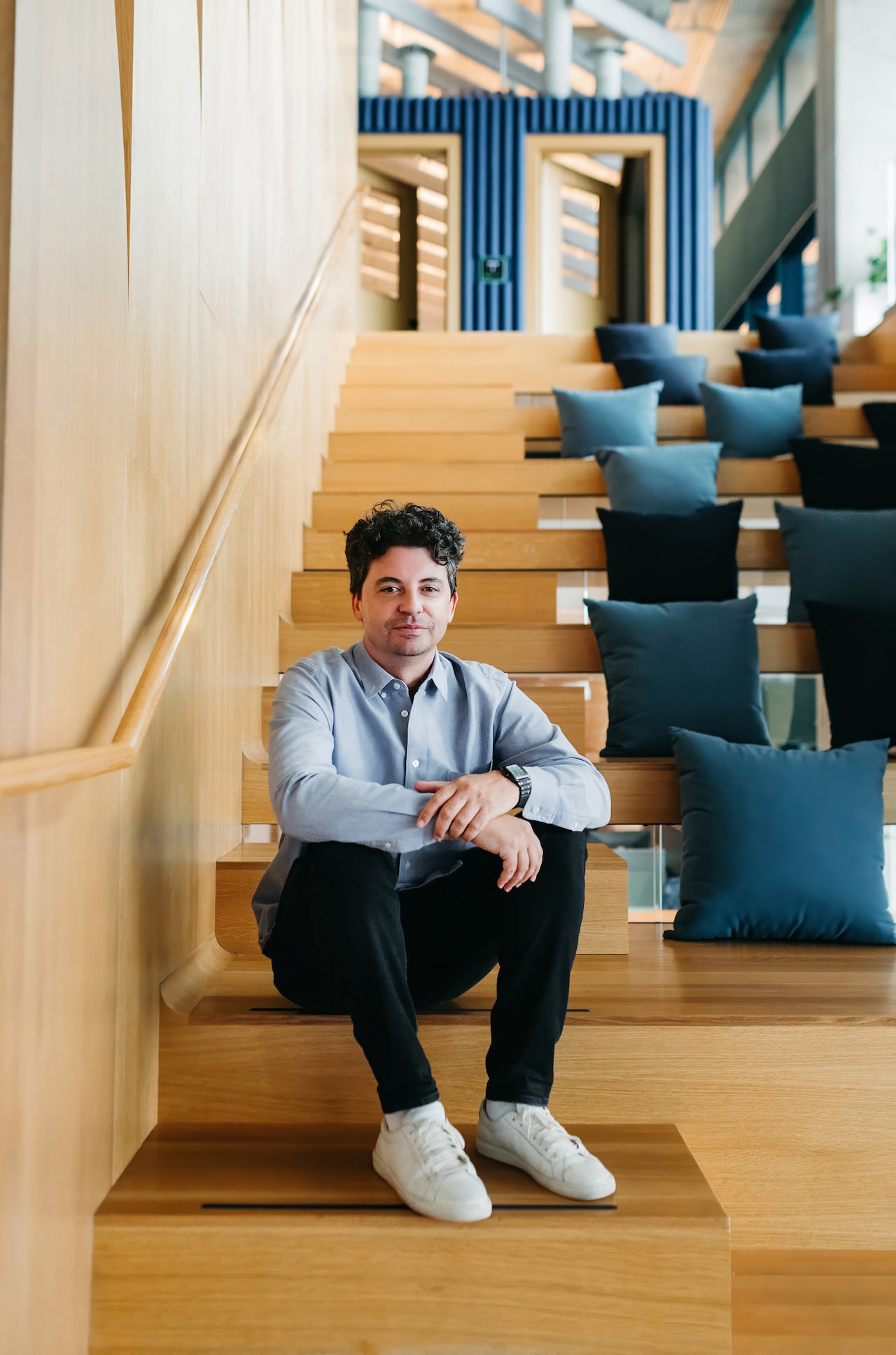
Don’t ask Dakota Smith where he wants to fly on his next holiday. To be honest, he’s getting a bit sick of travel. “I used to love travelling,” says the president of Hopper, the Montreal-based online travel company that has brought innovative data-based products to the business, becoming one of Canada’s largest private tech companies. “Now, I travel so much for work, it’s kind of taking a bit of fun out of it.”
No kidding: Last year, he flew 183,000 miles and spent 250 nights in hotels—and that was an off year. “I don’t want to see airports when I have time off now.”
Smith comes by his globetrotting honestly; the 38-year-old Montreal-born executive spent much of his early years living abroad in places like Cape Town and Buenos Aires. He founded an online travel promotion site in Hong Kong in his teens, returning to Montreal to study political science at Concordia University. He also landed a job editing blog posts for Hopper in March 2013, when it was trying to make a go as a destination discovery engine (Smith was employee No. 10).
In 2014, a New York Times travel writer discovered a tool on Hopper’s site that predicted the best time to buy cheap tickets, informed by years of pricing data. The ensuing story sparked a flood of traffic to Hopper’s site, and it pivoted to become an online travel agency with a twist: predicting the best time for prospective travellers to buy tickets and encouraging them to wait to save money.
Smith quit school and joined Hopper full time, establishing himself as a hard-working performer who got things done, earning key assignments from Hopper’s big-vision CEO and co-founder Fred Lalonde, including running user acquisition, growth and strategy. “I don’t think the term ‘work ethic’ even applies to Smith,” says Lalonde. “There’s nothing between him and success.”
Smith is no slouch on vision, either. After Hopper built insurance-like travel products (such as the ability to freeze prices or rebook missed connections), card giant Capital One asked Hopper to run its member travel services. “I said no three times,” says Lalonde. “At some point, Dakota said, ‘We should do this.’” Lalonde thought it would be complicated and distracting, and that startups and big companies didn’t mesh. “And Dakota said ‘Nah, we should do it now.’” The ensuing pivot transformed Hopper and earned Smith an upgrade to president and a “co-founder” title. Today, Hopper derives 90% of its revenue from providing digital infrastructure for corporations and card issuers to offer travel and ancillary services to members.
Smith, who lives in Miami and Paris (the guy really does get around), is the one flying out to close those deals. But he remains buckled in for the ride, despite the travel fatigue. Asked if he’d ever leave Hopper. he replies: “I don’t have excess mental capacity to think about those things.” –Sean Silcoff
Susan Irving
Chief marketing officer, Kruger Products
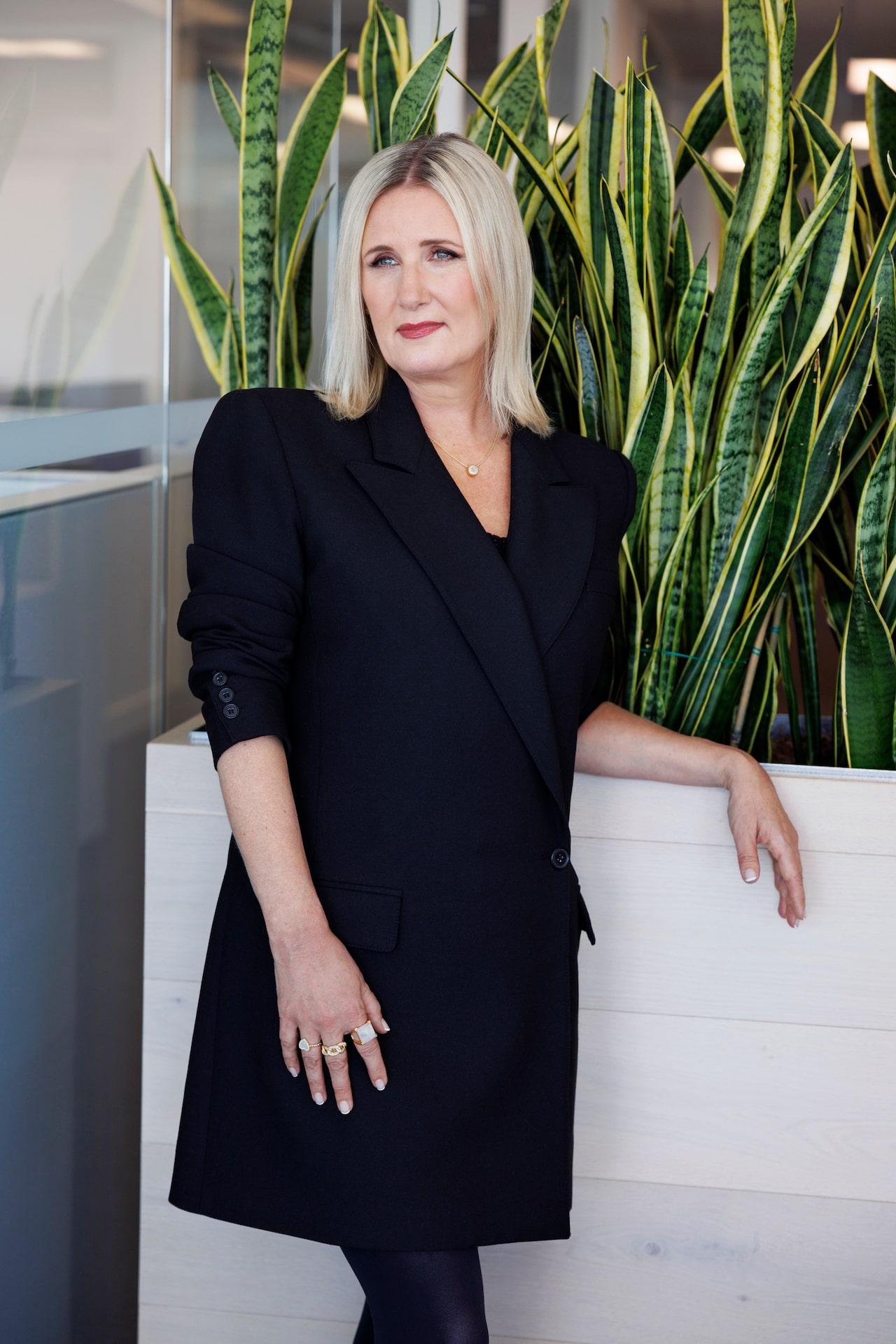
“If you want to go fast, go alone. But if you want to go far, do it together,” says Susan Irving, describing her approach to leadership. It’s a tactic the chief marketing officer at Kruger Products first adopted during her time as an athlete on Canada’s national sailing team, where success depended on the ability of crew members to support but also push one another.
Today, Irving—who came to Kruger with marketing chops from such Fortune 500 companies as Warner-Lambert/Pfizer, Coca-Cola and PepsiCo—leverages her knack for bringing great minds together and coaxing them to funnel their creative juices into award-winning campaigns that also boost brand loyalty and retail sales.
Kruger is Canada’s leading manufacturer of tissue products, including Cashmere, SpongeTowels and Scotties. Still, you’d be forgiven for wondering how the heck you amplify market share for such an unglamorous product as toilet paper. If you listen to Irving, though, the mundane factor isn’t necessarily a detractor. “Toilet paper and other tissue papers are something everyone uses on average eight to 15 times per day—we all make messes, have snot, bleed and go to the washroom,” she says, adding that if you understand marketing, you can turn any product into something remarkable.
Take the Unapologetically Human campaign. It was early in the pandemic, and Irving had just joined Kruger when the staff was sent home. Soon, toilet paper became a hot commodity, with store shelves emptying out. “It wasn’t that we were out of stock; it was that we couldn’t keep up with demand,” she says.
Employees were called back, and Irving’s team got cracking on a campaign to reassure Canadians that Cashmere would be back in stores and get them to pick up that brand. Together with ad agency Broken Heart Love Affair, they crafted a campaign that, rather than showing fluffy kittens and fuzzy bears, tackled why we use these products. The result—a short film, a commercial and spots—tapped into human realities in an honest and, well, unapologetic way.
With the team’s similarly raw 2023 follow-up, Love is Messy, Irving had effectively guided Kruger into new marketing territory where the objective was to connect with consumers on an emotional level. “It’s about how we show up in people’s lives, not about shoving a product on them,” says Irving. The two campaigns delivered a $36.5-million increase in retail sales, not to mention a Cannes Lion bronze medal in 2021 and silver in 2024.
Next, the marketing team set out on a mission to change the behaviour of Canadians, who insisted on calling the Scotties facial tissues by another (non-Canadian) brand name, despite Scotties being the best-seller in its category and that other brand having exited the Canadian market in 2023. With the help of humour, hypnosis and Raptors forward Scottie Barnes, who announced he was changing his name to Scotties as part of the campaign, brand awareness increased (and if Irving gets her wish, consumers won’t ever misname the tissues again). But the most fun reward for Irving so far was the gold in the marketing disrupters category at the 2025 Effie Awards Canada, for their campaign with the Cashmere UltraLux Bathroom Guide, in which consumers played a role by rating the cleanliness of public washrooms.
When Irving says she doesn’t like the status quo—“I like crisis, because it leads to opportunities”—it’s clear what she’s referring to. Under her leadership, the Kruger team has used the challenges of the pandemic as a creative springboard, proving that by embracing riskier approaches, it’s possible to turn the messier aspects of humanity into golden moments. –S.N.

Darryl JenkinsSupplied
Darryl Jenkins
EVP & chief corporate development officer, Canadian Tire
When you walk into one of Canadian Tire’s 1,700 retail locations this summer and the iconic Hudson’s Bay stripes catch your eye, know that’s the fast-thinking intellectual property acquisition strategy of Jenkins. “We had to move very quickly, but Canadians felt we were the right owners to step up and steward the HBC brand,” he says.
At lightning speed (well, six months), Jenkins guided the $30-million deal from inception to completion as just one piece of last year’s True North strategy—a wide-reaching, ambitious partnership with other best-of-the-best Canadian brands like Petro-Canada, WestJet and Tim Hortons. Later this year, thanks to Jenkins’s clever partnerships, more than 12 million Triangle Rewards members will be able to collect Canadian Tire Money with their morning double-double.

Aida CipollaDavid Chang Photography/Supplied
Aida Cipolla
CFO & chief administrative officer, Ontario Power Generation
Just like your tax guy might spread money to minimize your bill, Cipolla—an accountant by profession—is tasked with financing energy megaprojects without overburdening consumers. “Ontario has built out an integrated long-term energy plan to accommodate the world’s increasing demand for power,” she says. “My job is to get creative to find ways to make it affordable for ratepayers.”
Cobbling a few billion dollars from here and there—$2 billion from the Canada Growth Fund, $1 billion more from the Building Ontario Fund, $2 billion in cash proceeds from the sale of U.S. operations—Cipolla delivered $15 billion in credit‑supportive funding she’ll invest back into OPG projects like the Darlington Nuclear Refurbishment (completed four months early and $150 million under budget) and the Darlington small modular reactor, the first in a G7 country.

Frank MonteleoneSupplied
Frank Monteleone
SVP & chief people officer, Rexall
Last year, Rexall’s U.S. parent sent the 120-year-old Canadian pharmacy chain from its nest, selling all 385 retail locations. “We basically had to carve Rexall out to make it its own standalone organization,” says Monteleone, whose task was getting 8,000 employees on board—or, even better, enthusiastic—about the change. “We had to develop new values, leadership, behaviours and compensation models, and we were very intentional about pulling our people along for the journey.” Rather than imposing direction from the top down, Monteleone’s team had a chosen employee from each location represent their staff’s particular wants, needs and preferences. In what could have been a terrible time of uncertainty, employee turnover actually decreased by 15%.

Dan HarounSupplied
Dan Haroun
CFO, Activate Games
In 2023, Haroun met husband-and-wife team Adam and Megan Schmidt, who had five Activate locations across Canada. Whereas an analog escape room is solvable just once, the Schmidts had pivoted to a streamlined model that could be uploaded easily, refreshed and changed at will. “They did very well, but the logistics of scaling up were very hard,” he says.
Haroun, with his background in finance and business performance, became their adviser on the seemingly impossible task of going international, helping to implement an aggressive plan that saw Activate expand from five to 75 locations. Each is at least 10,000 square feet with eight to 13 rooms, and dozens of games—problem solving, laser dodging, hide-and-seek, digital dodgeball—with 10 progressive levels. He also secured the funding that helped the company open locations everywhere from France to Sweden to Dubai. But no matter which Activate door you walk through, he says, the experience inside is just the same.

Lyne JacquesSupplied
Lyne Jacques
Chief revenue officer, Miovision
Next time you’re stuck at an intersection in rush-hour Toronto traffic, know there’s a good chance a high-res, 24-7 Miovision camera is watching and measuring to optimize your commute—or eliminate it entirely. “In two generations, the notion of driving a car will become obsolete,” predicts Jacques of how Miovision’s collected data might revolutionize how humans operate cars—if at all.
Founded in 2005, Miovision’s technology has been counting and keeping track of time, volume, safety and efficiency at more than 120,000 intersections across 64 countries—a massive 348% growth since Jacques joined less than five years ago. Much of that success comes from six strategic acquisitions she implemented, aligning diverse teams under a unified vision. “We recently bought technology that enables us to connect the intersection to the car in real time,” she says, citing traffic management, reduced car accidents and fewer carbon emissions as just some of the ways Miovision is modernizing transportation “one intersection at a time.”

Jamie PorterSupplied
Jamie Porter
EVP finance and CFO, Agnico Eagle Mines
After 25 years in the gold business, Porter has watched the price of the precious metal spike and plummet and spike again—and producers climb to 16% of the TSX from a historical 2% to 3%. “To some extent, we’re just riding the wave,” says the CFO of Canada’s largest miner (and the world’s second-largest gold producer). “When gold’s up, and our costs and capital spending is controlled, we can pass the benefit of higher margins to our investors.” Last year, Agnico paid an $800-million dividend and bought back $600 million worth of shares—a record-setting six times what they’d ever bought back before.
Meanwhile, Porter sat through 220 investor meetings to broaden market support for Canada’s most valuable mined commodity. “A decade ago, no one was interested in mining gold, so money wasn’t available for exploration, and new discoveries were at an all-time low,” he says. Not anymore, given that in politically uncertain times, solid gold feels like the safest bet there is. (Unless you lift it over your head, says Porter, which he once did on a mine site and got in plenty of trouble for. “The bar was about 80 pounds,” he says, “and dangerously against safety protocols.”)

Mona KennedySupplied
Mona Kennedy
CFO, Open Farm
Increasingly, people are not only choosing healthy, ethical and sustainable foods for themselves, but also for their lucky pets. At Open Farm, the 12-year-old Toronto-based premium pet food company and one of the fastest-growing pet food brands in the segment, fancy treats like Icelandic Air-Dried Cod Skins and Herring & Mackerel Rustic Stew delight pet-parents keen to feed their furry friends only the best.
“Our customers choose us because of the nutrition, sustainability and transparency of our products,” says Kennedy, who in just three years at Open Farm has watched the brand’s revenue triple while expanding into eight countries and more than 8,500 retail locations. With finance leadership experience at Maple Leaf Foods, Indigo and Roots, Kennedy understands the value of customer trust, working directly with farms and ranches to source protein and meat from animals raised in humane ways.

Sean ZhangSupplied
Sean Zhang
President, Sukoshi
Thanks to social media and K-pop, Korean makeup and skincare products—K-beauty to those in the know—has exploded into the North American beauty market. It’s Zhang’s job to make sure this massive trend is here to stay and grow. “Sukoshi is an omni-channel retailer focused on Asian beauty—not just Korean, which gets all the hype right now—but Chinese, Thai, Vietnamese and Japanese, too,” says Zhang, who after three years was recently promoted to president at Sukoshi, which currently stocks some 5,000 SKUs from hundreds of Asian brands.
A certain other president isn’t making it easy. “Customs is a challenge as is regulatory compliance with the FDA and Health Canada,” says Zhang, citing foreign labelling as one current problem. Another is that, even in the age of online shopping, customers often want to feel a product before they commit. For them, Zhang has overseen the opening of multiple brick-and-mortar locations with high-tech appeal. “Customers can use our skin analysis machines to do a scan that maps out a 3-D topographic map of your skin to help find and tackle specific areas,” he says.

Nate TchapliaSupplied
Nate Tchaplia
President and CFO, Dentalcorp
Indisputable proof that Dentalcorp’s president believes in his cause? This year, as he closed a $3.3-billion deal to take the company private just as it expands into the U.S., Tchaplia rolled the dice with 40% of his own personal holdings. “Nothing’s better than betting on yourself and betting on the team that you’ve built,” he says.
Tchaplia joined Dentalcorp a dozen years ago as the first member of the acquisition team and has been climbing ever since. Then and now, his growth-through-acquisition model relies on convincing dentists, one at a time, to outsource their time-consuming admin work—hiring and recruitment, marketing, human resources—so that dentists can focus on dentistry.
More than 600 of them from coast to coast have signed onto the company’s 10,000-person team, its revenue spiking 132% from 2020 to 2024, and momentum shows no signs of slowing as Dentalcorp moves south, first to Florida. “As LeBron James says, we’ll be taking our talents to South Beach,” quips Tchaplia.

Hesham FahmySupplied
Hesham Fahmy
Global CIO, Telus
Like most large corporations, Telus’s IT department was a cost centre and “necessary evil”—until Fahmy arrived five years ago. “My mission was transforming Telus from tech consumer to provider—a high-performing engineering team and strong AI-technology-driven powerhouse,” he says. The challenge, however, is that plenty of people see AI as a zero-sum game: It’s either the bots or the humans. To assuage that notion in 66,000 Telus workers, Fahmy doubled down on the human half of that equation. “We’re empowering people to embrace the AI revolution and experiment and know-how to maximize these tools that can do all the stuff you hated doing and free you up to be creative,” he says. Telus teams have already created more than 53,000 custom AI solutions using its biggest and most exciting new addition: Canada’s first Sovereign AI Factory—the country’s fastest and most powerful supercomputer, operating on 99% renewable energy.

Jean-Yves BourgeoisSupplied
Jean-Yves Bourgeois
EVP business services, Desjardins Group
One small consolation of increased oil prices? A corresponding enthusiasm for renewable energy projects. Desjardins has invested $7.7 billion in 80 sustainable initiatives. “People see their dependence on oil and know we should diversify,” says Bourgeois. Easier said than done, of course, especially in uncertain times, when would-be investors tend to play it safe.
As such, the EVP has had to think outside the box. In 2023, he completed a $125-million ESG swap to support Alberta’s Paintearth Wind Project. The innovative financial product offers cash back for achieving ESG objectives while creating capital for other projects, like the Desjardins Affordable Housing Initiative, which committed to building 3,000 housing units in Quebec by 2028. After largely surpassing its target three years early, Desjardins upped the goal to 10,000. “It’s amazing how much we can get done when we collaborate,” says Bourgeois. “But people need to want to do it—and for all the right reasons.”

Oliver HarrisonSupplied
Oliver Harrison
SVP leasing and tenant experience, RioCan REIT
The Monday following his university graduation, Harrison started at RioCan to “try the real estate thing for a while.” Twenty-seven years later, he’s senior VP and in a position to fix the inefficiencies he experienced first-hand along the way. His first solution in action? A nationally consistent leasing framework with clear guardrails for deal structure, underwriting, negotiation and risk tolerance. Of some 700 deals RioCan does annually, 95% now have annual or biannual growth built right into the years-long leases—thus avoiding an often impossibly high rent spike when the contracts expire. “It’s more manageable for the tenant and far more efficient for RioCan’s sales team, who are freed up to focus on bulk renewals rather than doing them all individually,” says Harrison. The new win-win system has tenant retention at an all-time high.

Stefan RaosSupplied
Stefan Raos
General manager, Moderna Canada
Raos likens the experience of launching Canada’s first homegrown mRNA vaccine to flying a plane—while simultaneously building it. “We went from government approvals and R&D to building our manufacturing site to commercialization and first product launch in two years,” he says, referring to the COVID-19 shots produced last fall in Moderna Canada’s new manufacturing facility in Laval, Que.
Raos spearheaded the process, one that normally takes five to 10 years, while growing the company from one employee in 2020 to more than 120 today. This year, Moderna Canada is launching an mRNA RSV vaccine and working on other therapeutic products, including in cancer treatment. It’s all part of Raos’s higher-flying objective to secure Canadian vaccine sovereignty for the future. “We want to protect communities,” he says.

Krista LalondeSupplied
Krista Lalonde
COO, Odyssey Trust Co.
When Lalonde stepped into her role as COO with Odyssey Trust nearly four years ago, she soon identified inefficiencies. “Employees were doing things as individuals rather than as teams, with a number of them doing the same task,” she says. To remedy the disconnect between departments, Lalonde started with an education campaign. “I wanted staff from different units to understand what it’s like being in someone else’s shoes,” she says.
Building on that strategy, she reconfigured the company’s organizational foundation around three key pillars: the Treasury Desk, to streamline tasks; the Project Management Office, to analyze how tasks align with company objectives; and Errors & Omissions, to evaluate controls, identify mistakes, and find opportunities to learn and grow. Thanks to her organizational shake-up, Odyssey is in a better position than ever to serve its clients while boosting the bottom line.

Gayla Brock-WoodlandSupplied
Gayla Brock-Woodland
COO, Canadian Chamber of Commerce
When the Chamber of Commerce asked Brock-Woodland to improve how the advocacy organization supports its 200,000-plus members, she spearheaded a strategic plan. Dubbed Chamber 2025, that plan led to a 76% increase in revenue, both through its Business Data Lab—a tool that takes the pulse on the business climate, such as the impact of tariffs, and reports on remedies—and its International Policy and Advocacy Missions.
Under her guidance, the Chamber’s team nearly doubled in size over five years, and boosted staff diversity to 40% by implementing a compensation review to attract more women and people from minority groups. Leadership, Brock-Woodland says, is about capturing people’s skills and bringing them to the top of the job description. “The question isn’t, Are you smart?” she says. “It’s, How are you smart?”

Joan SheehanSupplied
Joan Sheehan
EVP global sales and marketing, Stemcell Technologies
Sheehan, who started out as a lab technologist, never could have imagined the role she’d play in catapulting Stemcell Technologies from startup to Canada’s largest biotech company. During her 32-year career—she just retired in April—she took the sales team from two employees in 1993 to more than 300 today; helped expand Stemcell’s offerings to more than 2,500 products; and consistently grew the business by 18% year-over-year, reaching revenues of more than $500 million in 2025.
Despite these accomplishments, she’s modest. “Hire smart people and get out of the way,” she says, “and help them get to where they want to go.” That’s involved supporting staff, often on the ground, to open offices around the world, including in France, Germany, Singapore, Australia and China. Today, Stemcell has 17 global offices and is adding more.

Emilly FraserSupplied
Emilly Fraser
CFO, Beauceron Security
“I’m not the loudest voice on the team, but I am the strongest,” says Fraser, who joined Beauceron Security as its first full-time financial controller in 2019, when the company was still in startup mode. Her chill demeanour—she describes herself as the steady constant who brings not reactive ideas but well-thought-out ones—soon built trust with the executive team, and in 2021 she was promoted to the company’s first full-time CFO. Since then, she’s become a trusted adviser equally adept at empowering employees and steering the company to new markets, doubling its revenue to $6.2 million in 2025 from $3 million in 2022, and taking it from loss to profit in the past two years. Fraser’s focus now is on building consistent growth, aiming for 20% to 25% year-over-year—and putting the company in the viewfinder of a potential future buyer.

Denise DiasSupplied
Denise Dias
Chief marketing and communications officer, Terry Fox Foundation
The numbers speak for themselves: peer-to-peer fundraising up by 25%, number of donors up by 20%, website traffic up by 900%, social media audience up by 30%, first-time donors up by 38%. Dias, who joined the Terry Fox Foundation in 2021 and built the marketing team from the ground up, is the force behind these record results.
With five people on board today, she’s amplified the foundation’s visibility by reframing Terry Fox’s legacy as one of responsibility—we can all contribute to eliminating cancer—not only on the day when the annual Terry Fox Run takes place, but also on the other 364 days of the year. To that end, Dias’s team built the Finish It platform, which anchors merchandise releases, the annual run, celebrity ambassadors and media campaigns.
“Before, the foundation ran singular, flash-in-the-pan campaigns, but with Finish It, we have an umbrella, a way to connect the dots and think multiple years ahead,” says Dias. “The platform has galvanized people to get involved today—and it provides a solid starting point for our 50th anniversary in 2030.”

Cindy BushSupplied
Cindy Bush
Chief HR officer, TMX Group
Since 2020, Toronto-based TMX Group’s work force has grown nearly 50%, distributed among offices in five countries, mostly through acquisitions. Bush’s task has been to break down silos, locally and globally, to foster collaboration, and to create a space where staff feel safe to bring diverse perspectives and propose and test new ideas. “People are so worried about failure, but not everything you try will work out,” she says. “You learn from your mistakes. Here, we say we fail forward.”
To increase inclusivity, Bush initiated improved parental leave across workplaces and national borders, introduced a neurodiversity week, boosted benefits to include reproductive technologies, and doubled mental health coverage to $3,000 per year. It comes as no surprise, then, that these strategies have led to a decrease in staff turnover, especially among women—and, this year, a highly coveted spot on Canada’s Top 100 Employers ranking.

Sharon ConwaySupplied
Sharon Conway
Head of HR, Optima Living
When Conway joined Optima Living, which operates senior living facilities in British Columbia and Alberta, the three-person HR team she was supposed to lead had just left the company. And only two weeks prior, the total number of employees had nearly tripled, from 600 to 1,500. “All of a sudden, I had a huge group of people looking for support,” she says, adding that it took a “fast and furious” hiring approach to manage employee relations at multiple living sites.
In under four years, she’s built a 20-person team and decentralized the HR structure to put the power of HR decisions at site level to better meet the needs of the seniors who live there. She’s also fostered a culture focused on the wellbeing of residents and employees alike, boosting satisfaction for both camps by 10% year-over-year.
Her team’s growth reflects the company’s expansion, which has added more than 3,500 senior’s suites and 2,000 employees in the past five years, mainly through acquisition. So it’s a logical transition for Conway to step into a new role this spring, as senior lead on cultural integration of new employees. “As we scale, we must not override the culture piece,” says Conway. “We need to ensure smooth transitions for new employees, while guaranteeing seniors are treated with dignity and respect.”

Jodie WallisSupplied
Jodie Wallis
Global Chief AI Officer, Manulife
In a way, Wallis was studying AI two decades before the world caught on. “I did a math degree at the University of Waterloo in mathematical optimization—which is essentially AI,” she says. In 2021, just before AI was about to go mainstream, Wallis was recruited to Manulife with three main objectives: First, show and prove that AI had measurable business value; next, convince employees to engage and adopt the technology into all business facets; and last, scale up to increase AI’s speed and amplitude. Which of these was the most challenging? That’d be the humans, of course. “I visited our businesses around the world to meet each leader and talk about how AI might be applicable,” she says.
Five years and 87,000 hours of courses later, 75% of Manulifers are on the bandwagon, tripling the company’s AI talent footprint and putting it on track to deliver $1 billion in AI-driven value by 2027.
The profile of Dan Haroun of Activate Games has been updated to clarify his role in growing the company.