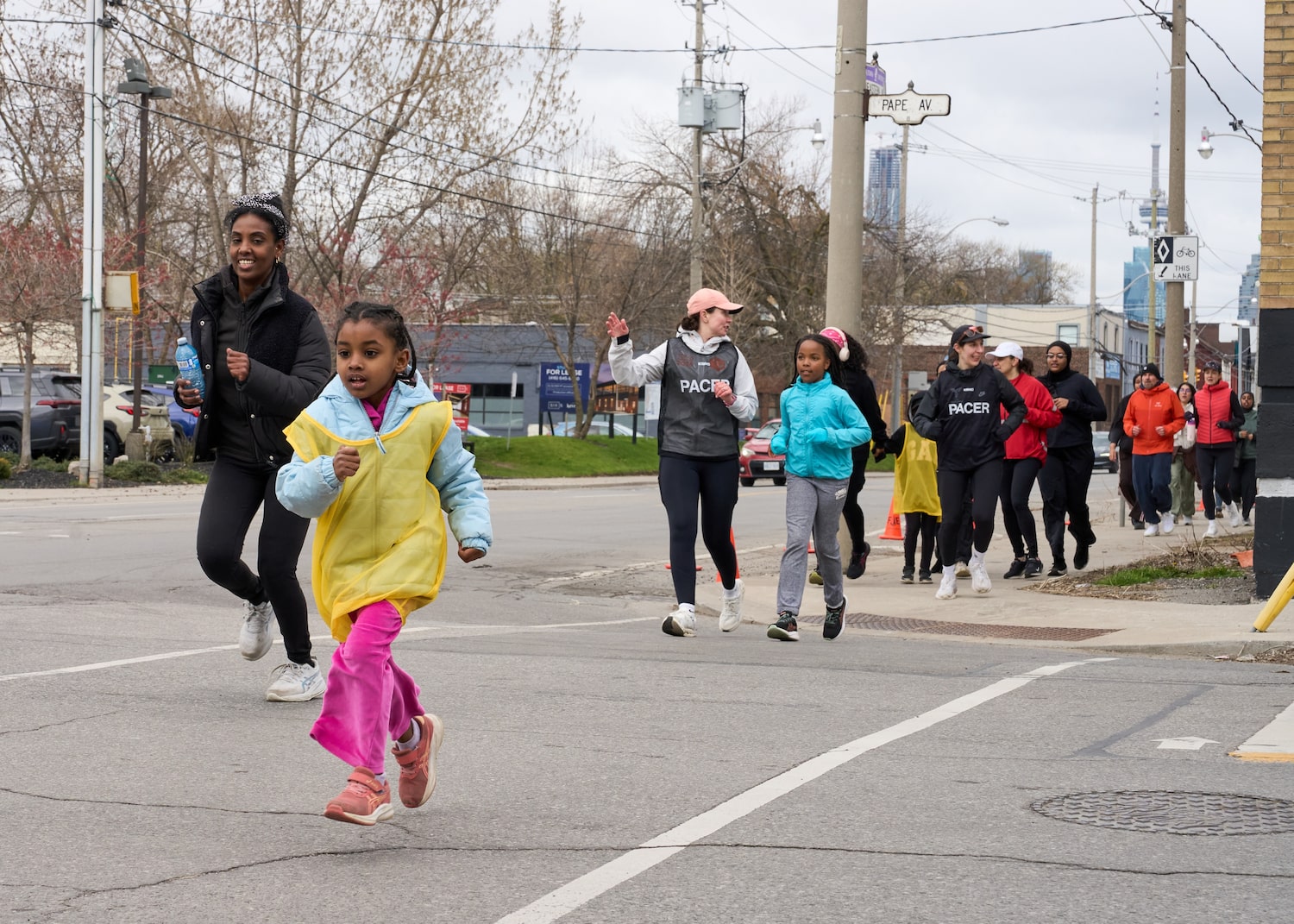
About a kilometre into the route, after the fastest runners had sprinted ahead and the beginners slowed to a jog, a few of the participants came across an unusual predicament. One of the runners was falling asleep.
The snoozer in question was Camden Jones, just two years old. He was dressed in a red superhero cape and tucked into his stroller – his mom, Hannah Wright, pushed him along. “No sleeping!” she called out frantically. “You can’t get too cozy!”
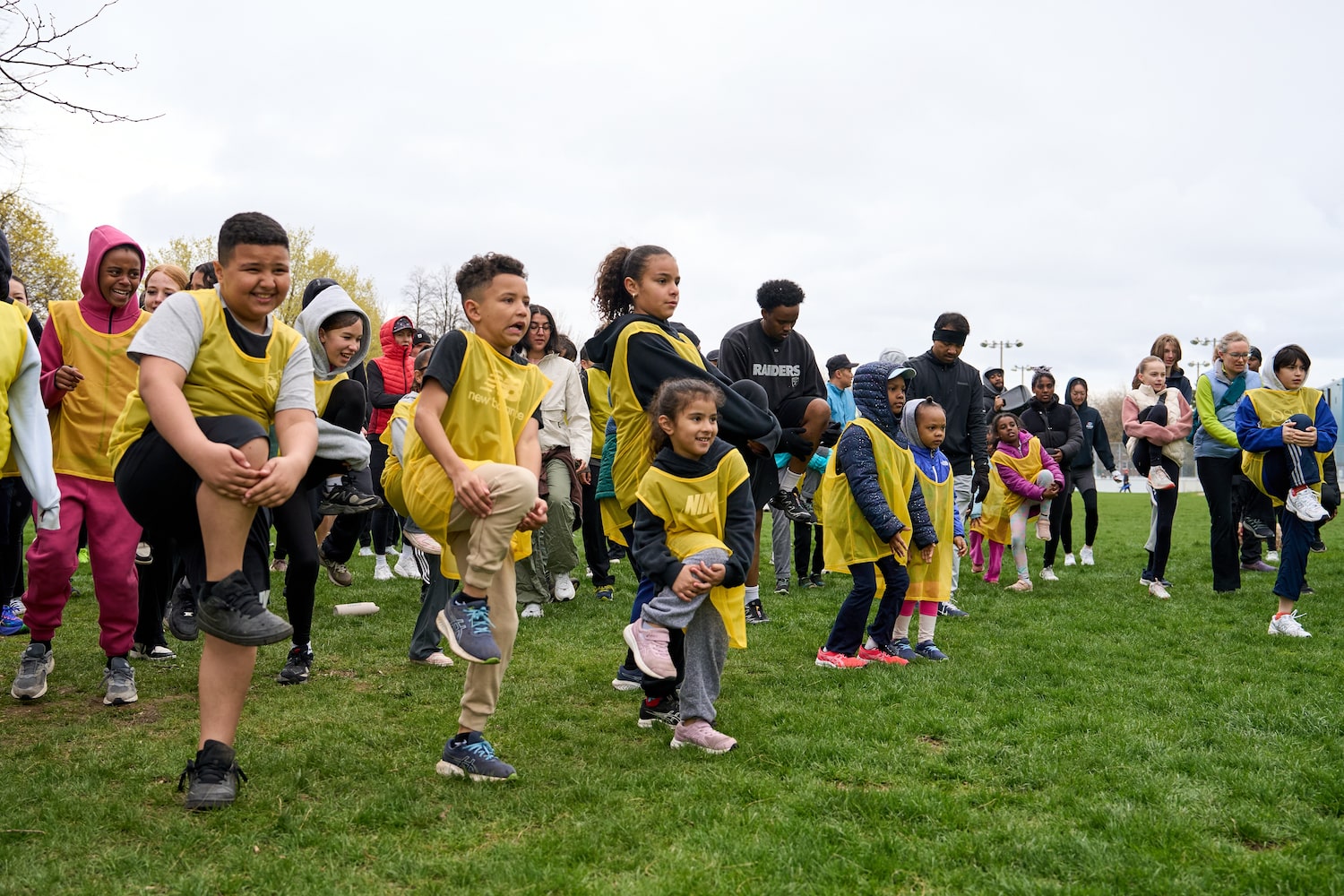
This was no typical Toronto run club. There were no running belts, or hydration vests, or matching athletic sets to be seen. Instead, the Kickback Run Club is designed for anyone who doesn’t typically see themselves in the world of running – from moms of babies in strollers to seniors with grandchildren, from beginners to seasoned marathoners. Runners of all racial and socioeconomic backgrounds.
The weekly run club at Jimmie Simpson Park in Leslieville is the brainchild of 32-year-old Jamal Burger. He’s the founder of the Kickback Foundation, which aims to create new opportunities for youth from underserved communities. Many of the run club members come from the same Toronto neighbourhoods where Mr. Burger grew up, around Moss Park and Regent Park.
“We start with youth, but it’s for everyone,” said Mr. Burger. “Everyone needs to be active. Everyone needs to engage with sport. Everyone needs to feel safe in sport.”

Kickback founder Jamal Burger poses with Amari and Kayden Zedan, 7 and 10.Nic Hotchkiss/The Globe and Mail
Competitive, long-distance and marathon running have long been viewed as the domain of the young, affluent and white. The run club’s mission is to give young people from lower-income families, and from Black and racialized communities, a path into the sport.
And though many assume that the barrier to entry with running is low – that all you need is a pair of shoes – Mr. Burger pointed out that it’s still exclusionary. “Sneakers,” he said, “are a privilege.”
To help with this, the group, in partnership with ASICS, offers young people who participate in at least three runs a free pair of running shoes.
As the pack of runners trailed up a residential street, 57-year-old Betty Kaputo jogged slowly but steadily up the slope. A woman gently tapped her on the shoulder. “Back at it again, mama?” she asked.
Over the past four years, Ms. Kaputo has become a regular fixture at these runs. She’s here every Saturday with her entire family – all three generations of them. On this day, she was running with three of her four adult children, and five grandchildren, who ranged in age from five weeks to eight years old.

Three generations of the Kaputo family participate in Kickback Run Club.Nic Hotchkiss/The Globe and Mail
Ms. Kaputo was born in the Democratic Republic of the Congo and came to Canada at the age of 32. She raised all four of her kids as a single mom, working full-time as an early childhood educator. Even with her packed schedule, she said, she always prioritized physical activity for the family.
“So many kids this age, they’re stuck on the TV, the technology,” she said. “Growing up and seeing this? It will motivate them.”
A few blocks later, Ms. Kaputo and her daughter-in-law, Dhiviya Kaputo, had slowed to a walk.
She wasn’t a regular runner, explained Dhiviya, whose breathing had become quick and shallow. Plus, the 26-year-old had just given birth to a baby – Betty’s youngest grandchild – five weeks ago.

Abdul Hussein, 19, is one of the club's pacers.Nic Hotchkiss/The Globe and Mail
Still, as tired as she felt, Dhiviya said, she couldn’t complain.
“I can’t really say anything when my mother-in-law is running, too.”
They rounded the corner onto a busy commercial street, where volunteer Abdul Hussein, 19, was standing and clapping.
“Let’s do this together,” he called out. “You’ve got this!”

Anthony Reyes stations himself at a street corner to cheer on runners and guide them along the route.Nic Hotchkiss/The Globe and Mail
Mr. Hussein first started running with the club at 15. By the following year, the volunteers were encouraging him to try for a marathon. And after months of training, they arranged, as a surprise, to have him compete in the Chicago marathon – even paying for his registration and travel.
“It was insane. Beautiful, but insane,” he said.
“Not a lot of people who look like me have done it,” said Mr. Hussein, who grew up in Regent Park. “So it was an opportunity for me to show the youth that it’s possible.”
Mr. Hussein, now a first-year student at Toronto Metropolitan University, teaches young runners what he himself has learned along the way. “It’s all about consistency,” he said. “I’ve learned that anything I do, I’ll be successful as long as I keep at it and be consistent with it.”
About 2.5 km into the route, just as the road began to slope downward, Ms. Kaputo was ready to run again.
As she began to jog, Libin Ahmed, a 24-year-old in a bright blue hijab, appeared by her side. It was her first time here, said Ms. Ahmed, a student at TMU.
When was the last time she’d run?
“Never,” she said. A beat later, she reconsidered. “Well, for the bus.”
Was she enjoying it?
“No. Not at all,” she quipped. “Not even a little bit. Not even almost.”
Ms. Kaputo laughed, shook her head.
“The first is difficult,” she said. “Nothing comes easy. Nothing.”
Ms. Kaputo and Ms. Ahmed rounded the corner again. They could see the playground, and the far edge of the park, off in the distance. The finish line was near.
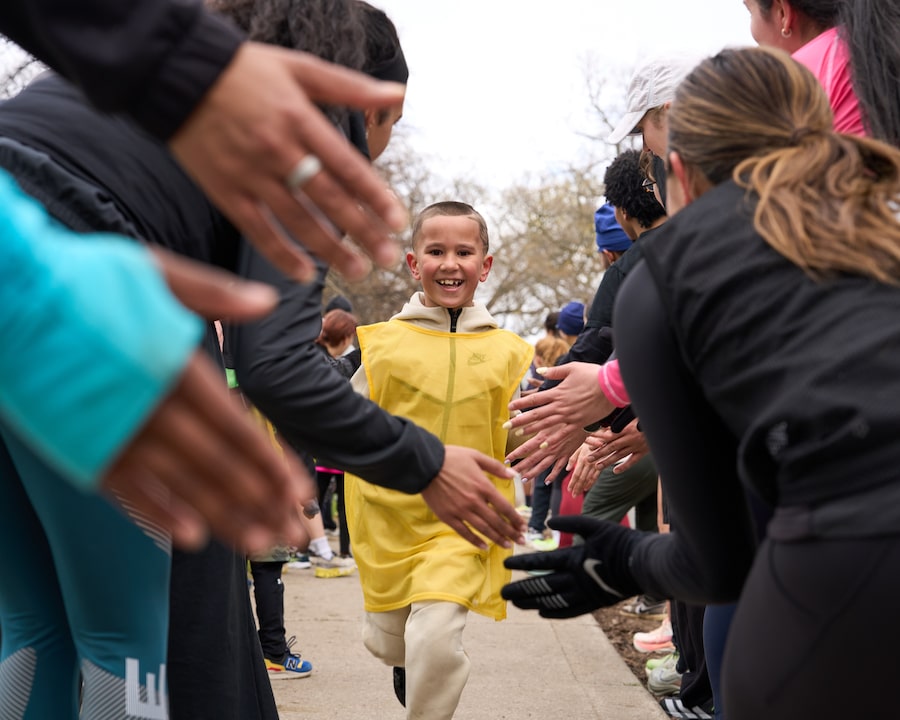
They made their way, together, toward the end. They ran, smiling, through a spirit tunnel of cheering volunteers, showering them with high-fives and “You’ve got this,” and “Way to go.” They’d made it.
With an exhausted but happy look on her face, Ms. Kaputo stretched out on an empty spot on the grass.
She used to be able to run the whole thing, she said. Recently, however, her knees have been giving her trouble.
“It’s okay. Sometimes I walk, then run, then walk, then run,” she said.
“But I do it.”