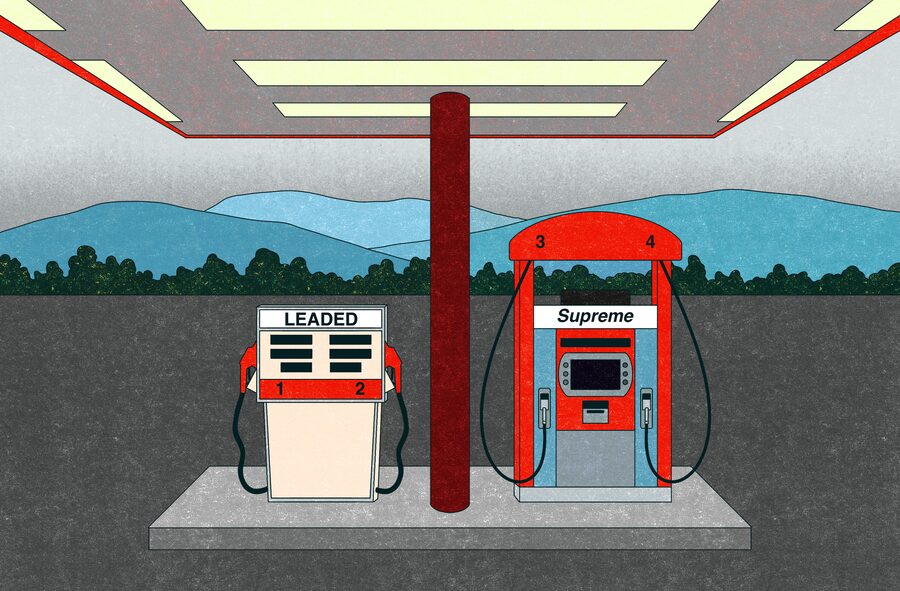
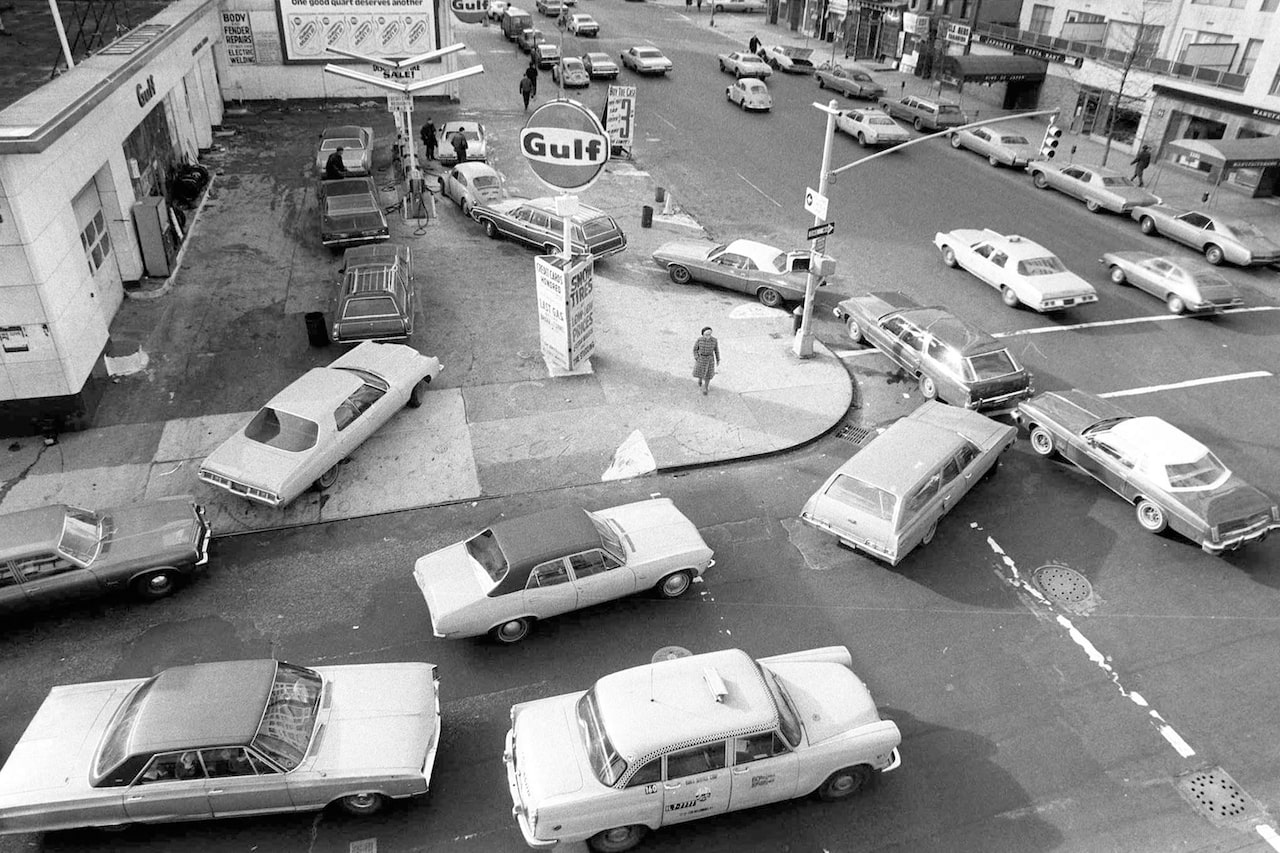
Conflict in the Middle East has sent pump prices soaring. There’s an erratic Republican president in the White House. The auto sector is struggling to compete against more technologically advanced foreign imports. Separatism is bubbling up in Canada, and even though a minority opinion, is starting to suck up political oxygen. The cost of living is an ever-present concern.
And, most important, the long-term outlook for economic growth is eroding, a fact that politicians seem intent on ignoring as they pile up deficits.
That was 1973 – but it might sound more than a little familiar today. The parallels with the tumult of 53 years ago aren’t exact; inflation today is relatively tame in 2026, for instance.
The past is not the present, exactly. But it does echo, particularly on the fundamental (down)shift under way in the economy, and the failure of policy makers to adjust to that new reality.
The trap of slow growth: why it’s 1973
Don Drummond, the economist and former senior Finance official, sees extensive parallels between 1973 and 2026, most notably the slowdown in productivity (and, consequently economic growth) as the primary driver of a fiscal crisis that took root in the early 1970s before reaching a full crisis point in the mid-1990s. High energy prices played a key part in that slowdown, although there were many other factors at play.
Labour productivity grew by an average of 3.6 per cent in the 1960s, but fell to 2.1 per cent in the 1970s and even further in the 1980s, to just 1.4 per cent, according to Statistics Canada. Mr. Drummond says policy makers kept assuming that the structural slowdown in productivity and economic growth was a temporary phenomenon.
It was not.

A line of cars wait in the final assembly area of the General Motors plant in Oshawa, Ont., in October, 1970. Labour productivity fell to 2.1 per cent in the 1970s and even further in the 1980s.John McNeill/The Globe and Mail
The same trend, only worse, is showing up today. Labour productivity grew by an average of 1.07 per cent between 2000 and 2019, according to the Bank of Canada. That was already a weaker performance than the 1980s (and much lower than the 1990s). But since the pandemic, labour productivity has gone from anemic to sclerotic, growing at a compound annual rate of just 0.47 per cent from 2020 to 2025.
To put that into perspective, today’s labour productivity growth is less than half the rate of the major slowdown in the 1970s that proved to be an insurmountable policy challenge for two decades.
This first chart, tracking real gross domestic product per hour of work, illustrates that shift. (That is a broader measure than labour productivity.)
From 1970 to 1973, that measure rose 2.8 per cent on a compound annual growth basis. But from 1973 to 1980, that rate fell by more than half, to 1.3 per cent, as the effects of higher energy prices, among other factors, took a toll. Real GDP per hour of work was barely higher in 1975 than it was in 1972.
A similar stagnation is gripping the Canadian economy today. The chart does show a big spike, in 2020, amid the economic disruption of the pandemic. But that spike is misleading: the longer-term trend is one of slowing growth.
From 2014 to 2024, real GDP per hour worked rose just 0.39 per cent, again on a compound annual growth basis. That’s weaker not only than the strong growth of the early 1970s, but of the slowdown in the back half of the decade.
The numbers may differ, but the same mistake is being made as in 1973. Then, policy makers mistook a structural shift for a cyclical swing, and kept trying to goose demand through fiscal stimulus.
A half-century ago, the slowdown was the start of a deficit and debt cycle that eventually led to the shock-and-awe fiscal reforms of the mid-1990s.
The deficit was a relatively paltry 1.3 per cent of GDP in fiscal 1973. By fiscal 1979, the budget gap had grown to 5.2 per cent of GDP – where it stood in fiscal 1994, when the Chrétien Liberals took office.

Former prime minister Jean Chrétien holds a copy of the Liberal 'Red Book,' which laid out his platform, including plans to restore fiscal solvency, during the 1993 federal election campaign. By the time his Liberal government took office in 1994, the budget gap had settled at 5.2 per cent of GDP.TOM HANSON/The Canadian Press
Similarly, today, Ottawa plans to run persistent deficits. The spring economic update pegged the fiscal 2026 deficit at 2.6 per cent of GDP, with a slight decline in the ensuing half-decade to 1.4 per cent of GDP by fiscal 2031. (But there are major expenditures not accounted for, not the least of which is a promised second stage of military rearmament by 2035.)
Mr. Drummond looks at that trend and sees today’s Liberal government repeating the mistake of its 1970s predecessor, namely failing to come to grips with a fundamental shift in the economy. He and economist Parisa Mahboubi co-authored a recent study for the CD Howe Institute, that forecasts the long-term GDP growth rate through to 2060 for Canada at 1.2 per cent, well below the 1.5 per cent projection in the spring economic update.
That means Ottawa’s official estimate is 25 per cent higher than the CD Howe figure. By 2060, GDP would be 11.6 per cent lower, using the institute’s figures. (For comparison, the Great Recession of 2008 reduced GDP by 3.3 per cent.)
And over several decades, that would make for very different fiscal outcomes.
The spring budget update lays out, for instance, a gentle continual decline in the ratio of net federal debt to GDP. The study notes tersely that the gap would mean “structurally weaker revenues and higher debt ratios, absent policy adjustment.” Fiscal plans that wrongly assume that the gap can be closed through spending to boost demand “risk understating the long-run fiscal challenge,” it adds.
All of that would be bad enough. But Mr. Drummond points out that policy makers face challenges and constraints that their 1970s forebears did not.

Protesters take part in a climate march in Ottawa, in 2024. Climate change, and its destructive effects on the health and livelihoods of Canadians, is an unavoidable and costly issue the government must contend with while promoting economic recovery.Spencer Colby/The Canadian Press
A future of constrained choices: why it’s worse than 1973
There are obvious differences, most of them unfavourable, between 2026 and 1973. Climate change can no longer be ignored (a good thing) but it will be a costly problem to address, whether through reducing emissions or through adaptation.
Artificial intelligence could prove to be a major productivity boost, in the long run. But if the pattern of previous technology-driven upheavals holds, the benefits will take decades to fully materialize, while the costs (in the form of layoffs and disrupted businesses) will arrive much more quickly.

Prime Minister Mark Carney visits the Royal Canadian Air Force 440 Transport Squadron in Yellowknife, N.W.T., in March. Mr. Carney's government is investing billions in overhauling the country's military and defence sectors.Carlos Osorio/Reuters
Unlike the early 1970s, Canada has committed to expanding its military in the face of growing threats from Russia, China and other authoritarian states. And the population is much older: in 1973, the average age in Canada was 31.1 years. In 2026, the median age is projected to be 42.7 years.
A little less obvious is the downside of a conspicuous success: women entering the workplace en masse. As this second chart shows, the female labour participation rate rose rapidly through to the early 1990s, taking off again later that decade, in part because Quebec was expanding subsidized child care. More recently, there has been a modest rise this decade, with the spread of remote work and the expansion of federal subsidies for child care.
All told, the participation rate for women aged 25 to 54 has risen by nearly 30 percentage points, a flood of workers into the labour market that helped to increase economic growth in the past half-century.
But that success cannot be repeated; a further 30 percentage point gain is not arithmetically possible.
There may be some room for growth; the participation rate in 2025 for men aged 25 to 54 was 91.9 per cent, higher than the 85 per cent rate for women in the same age range. But the participation rate for women has, after rising in the early part of the decade, been stuck around the 85-per-cent mark. Perhaps a massive expansion of federal child care subsidies could boost that rate a bit. But the gains would be marginal, at best.
Much less rosy is the constraint of higher debt loads at the federal level. As this last chart shows, federal debt was much smaller, relative to the economy, in 1973 than today, at just 21.1 per cent of GDP. But by 1976, the debt burden started a two-decade rise, culminating in a peak of 66.6 per cent in fiscal 1996.
Mr. Drummond points out the danger for federal finances today: the starting point of the debt burden is significantly higher, a consequence of the refusal of the Trudeau government (and its successor, the Carney government) to decisively pare back spending to drive down debt relative to the economy. In fact, Ottawa is forecasting a (small) rise in federal net debt as a percentage of GDP through to fiscal 2029. Without a sharp policy reversal, that is almost certainly a best-case scenario.
Hindsight should be 20/20
Of course, today’s policy makers have one enormous advantage over those in the 1970s: They already know how the story turns out.
The federal Liberals know that stagnating productivity will lead to sluggish revenue growth. They know that the temptation to increase taxes will make the problem worse. They know that every year, the cost of servicing debt will rise. They know that the tax structure needs to be radically revamped to increase corporate investment and boost productivity. They know that the longer they wait to take action, the more painful that action will need to be.
They know all of this. The question is whether they will use that knowledge to avoid once again sowing the seeds of a fiscal crisis like the one that took root in 1973, a year both far distant in the past and uncomfortably close.