Postcards are for clichés: the CN Tower, Lake Louise, a Maritime lighthouse. They’re pretty, and don’t tell you much.
In the past month, The Globe has set out to write a different kind of Canadian postcard, visiting cities and towns in sometimes-overlooked corners of the country and producing dispatches that show the place in the round, its underbelly as well as its pretty face.
We’re in a time of national soul-searching, prompted by annexation threats and a federal election, and this series has been a part of that process. Reporters based in Vancouver, Edmonton, Winnipeg, Thunder Bay, Toronto, Montreal and Halifax all hit the road, sometimes returning to their home towns, sometimes visiting places they had never been before.
Anxiety – the word of the moment – was pervasive from coast to coast to coast. Trump. Tariffs. Carney. Poilievre. These new realities, clichés themselves by now, were inescapable in communities across the country.
But Globe correspondents discovered an earthier and more textured country as well, one that often slips beneath the radar of the headlines.
It is a country of winter roads carved out of snowy muskeg, and “stop-on-requests areas” where train stations get scarce. A country of fish fries at the legion, paper mills, and closed paper mills. A country where empty fields are filled with white crosses in Sudbury and blue flags in Campbell River to commemorate our 50,000 dead in the opioid crisis.
It is a country well-marked by sorrow but also rich in local pleasure, a highway map of delicacies that pop off the grid like cacti and orange groves: Nova Scotia lobster rolls, PEI French fries, Mauricie cheese curds, Coney dogs from Thunder Bay, Prairie perogies, Okanagan pinot. It is a country where the tenacious and not unpleasant smell of cow manure, like some obscure French cheese, can be washed away within 15 minutes by the almost sour tang of good espresso. It’s a country that is wry, soulful, calloused – a country of satirists and folk singers, sage retired bureaucrats and many, many farmers.
It’s a funny country, with humour that is sometimes black, sometimes subtle and sometimes both. The modesty of the Eganville Leader’s tagline – “Renfrew County’s largest paid circulation newspaper” – is just crying out for a movie where Eugene Levy and Catherine O’Hara try to revive the struggling weekly.
Even our place names tell a colourful story. Souris, PEI, was christened for the “hordes of mice that swarmed the community in the early 1700s, destroying the crops of French settlers.” Sioux Lookout was the site of a mountain where Ojibwa scouts scanned the horizon for rival warriors approaching by canoe. Sidney, Nelson and Brandon sound like the third line on a playoff hockey team.
The country that emerged from these placelines was just as fascinating and peculiar as their etymologies. A country anxious about the future and struggling to resolve knotty problems but rooted in something surprisingly deep. A country that is hard to knock off-balance in a crisis because it is built by survivors, people who value refuge and resilience. A country that shelters people in its tough embrace and insists they keep on going.
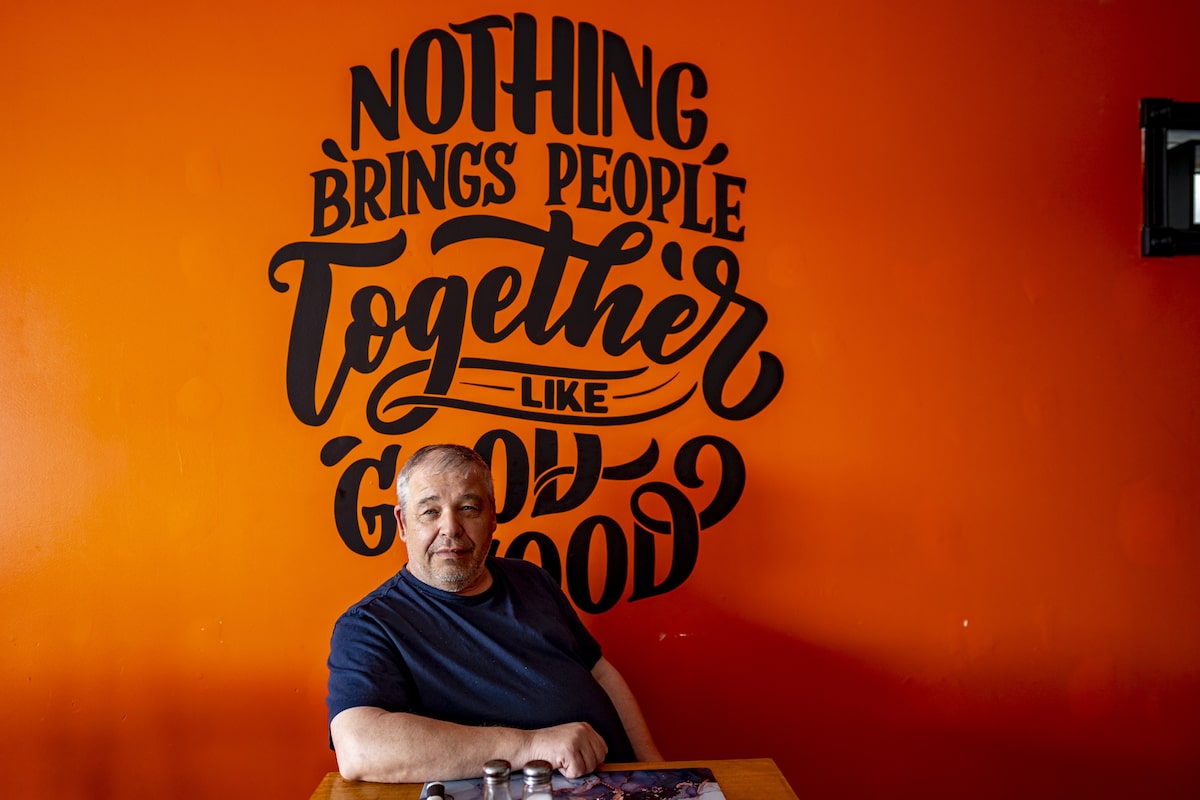


Canada isn’t always easy to be romantic about. It is full of hard-luck places – “gloomy, weird” company towns with one hotel like the now-booming Kitimat, B.C., described by Haisla novelist Eden Robinson. The brutal and brilliant Philadelphia Flyers captain Bobby Clarke once said that if he hadn’t learned to lay on the lumber once in a while, he’d have never left Flin Flon. We’re a country full of stories like that.
The most romantic Canadians are often new Canadians; it is easier to fall in love with somewhere snakebitten if it promises a new beginning. The country has always been a particular place of refuge – for Highland Scots evicted in the Clearances, Jews fleeing pogroms, Ismaili Muslims expelled by Idi Amin, the Vietnamese boat people – one group of exiles sometimes giving way to another.
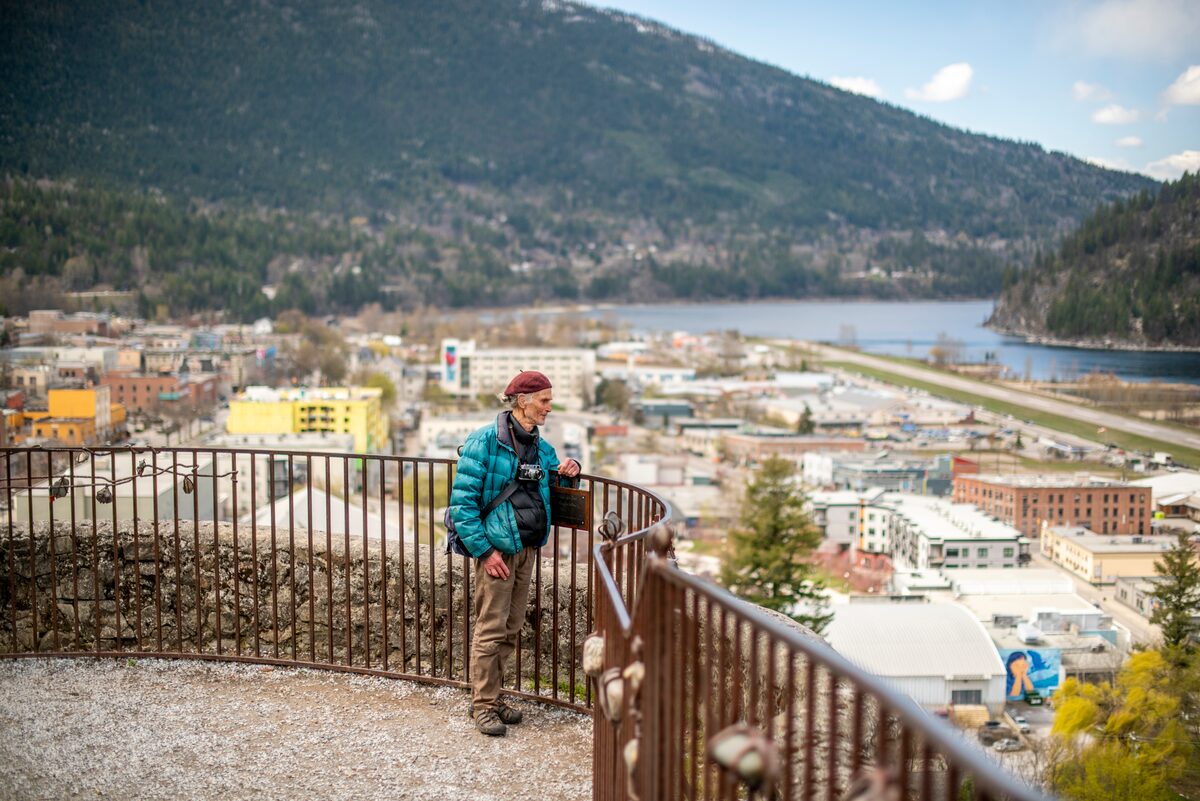
Is there anything more Canadian than the U.S. draft dodgers who bought land in the Kootenays from Russian Doukhobors and transformed the region around Nelson from its reliance on a shaky lumber industry into a hippie paradise – one group of peace-loving refugees passing the torch to another?
Or Palak Gulati, an international student who moved to the troubled northern hub of Sioux Lookout and found peace in its big quiet spaces – spaces where, as she beautifully put it, “We get a chance to know ourselves and everything around us too”? Now that’s romance.
The story of Northeast Calgary must be in the running. In a single generation, the neighbourhood has gone from “brown prairie where badgers burrow” to a thriving suburb of cricket players, fragrant strip-mall food and the big Alberta sun setting behind the minaret of a mosque.
Canada can be a uniquely secure place in which to preserve your heritage. There are parts of Nova Scotia where the local languages include Gaelic, Mi’kmaq and French, just like in the 18th century when redcoats were trying unsuccessfully to clear the land of its Indigenous and Acadian residents.

Signs of French history in Port Hawkesbury, N.S., include the Fleur-de-Lis diner, where this former U.S. citizen and her Canadian veteran husband were having lunch one day.Steve Wadden/The Globe and Mail
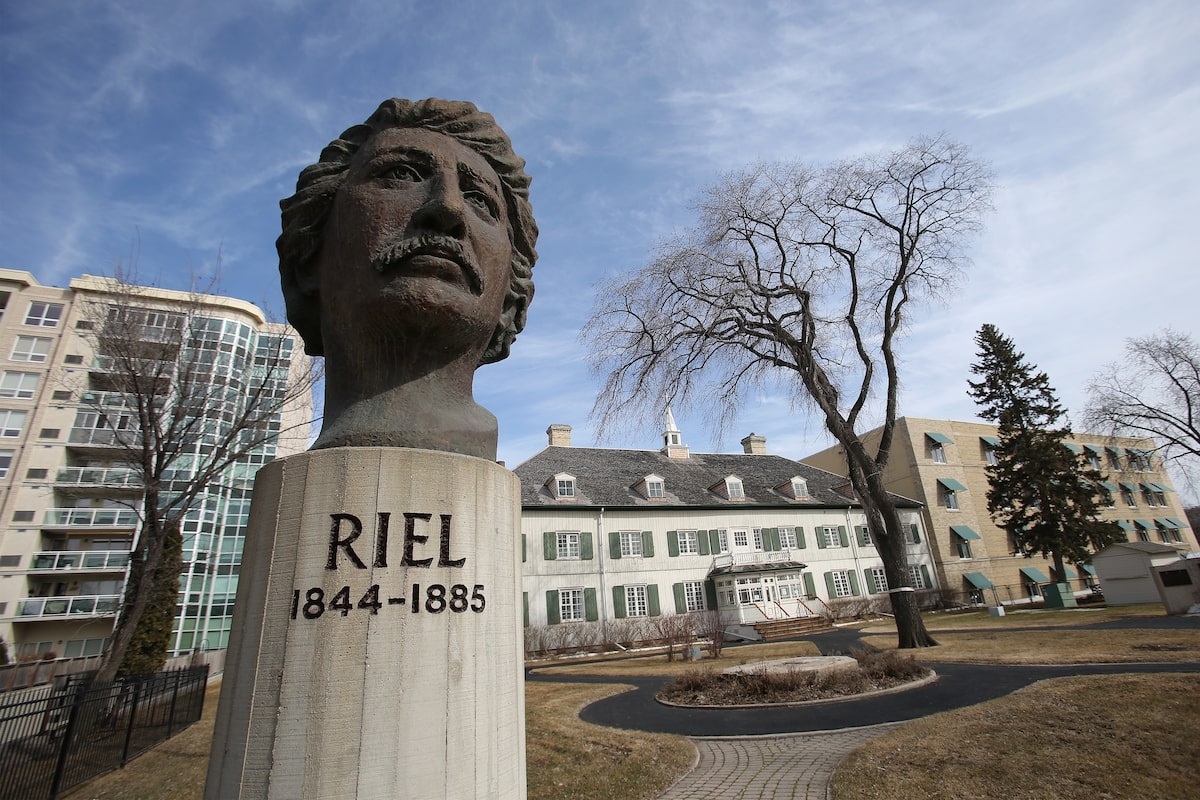
Canada can also be a place where cultures mix and bleed together in a glorious tie-dye. Where else would the story of Moroccan-born Yasmine Zaré, studying biochemistry at Manitoba’s Université de Saint-Boniface and thereby fulfilling Louis Riel’s vision of living in French on the Prairies, even make sense? The viscerally moving quality of a North African scientist sharing the same “Canadian dream” as the great Métis leader simply isn’t intelligible outside of our borders.
Of course, everyone in St. Boniface knows how Riel’s story ended, at the bottom of a hangman’s noose. The violence that runs through Canadian history like a scarlet thread is apparent across these postcards, too – like in the former Pelican Falls residential school near Sioux Lookout, where the region’s rate of hospital visits for mental health and substance abuse is 14 times the provincial average.
This reporting provided no beer-commercial portrait of Canada, no glossing over the homelessness and addiction, the college students afraid to ride public transit in big cities and the “busboys and billionaires” inequality plaguing cottage-country communities like Collingwood, Ont.
Opioids and homelessness are recurring plagues blighting the landscape. Nelson, B.C., has a deep egalitarian streak; a group of rough-and-tumble men day drinking in a public park are quick to leap up and congratulate a teen streaking by on an expensive mountain bike when he bails to avoid a pedestrian, remaining unscathed. But remote work has led to gentrification from those fleeing Vancouver, Toronto and − gasp − American cities, and skyrocketing home values in a place once identified with back-to-the-earthers and communal living.
It might surprise readers that Moncton, N.B., is the second fastest-growing city in Canada, driven by a surge in immigration. New Indian restaurants on Main St. are one benefit of that growth, but home prices leaping 65 per cent in five years is a clear downside, including for newcomers.
The national crisis of addiction and mental illness – especially when it manifests as street crime and disorder – also weighs heavily on Canadians’ minds. In Sudbury, that looks like crosses of mourning and protest on a lawn opposite City Hall and yellow needle drop boxes on curbs that might normally hold a mailbox. In Edmonton, it means the city’s groundbreaking light-rail system has become a nexus of fear and violence.

Denise Sandul lost her son, Myles Keaney, to a fentanyl overdose. His name is now one of 267 at the ‘Crosses for Change’ memorial across from City Hall in Sudbury, Ont.Fred Lum/The Globe and Mail
Naturally, the U.S. trade war loomed over the country like a leaden late-winter sky. People who work the wheat fields around Brandon, Man., and farmers burrowing in PEI’s red soil for spuds have the same thoughts right now. Likewise, the aluminum workers of Trois-Rivières and the refinery workers of Sarnia, Ont. Mike Bradley has been Mayor of that blue-collar border city for an astonishing 36 years, but even he was winded by the suddenness of the American gut punch.
“It just hits you right here,” he said over a glass of wine at Ups N’ Downs pub, pointing to his stomach. “It’s like ‘I thought we were friends.’”
All of Canada feels winded, a bit dazed by the blow we’ve just received. There’s a sense of bewilderment, of lost bearings, of groping in the dark. Fortunately, another leitmotif running through the postcards is a never-say-die cussedness that gets translated in campaign speeches as “resilience.” Bobby Clarke hacked his way out of Flin Flon and didn’t stop until he was holding the Stanley Cup in severe need of dental surgery.
Canadians bounce back, or refuse to go away. You can hear it in the jingle dresses of a Regina powwow 140 years after Riel was hanged, and in the voice of Lydia Big George, a proud Indigenous woman who is proud to welcome immigrants. (“Canada has always been known to be that country that, it’s safe to come here. It doesn’t matter what nationality you are.”)
You can taste it in the new fine-dining establishments of St. John’s, where the pasta is properly al dente and menus are as sophisticated as anything in Montreal, thanks to an offshore oil boom that has transformed the former have-not exporter of petro-workers.

Rob Strong got in early on the Newfoundland offshore-oil boom of the early 1980s. Now he runs a consulting firm, and had much to say about federal regulation of greenhouse-gas emissions.Greg Locke/The Globe and Mail

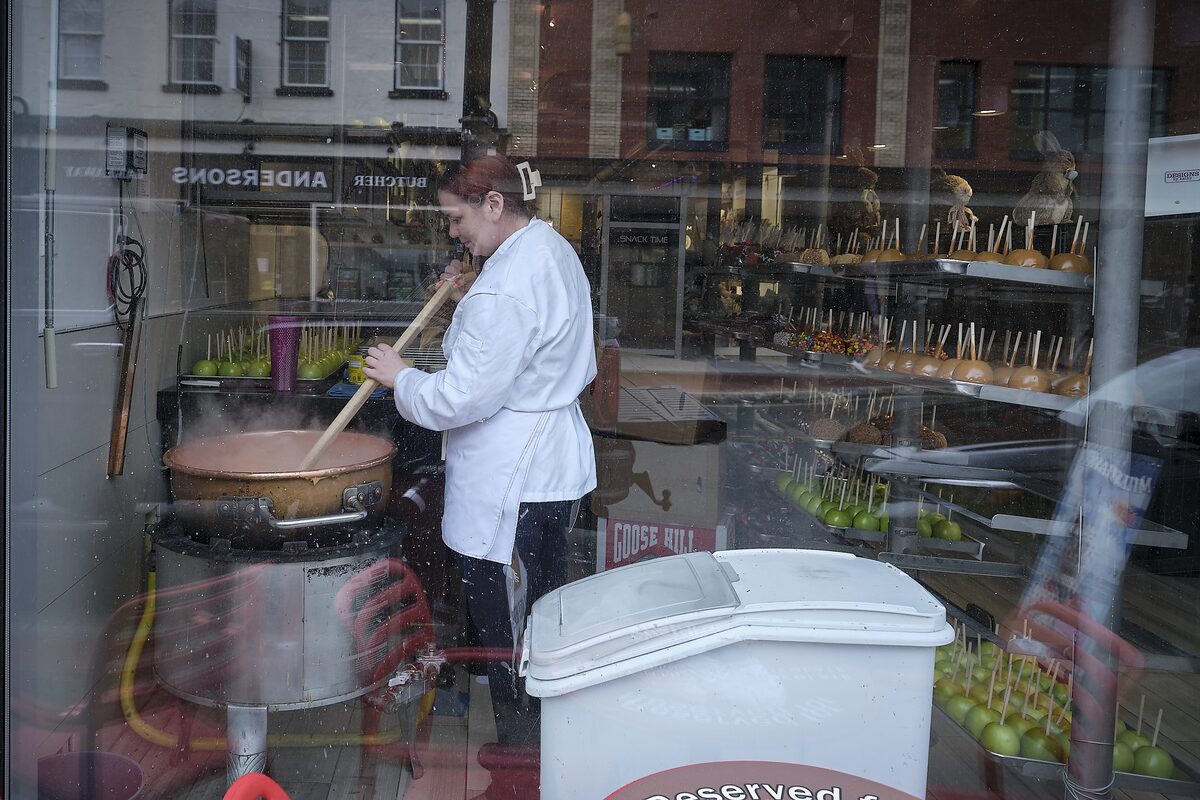
Second acts abound in these stories. Trois-Rivières was always a distillation of old French Canada: priests and nuns, nationalist politics, the hewing of wood for pulp-and-paper and the drawing of water for hydro-dependent aluminum manufacturing. But when the mills started closing – that old Canadian refrain – the city needed to pivot. Now it builds high-tech products like submarines, the population is growing again and the Japanese tonkatsu pork sandwiches downtown are top-of-the-line.
Resilience, that old saw, gets fresh teeth in the depiction of Jim Huff, a union job coach in Hamilton trying to steer laid-off steelworkers into new careers (“We don’t turn them away”) and a boarded-up music hall on Barton Street that is becoming supportive housing for women.
The whole country feels poised for a second act. The time of depending on Americans for trade – but also for historical narratives and dreams of the good life and political ideals – is fading. The postcards go some way to proving it. They show a Canada that’s curious about itself, a country looking in the mirror and being challenged, delighted and intensely interested in what it sees.
These pieces are full of things that only make sense in Canada and show off our best values. Like the Doukhobors, those “spirit-wrestlers” driven out of tsarist Russia for apostasy, who protested war by stripping naked, a chapter of history known intimately by Western Canadians and barely at all by anyone else.
Or the never-ending struggle to preserve the French language and all its magnificent culture on the North American continent, from Moncton to Trois-Rivières to St. Boniface, fortified by the fresh blood of a global francophonie.
These snapshots of refuge and resilience, of a country’s hard sheltering breast and will to reinvent, are ungainly on a postcard. Lake Louise still works better for mailing home on holiday.
But stitch them together and we see a bigger picture emerge: a mosaic – that very Canadian metaphor – of a country waking up to its own existence.
Cameras on Canada
For the East to West series, The Globe sent about 20 freelance photographers, and staff photographer Fred Lum, to every province and the Northwest Territories. They worked in tandem with reporters from every national bureau. In the video montage at the top of this article, you saw a sample of their photojournalism. Here are those images again, and the stories behind them.




With files from Andrew Coyne, Temur Durrani, Willow Fiddler, Marcus Gee, Mike Hager, Ann Hui, Justine Hunter, Lindsay Jones, Nancy Macdonald, Gary Mason, Greg Mercer, Sara Mojtehedzadeh, Jana G. Pruden, Doug Saunders, Laura Stone, Andrea Woo and Konrad Yakabuski
Election 2025: More from The Globe and Mail
The Decibel podcast
Audio journalist Kasia Mychajlowycz took a cross-country road trip to ask as many Canadians as she could: What is the most important election issue to you, and why? On this episode of The Decibel, we recap what they told her. Subscribe for more episodes.
Explainers and election-day resources
Voters’ guide: How to cast your ballot, and what happens after
Platform guide: Compare pledges on issues from Trump to housing
Ten economic issues that will define the election, in charts
Who are the people steering the Liberal and Conservative campaigns?