Stefano Centioni, the lead civilian instructor at the International Flight Training School in Sardinia, squeezed himself into a Canadian-made CAE flight simulator that is a marvel of immersive virtual reality. When he hit the throttle and took off, it looked like he was in the air.
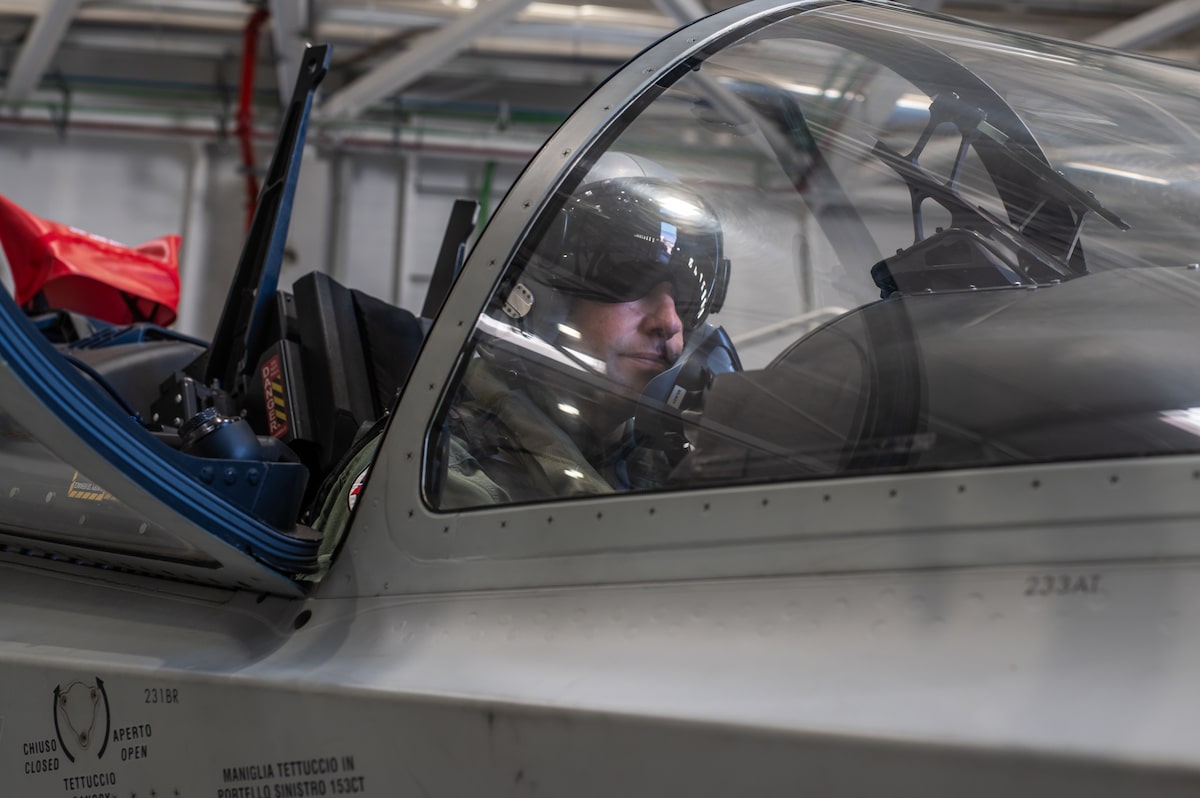
The cockpit is a replica of the ones in the T-346 trainer jets used at the school, four of which are jointly owned by CAE and partner Leonardo, the Italian defence giant that makes the aircraft.
A video dome surrounds the cockpit, making it appear that the simulator is actually flying. Their pilots can hear the engine noise, bank the jet, do 360-degree loops and fire missiles at targets that look realistic.
Flight simulators are nothing new – CAE has been building military versions since the 1960s. This one is remarkable in that the pilot in the simulator can co-ordinate seamlessly with a pilot in the air. They can even engage in dogfights with one another.
“The pilot in the air will operate as if there is a real second aircraft with him,” said Mr. Centioni, a former Italian Air Force squadron leader and member of Italy’s Frecce Tricolori, the national military jet aerobatic team.
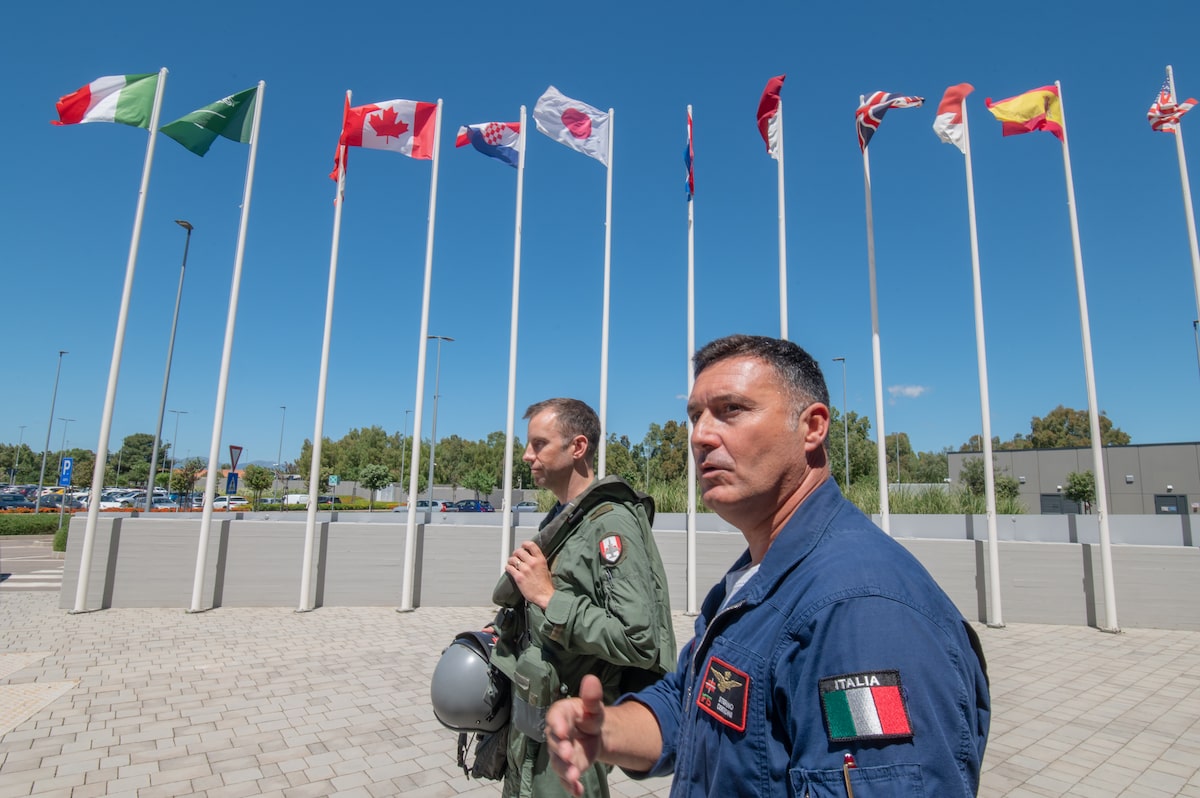
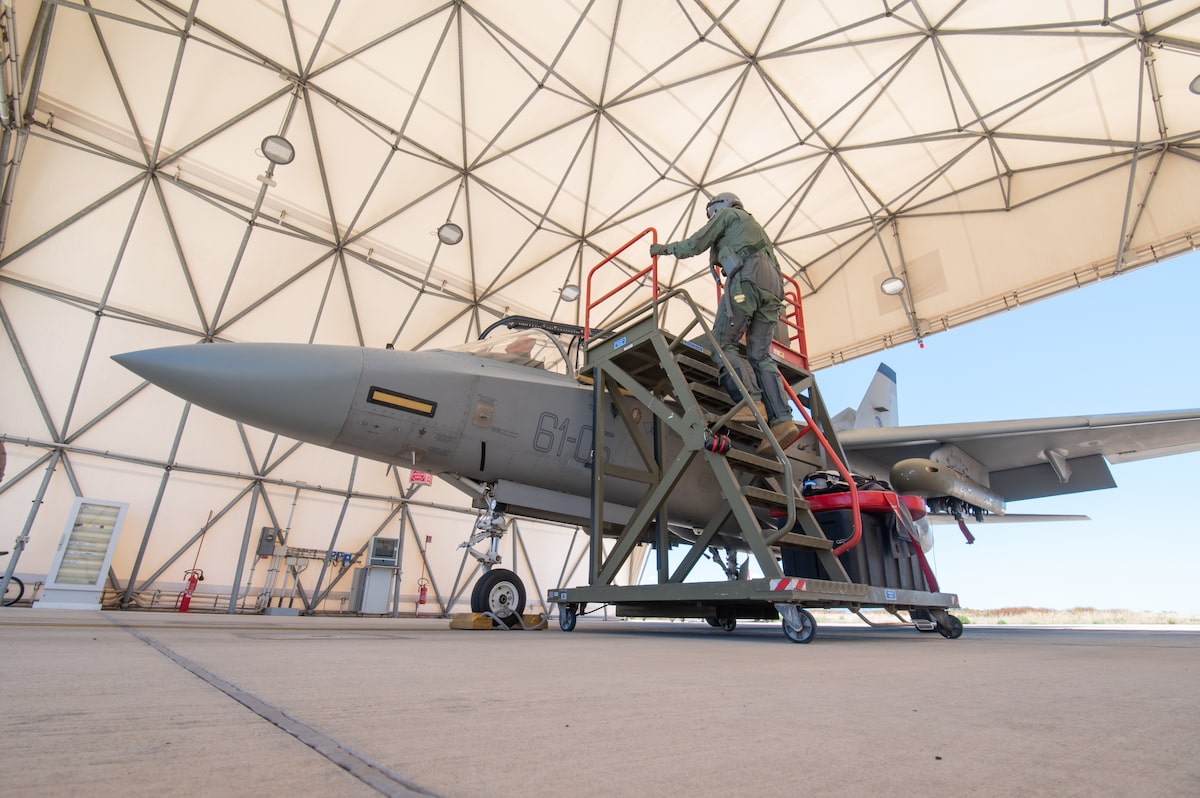
The two-way simulator is just one novel aspect of the flight school, which goes by its acronym, IFTS.
The new school is a rare, perhaps unique, example of a public-private partnership designed solely to train pilots for the newest generations of fighter jets used by NATO countries and their allies.
IFTS also marks the first time that CAE has formed a partnership with a defence manufacturer for military pilot training – in effect, a new business model. “It is an exportable model,” said Pascal Grenier, CAE’s president of defence and security.
The “public” aspect of the IFTS is the Italian Air Force, which provided the Decimomannu air base and designed the training program. The “private” aspect is the joint venture formed by Leonardo and CAE in 2020 to build and manage the training campus, including the maintenance hangars and housing, and provide the simulators, the aircraft and the instructor pilots, all of whom are current or former military pilots from several countries, including Canada.
“Leonardo and CAE together power this program,” said Mr. Centioni, who now works for Leonardo. “The IFTS is now the benchmark for advanced pilot training around the world. And we are the only school outside of the U.S. that is licensed to train American pilots for next-generation planes.”
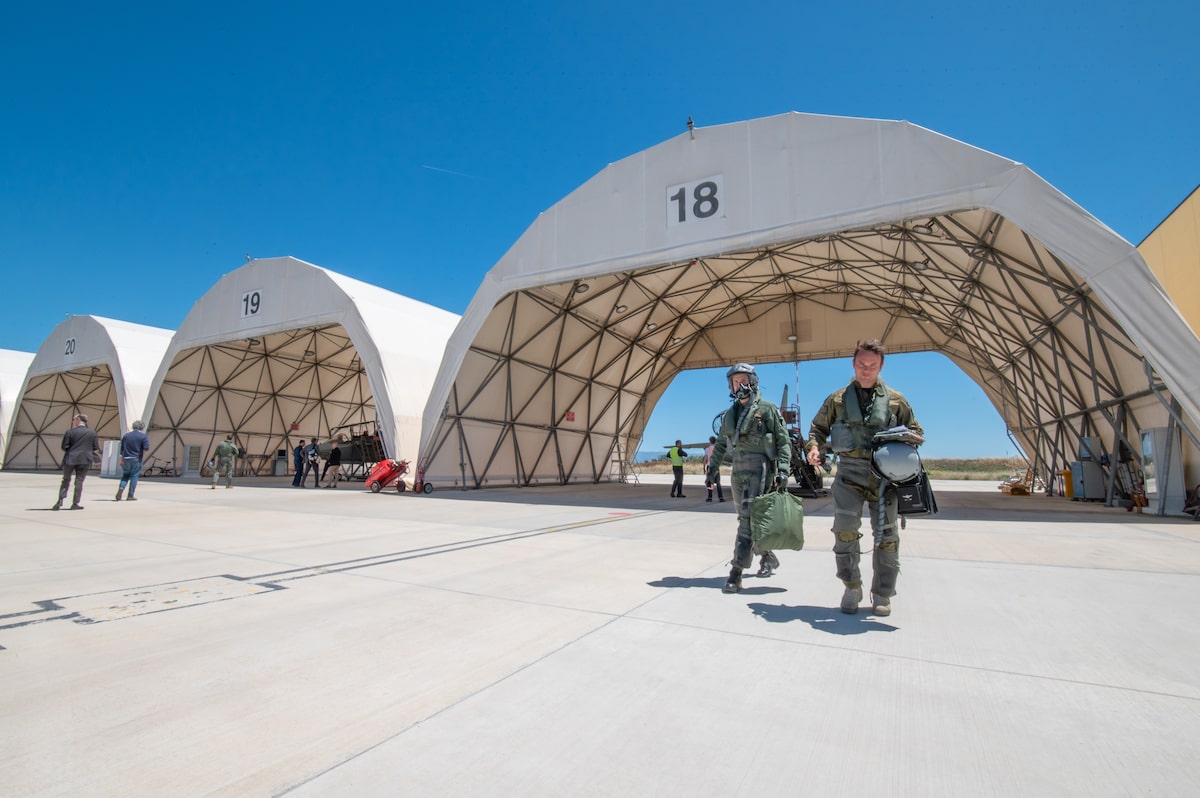
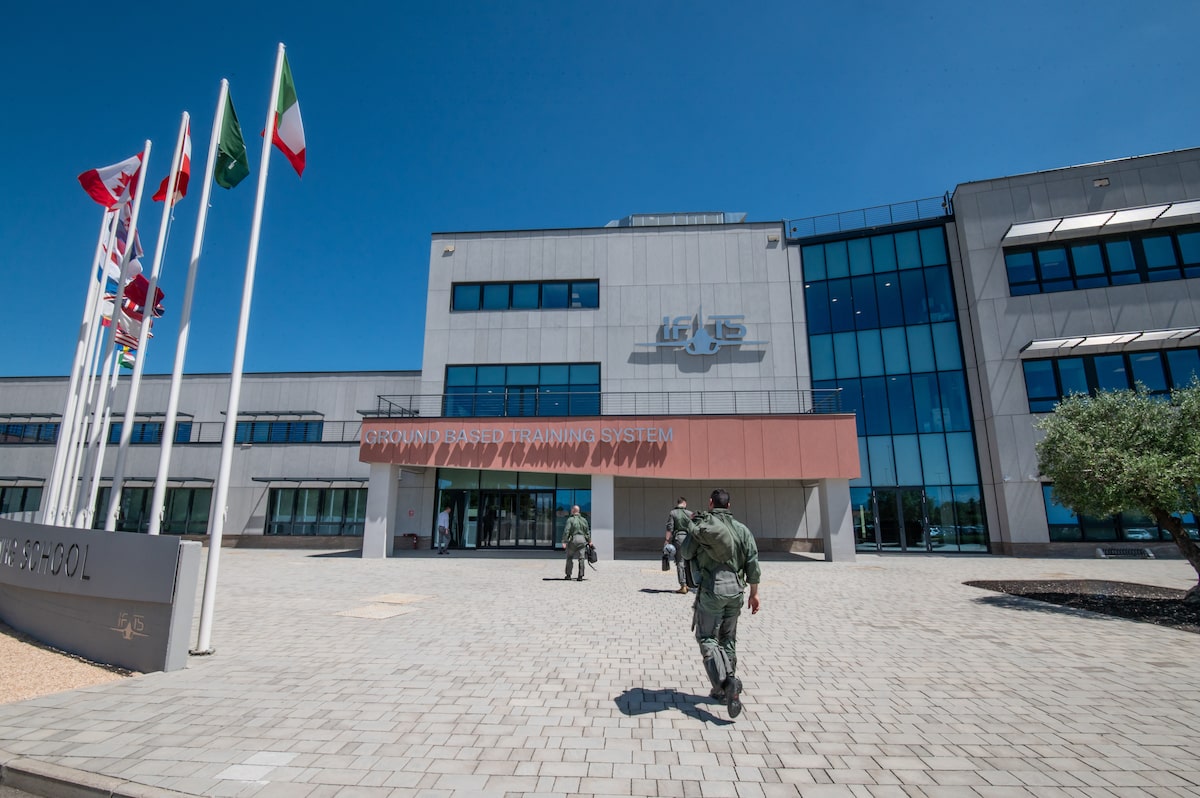

The IFTS reflects the expanded need for military pilots as defence spending among NATO countries, especially Canada and those in Europe, climbs after decades of flatlining.
Some of these countries are spending tens of billions of dollars on new fighter jets. Canada has ordered 88 F-35 stealth jets from Lockheed Martin at a cost of about $28-billion, though has so far committed to take only 16 of them. It is also considering the purchase of Swedish Saab Gripen jets, which would be built under licence in Canada.
The Decimomannu air base, about 25 kilometres north of Cagliari, the Sardinian capital on the southern tip of the island, was built by Benito Mussolini’s Fascist government at the outbreak the Second World War. It was also used by the Germans, was bombed by the Allies in 1943 and became a major NATO training base in the postwar years.
Leonardo makes jet trainers, helicopters, turboprop passenger planes, space propulsion systems and defence electronics and is one of only two companies that assembles the F-35 outside the U.S. (the other is Japan’s Mitsubishi). It is 30-per-cent owned by the Italian state and has a market value of €30-billion ($48-billion).
CAE, whose headquarters are in Montreal, is the biggest maker of civilian and defence flight simulators and has a value of $11.5-billion.
The IFTS site covers an area the size of 22 soccer fields. The campus looks more like an upscale suburb than a military site. The 80 or so trainee pilots (soon to be 100) are treated to smart apartments with balconies or gardens, a health centre with a pool, several cafés and all the food they can eat at the restaurant. The men’s toilets even have bidets.

The instructors, the squadron of 28 T-346 aircraft and the CAE simulators form the heart of the program. The nine-month course is not for newbie pilots. The students come to the school fully capable of flying trainer jets. When they graduate, they will be combat-ready pilots able to fly F-35s and other advanced attack aircraft.
“This is the most advanced flight school I have worked at,” said Major Brian Kilroy, 41, of the RCAF, one of the school’s three Canadian instructors. “When they get to a CF-18, nothing should be new to them. We teach these pilots tactical flying. We teach them how to fight.”

Maj. Kilroy is a seasoned pilot in the Royal Canadian Air Force, whose planned purchases of new fighter jets will create more demand for pilots.
The school currently has four Canadian student pilots. Fourteen Canadians have graduated from the program, and about 18 are en route in the next two or three years.
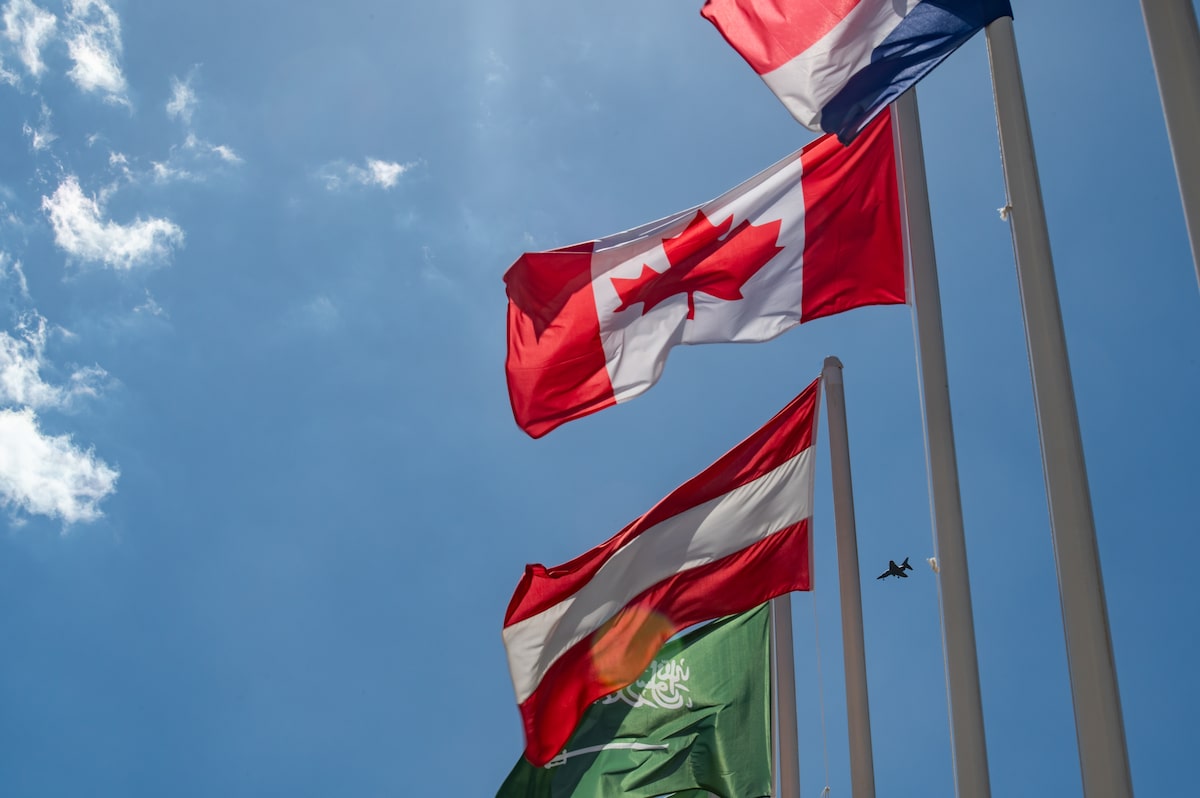
Students from more than a dozen other countries, including the U.S., Qatar and Saudi Arabia, round out the list.
The CAE simulators are the most advanced of their kind. Part of their role is to save money. The cost of flying a T-346 is several thousand dollars per hour, including fuel and maintenance (still a fraction of the cost of flying an F-35). The cost of flying a simulator is close to zero.
“With the simulators, you can train as many times as you want, whenever you want, without leaving the ground,” said Colonel Gianfranco Liccardo, commander of the Italian Air Force’s 61st Wing training centre. “This is a huge cost savings, and you can re-fly the whole mission by reviewing the downloads.”

Each of these jets cost millions of dollars, and maintaining them is high-stakes work for the mechanics. A mishap in the air could be deadly.
CAE and Leonardo would not reveal the investment made in the IFTS, but it was probably substantial.
The venture’s four T-346s have a reported flyaway price of US$20-million to U$$25-million apiece. CAE’s military flight simulators cost between $1-million and more than $50-million, depending on their complexity, Mr. Grenier said. Add in the campus construction costs and compensation to the Italian Air Force for the use of the runways and control towers, and the total could be in the low hundreds of millions. “The IFTS has to generate a return on investment for us. There is a lot of capital involved,” Mr. Grenier said.
CAE and Leonardo would like to replicate the IFTS model in Canada and other countries. In Canada, basic-level military flight training can be done but not advanced combat training, since the RCAF lacks suitable aircraft. All of the RCAF’s advanced training is currently done outside Canada.
Leonardo is trying to sell the T-346 to Canada. If Canada goes with another aircraft, CAE would try to form a joint pilot-training venture with its manufacturer. “You also have various countries around the world looking to do the same thing,” Mr. Grenier said. “The IFTS is not just a Canadian or Italian story. We can export this model all over the world.”
Modern warfare: More from The Globe and Mail
The Decibel podcast
Fighter jets, drones and military hardware are expensive – and soon, countries that need help paying for them can turn to a defence bank based in Canada. Reporter Pippa Norman spoke with The Decibel about why we were chosen as the DSRB’s host country and how it fits in Ottawa’s broader strategy. Subscribe for more episodes.
Canada and Europe on the defensive
NATO exercise in Latvia reveals alliance’s drone vulnerabilities
As U.S. turns on its allies, Canadians look toward joining Europe